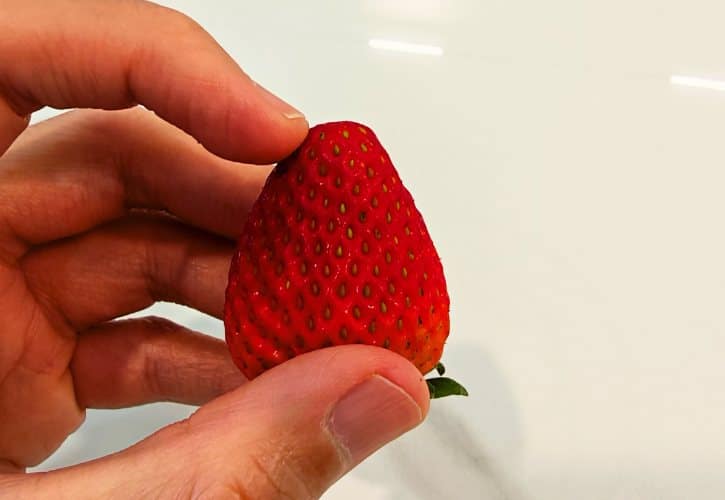
You’ve done it before. You grab a box of strawberries that looks perfect. Bright red, beautifully shaped, no visible damage.
But the moment you bite into one at home, it’s watery, sour, or completely bland.
This happens to almost everyone, and it’s not random bad luck. Most people rely on the wrong signals when choosing strawberries.
The good news? Sweetness isn’t a mystery. Once you know what to look for, you can predict it before you buy. 😊
Why People Keep Picking the Wrong Strawberries
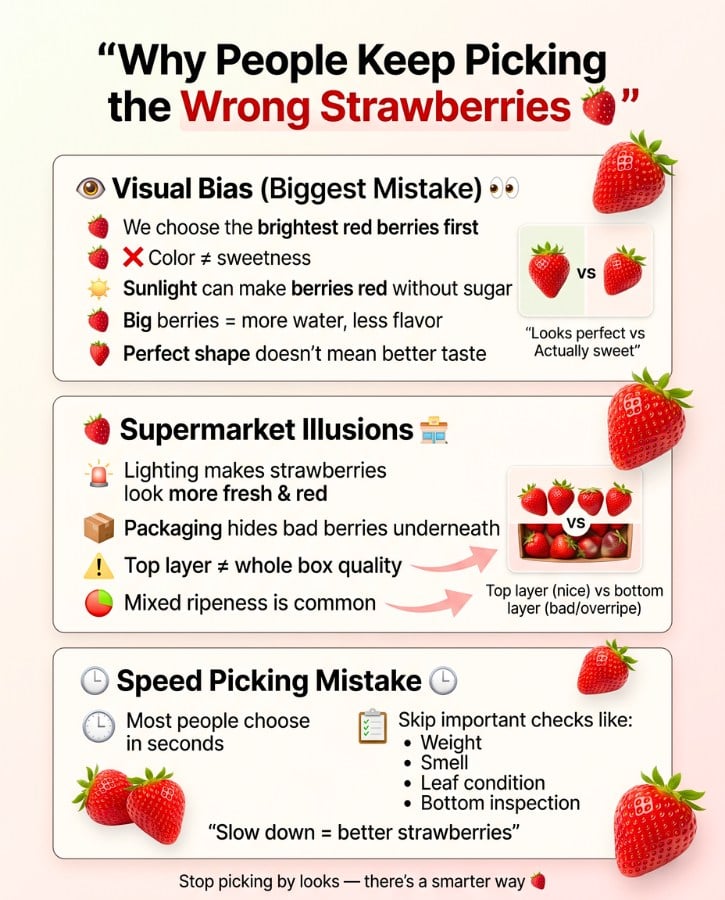
a. Visual Bias: The Biggest Mistake
When you’re standing in front of a pile of strawberry boxes, your eyes naturally go to the brightest, reddest berries first. This makes sense. We’re wired to associate bright red with ripe fruit.
But here’s the problem: color alone doesn’t guarantee sweetness.
A strawberry can turn deep red from sunlight exposure without actually developing much sugar inside. The red pigment and the sugar are created through different processes in the plant. One doesn’t always match the other.
The same goes for size and shape:
- Large strawberries often look more impressive, but bigger doesn’t mean sweeter. Large berries frequently take in a lot of water near the end of their growth, which dilutes the flavor.
- Perfect shape catches your eye, but an oddly shaped berry can taste just as good, sometimes better.
When you choose only by appearance, you’re missing the real signs of sweetness.
b. Supermarket Illusions
Grocery stores are designed to make produce look its best. This is where many shoppers get fooled.
Lighting tricks your eyes. Stores use special lighting that makes strawberries appear more vibrant and fresh than they actually are. That gorgeous red glow you see under the display lights? It might look completely different under normal lighting at home.
Packaging hides problems. The plastic containers make it hard to inspect the bottom layer. You only see the top berries, which are usually the best-looking ones. Meanwhile, the berries underneath might be overripe, crushed, or starting to mold.
Mixed ripeness is common. Even if the top layer looks perfect, the same box can contain berries at very different stages of ripeness. What you see on top doesn’t represent the whole container.
c. Speed Picking Behavior
Most people spend only a few seconds choosing strawberries. They glance at a box, decide it looks acceptable, and move on.
This quick approach causes you to miss subtle but important differences:
- You don’t compare the weight of different boxes
- You skip the smell test entirely
- You ignore the condition of the green leaves
- You never flip the container to check underneath
Slowing down and using a few simple checks makes a huge difference in the quality you bring home.
The 10 Signs of a Sweet, High-Quality Strawberry
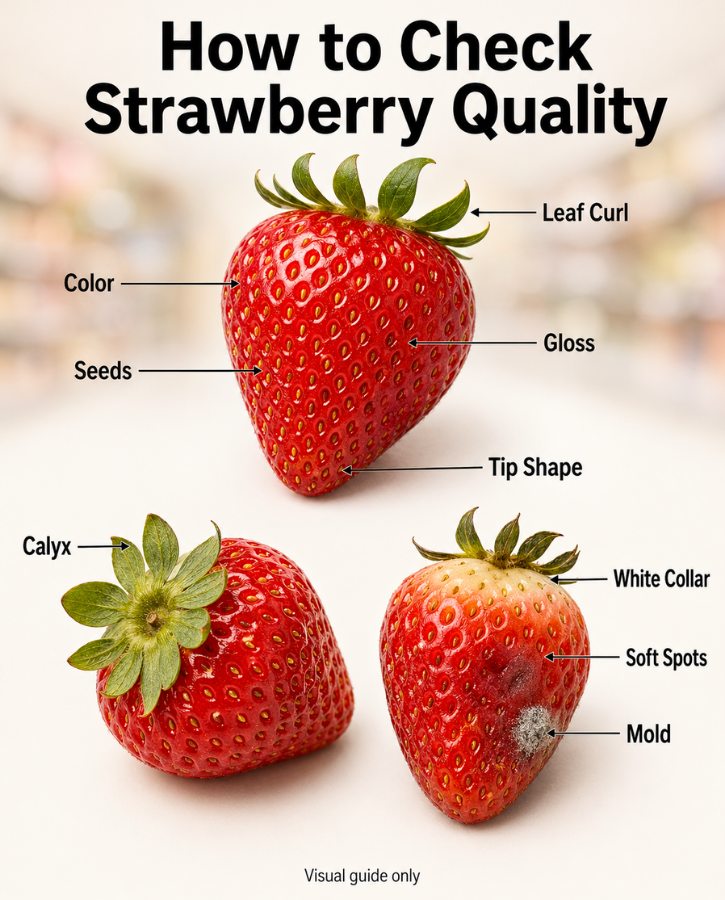
These signs help you look beyond surface appearance and find strawberries that are both high quality and actually taste good.
Sign 1: Look for Full, Even Red Color
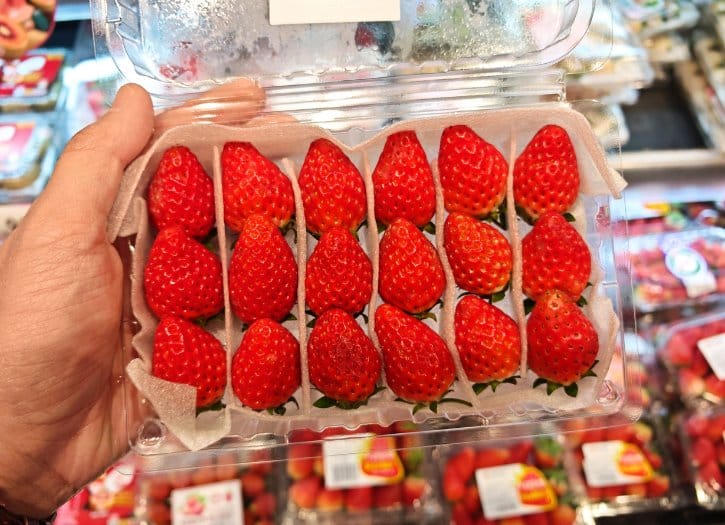
What to look for:
- The berry should be red from the tip all the way up to the green leaves
- Avoid berries with white or pale patches near the top
Why it matters:
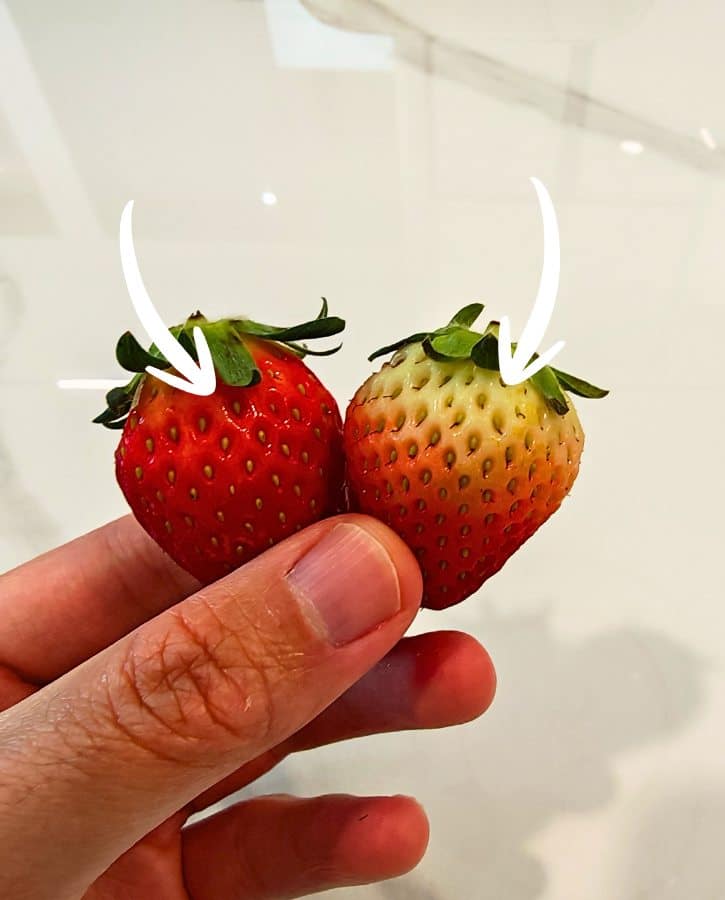
Strawberries stop developing sugar the moment they’re picked. Unlike bananas or avocados, they won’t ripen further at home. If a berry has a white “collar” near the stem, it was harvested too early. That pale area will stay sour, no matter how long you wait.
A fully red berry from top to bottom tells you the plant finished sending sugars into the fruit before it was picked.
Sign 2: Smell for a Sweet, Strong Aroma
What to look for:
- Bring the container close to your nose
- Sweet, ripe strawberries should smell fragrant and fruity, even through the packaging
Why it matters:
Your nose is one of the most reliable tools for judging strawberry quality. A sweet strawberry produces natural fragrant compounds that you can smell even when the fruit is cold.
If a box of strawberries has little or no smell, it’s a warning sign. The berries were likely picked too early, before the flavor compounds had a chance to develop. Or they’ve been stored so long that the aroma has faded.
Sign 3: Choose Small to Medium-Sized Berries
What to look for:
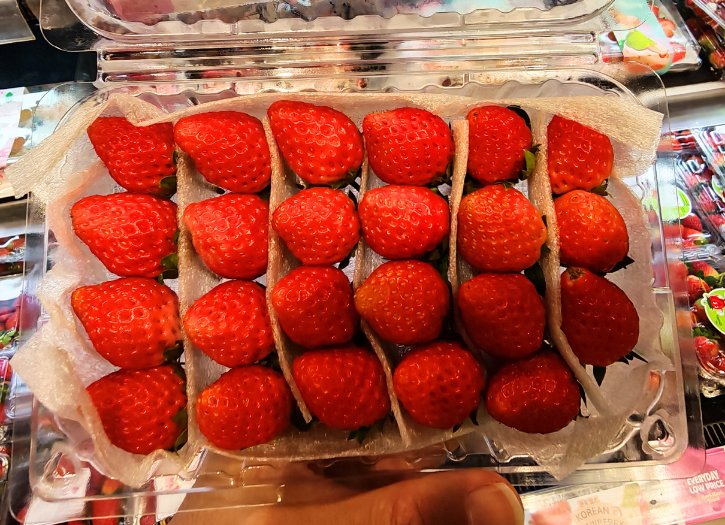
- Don’t automatically reach for the biggest berries
- Small to medium-sized strawberries often have better flavor
Why it matters:
Large strawberries can look impressive, but they often have a weaker taste. When a berry grows very fast and large, water rushes in faster than the plant can add sugar. The result is a diluted, watery flavor.
Smaller berries tend to develop more slowly, allowing sugars to concentrate. This doesn’t mean every small berry is perfect, but size alone shouldn’t be your main selection factor.
Sign 4: Inspect the Leaves (Calyx Condition)
What to look for:
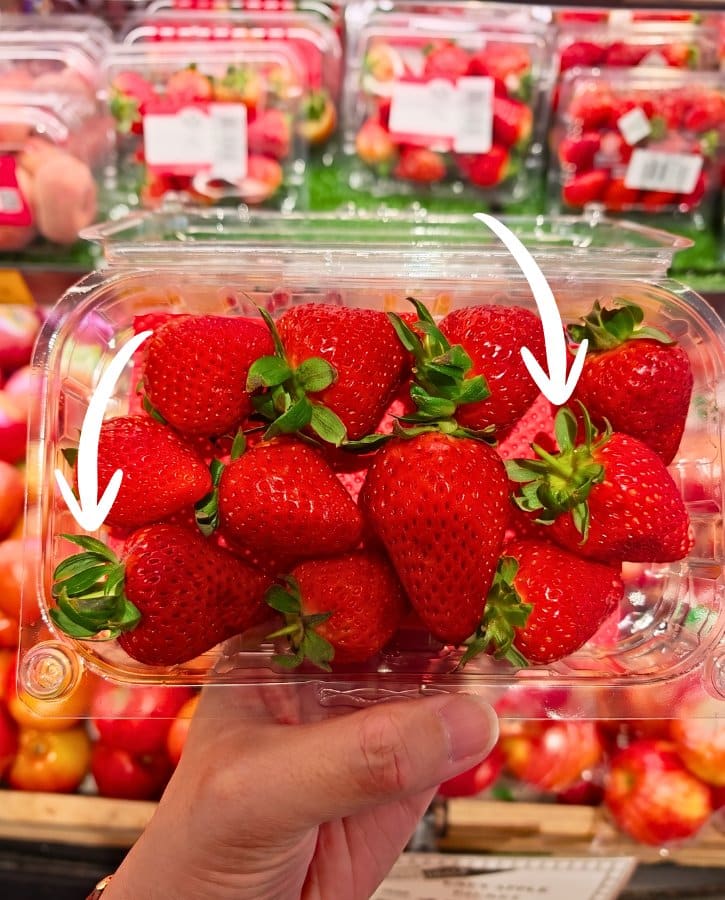
- The green leaves at the top should look fresh and vibrant, not brown or wilted
- On a ripe, sweet berry, the leaves often curl slightly upward and away from the fruit instead of lying flat
Why it matters:
Fresh green leaves tell you the strawberry was recently picked and properly stored. Brown, dry, or shriveled leaves indicate the fruit is old or was mishandled during shipping.
Here’s a lesser-known detail: when a strawberry reaches peak ripeness and maximum sweetness, the fruit expands fully.
This expansion often causes the green leaves to curl back and lift away from the skin. Flat leaves aren’t necessarily bad, but upward-curling leaves on a fresh-looking calyx are a good sign.
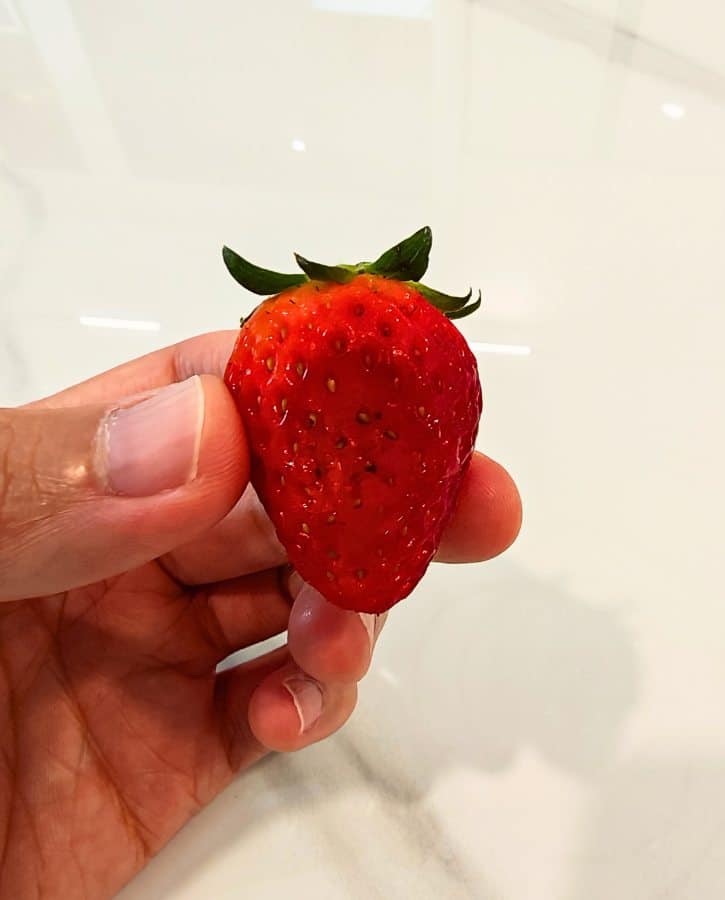
Sign 5: Look for Sunken Seeds
What to look for:
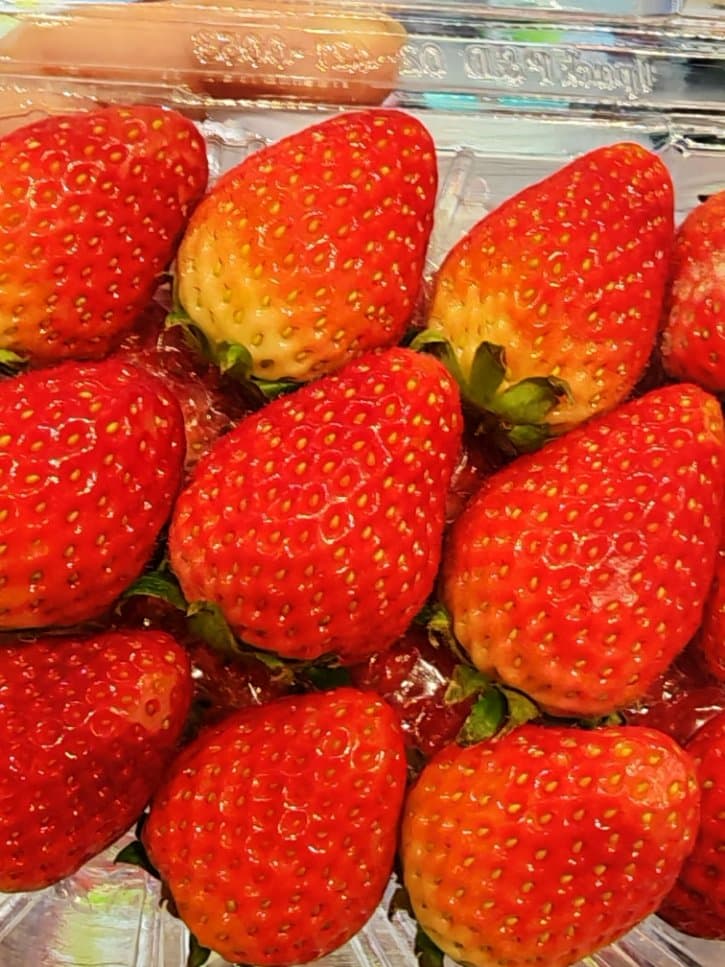
- The tiny seeds on the surface should sit slightly below the level of the flesh
- Avoid berries where the seeds stick out or feel bumpy
Why it matters:
As a strawberry fully ripens, the flesh swells with juice and sugars. This causes the fleshy part to rise above the seeds, creating a smooth surface with slightly sunken seed pockets.
If the seeds are raised or protruding, the berry didn’t fully expand. This usually means it was picked too early or didn’t get enough water during growth. These berries tend to be less juicy and less sweet.
Sign 6: Look for Glossy, Natural Skin (Not Dull or Dry)
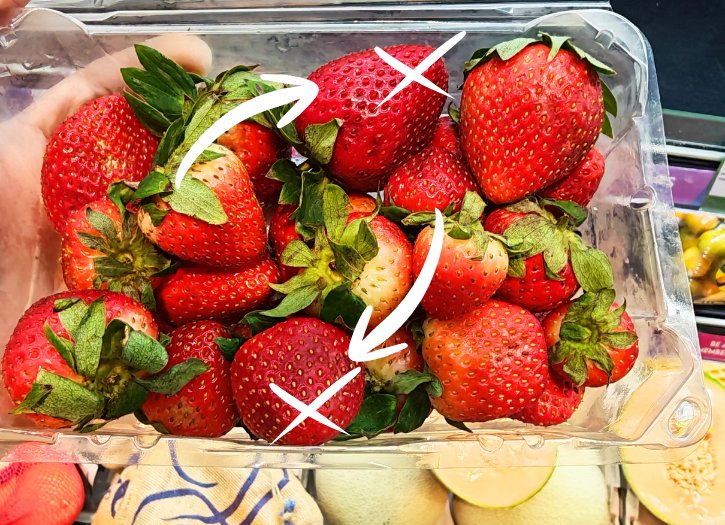
What to look for:
- A fresh strawberry should have a bright, shiny surface
- Avoid berries that look dull, matte, or dried out
Why it matters:
That natural shine comes from the moisture inside the fruit. A glossy surface means the berry is well-hydrated and fresh.
When strawberries age, they lose moisture and the skin becomes dull.
A matte appearance often indicates the fruit has been in storage too long or kept at the wrong temperature. These berries have usually lost some of their sweetness and flavor compounds.
Sign 7: Gently Press for Firmness
What to look for:
- A good strawberry should feel firm but not rock-hard
- It should have a slight give when you press gently
- Avoid berries that feel soft, mushy, or squishy
Why it matters:
Firmness tells you about the berry’s freshness and how it was stored. A firm berry with slight elasticity is at the sweet spot of ripeness.
Soft or mushy strawberries are overripe. As berries age past their peak, they start breaking down internally.
Overripe berries often taste “off” or slightly fermented because the sugars have started turning into other compounds. They also spoil much faster once you get them home.
Sign 8: Flip the Container to Check the Bottom Layer
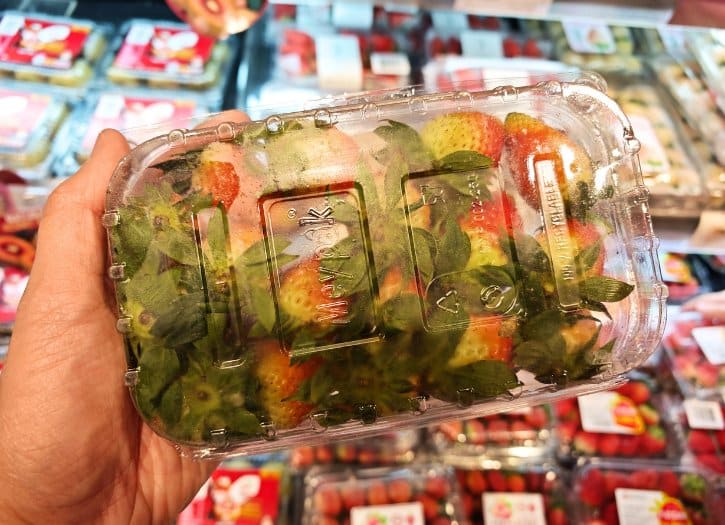
What to look for:
- Lift and tilt the container to see the berries at the bottom
- Check for stained packaging, wetness, crushed fruit, or any fuzzy white mold
- The bottom berries should look as good as the top ones
Why it matters:
Most people never check the bottom, and this is where problems hide.
Strawberries release moisture as they age. This liquid pools at the bottom of the container, creating the perfect environment for mold to grow. A single moldy berry can quickly spread to its neighbors.
If you see wet stains, crushed berries, or any sign of white fuzz, put that container back. A clean, dry bottom with uniform berries suggests the fruit was handled carefully and is still in good condition.
Sign 9: Compare Weight, Choose Heavier Berries
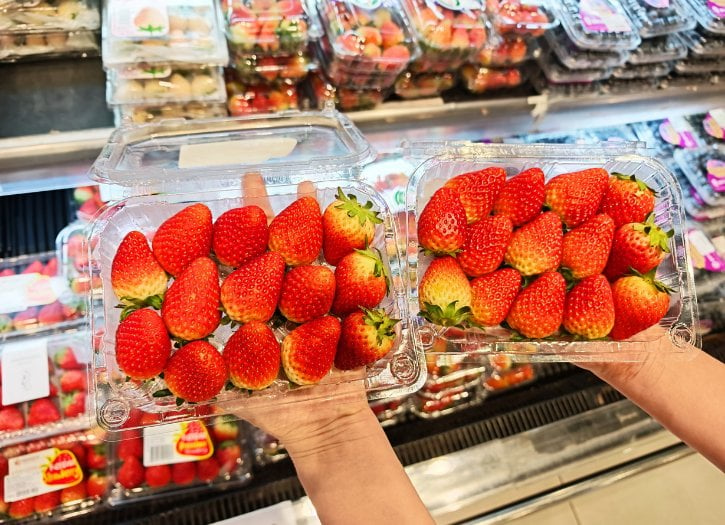
What to look for:
- Pick up two containers that look similar
- Choose the one that feels heavier
Why it matters:
A heavier container means the berries are fully hydrated and packed with juice. Strawberries are about 90% water, and the remaining 10% is mostly sugars and flavor compounds.
Light or “pithy” berries often have hollow centers or dry spots inside. These cavities form when the plant experiences stress during growth. Hollow berries have less juice, less sweetness, and a more fibrous texture.
When two boxes look equally good, the heavier one is almost always the better choice.
Sign 10: Examine the Tip Shape and Color
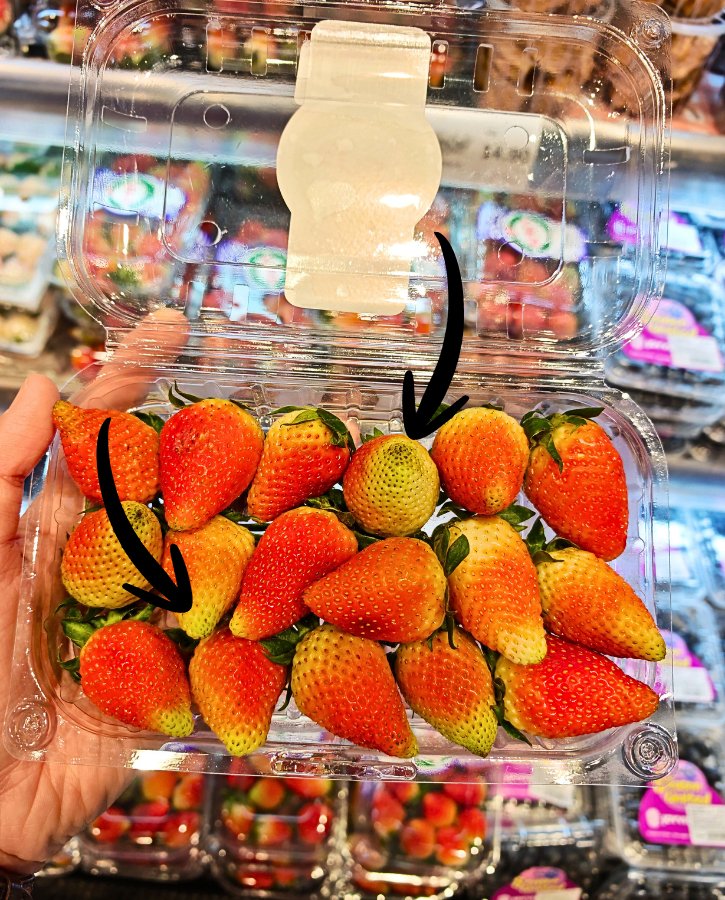
What to look for:
- The bottom tip of the berry should be fully red, not white or greenish
- A sweet, mature strawberry often has a tip that sticks out slightly, appearing pointed or bulging
- Avoid berries with flat, indented, or pale tips
Why it matters:
The tip is where sugars concentrate most heavily. Because of how the plant’s system works, sugars travel down and collect at the point furthest from the stem.
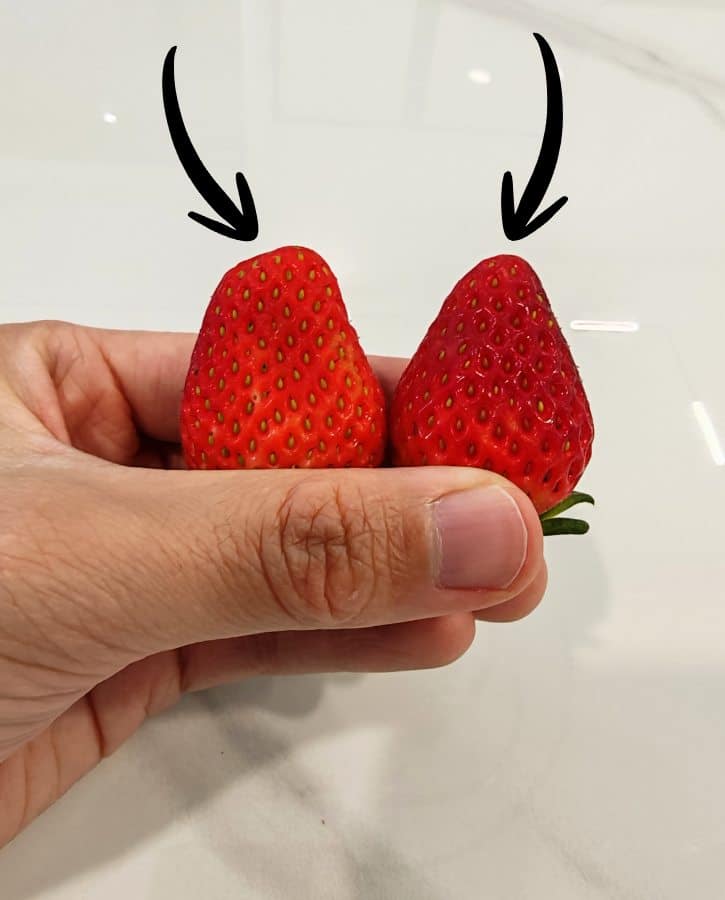
A protruding, fully red tip tells you the berry completed its development. The fruit filled out completely, and sugars reached all the way to the end.
A flat or indented tip often suggests the berry was picked before this final stage. A pale or greenish tip may indicate the sugars never made it there. Both situations tend to result in a berry that tastes less sweet overall.