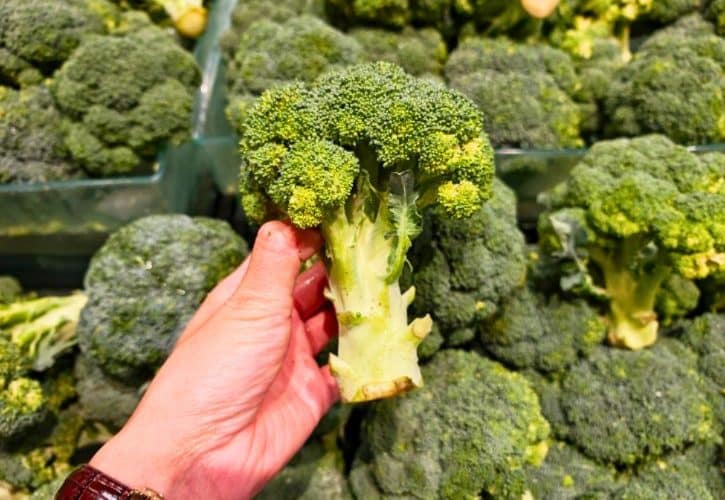
You pick up a head of broccoli at the store. It looks green, it looks fine. But when you get home and cook it, something’s off. It tastes bitter, feels rubbery, or starts turning yellow the very next day.
Sound familiar? You’re not alone, and it’s not random.
The truth is, most people judge broccoli by color alone. But real freshness goes deeper than what your eyes can see. There are specific signs that tell you exactly how fresh a head of broccoli really is.
Here’s how to spot them. 😊
1. Tight, Compact Florets
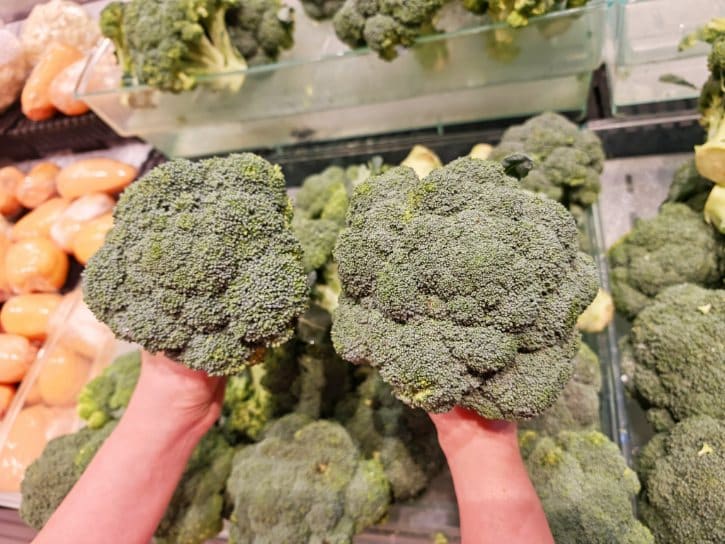
This is the single most important thing to check.
Fresh broccoli is basically a bundle of tiny, unopened flower buds. When those buds are tight and packed closely together, it means the broccoli is still young and hasn’t started trying to bloom.
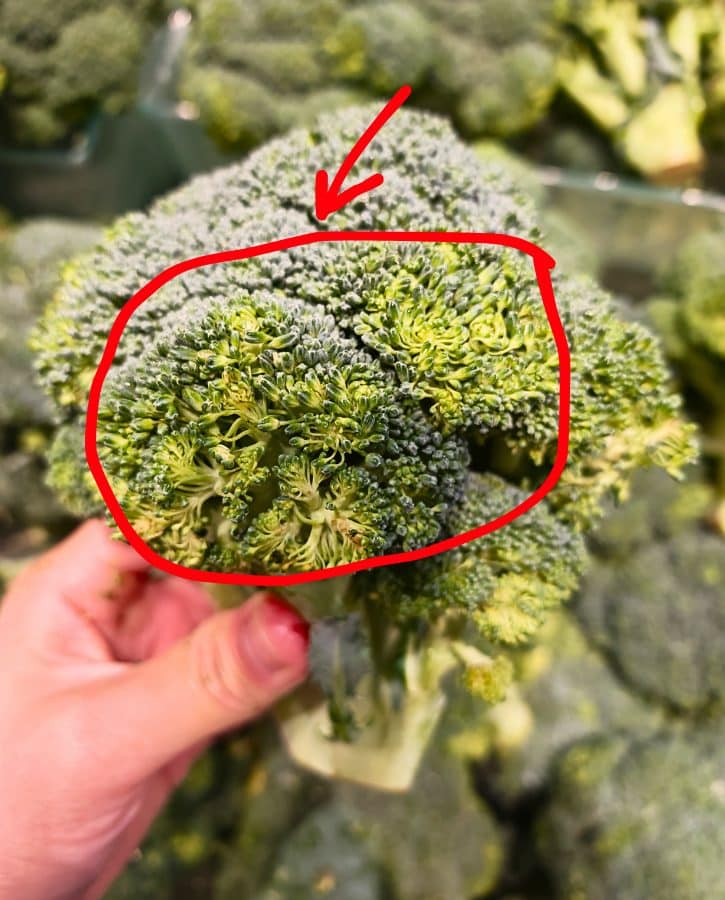
- What to look for: Small, firm “beads” that sit tightly together with no gaps between the clusters.
- Why it matters: Once those buds start loosening or spreading apart, the broccoli is aging. Its sugars drop, and the flavor shifts toward bitter.
Limitation: Some varieties naturally have slightly looser heads. But in general, tighter is always better.
2. Deep Green Color (No Yellowing)
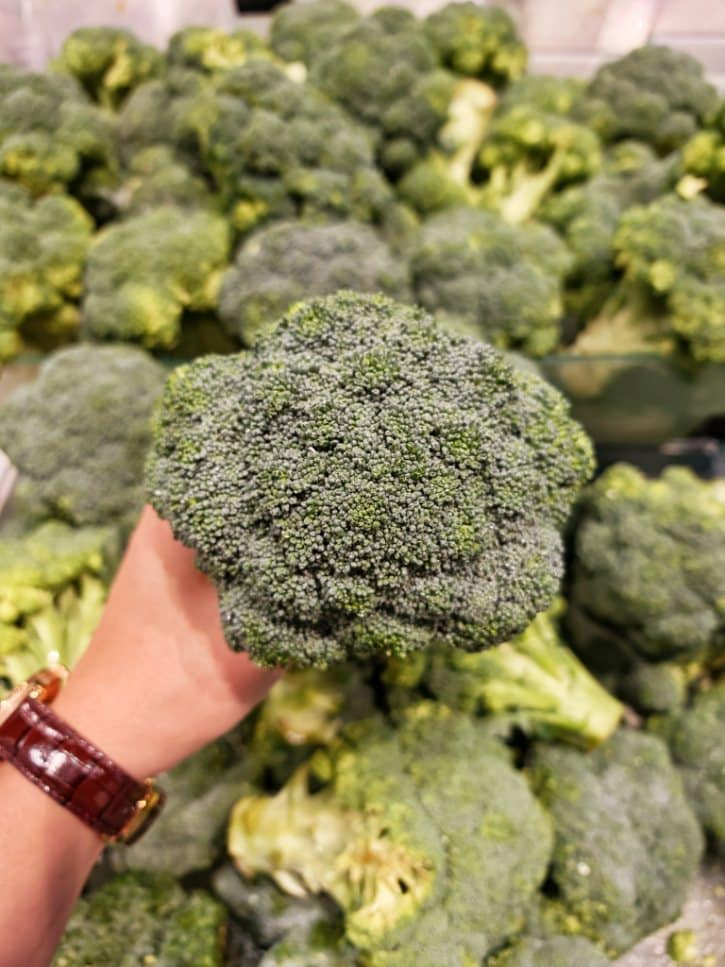
Color is useful, but it’s not the full picture.
Fresh broccoli should be a uniform dark green, sometimes with a slight purplish tint. That purple tone is completely normal and actually suggests higher antioxidant levels.
- What to look for: Even, rich green across the entire head.
- What to avoid: Any yellow patches, especially at the edges or tips of the florets.
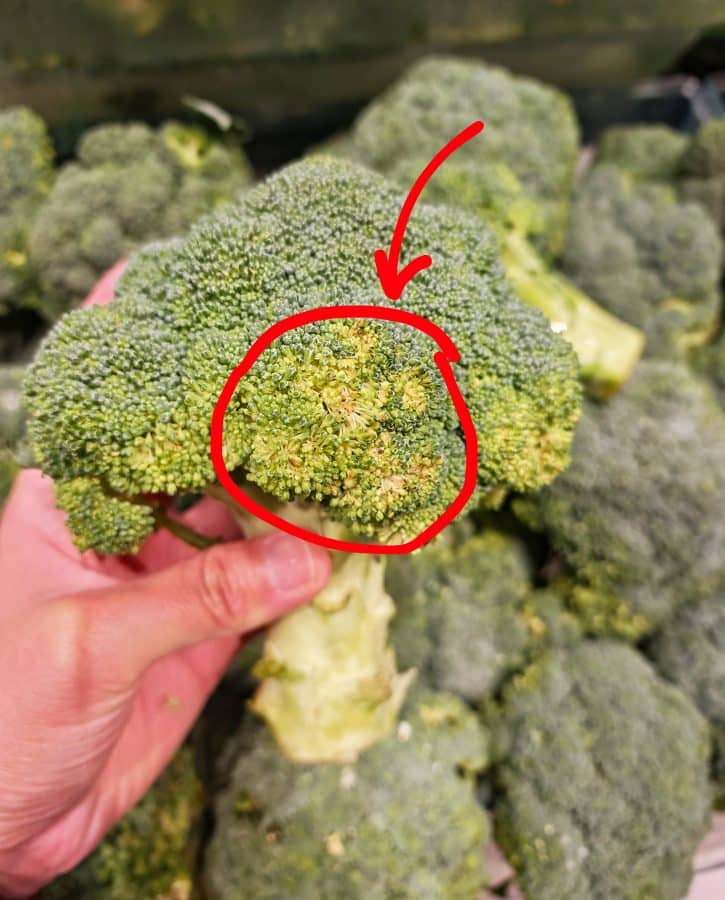
Why it matters: Green means the chlorophyll is still intact. Yellowing means that chlorophyll is breaking down, and the broccoli has already lost a good amount of its vitamin C and nutrients.
Limitation: Supermarket lighting can make broccoli look greener than it really is. So don’t rely on color alone. Always check the other signs too.
3. No Yellow Flowers
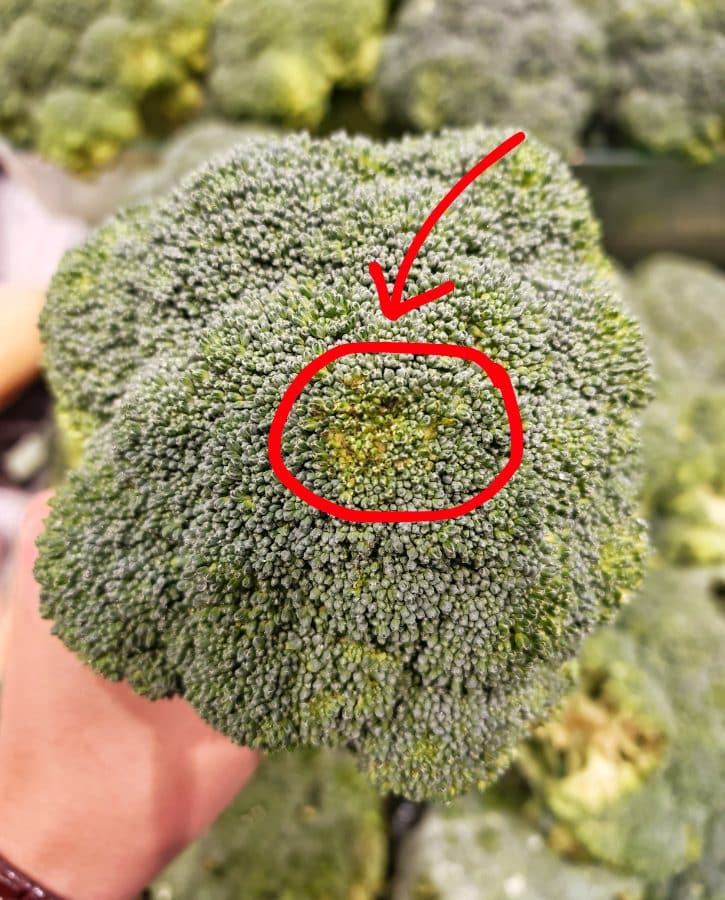
If you see tiny yellow petals poking out from the buds, put that broccoli back.
Those are actual flowers. It means the broccoli has moved past its eating stage and is trying to reproduce.
When this happens, the plant pulls its energy away from the parts you eat and puts it into the flowers.
- The result: Woody, fibrous stems and almost no “broccoli” flavor left.
This is one of the clearest “do not buy” signals.
4. Firm, Crisp Stems
Most people only look at the top. But the stem tells you just as much about freshness.
A fresh broccoli stem should feel solid and rigid. If you try to bend it gently, it should resist. A truly fresh stem will feel almost like a small piece of wood.
- What to look for: A firm stem that doesn’t flex easily.
- What to avoid: A rubbery or bendy stem that gives way when you press it.
Why it matters: That firmness comes from water pressure inside the plant cells. When broccoli loses even a small amount of its water (around 3% to 4%), the stems go limp. A bendy stem means the broccoli has been sitting out too long or stored in dry conditions.
5. Moist, Fresh-Looking Stem Cut
Here’s a sign most people don’t notice.
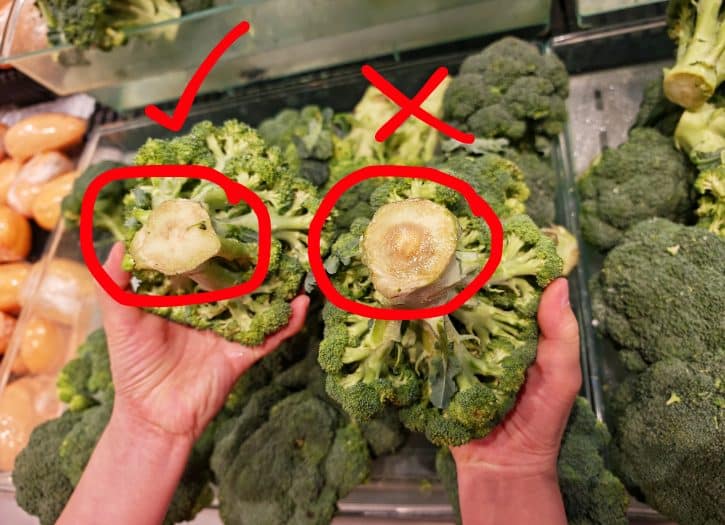
Flip the broccoli over and look at the bottom of the stalk, where it was cut. A fresh cut looks moist, light green, and smooth.
- What to avoid: A dry, cracked, brown, or white-looking base.
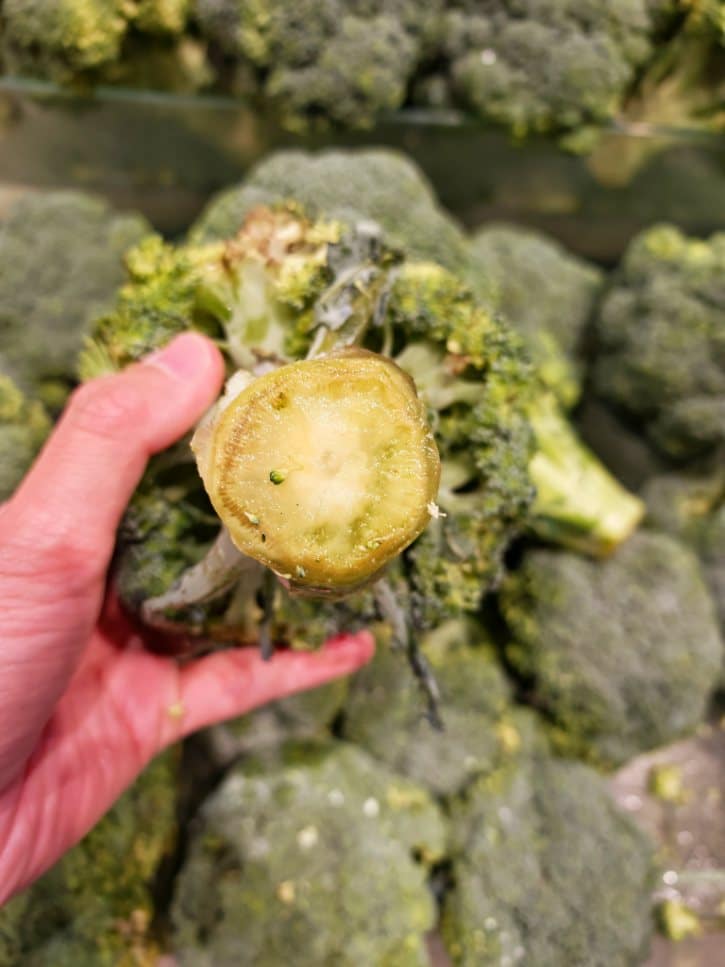
Why it matters: That cut end is like a window into the broccoli’s history. If it’s dried out or brown, the broccoli has been off the plant for a while and hasn’t been kept cold enough.
Limitation: Some stores trim the bottom to make old broccoli look fresher. But they usually can’t hide deep cracks or hollowness inside the stem.
6. Heavy for Its Size
This one is simple but powerful.
Fresh broccoli is about 89% water. That makes it surprisingly heavy when it’s properly hydrated.
- What to do: Pick up a few heads and compare. Choose the one that feels the heaviest for its size.
- Why it matters: A light or “airy” feeling head has lost water. And when water leaves, the broccoli becomes more bitter, more fibrous, and less enjoyable to eat.
7. Mild or No Smell
Fresh broccoli has almost no smell. At most, it should have a very faint, clean, green scent.
- What to avoid: A strong, sharp, or sulfur-like odor.
Why it matters: That strong smell comes from chemical compounds breaking down inside the broccoli. If you can smell it before you even cut or cook it, the flavor will be overwhelmingly bitter.
8. Fresh Leaves (If Attached)
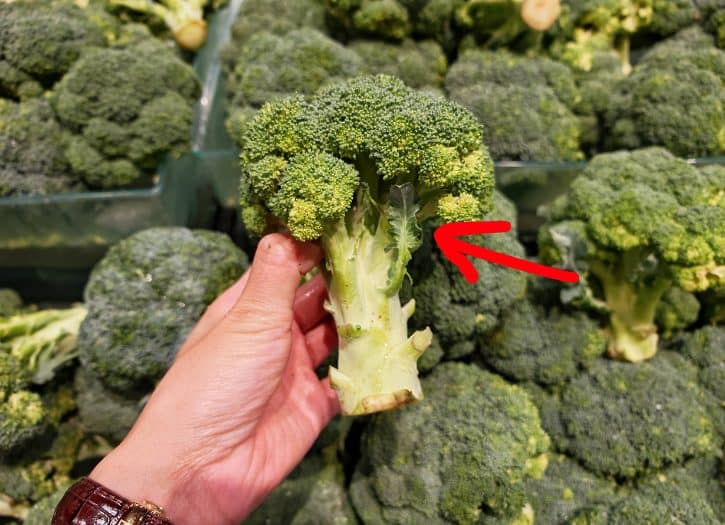
If the broccoli still has small leaves attached to the stem, check them first.
- What to look for: Green, firm leaves that haven’t gone limp.
- What to avoid: Wilted, yellow, or dried-out leaves.
Why it matters: Leaves are thin and lose water faster than the rest of the plant. If the leaves are already wilted, the broccoli has been fighting dehydration for a while, and the head itself isn’t far behind.
9. Avoid Overly Thick Stalks
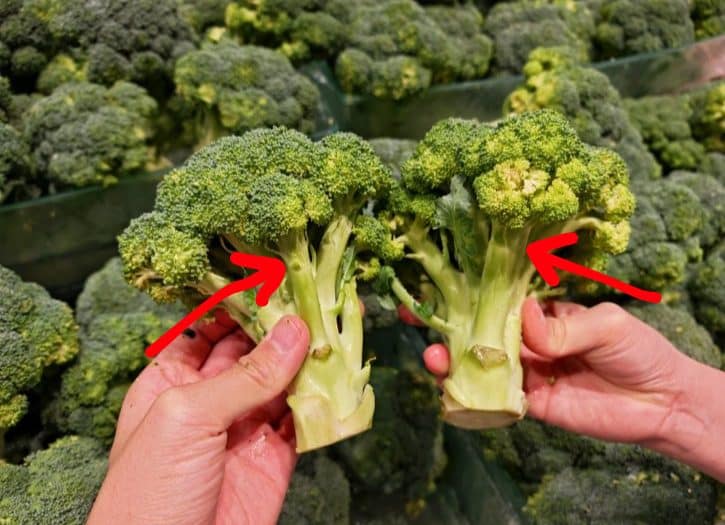
Not all broccoli stalks are the same. If the stalk looks noticeably thick or bulky, it’s usually a sign the broccoli was left to grow too long before harvesting.
- What to look for: A firm stalk that doesn’t look overly wide or chunky.
- What to avoid: Stalks that are unusually thick or bulging.
Why it matters: Overly thick stalks tend to be tough, woody, and fibrous. They don’t cook evenly, and the texture is often unpleasant to eat. A slimmer stalk is a better sign of broccoli that was picked at the right time.
10. No Wrinkling or Dryness
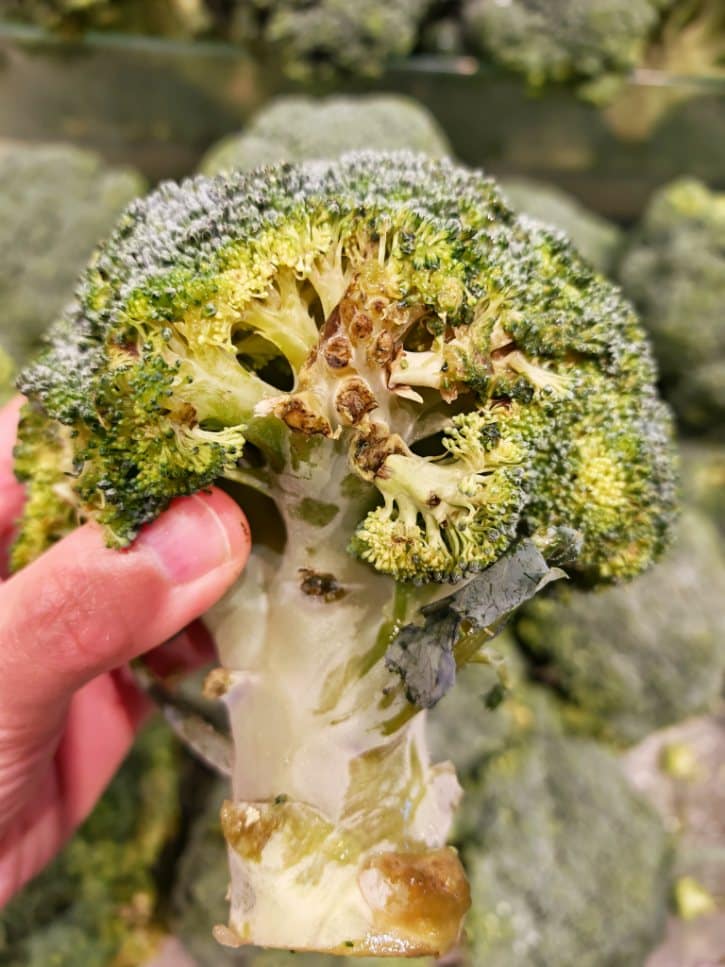
Run your fingers along the stem and florets. Everything should feel smooth and slightly moist, not dry or wrinkled.
- What to avoid: Shriveled skin on the stem, rough texture, or dried-out floret tips.
Why it matters: Wrinkling is a clear sign of water loss. The broccoli is drying out from the inside, and its texture and taste have already started to decline.
“Do Not Buy” Warning Signs
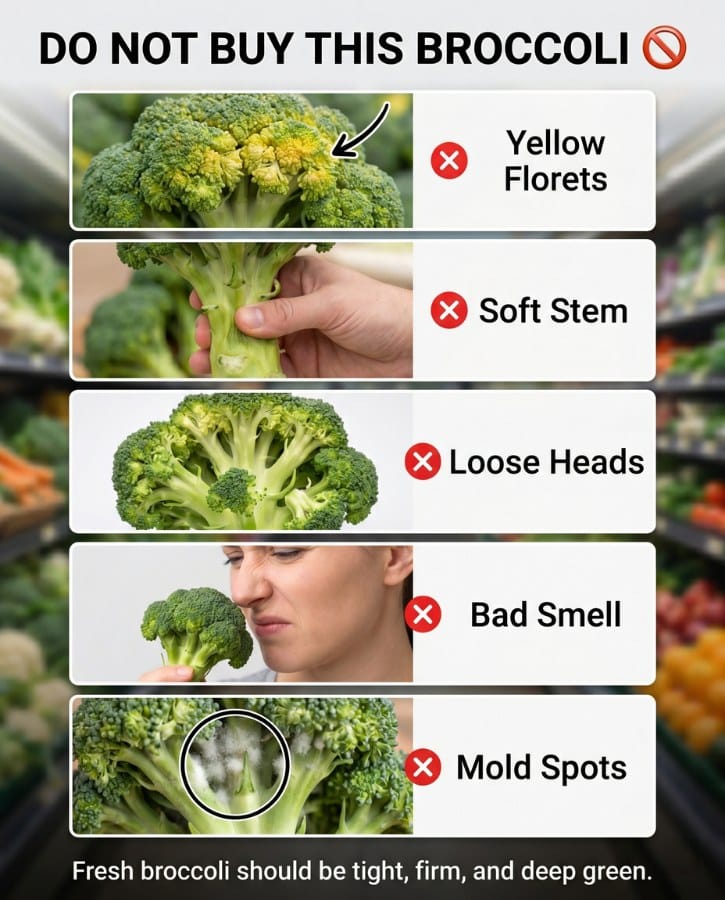
If you spot any of these, skip that head of broccoli entirely. No exceptions.
- Yellowing florets. Yellow means the chlorophyll has broken down. The broccoli has lost much of its vitamin C and nutrients, and it will taste flat or bitter.
- Soft, bendable stems. A rubbery stem means serious water loss. The texture will be mushy when cooked, and the flavor won’t be worth it.
- Open or loose florets. When the bud clusters spread apart or look “fluffy”, the broccoli is trying to flower. The sugars are gone, and the taste turns woody and bland.
- Strong or sulfur-like odor. That sharp smell means the broccoli’s internal chemistry has collapsed. It’s past the point of good flavor, and it may cause stomach discomfort.
- Mold, slime, or dark mushy spots. This is bacterial decay. Broccoli’s complex surface traps moisture, which allows bacteria to grow quickly. If you see even a small slimy or dark patch, avoid the entire head. The bacteria can spread deeper than what’s visible on the surface.
What Supermarkets Don’t Tell You About “Fresh” Broccoli
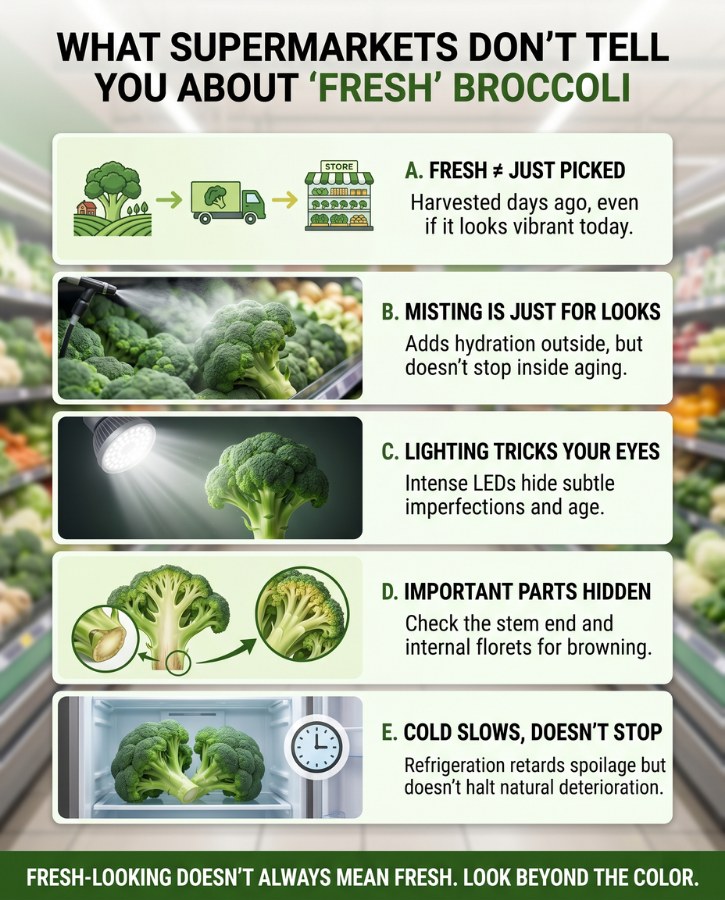
That bright, green head of broccoli in the display case may not be as fresh as it looks. Here’s what most stores won’t mention.
a) “Fresh” Doesn’t Mean Just Picked
Most broccoli has been harvested 7 to 14 days before it reaches the shelf. It’s been sitting in cold storage and transport the entire time. By the time you see it, it’s already been aging for a while.
b) Water Mist Is for Looks, Not Freshness
Those misting systems in the produce section keep broccoli looking green and hydrated on the outside. But they don’t slow down what’s happening on the inside. Nutrients like vitamin C can still be declining, even if the surface looks perfectly fresh.
c) Store Lighting Can Trick Your Eyes
Certain LED lights used in produce sections can actually slow down the visible yellowing of broccoli. This means older broccoli can sit under those lights and still look like it was just picked, even though its sweetness and nutrition have already dropped.
d) The Important Parts Are Hard to See
The things that matter most, like the stem condition, the cut end, and the internal water content, aren’t easy to spot at a quick glance. Surface color alone won’t tell you the full story.
e) Cold Storage Slows Aging, but Doesn’t Stop It
Refrigeration buys time, but broccoli keeps using up its sugars and losing nutrients every single day, even in the cold. Keeping it chilled helps, but the clock never fully stops.
The bottom line: Fresh-looking doesn’t always mean fresh. Use the signs above, not just your eyes.