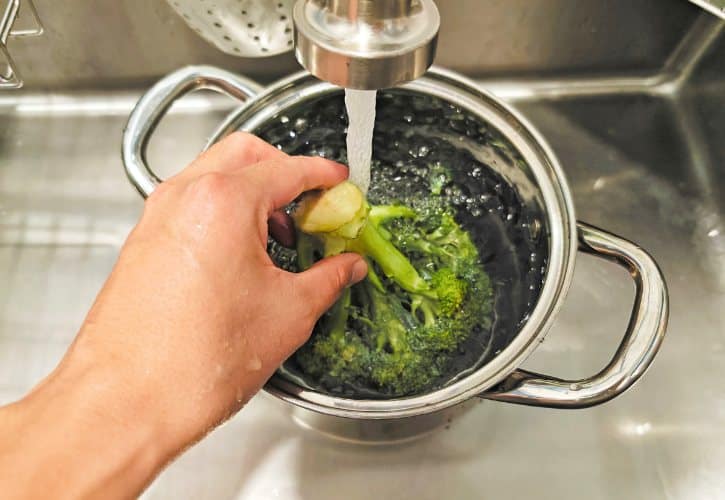
You hold the broccoli under the tap, give it a quick rinse, maybe shake off the water, and toss it on the cutting board. Looks clean, right?
But have you ever wondered why some people soak their broccoli instead? What if something is hiding deep inside those tightly packed florets that water alone can’t reach?
If you’ve been rinsing broccoli the same way you rinse an apple, you might want to keep reading. Because what looks clean on the outside can tell a very different story on the inside.
1. Why Washing with Just Water Is Not Enough
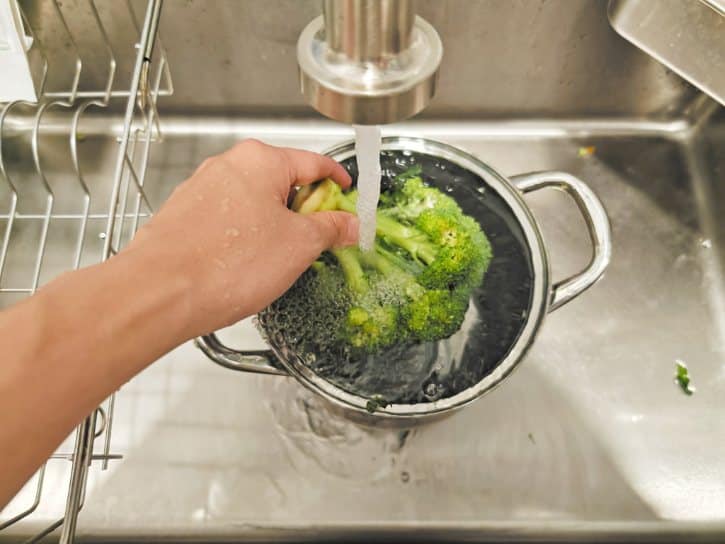
Here’s what most people do:
- Hold broccoli under running water for a few seconds
- Give it a shake
- Move on to chopping
It feels like enough because the broccoli looks clean. No visible dirt. No obvious mess. Quick and easy.
But here’s the problem. Broccoli is nothing like an apple or a tomato. Those have smooth, flat surfaces where water can actually do its job. Broccoli is the opposite.
Its surface is bumpy, layered, and full of tight clusters. When water hits broccoli, it mostly flows over the top. It doesn’t reach the deep gaps between the florets. It doesn’t loosen anything that’s stuck inside.
What you see: A clean-looking vegetable.
What’s actually happening: Water is giving you a surface rinse, not a deep clean.
2. The Real Structure of Broccoli
To understand why a quick rinse doesn’t work, think about what broccoli actually looks like up close.
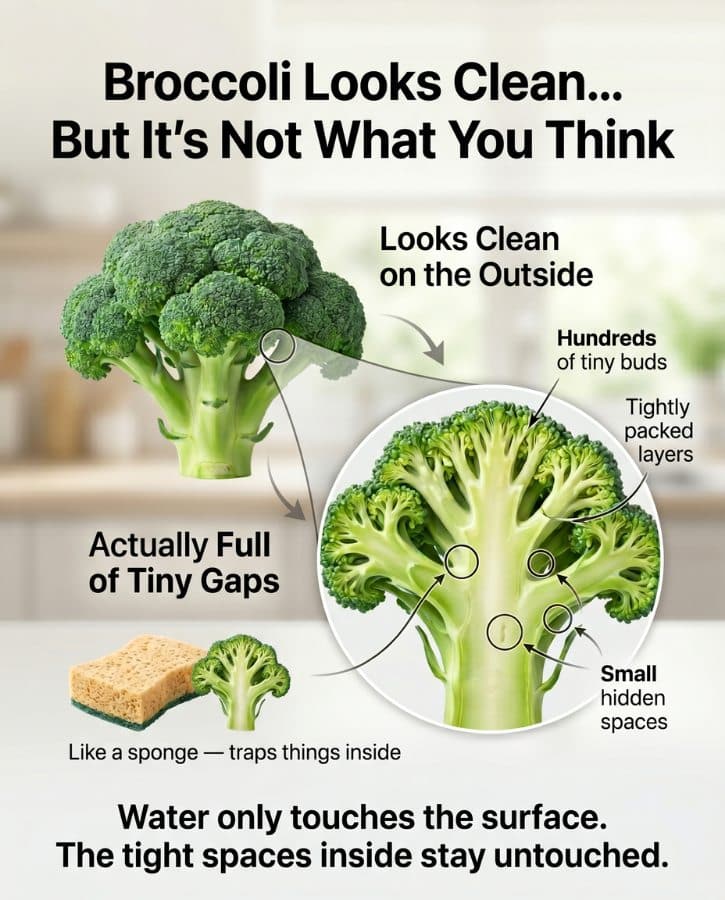
Each broccoli head is made up of hundreds of tiny, tightly packed flower buds. These buds cluster together in layers, creating countless small gaps and folds.
Think of it like a sponge. Or a mini tree with dense branches pressed together.
That structure is exactly why things get trapped inside so easily. Water flows right over the top, but the tight spaces underneath stay untouched.
Most people don’t realize this. The outside looks solid, but the inside is full of tiny hiding spots.
3. What Can Actually Be Inside Broccoli
This isn’t meant to scare you. But it’s worth knowing what can sit inside those hidden gaps.
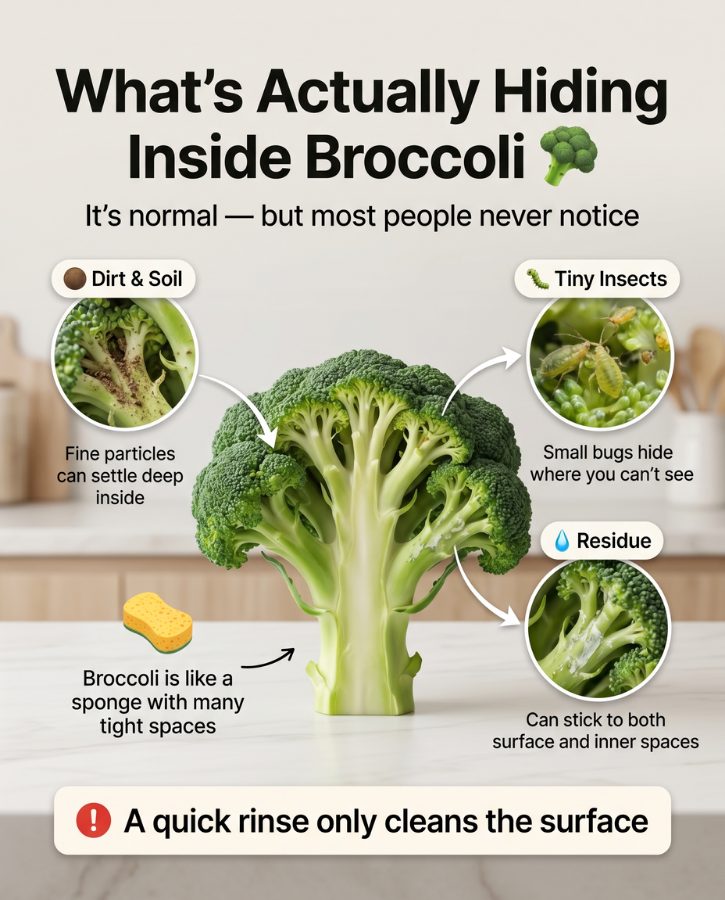
- Dirt and soil particles. Even supermarket broccoli can carry fine dust and soil that settles deep between the florets. You won’t see it from the outside.
- Tiny insects or larvae. Small bugs like aphids love to hide inside broccoli heads. They’re often green, so they blend right in. Some are so small you’d never spot them during a quick rinse.
- Pesticide residue. Many pesticides are designed to stick to the plant’s surface and resist being washed off by rain. That means they can cling to both the outer surface and the trapped areas inside the floret clusters.
None of this is unusual. It’s simply what happens with a vegetable that grows outdoors with an open, sponge-like structure.
The point is simple: a fast rinse under the tap doesn’t reach any of it.
4. The Right Way to Wash Broccoli
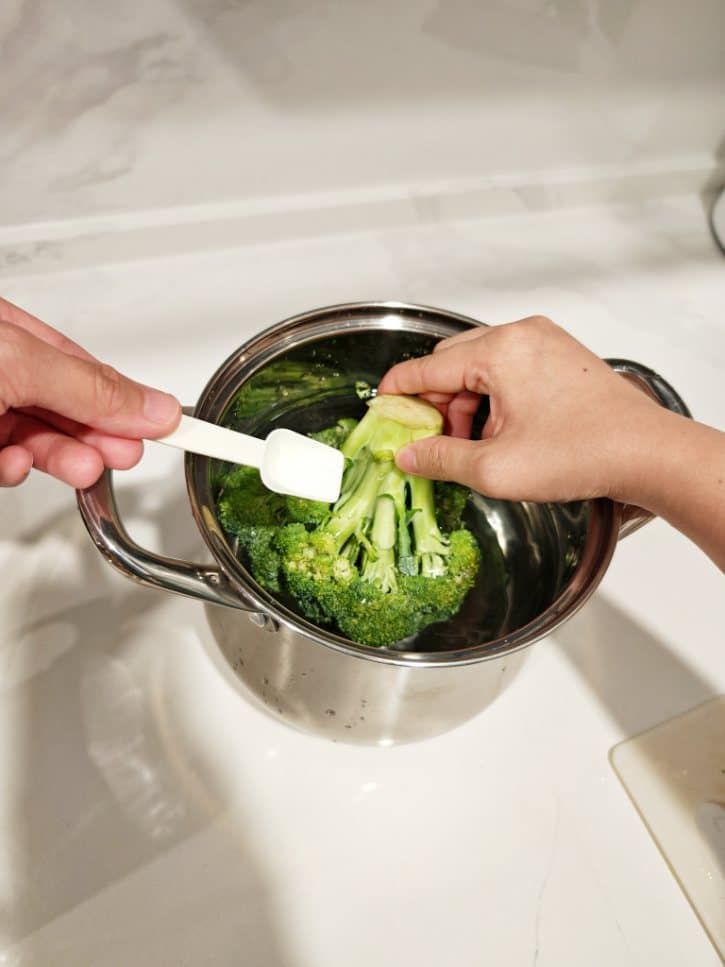
If you want broccoli that is truly clean, free from hidden dirt, insects, and residue, the method matters more than the ingredients.
The most important rule: always wash the whole head first, then cut it.
Why? Because cutting first opens up the florets and creates new entry points. Dirt and residue can spread deeper inside. Soaking cut pieces can actually trap contamination instead of removing it.
Washing whole also helps preserve nutrients. Broccoli contains water-soluble vitamins like Vitamin C. Cutting increases the surface area, which means more nutrients can leach out into the water.
Wash whole first. Cut after. Always.
Step 1: Soak the Whole Head (Most Important)
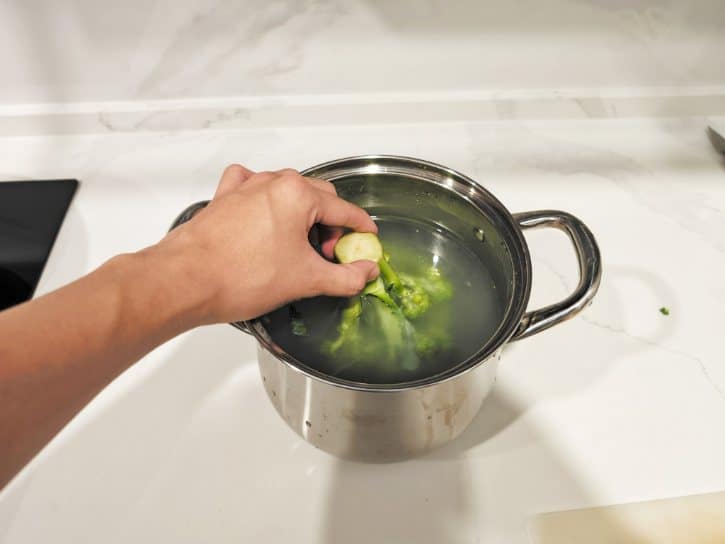
- Fill a large bowl with clean, cool water
- Add 1 tablespoon of salt
- Add 1 tablespoon of flour and baking soda
- Place the broccoli upside down, with the florets facing into the water
- Soak for 5 to 10 minutes
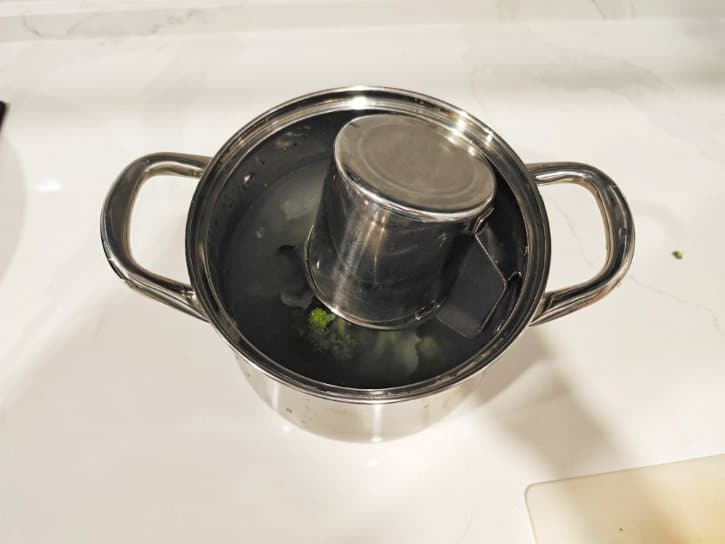
Helpful tip: Place a small cup or bowl over the stem end to keep the broccoli fully submerged. This way you don’t have to hold it, and your hands stay free.
Why this works:
- Salt creates conditions that encourage tiny insects and larvae to detach and float to the surface
- Flour acts like a gentle scrubber, trapping dirt and sticky residue from the tiny gaps between florets
- Baking soda helps break down certain pesticide residues, making them easier to wash away
Don’t be surprised if you see small particles or debris floating in the water. That’s completely normal, and it’s a sign the soak is doing its job.
Step 2: Cut and Rinse Thoroughly
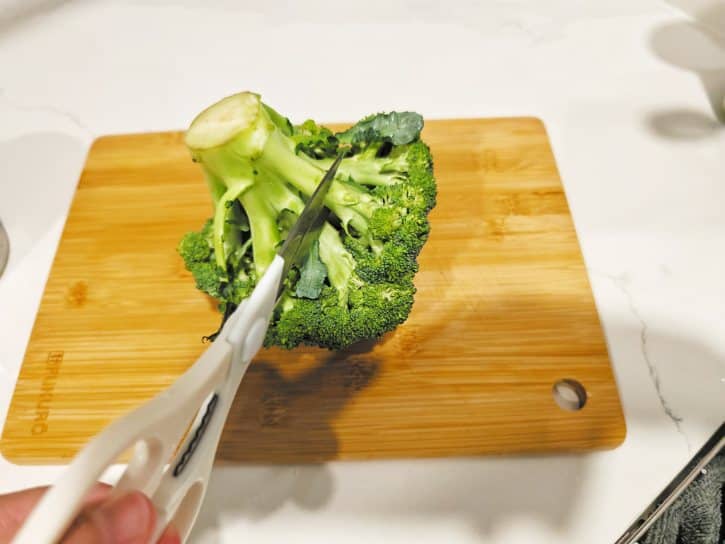
- Remove the broccoli from the soaking water
- Give it a quick rinse under running water to wash off the soaking solution
- Cut or break it into smaller florets
- Rinse each piece under running water again
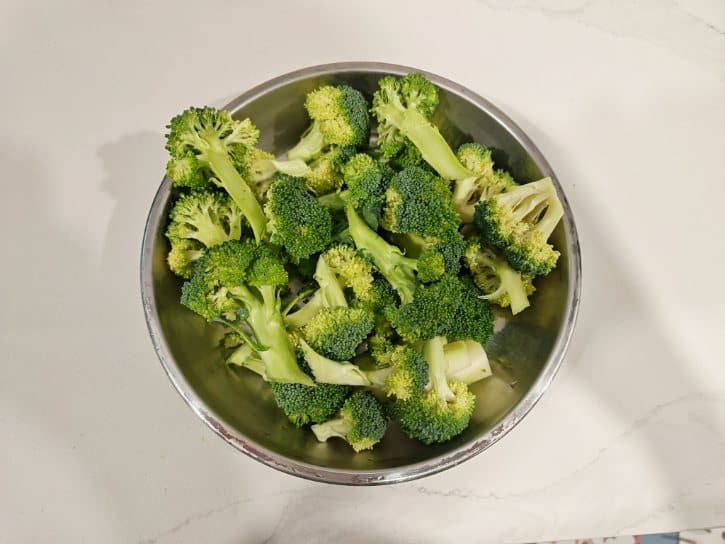
While rinsing, use your fingers to gently rub and clean between the florets.
This step removes the dirt and residue that were loosened during soaking. The soak does the heavy lifting, but this rinse flushes everything out.
Step 3: Quick Blanch (Optional but Recommended)
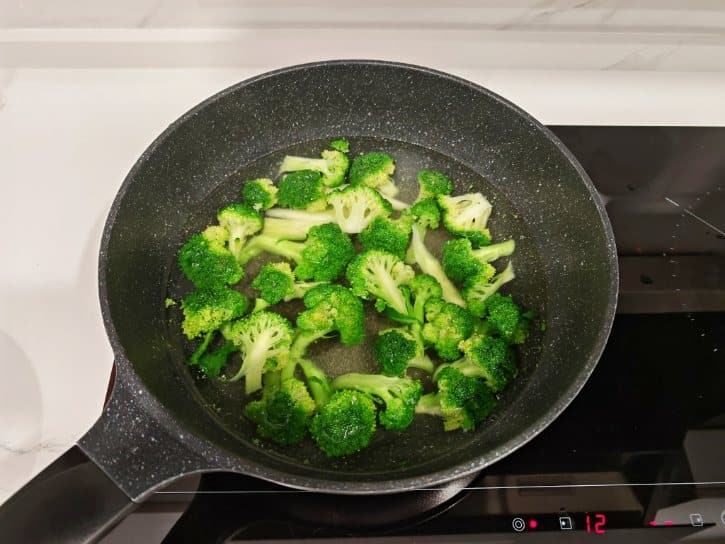
This step is especially useful if you’re concerned about remaining residue, or if your broccoli looks a bit older.
- Bring a pot of water to a rolling boil
- Add a pinch of salt and a few drops of cooking oil
- Drop the florets in for 30 seconds to 1 minute
- Immediately transfer them to a bowl of running water
- Drain well and pat dry, or set aside for cooking
What blanching does:
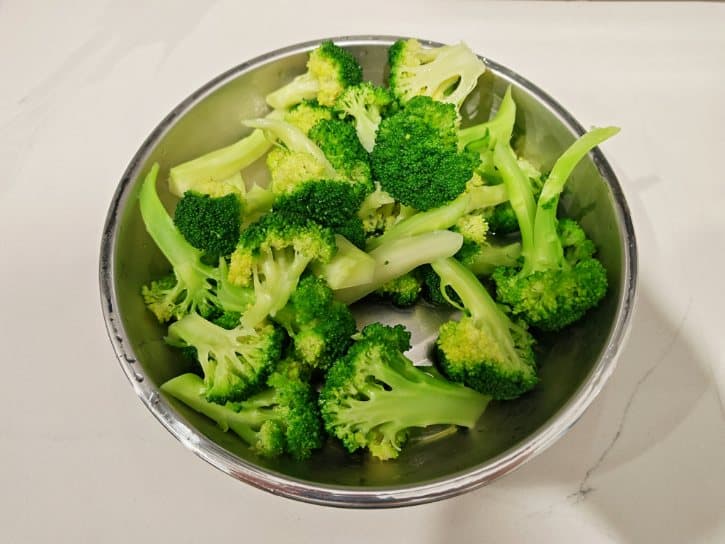
- Helps wash away any remaining loosened residue
- Keeps broccoli a bright, vibrant green
- Maintains a crisp, firm texture
- Reduces that sharp raw smell, especially in older broccoli
- Prepares it perfectly for stir-frying or quick cooking
- Can bring out a slightly cleaner, sweeter taste
Extra Tip: Don’t Ignore the Stem
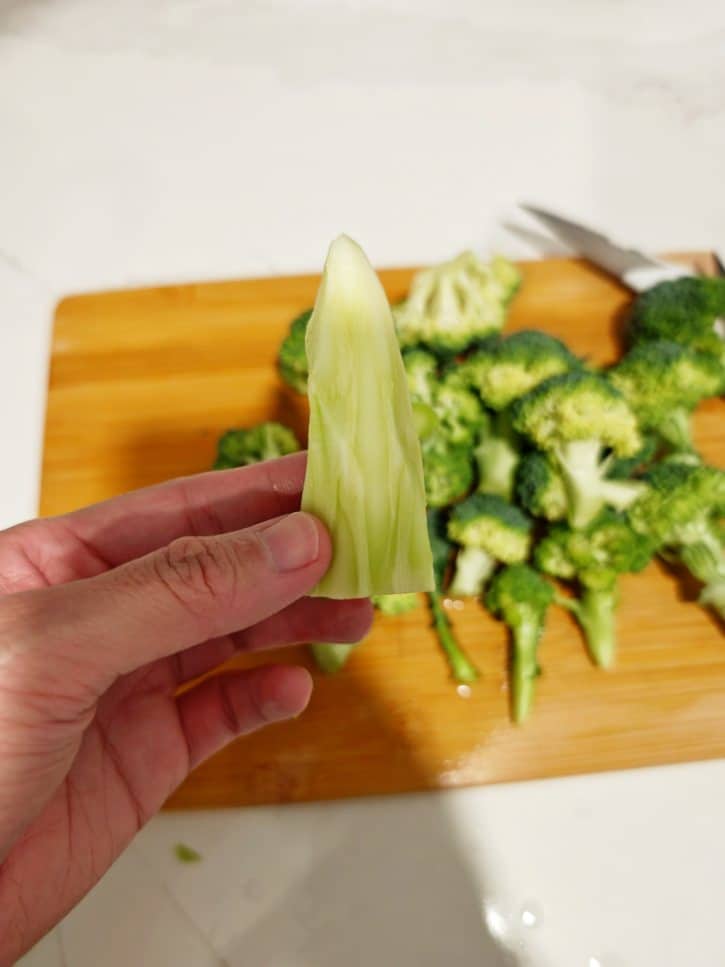
Most people throw the stem away. But here’s something you might not know.
The stem is fully edible. It’s often sweeter and milder than the florets, and it’s packed with fiber.
To clean it properly:
- Lightly peel away the tough outer layer
- Cut the stem lengthwise
- Rinse the inside under running water
The outer skin can trap dirt, so peeling it first makes a big difference.
5. Common Mistakes to Avoid
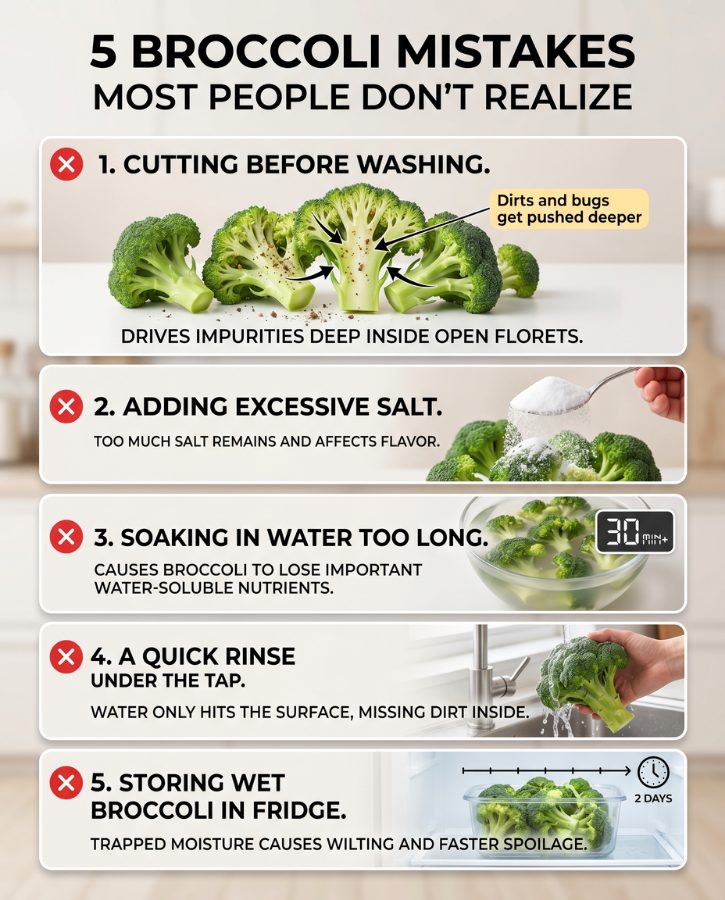
a. Cutting Before Washing (The Biggest Mistake)
This is the one mistake that undoes everything.
When you cut broccoli first, you open up the florets and expose more surface area. Dirt, residue, insects, and insect eggs can settle deeper inside. And when you soak cut pieces, contamination can spread instead of being removed.
You think you’re cleaning it, but you’re actually trapping dirt inside.
On top of that, cutting before washing increases nutrient loss. Water-soluble vitamins leach out faster when there’s more exposed surface area.
The correct order: Wash whole, then cut, then rinse again.
b. Using Too Much Salt
More salt does not mean a better clean. One tablespoon is enough. Too much can affect the taste and start to break down the delicate floret texture.
c. Soaking Too Long
Stick to 5 to 10 minutes. Soaking longer than that can reduce nutrients and make the broccoli soft.
d. Only Rinsing with Water
It looks clean on the surface. But as you now know, the inside tells a different story.
e. Leaving Washed Broccoli Sitting Too Long
Washed broccoli that sits too long in the fridge can lose its freshness. The best approach is to wash it right before you’re ready to cook.
6. What Happens When You Do It Properly
Here’s the part that surprises most people.
After the soak, take a look at the bottom of the bowl. You’ll likely see small particles, fine debris, and sometimes tiny insects floating in the water.
That’s everything a quick rinse would have missed.
This is your “wow moment”. The first time you see what was actually hiding inside your broccoli, you’ll never go back to just rinsing with water again.
Properly cleaned broccoli looks brighter, tastes cleaner, and gives you the confidence that what you’re eating is truly safe. It only takes a few extra minutes, and the difference is one you can actually see.