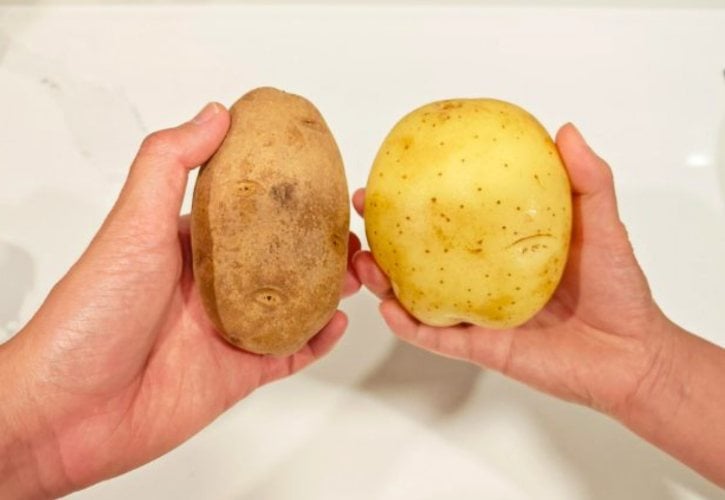
It’s easy to grab whatever potato is on sale and call it a day. But Russet and Yukon Gold potatoes are built differently, and they cook differently too.
One is better for fluffy baked potatoes and crispy fries. The other is better for creamy mashed potatoes, roasting, and dishes that taste rich without a lot of extra butter.
Here’s what you need to know before your next grocery run. 😊
1. Why Most People Think Potatoes Are All the Same
a. They All Look Similar at First Glance
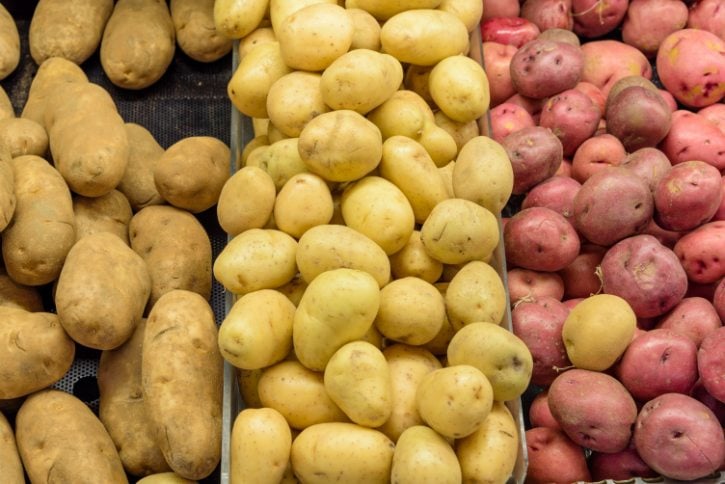
When you look at a grocery store potato display, most of them look pretty similar. Brown ones, yellow ones, red ones, all sitting in bins or bags side by side.
Most shoppers pick potatoes based on:
- Habit or whatever they usually buy
- Price or what’s on sale that week
- Bag size or whatever looks cleanest
And that makes sense, because recipes often just list “potatoes” as an ingredient without telling you which kind to use.
b. What Most People Don’t Think About
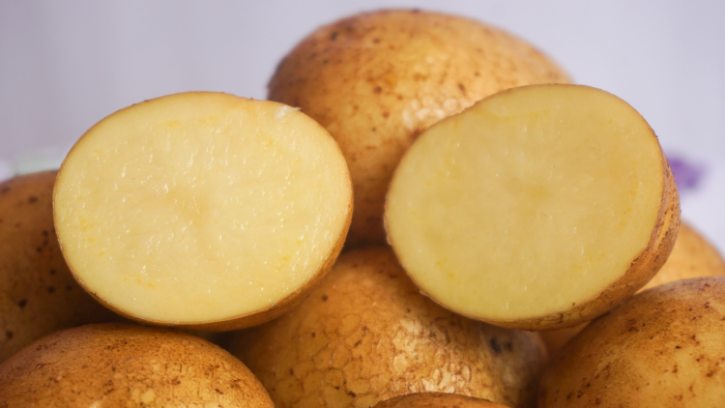
Here’s what most shoppers miss. Different potatoes have different levels of starch and moisture, and that changes everything about how they cook.
- Starch level affects whether a potato turns out fluffy or creamy.
- Moisture level affects whether it holds its shape or falls apart.
- Texture changes completely depending on which potato you use and how you cook it.
c. Why This Matters in Real Cooking
If you’ve ever made potato salad and it turned into mush, or baked a potato and wondered why it didn’t come out fluffy, the problem probably wasn’t your cooking. It was your potato choice.
Using the wrong potato doesn’t just make a small difference. It can completely change the texture and result of your dish.
2. The Biggest Difference Between Russet and Yukon Gold Potatoes
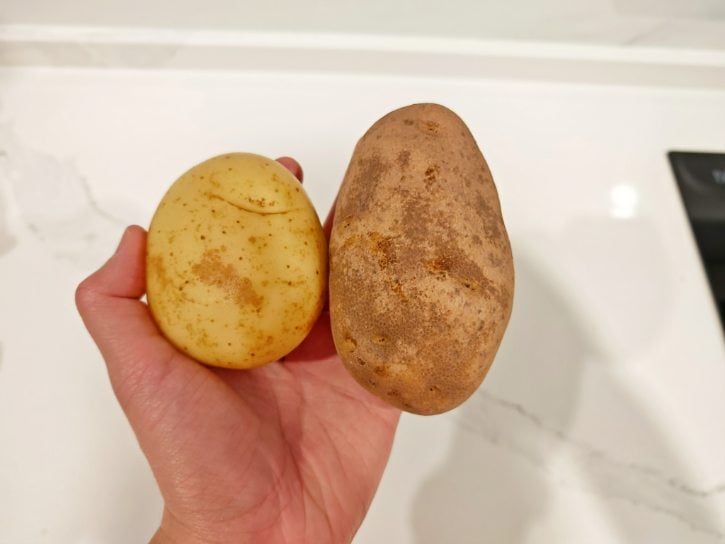
The biggest difference between these two potatoes isn’t the color or the price. It’s how they behave when they’re cooked.
a. Russet: The High-Starch Potato
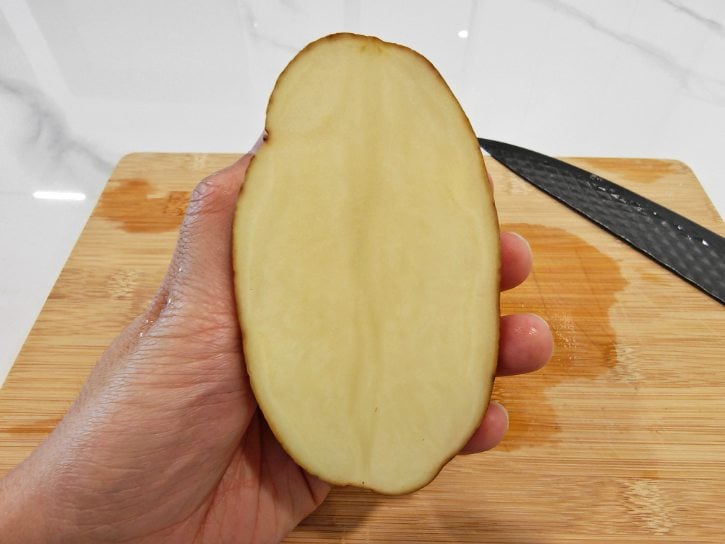
- Russets are high-starch potatoes with very low moisture inside.
- When you cook them, the starch swells and the cells separate from each other.
- This creates that light, fluffy, dry texture that’s perfect for baking and frying.
b. Yukon Gold: The All-Purpose Potato
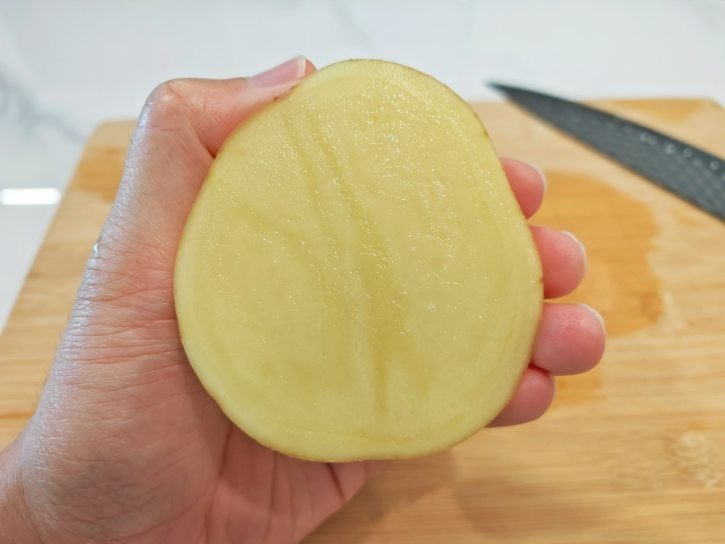
- Yukon Golds are medium-starch, all-purpose potatoes with more moisture.
- They have a different type of starch that keeps the cells closer together, even after cooking.
- Instead of falling apart into something fluffy, Yukon Golds stay dense, smooth, and naturally creamy.
c. A Simple Way to Think About It
A Russet is like a sponge. It’s dry and ready to soak up whatever you put on it, like butter, gravy, or sour cream.
A Yukon Gold is already smooth and rich on its own. It doesn’t need as much help to taste good.
That balance of starch versus moisture is what makes each potato better for different dishes.
3. What Russet Potatoes Are Best For
If you want something fluffy, crispy, or light, the Russet is your best choice. These are often called “baking potatoes” or “Idaho potatoes”, and they’re the most popular variety in the U.S. for good reason.
a. Best Uses for Russet Potatoes
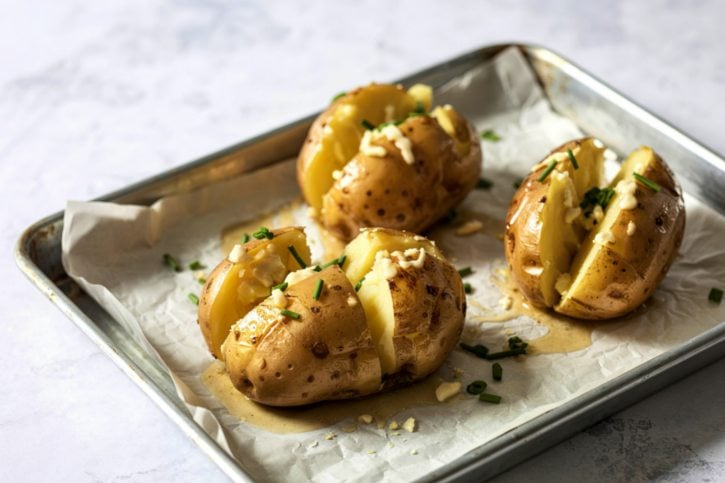
- Baked potatoes. The thick skin crisps up in the oven while the inside becomes perfectly fluffy. When you cut it open and add butter or sour cream, the potato absorbs all that flavor.
- French fries. Russets are the go-to for crispy fries because their low moisture means the outside crisps up fast while the inside stays light and airy.
- Hash browns. Same idea as fries. The dry, starchy texture crisps beautifully.
- Potato skins. The thick skin holds up well and gets nice and crunchy.
- Extra-fluffy mashed potatoes. If you want a mash that’s light and voluminous rather than dense, Russets deliver that cloud-like result.
- Crispy roasted potatoes. When prepared correctly, Russets develop a thick, crunchy crust on the outside.
b. Why Russets Work Well for These Dishes
- Fluffy, airy interior
- Drier texture that crisps easily
- Higher starch content
- Absorbs butter, cream, sauces, and toppings really well
c. When Russets May Not Be Ideal
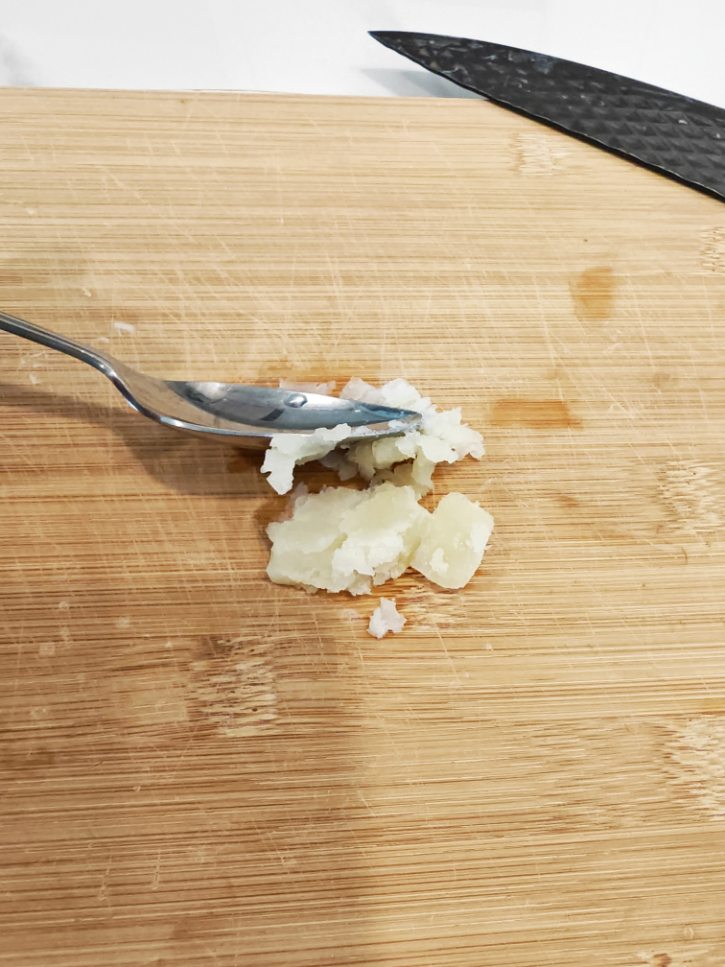
- Soups and stews. Russet chunks tend to fall apart and dissolve into the broth during long cooking.
- Potato salad. Boiled Russets lose their shape easily. If you’re not careful, you’ll end up with mashed potato salad instead of nice cubes.
- Mashed potatoes (with a caution). Russets make great mash, but if you overwork them with a blender or mix too long, they can turn grainy or pasty. Use a hand masher or ricer and stop as soon as it’s smooth.
4. What Yukon Gold Potatoes Are Best For
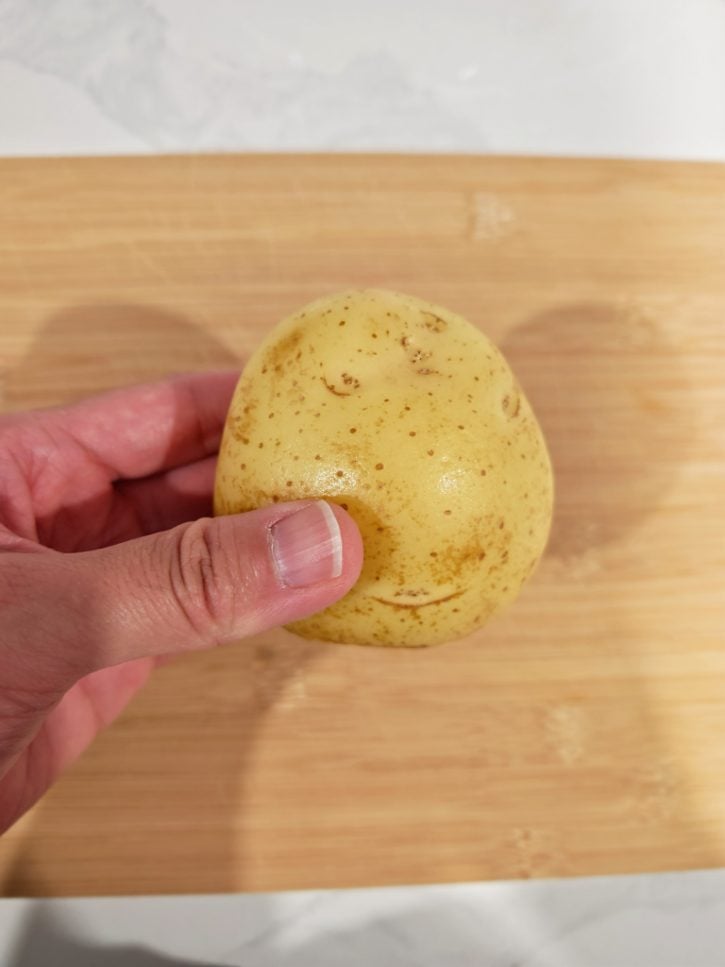
If you want a potato that tastes naturally rich and buttery without adding a lot of extras, the Yukon Gold is your best bet. This all-purpose potato is a favorite among both home cooks and professional chefs for its reliability and flavor.
a. Best Uses for Yukon Gold Potatoes
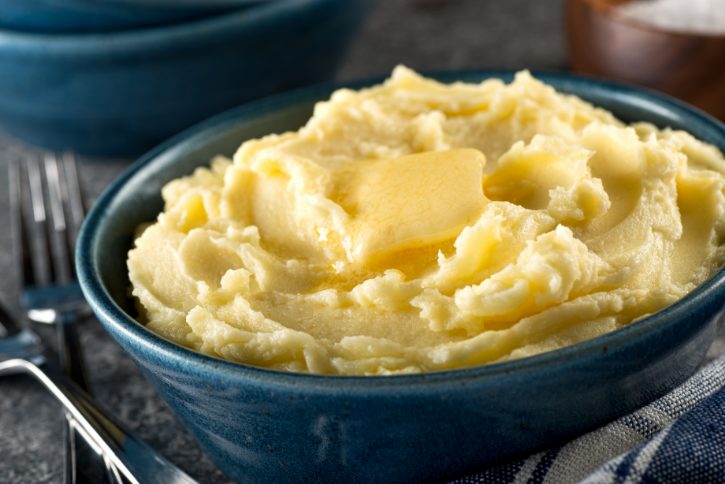
- Creamy mashed potatoes. Yukon Golds create a velvety, rich mash. Because they already have a buttery flavor and golden color, you don’t need to add nearly as much butter or cream.
- Roasted potatoes. These are arguably the best potato for roasting. They develop crispy edges on the outside while staying moist and almost custard-like on the inside.
- Potato salad. Yukon Golds hold their shape after boiling, so your cubes stay intact through mixing and serving.
- Soups and stews. They won’t fall apart or disappear into the broth during cooking.
- Scalloped potatoes and gratin. They hold their layers and bring a naturally rich, buttery taste.
- Pan-fried potatoes. They crisp up nicely while keeping a creamy center.
- Everyday boiled potatoes. Simple boiled Yukon Golds with a little salt and herbs already taste great on their own.
b. Why Yukon Golds Work Well
- Naturally buttery flavor
- Creamy, smooth texture
- Holds shape much better than Russets
- Thin, tender skin that’s pleasant to eat
- Good balance between starch and moisture
- Doesn’t need as much butter or cream to taste rich
c. When Yukon Golds May Not Be Ideal
- French fries. They can taste great, but they won’t have that super-fluffy, light interior that Russets give you.
- Classic baked potato. They won’t deliver that dry, crumbly, steakhouse-style texture.
Most people don’t notice this until the recipe turns out different from what they expected.
5. Texture Comparison: Fluffy vs Creamy
Texture is the single most important thing to think about when choosing between these two potatoes. It’s not just about how the potato looks on your plate. It’s about how it feels in your mouth and how it works with other ingredients.
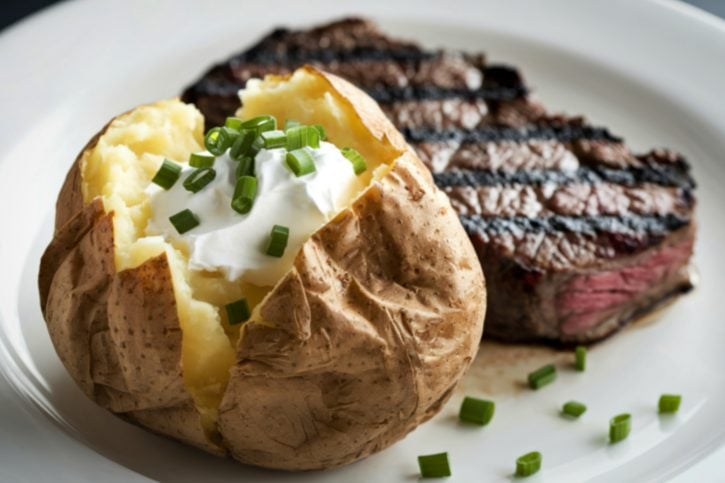
Russet Texture: Fluffy, dry, light, and airy. Think of it like a soft, loose sponge with lots of air between the cells. That’s why a baked Russet fluffs up so easily with a fork and soaks up gravy, butter, or sour cream.
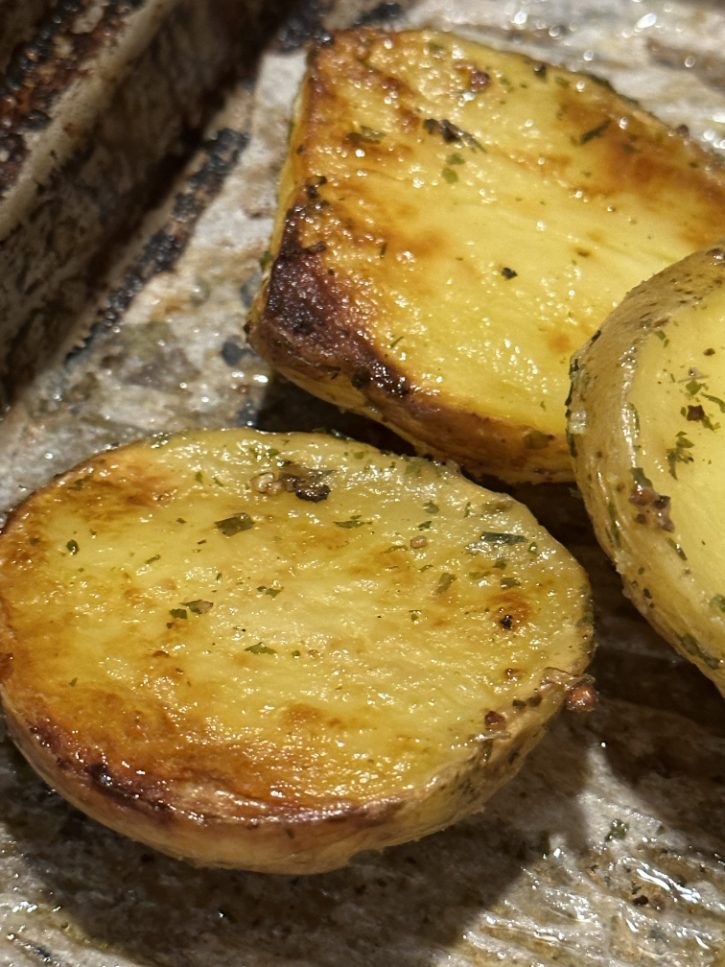
Yukon Gold Texture: Creamy, smooth, moist, and dense. Think of it as solid and substantial, with a consistent texture throughout. When you bite into a roasted Yukon Gold, it feels rich and moist rather than light.
a. How the Texture Changes by Cooking Method
- Russets become crumbly and start falling apart at the edges. Yukon Golds stay firm and smooth.
- Russets become dry and light inside. Yukon Golds become moist and dense.
- Russets get a thick, crunchy crust. Yukon Golds get a thinner, crispier shell with a creamy center.
- Russets are light and voluminous. Yukon Golds are thick, rich, and silky.
- Russets crisp up fast and stay airy inside. Yukon Golds crisp up well but have a denser, softer interior.
b. Quick Examples to Help You Decide
- If you want a classic steakhouse baked potato that fluffs up with a fork, choose Russet.
- If you want creamy mashed potatoes with a naturally rich taste, choose Yukon Gold.
- If you want potato salad pieces that hold together through mixing and serving, choose Yukon Gold.
- If you want fries that are crispy outside and light inside, choose Russet.
6. Flavor Difference: Plain vs Buttery
Most people don’t think of potatoes as having much flavor on their own. But if you tasted a plain boiled Russet next to a plain boiled Yukon Gold, you’d notice the difference right away.
a. Russet Flavor: The Blank Canvas

Russets have a mild, neutral, and earthy flavor. They don’t have much sweetness or richness by themselves.
This is actually a good thing when you’re using bold toppings or seasonings. The Russet doesn’t compete with those flavors. It carries them and lets them stand out.
- Works well with sharp cheddar, bacon, chili, or sour cream
- Great for loaded baked potatoes and fries with dipping sauces
- Best when you want the toppings or seasonings to be the star
b. Yukon Gold Flavor: Natural Richness
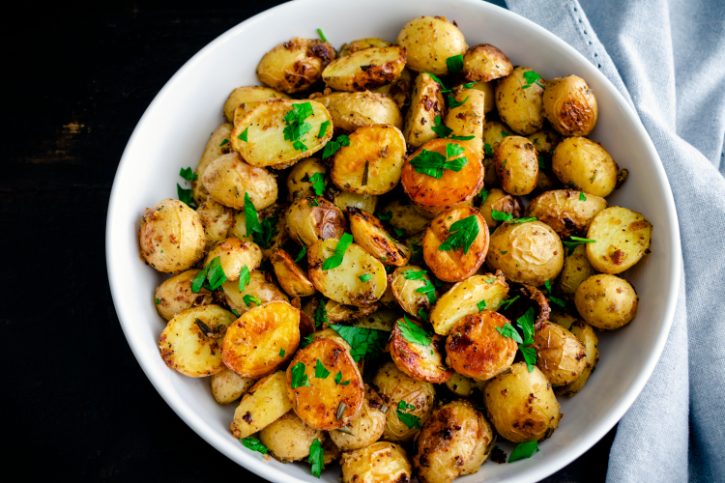
Yukon Golds have a naturally richer, slightly sweeter, and subtly buttery flavor. The yellow color even gives your brain the visual cue of butter before you take a bite.
Because they have more flavor on their own, they often need less salt and fat to taste satisfying.
- Works well with just herbs, olive oil, or a light sprinkle of salt
- Great for simple boiled or roasted potatoes
- Best when you want the potato itself to shine
7. Skin Difference
The skin matters more than most people think, both for cooking and for eating.
a. Russet Skin
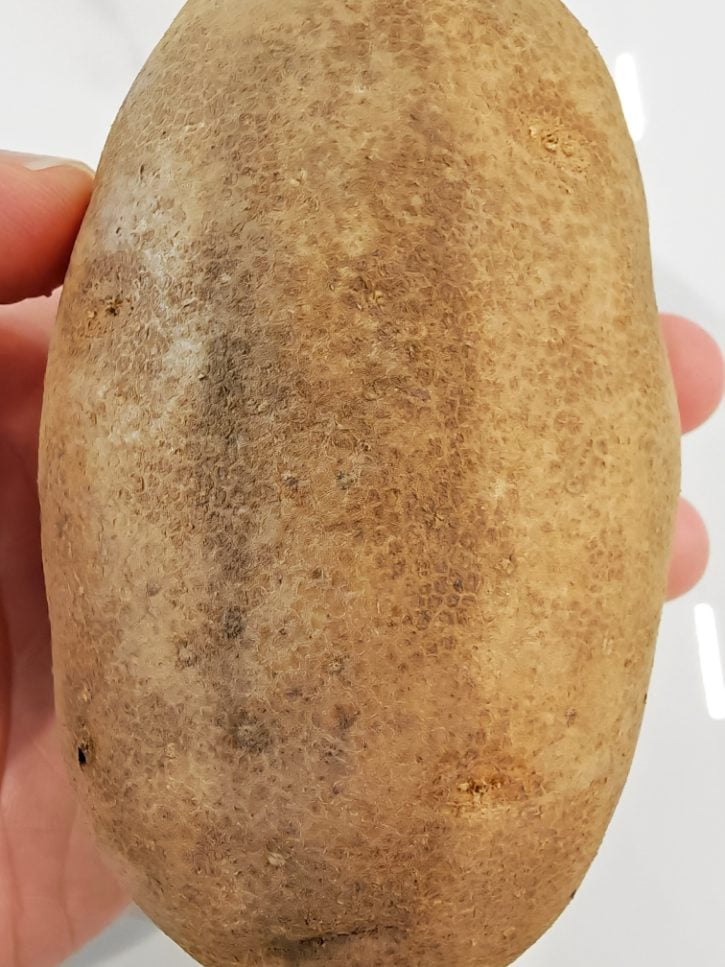
- Thick, rough, and brown with a netted texture
- Durable, which is why Russets handle being tossed around in big bags
- Gets very crispy and salty when baked, creating a satisfying “jacket” for the potato
- Some people find it a bit tough or leathery, so it’s often peeled off for mashed potatoes or fries
- Great choice if you want a rustic, fiber-rich dish with textural contrast
b. Yukon Gold Skin
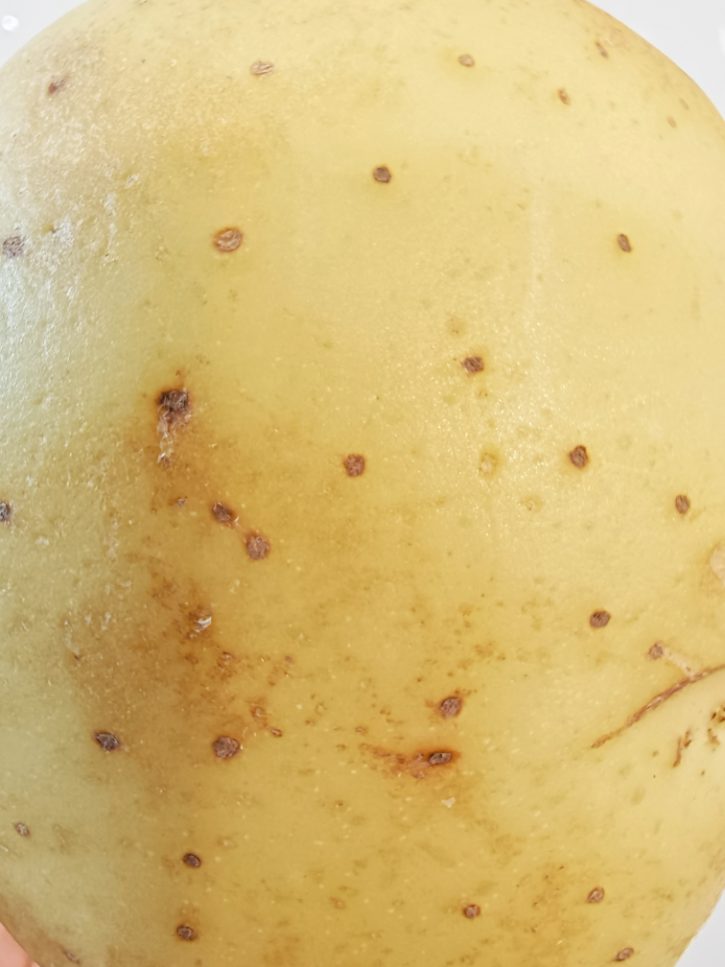
- Thin, smooth, and yellowish or light tan
- More delicate and bruises more easily
- Tender and actually pleasant to eat
- So thin that it practically disappears when you mash the potato
- Perfect if you want to skip peeling entirely and still have a smooth result
c. Practical Takeaway
If you’re in a rush and want to skip peeling, Yukon Gold is the better choice. The skin is so tender it blends right into the dish. If you want a classic baked potato with crispy, salty skin, Russet is the way to go.
8. Quick Buying Guide: Which Potato Should You Choose?
When you’re at the store and need a quick answer, use this as your guide.
a. Choose Russet if You Want
- Fluffy, dry, classic baked potatoes
- Crispy French fries with a light interior
- Extra-fluffy mashed potatoes
- Crunchy hash browns or potato skins
- A potato that absorbs toppings and seasonings well
b. Choose Yukon Gold if You Want
- Creamy, buttery mashed potatoes with less effort
- Roasted potatoes with crispy edges and a moist center
- Potato salad that holds its shape
- A potato that stays intact in soups and stews
- Scalloped potatoes or gratin with a rich, natural flavor
- A tender skin you don’t need to peel
c. Quick Picks by Dish
- Baking: Russet
- Mashed (creamy): Yukon Gold
- Mashed (fluffy): Russet
- Fries: Russet
- Roasting: Yukon Gold
- Potato salad: Yukon Gold
- Soups and stews: Yukon Gold
- Potato skins: Russet
- Scalloped/gratin: Yukon Gold
Once you start choosing the right potato for the right dish, you’ll notice the difference immediately. It’s one of the simplest upgrades you can make in your everyday cooking.