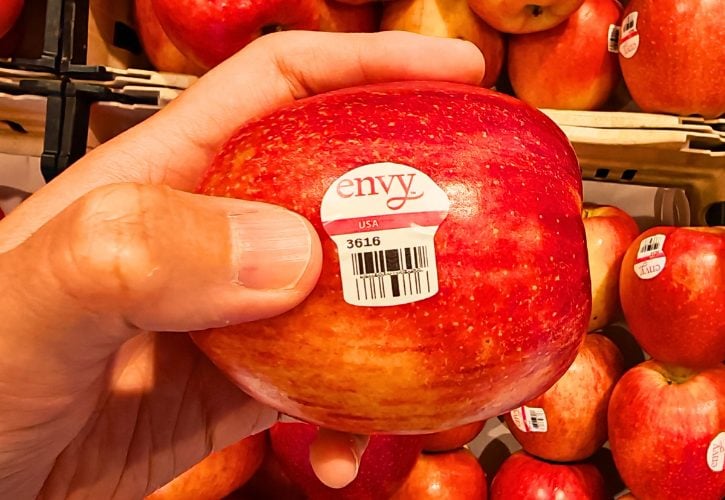
You pick up an apple, check for bruises, maybe compare a few for size, and then drop it in your bag without a second glance at that tiny sticker.
Most of us assume those numbers are just some internal store code for the cashier.
But that little sticker actually carries useful information, and once you know what those numbers mean, it can help you shop a little smarter.
It also does not mean many of the things people online claim. 😊
1. Why Most People Ignore Apple Sticker Codes
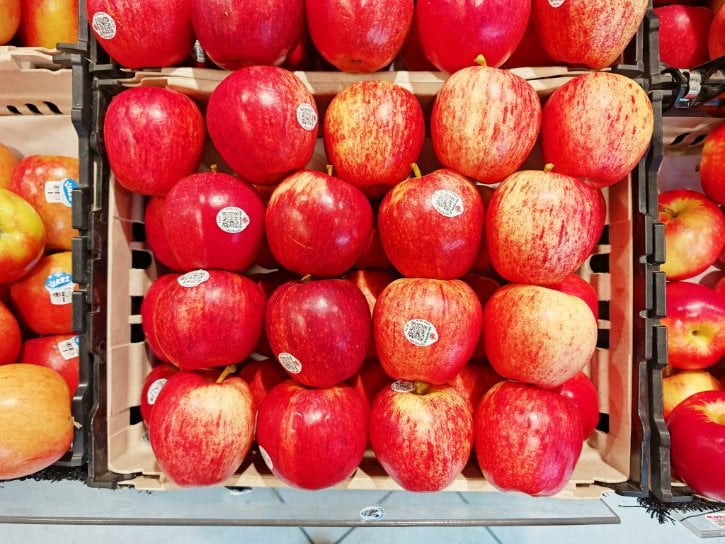
a. Shoppers Focus on What They Can See
When most shoppers pick up an apple, they are looking at the things that stand out right away:
- The color and shine of the skin
- The size and shape
- The price on the store sign
That is completely natural. The little sticker? It just looks like a small checkout detail. Something for the cashier or the scanner to deal with.
b. The Number Seems Like It Is Not for You
Many people assume the number is only there to help the store process the sale.
So they peel it off without a second thought, sometimes before the apple even makes it to the kitchen sink.
c. The Sticker Is Easy to Miss
It is easy to see why most people overlook it. The sticker is tiny, usually about half an inch, and it blends into the background of a busy produce section where big signs and colorful displays are competing for your attention.
But that small label actually carries useful information, and it is worth a quick glance before you toss it.
2. Why Those Tiny Numbers Actually Matter
a. They Are Part of a Global System
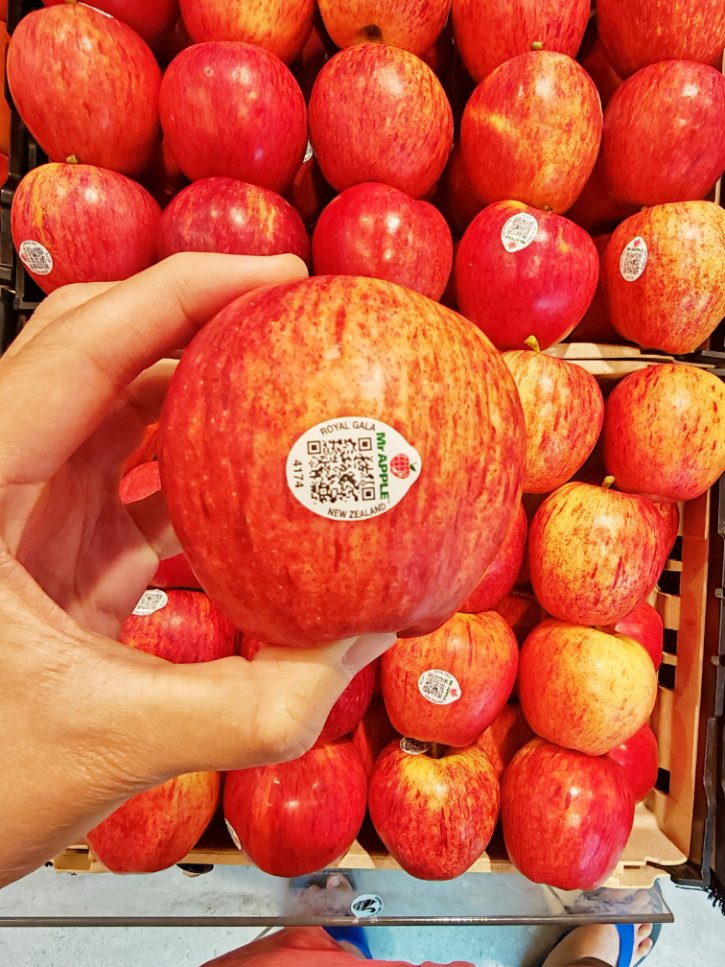
The numbers on apple stickers are not made up by individual farms or stores.
They are part of a standardized system managed by the International Federation for Produce Standards (IFPS), which means the same codes are used by retailers around the world.
b. What the Codes Help With
Here is why that matters for you as a shopper:
- They help identify the exact apple variety at checkout, so stores can ring up the right price.
- They help stores track inventory and keep shelves properly stocked.
- They make it easier to separate apple varieties that look almost identical, like Gala and Fuji.
- They can indicate whether the apple is sold as conventional or organic produce.
c. Why Accuracy Matters
Without these codes, a cashier would have to tell apart dozens of similar-looking apples just by sight.
If a premium organic Honeycrisp gets scanned as a standard Gala, the price is wrong, and the store’s records become inaccurate.
3. What Apple Sticker Codes Really Are
a. A Quick Definition
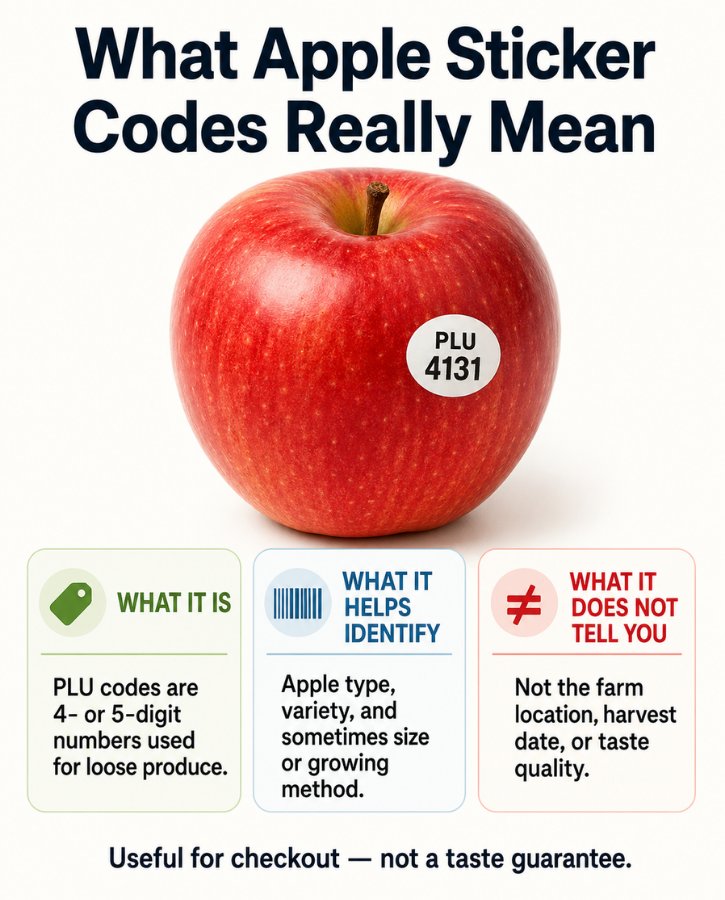
PLU codes, or Price Look-Up codes, are 4- or 5-digit numbers that supermarkets have used since 1990.
They were introduced as an industry standard to make checkout faster and reduce pricing errors for loose produce, the kind sold individually rather than in pre-packaged bags.
b. How the System Works
The system is managed by the IFPS, and each code is assigned after a review process. A code usually corresponds to a specific combination of:
- The type of produce (for example, apple)
- The variety (for example, Gala or Fuji)
- Sometimes the size
Because the apple category is one of the most diverse in the produce department, with hundreds of commercially grown varieties, PLU codes are especially useful here.
c. What the Code Is Not
One important thing to keep in mind: a PLU code is mainly a retail identification tool. It tells the system what the apple is and how it was grown (conventionally or organically), but it is not a quality score. It does not tell you:
- Where the apple was grown
- When it was harvested
- How good it will taste
4. What 4-Digit Apple Codes Usually Mean
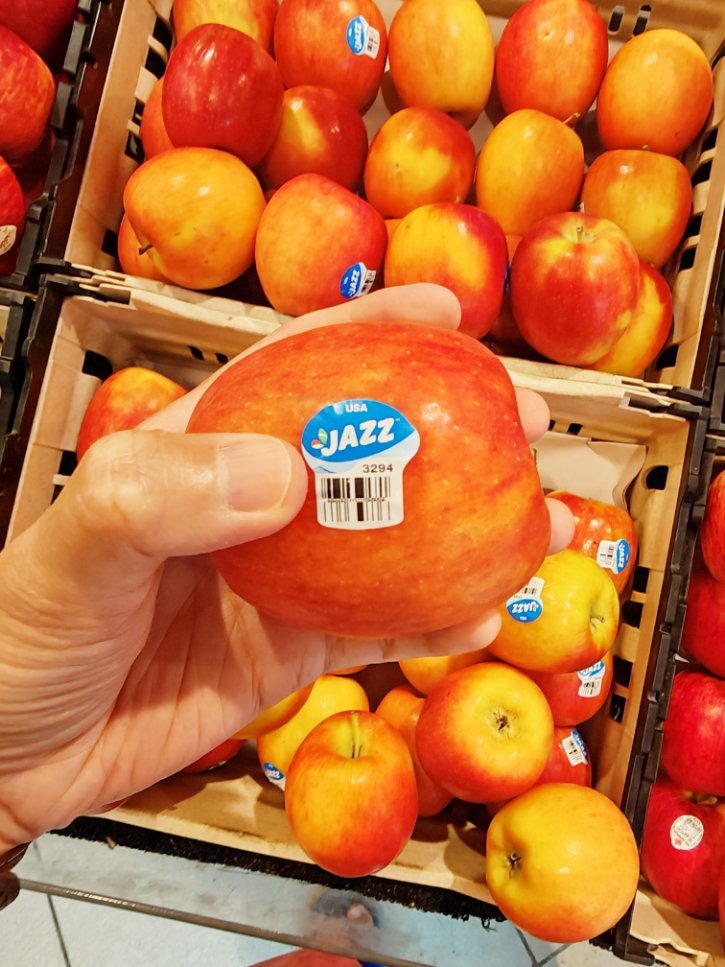
A 4-digit PLU code is the standard identifier for conventionally grown produce. These numbers are typically in the 3000 or 4000 series.
Here are a few common examples:
- Fuji (small): 4129
- Fuji (large): 4131
- Gala (small): 4133
- Gala (large): 4135
- Granny Smith (small): 4139
- Granny Smith (large): 4017
- Honeycrisp (all sizes): 3283
- Jazz (small): 3293
- Jazz (large): 3294
- Envy: 3616
The individual digits do not have hidden meanings. The entire number works as a unique key for the variety and sometimes the size.
A 4-digit code does not mean the apple is bad, unsafe, less fresh, or lower quality. It simply identifies the variety and the standard growing method.
5. What 5-Digit Apple Codes Starting With 9 Usually Mean
a. The Basics
A 5-digit PLU code starting with 9 is commonly used for organic produce. The “9” is simply added before the standard 4-digit code.
For example, if a conventional Fuji apple has the code 4131, its organic version will be labeled 94131.
The “9” prefix tells the store’s system that the item was grown according to certified organic standards.
b. A Few Things Worth Knowing
However, there are some important nuances shoppers should keep in mind:
- The PLU system is voluntary. Some retailers may not use the “9” prefix for organic items and may rely on store signs or packaging instead.
- The sticker is not a substitute for official organic certification. The USDA Organic seal on packaging or store signage remains the legal standard for verifying organic status.
- Restocking mix-ups happen. In busy stores, a conventional apple can end up in an organic bin or the other way around. The sticker gives you one more way to double-check.
c. The Bottom Line
If buying organic matters to you, look for the “9” prefix on the sticker, but also check the store sign and any official labels on the packaging.
6. The Common Myth About Codes Starting With 8
a. The Claim
One of the most widespread claims on social media is that a 5-digit code starting with “8” means the apple is genetically modified (GMO). This is misleading.
b. What Actually Happened
Here is the background. In the 1990s, the IFPS did reserve the 80000 series as a potential label for genetically engineered produce.
But the code was almost never used in real stores. Growers of genetically modified produce were not required to use it and generally chose not to.
In 2015, the IFPS officially reassigned the “8” series to handle the growing number of new produce varieties.
Today, codes starting with 8 are used as an expansion of the standard conventional and organic numbering system.
c. How to Actually Identify GMO Products
Shoppers should not rely on the “8” prefix to identify GMO products. In the United States, the official method for identifying bioengineered foods is the National Bioengineered Food Disclosure Standard, which uses:
- Text labels on packaging
- A specific bioengineered symbol
- QR codes
PLU stickers are not part of the official GMO disclosure system.
7. What Apple Sticker Codes Can Reveal
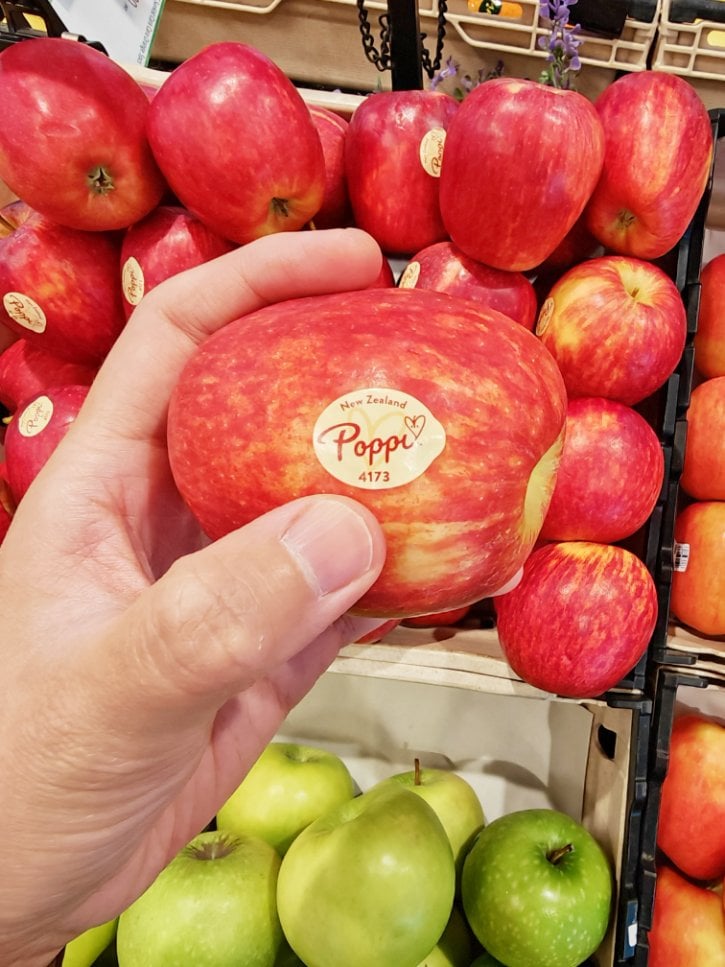
When used correctly, the PLU code can help you with a few useful things while shopping:
- The apple variety. The code tells you whether you are holding a Gala, Fuji, Honeycrisp, or another type. This is especially helpful when similar-looking apples are placed near each other.
- Conventional or organic. The presence or absence of the “9” prefix tells you and the store how the item was categorized.
- Size classification. Many apple varieties have different codes based on size. This helps make sure the price matches the size you are buying.
8. What Apple Sticker Codes Cannot Reveal
a. Taste and Texture
The PLU code cannot tell you anything about how the apple will actually feel or taste:
- Two apples with the same code can taste different depending on growing conditions and ripeness.
- Juiciness or crunchiness. These depend on the individual fruit, not the sticker.
- Whether the apple will taste good. That part is still up to you, your eyes, and your hands.
Read More: 10 Red Apple Buying Mistakes Almost Everyone Makes
b. Freshness and Ripeness
The code also cannot tell you how old or ready-to-eat the apple is:
- The code identifies the variety, not how ripe the apple is right now.
- There is no way to know from the code when the apple was harvested or how long it has been in storage.
- Exact harvest date. PLU codes are fixed variety identifiers and do not change with each harvest.
c. Growing and Handling Details
Finally, the code does not give you a full picture of what happened to the apple before it reached the shelf:
- Wax coating. The code does not tell you whether wax was applied after harvest.
- Pesticide history. While the growing method (organic vs. conventional) is indicated, the code does not list specific chemicals used.
9. Can Apple Sticker Codes Tell You the Variety?
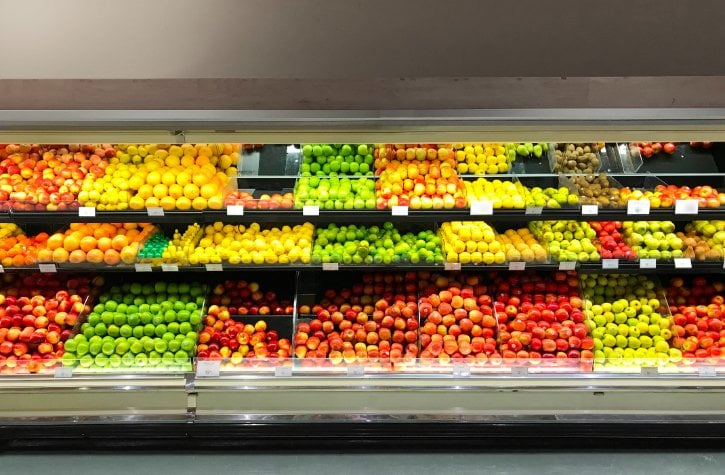
Yes, and this is arguably the most useful thing the code does.
Modern grocery stores carry many “red bi-color” apples, varieties with varying shades of red, pink, and yellow that can be hard to tell apart. Varieties like Fuji and Gala are often confused, but they have different flavors and textures.
The sticker stays on the apple even after you bring it home. So if you forget which variety you bought, the code can remind you.
That said, the store sign or package label is usually the easiest way to check the variety while shopping. The code is a helpful backup, not the only clue.
10. Do Apple Sticker Codes Tell You About Wax or Pesticides?
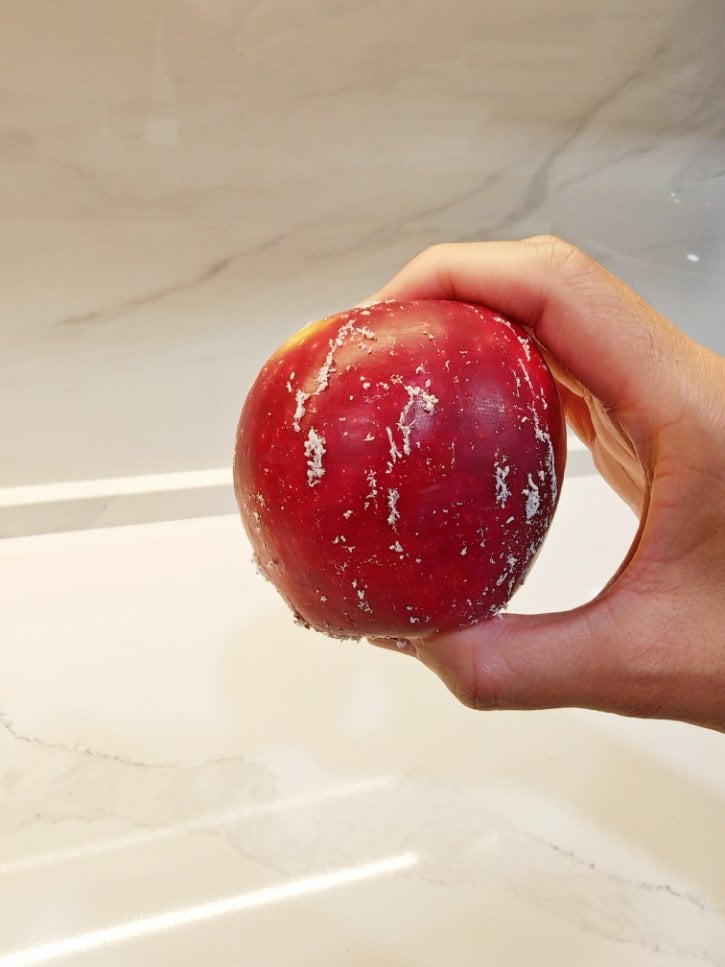
No, the PLU code does not provide this information.
a. What to Know About Wax
Most commercially sold apples are washed after harvest, which often removes the apple’s natural wax coating.
To protect the fruit during storage, a thin layer of food-grade wax is usually reapplied.
- The wax is typically vegetable-based (like carnauba) or shellac-based.
- It is considered safe for consumption by the FDA.
- The sticker does not disclose whether wax was applied.
Read More: The Apple Wax Coating Truth
b. What to Know About Pesticides
The PLU system only distinguishes between conventional and organic methods at a high level. It does not detail specific chemical histories.
- Organic apples (9-prefix) are grown under rules that prohibit most synthetic pesticides, but they may still be treated with approved organic substances.
- Conventional apples (4-digit codes) are treated with pesticides that are registered and regulated within safety limits.
c. The Takeaway
The sticker is a general category marker, not a detailed report on the apple’s growing and handling history.
If specific pesticide or wax information matters to you, look for additional labels, certifications, or contact the grower directly.