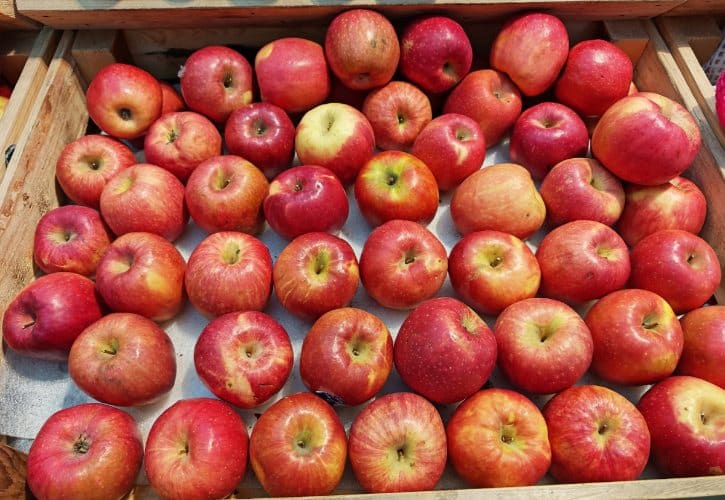
We all do the same thing at the store. We reach for the shiniest, reddest apple on the pile, thinking it must be the best one.
But here’s the thing. That perfect-looking apple might have been sitting in storage for months. The glow could be wax. And that deep red color? It doesn’t actually tell you much about sweetness.
The real signs of a great apple are the ones most people skip right over. Here are 10 common mistakes to avoid, so you never bring home a bland, mealy apple again. 😊
1. Choosing the Shiniest Apple
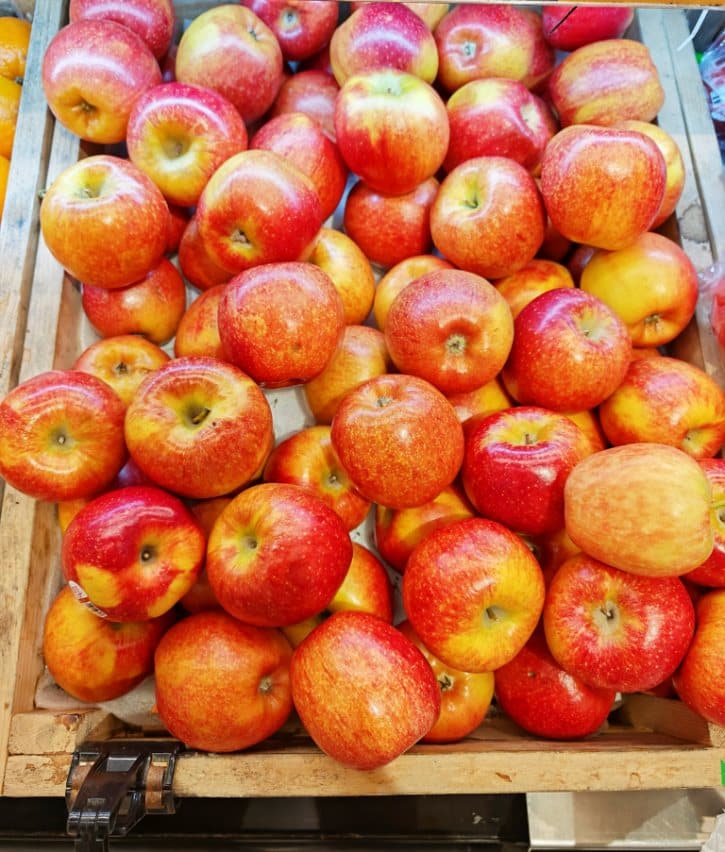
That high-gloss shine on supermarket apples looks tempting. It practically screams “fresh!” But most people don’t realize what creates that shine.
All apples naturally produce a protective waxy coating. It looks slightly milky or matte, almost like a light dusty film. This natural layer keeps the apple fresh and protects it from going bad.
Here’s what happens at the store: apples get washed and brushed to remove dirt, which also strips away that natural protection. To replace it, packers apply food-grade wax to help the apple last longer on the shelf.
- High shine often means more processing, not more freshness
- A matte or slightly dusty look is actually a sign the apple hasn’t been heavily handled
- Shine tells you nothing about how sweet or flavorful the apple is inside
Next time, skip the shiniest apple. Look for one with a more natural, less “polished” appearance.
2. Ignoring Skin Texture (Too Smooth vs. Slightly Rough)
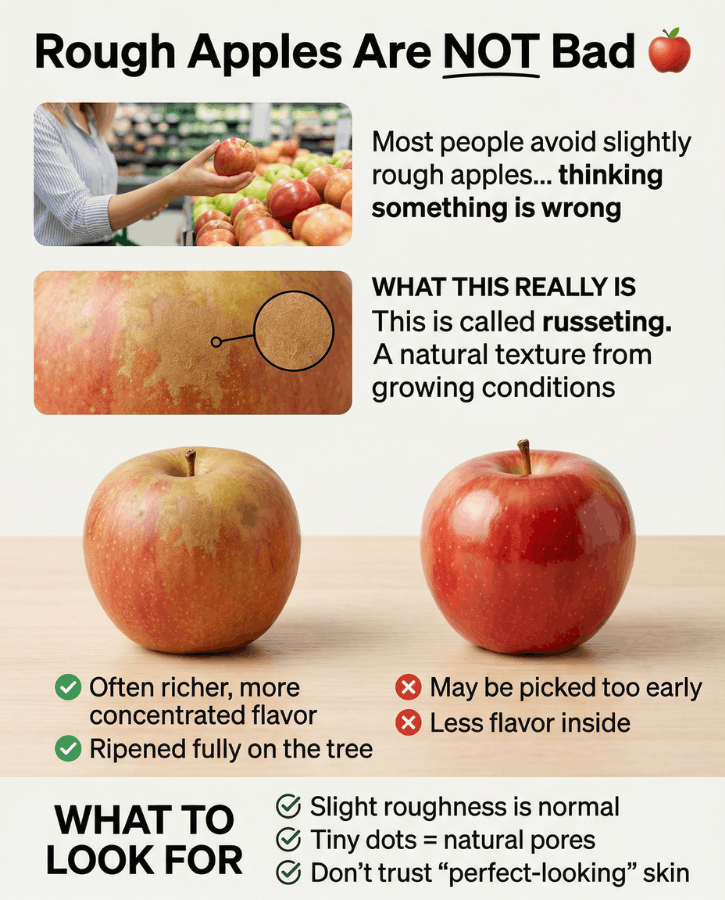
Many shoppers avoid apples with slightly rough or textured skin, thinking something is wrong with them. This is a mistake.
Some apples naturally develop a brownish, slightly rough patch on the skin. This is called russeting, and it happens because of weather conditions while the apple was growing. It looks a bit like a light brown, corky texture.
Here’s the surprising part: apples with some russeting often have a more concentrated, richer flavor. That rough texture is not a flaw. It’s a sign the apple ripened fully on the tree.
On the other hand, skin that’s unnaturally smooth and “tight” can mean the apple was picked too early, before it had time to develop its full taste.
What to look for:
- A little texture or light roughness is perfectly fine
- Tiny dots on the skin are natural pores that help the apple breathe
- Avoid apples that look too “perfect” and plastic-like
3. Assuming Darker Red Means Sweeter
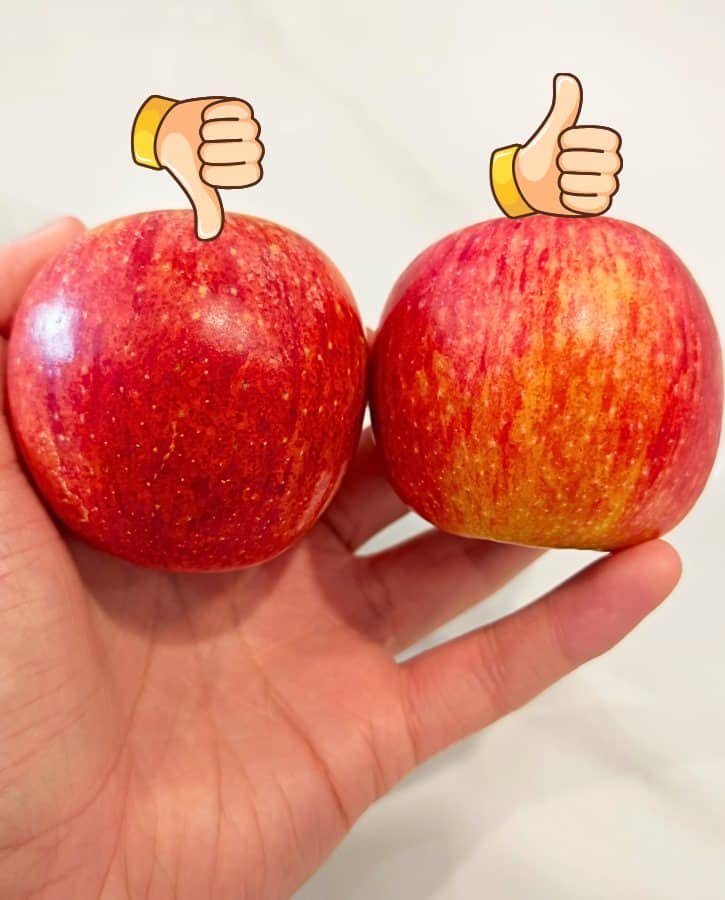
This is one of the biggest myths in apple shopping. Most people believe that the deeper the red color, the sweeter the apple. It makes sense for strawberries and cherries, but apples work differently.
The red color on an apple’s skin comes from exposure to sunlight and cool temperatures.
An apple hanging on the sunny side of a tree will turn deep red much faster than one shaded by leaves, even if the shaded apple is actually riper and sweeter inside.
Here’s the real story:
- An apple’s red color develops on the outside, separate from how sweet it gets on the inside
- A pale or greenish apple can be perfectly ripe and delicious
- Some apple varieties were bred to look very red but actually taste bland and starchy
Sweetness depends on what’s happening inside the fruit, not how red the skin looks. Don’t let color fool you.
4. Ignoring Red–Yellow Color Mix (Stripes Matter)
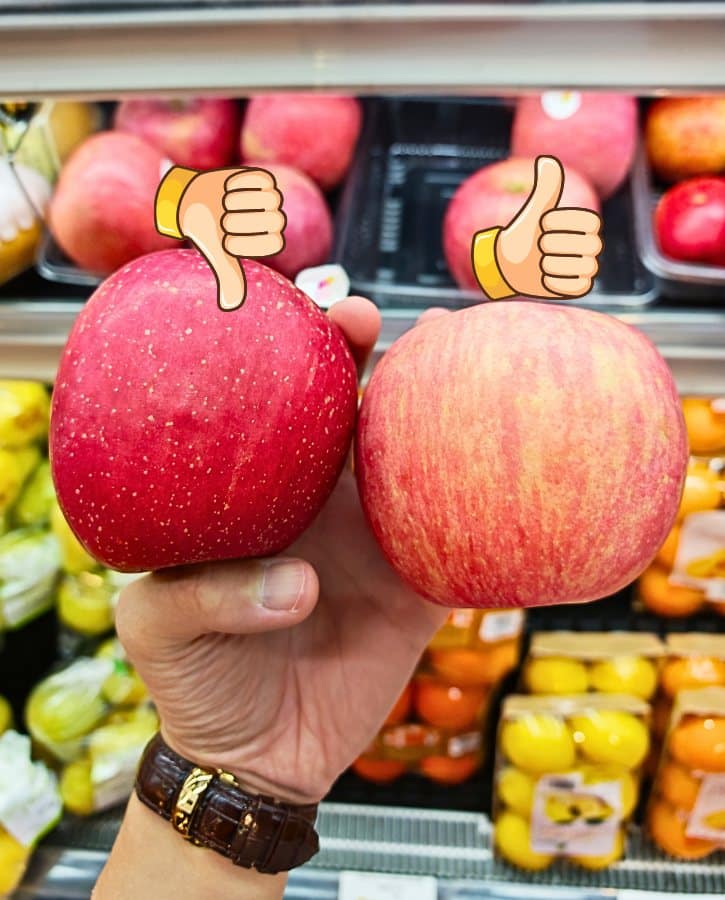
While the red blush catches your eye, the background color underneath the red is what really tells you about ripeness.
Look closely at any apple. You’ll notice areas that aren’t fully red, often near the bottom or in streaks. This “ground color” changes as the apple ripens.
What the background color tells you:
- Bright green underneath = the apple is likely underripe, starchy, and very tart
- Light green to yellowish = the apple is getting close to ripe
- Creamy white or pale yellow = the apple has reached good ripeness and should taste balanced and sweet
Why stripes are a good sign:
For varieties like Gala or Fuji, look for a mix of red and yellow with fine vertical streaks. These stripes indicate the apple ripened properly on the tree, making it crisper and juicier.
Apples that are solid, uniform red all over may not taste as good, often with a softer, less pleasant texture inside.
5. Never Checking the Bottom (“Apple Belly”)
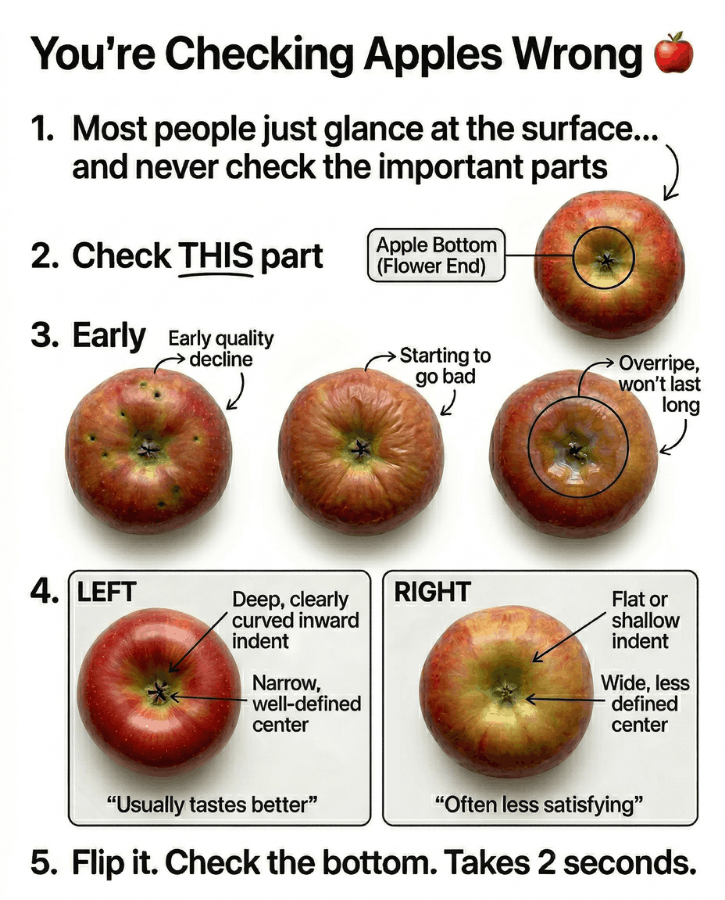
Most shoppers look at the top and sides of an apple but completely ignore the bottom. That’s a missed opportunity.
The bottom of the apple, where the flower once was, is one of the first places to show problems. This area, sometimes called the “apple belly”, can reveal issues before they appear anywhere else.
What to check for:
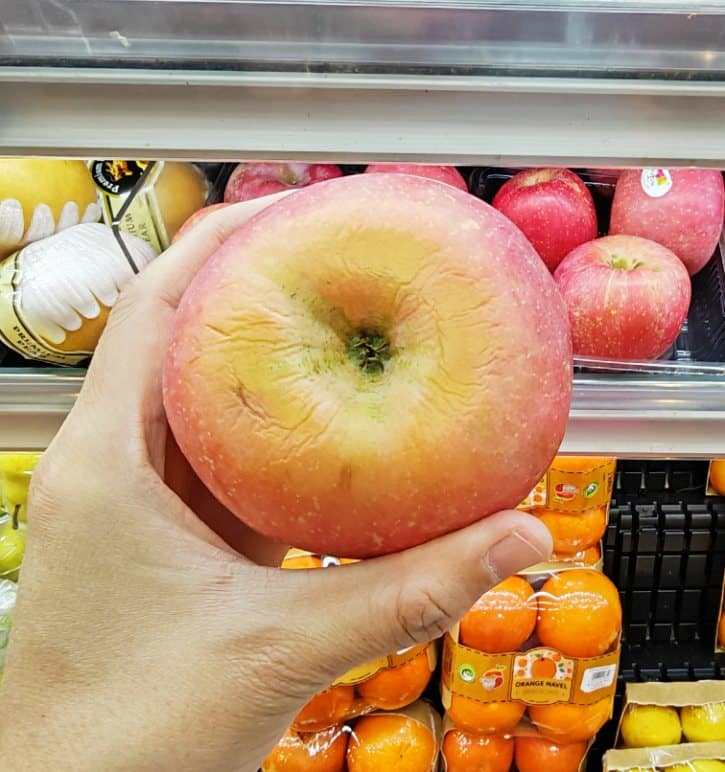
- Small dark pits or brown spots = a sign the apple’s quality is failing
- Soft or mushy areas = early decay starting from the bottom
- A watery, glassy look = the apple may be overripe and won’t store well
Here’s a tip most people don’t know:
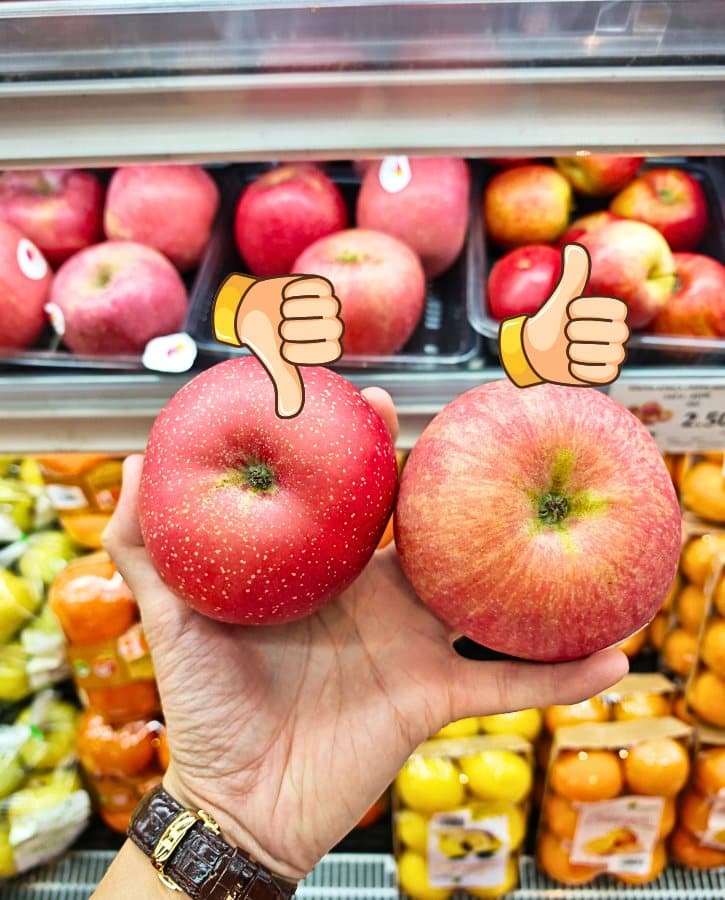
The depth of the bottom indent matters too. Apples with a deep, well-shaped belly tend to be more developed, sweeter, and juicier. If the bottom is flat or shallow, the apple may taste more sour and less satisfying.
A quick flip to check the bottom takes two seconds and can save you from a disappointing apple.
6. Not Checking Firmness Properly
Everyone knows a good apple should be firm. But most people test firmness the wrong way.
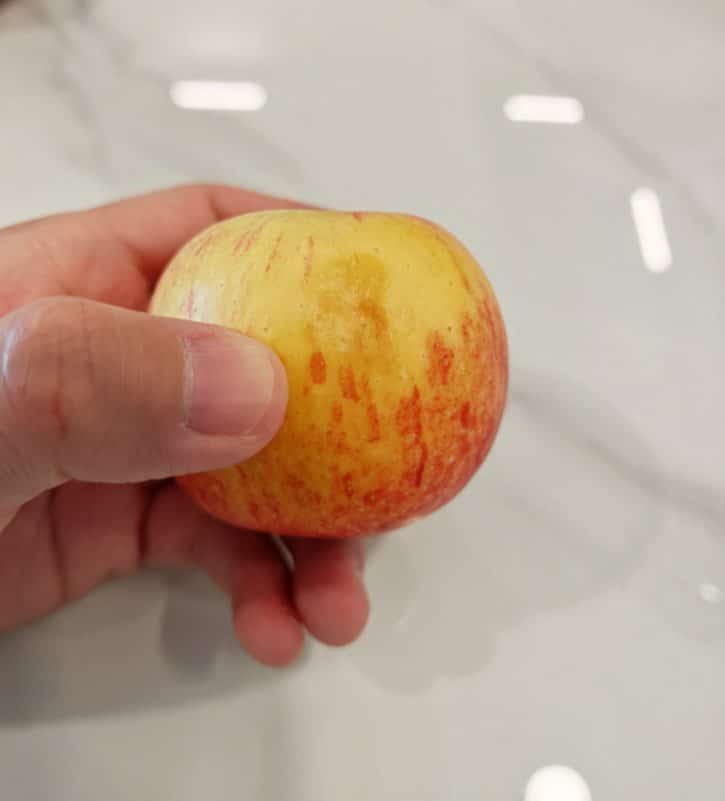
Pressing your fingertips hard into an apple can actually damage it. That pressure bruises the fruit right there in the store, and those bruises lead to soft spots later.
The right way to check firmness:
- Hold the apple in your palm
- Press gently with your thumb or the base of your palm, using even pressure
- A fresh apple should feel completely solid with no “give” at all
What firmness tells you:
- Rock hard = fresh and crisp, the cells are full of juice
- Slightly springy = the apple is past its prime and may taste dry or mealy
- Soft spots = avoid it, the texture will be mushy
A truly fresh apple feels almost like pressing against a baseball. If it gives even a little, put it back.
7. Assuming Bigger Apples Are Better
It’s easy to think that a bigger apple means more value. But when it comes to taste, bigger is often not better.
Oversized apples are usually the result of extra water during growing. All that extra water dilutes the flavor. Think of it like watering down juice.
Why medium-sized apples often taste better:
- The sugars and flavors are more concentrated
- The texture tends to be firmer and crisper
- They store better and stay fresh longer
Very large apples can also have internal issues like brown, corky spots caused by uneven growth. These won’t be visible from the outside.
When you’re choosing apples, reach for medium-sized fruit. Your taste buds will thank you.
8. Skipping the Stem Check
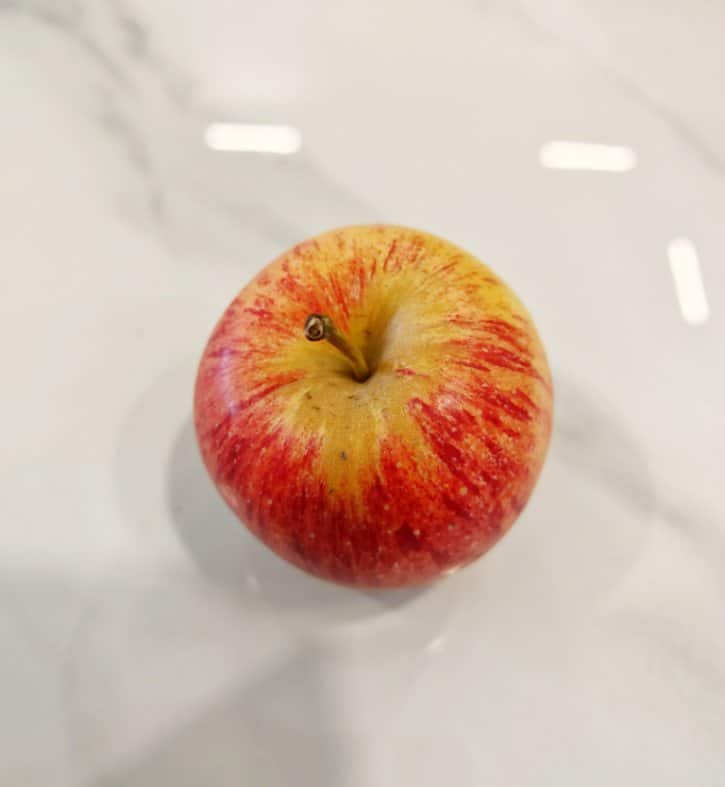
Most people never look at the stem unless the apple already looks bad.
But the stem and the little bowl around it can tell you two things quickly.
First, an apple missing its stem won’t stay fresh as long. If the stem is missing, moisture and air can enter more easily, and the apple may decline faster.
Second, the stem area can be a weak point where mold or decay starts, especially if the stem was pulled off roughly and left an opening.
What to do:
- Choose apples with the stem still attached
- Check that the stem bowl looks clean and dry
- Avoid stems that look cracked, sticky, or have any mold
A quick glance at the top takes a second and tells you a lot.
9. Picking Apples That Feel Too Light
Here’s a quick test most people skip: compare the weight of two similar-sized apples. The heavier one is almost always the better choice.
Why does weight matter? A fresh apple is full of water and juice. As it sits around, it slowly dries out from the inside. A “light” apple is literally losing its moisture.
What weight tells you:
- Heavy for its size = juicy and well-hydrated
- Light or “airy” feeling = drying out, likely on its way to becoming mealy
This is one of the easiest quality checks you can do. Just pick up the apple and feel its heft. A good apple should feel surprisingly solid and dense.
10. Not Smelling the Apple
With all the cold storage and wax coatings, many people have stopped using their nose when shopping for apples. But the smell test is your final confirmation of quality.
A ripe apple has a distinct, pleasant fruity aroma. You’ll notice it most near the stem end.
What different smells mean:
- Fruity, sweet, floral scent = the apple is ripe and ready to eat
- No smell at all = the apple was picked too early or has been in storage too long
- Sour or vinegar-like smell = the apple is overripe and starting to ferment inside
If an apple smells good, it will almost certainly taste good. Trust your nose.
Quick Checklist: Look, Lift, Press, Flip, Sniff
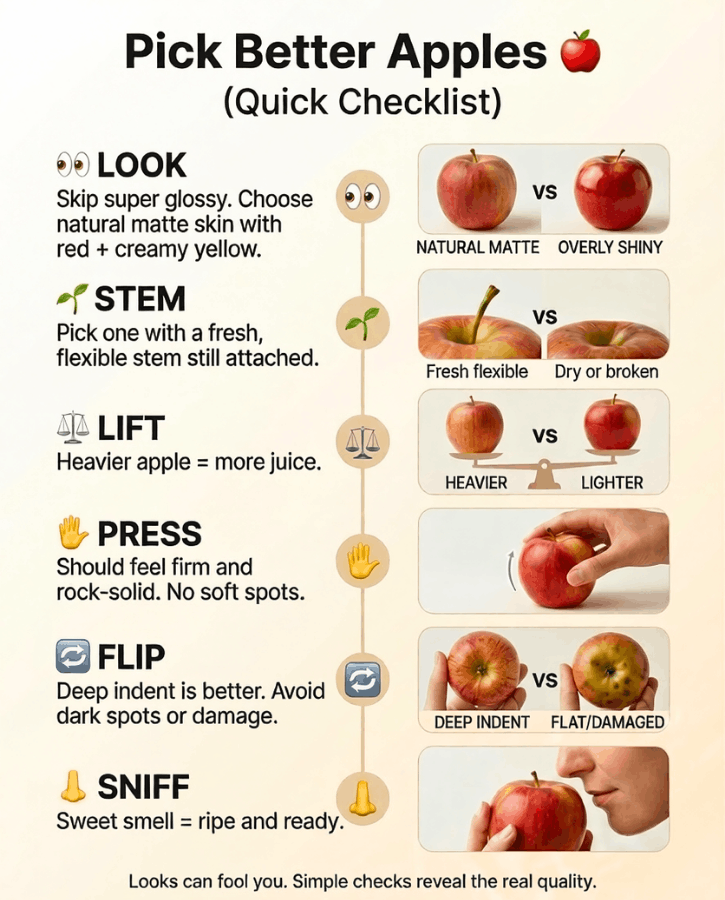
If you only remember one thing, make it this simple sequence:
- Look at the surface. Skip the super glossy apples. Choose matte skin with a mix of red and creamy yellow, and fine stripes if possible.
- Stem check. Make sure it’s fresh, flexible, and still attached.
- Lift a few apples of similar size. Pick the heaviest one for more juice.
- Press gently with your palm. A fresh apple feels rock-solid with no give.
- Flip to check the bottom. Look for a deep indent, no soft spots or dark pits.
- Sniff near the stem. A sweet, fruity smell means it’s ripe and ready.
This takes about ten seconds per apple and makes all the difference between a great pick and a disappointing one.
Happy apple hunting!