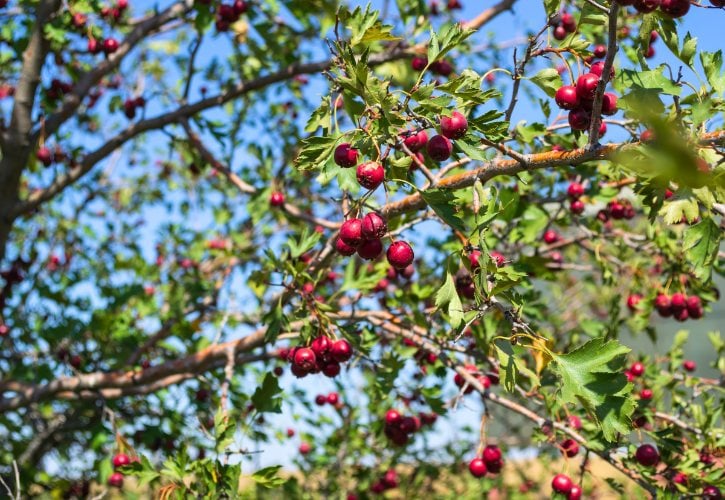
A fruit bowl can look perfectly fresh and healthy, but some of those fruits deserve extra attention before you eat them.
Fruits with thin skin, soft texture, edible peel, or delicate surfaces tend to need more pest protection while growing, which means they can carry more residue by the time they reach your kitchen.
Fruits that grow close to the ground or in tight clusters can also be more exposed to insects, mold, and moisture.
None of this means you should stop eating these fruits. They are still some of the healthiest foods you can choose. The goal is simply to wash and handle them more carefully. 😊
1. Strawberries
Why They Can Have Higher Residue
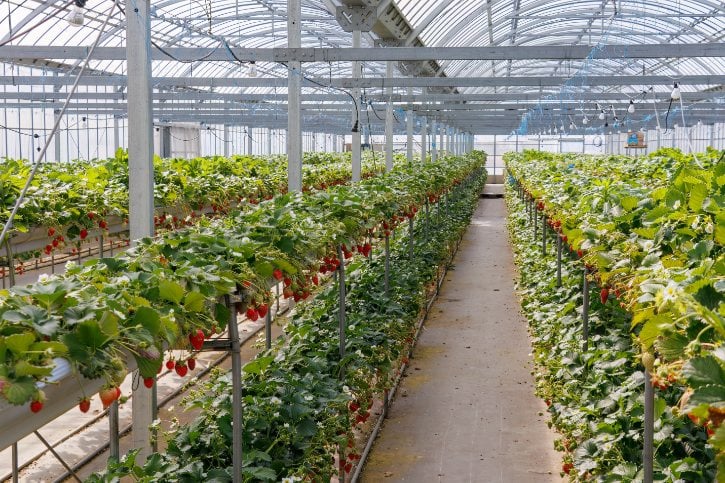
- Strawberries are soft, thin-skinned, and highly vulnerable to mold, fungi, insects, and disease pressure during growing.
- Their surface is covered in tiny seed-like bumps with small indentations around each one, where residue can settle and resist simple rinsing.
- They are highly prone to mold and fungal problems, especially gray mold.
- Because they are so perishable, they often need more protection during growing.
What to Watch For
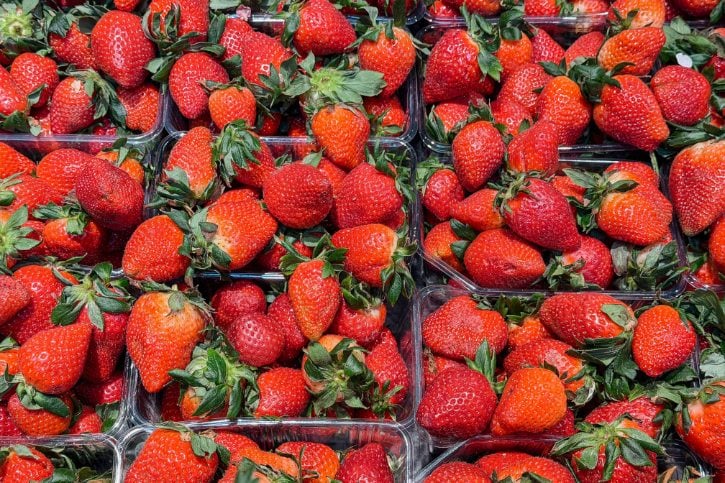
- Strawberries bruise easily during picking, packing, and transport.
- They are eaten whole, so any residue on the surface is consumed directly.
- A quick rinse may not be enough because of their uneven texture.
Strawberries look beautiful in the box, but their soft surface and growing conditions make them one of the fruits worth handling most carefully.
Read More: The Right Way to Wash Strawberries Before You Eat Them
2. Grapes
Why They Can Have Higher Residue
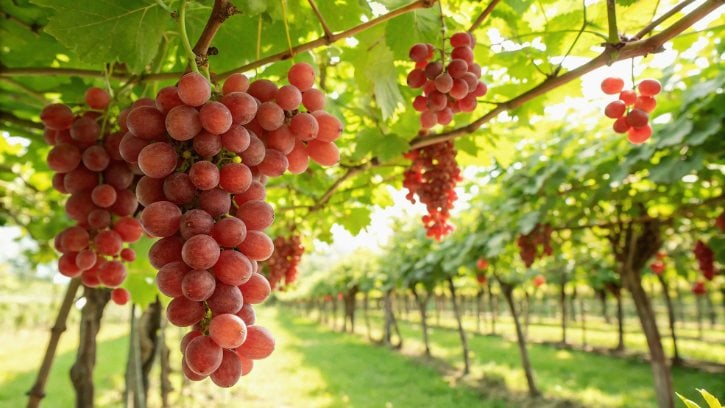
- Grapes grow in tight clusters, which makes it easy for residue and dirt to hide between the fruit.
- Vineyards often deal with heavy pest and disease pressure, including mildew, rot, and insect damage.
- The waxy coating on grape skin, called bloom, is harmless and natural, but it can bind with certain pesticide compounds more easily.
What to Watch For
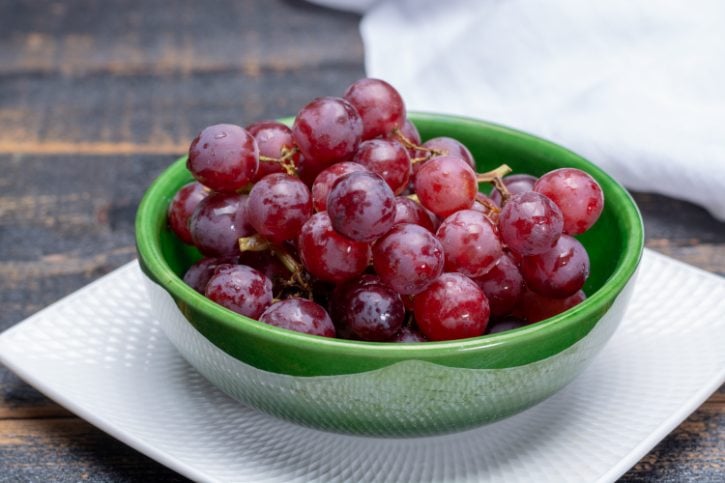
- The smooth surface can look clean even when it still needs washing.
- People tend to eat many grapes at once, so the total skin consumed adds up.
- The natural white bloom should not be confused with dirt or pesticide. It is a protective layer that helps keep the fruit from drying out.
Grapes need more than a quick splash of water over the top of the bunch.
3. Nectarine
Why They Can Have Higher Residue
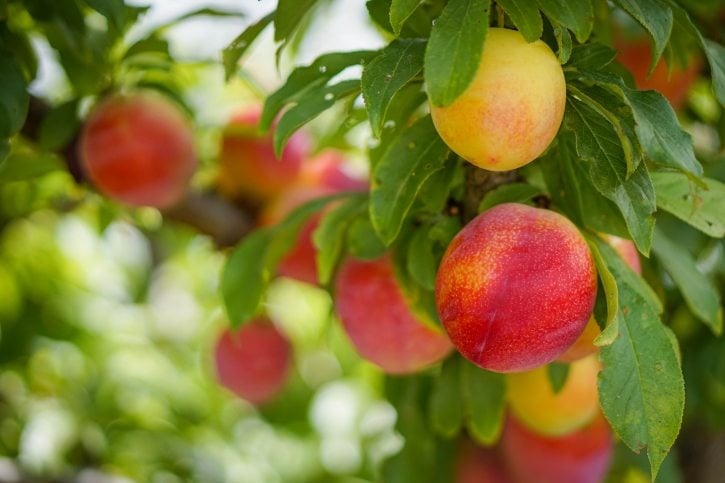
- Nectarines have thin, smooth, edible skin, so any residue on the surface is more likely to be eaten.
- They are soft stone fruits that attract pests like thrips and stink bugs, and are vulnerable to fungal problems such as brown rot.
- Their high sugar content as they ripen makes them even more attractive to insects close to harvest.
What to Watch For
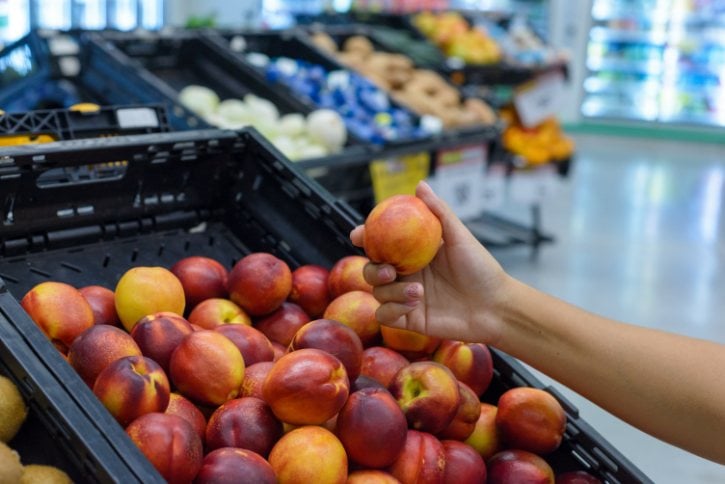
- The smooth skin may still hold surface residue even if it looks perfectly clean.
- Soft spots and bruises develop quickly after picking.
- Nectarines are usually eaten raw with the peel on.
A smooth nectarine can still carry residue on the skin, so it should not be skipped during washing.
4. Peaches
Why They Can Have Higher Residue
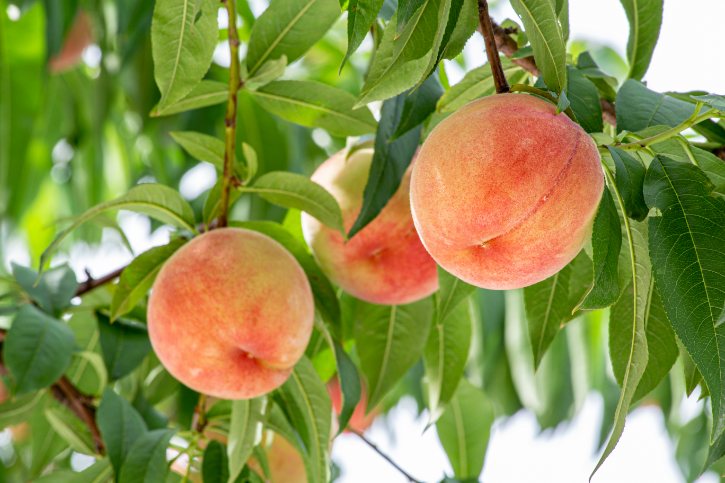
- Peaches have fuzzy skin covered in fine hair-like fibers called trichomes, which increase the surface area and give residue more places to cling.
- The fuzz traps dust, dirt, and pesticide droplets more easily than smooth-skinned fruit.
- Peaches are prone to insects like the Oriental Fruit Moth and diseases like peach leaf curl, which means they often need more treatment during growing.
What to Watch For
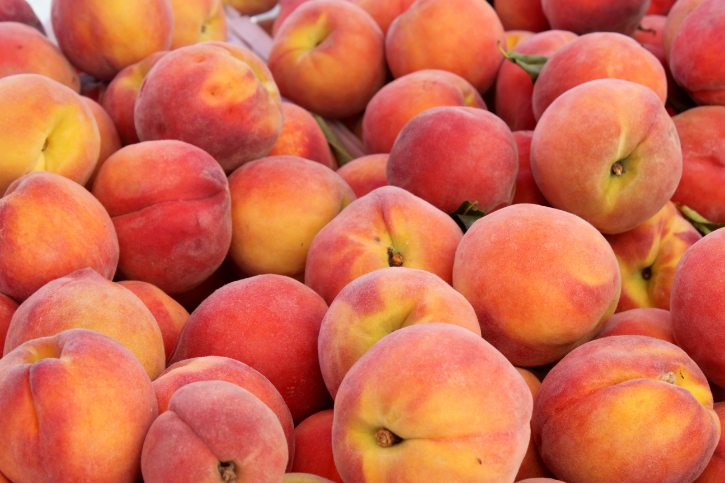
- Most people eat the peel, so residue on the outside matters.
- Peaches are soft and easily damaged, so they need gentle washing rather than hard scrubbing.
- The fuzzy texture can make residue harder to rinse away compared to smoother fruits.
Peach fuzz is one reason this fruit deserves extra attention before eating.
5. Cherries
Why They Can Have Higher Residue
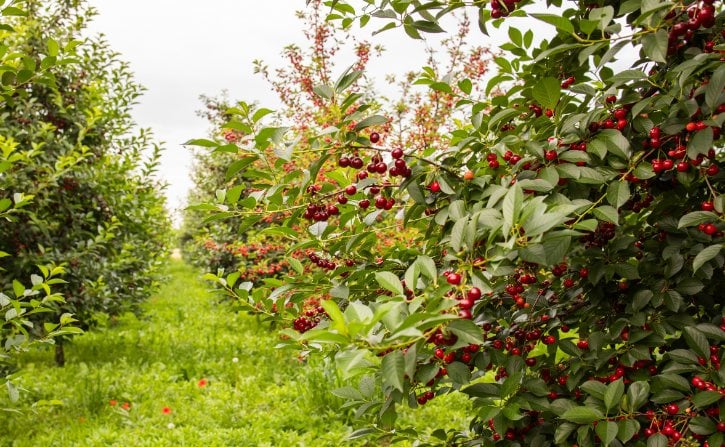
- Cherry trees face serious pest and disease pressure, including insect damage and rain-related cracking.
- The harvest window for cherries is very short, so they often need protection right up until picking.
- The stem area can trap dirt, moisture, and residue in higher concentrations.
What to Watch For
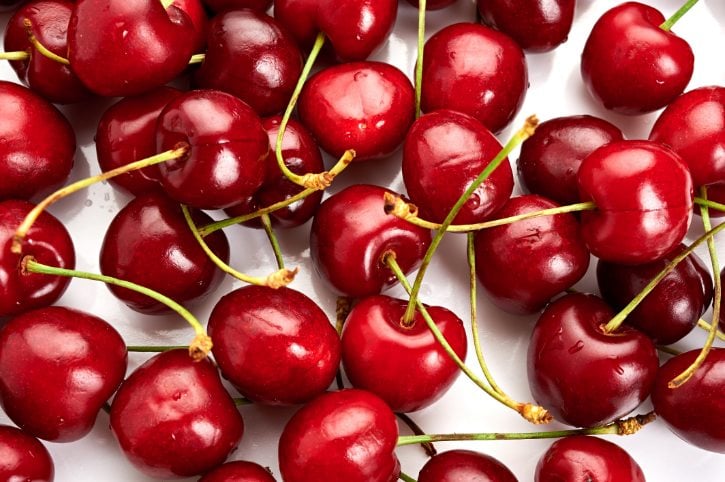
- Cherries are small and eaten with the skin, so you consume a lot of fruit skin in one sitting.
- Cracked or damaged cherries spoil faster and should be sorted out before washing.
- Their small size means even small amounts of surface residue add up when you eat many.
Because cherries are eaten one after another, even small surface residue makes careful washing important.
6. Apples
Why They Can Have Higher Residue
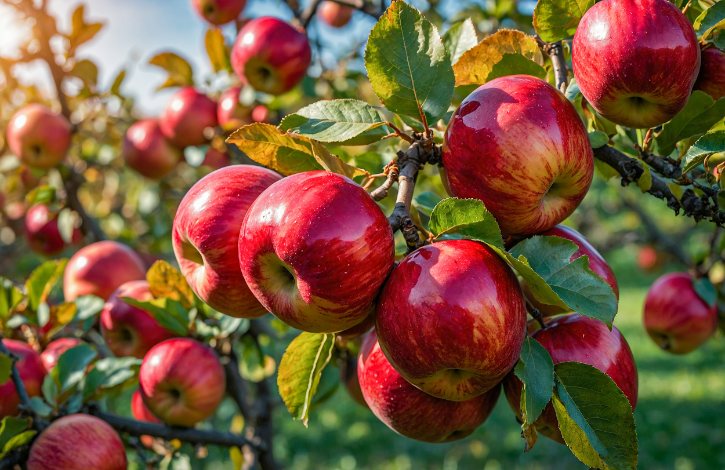
- Apples have a long growing season and can receive many pesticide applications before harvest.
- The deep indent at the stem and the bottom (calyx) can trap residue in spots that a quick rinse may not reach.
- Some apples are coated with food-grade wax after harvest to keep them looking fresh during shipping. If residue is not removed before waxing, the wax can seal it onto the skin.
What to Watch For
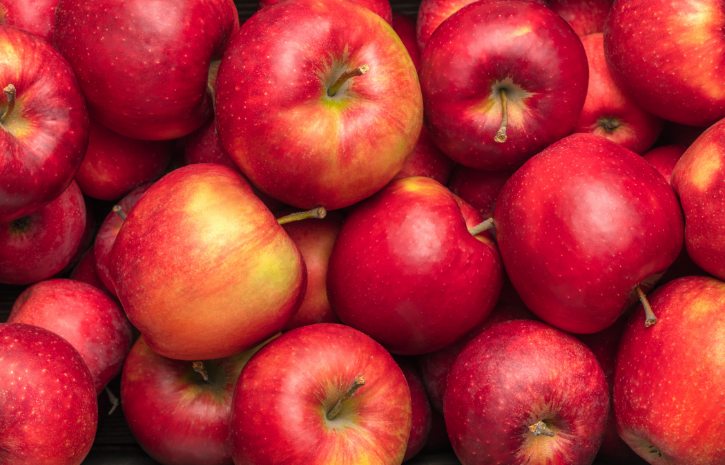
- Apples are almost always eaten with the skin on, so surface residue matters.
- A shiny, polished look does not mean the apple has been cleaned.
- Apples can face pest and disease pressure throughout growing and during long-term storage.
A shiny apple does not always mean a cleaner apple.
7. Blackberries
Why They Can Have Higher Residue
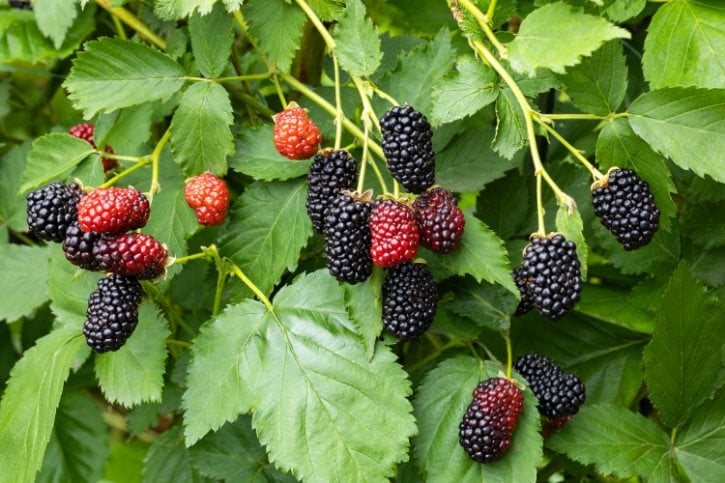
- Blackberries are made up of many tiny sections called drupelets, creating a large amount of surface area where residue, dust, and moisture can cling.
- Their soft, fragile structure means you cannot scrub them or wash them aggressively without crushing the fruit.
- They are very vulnerable to mold and spoilage because of their delicate shape.
What to Watch For
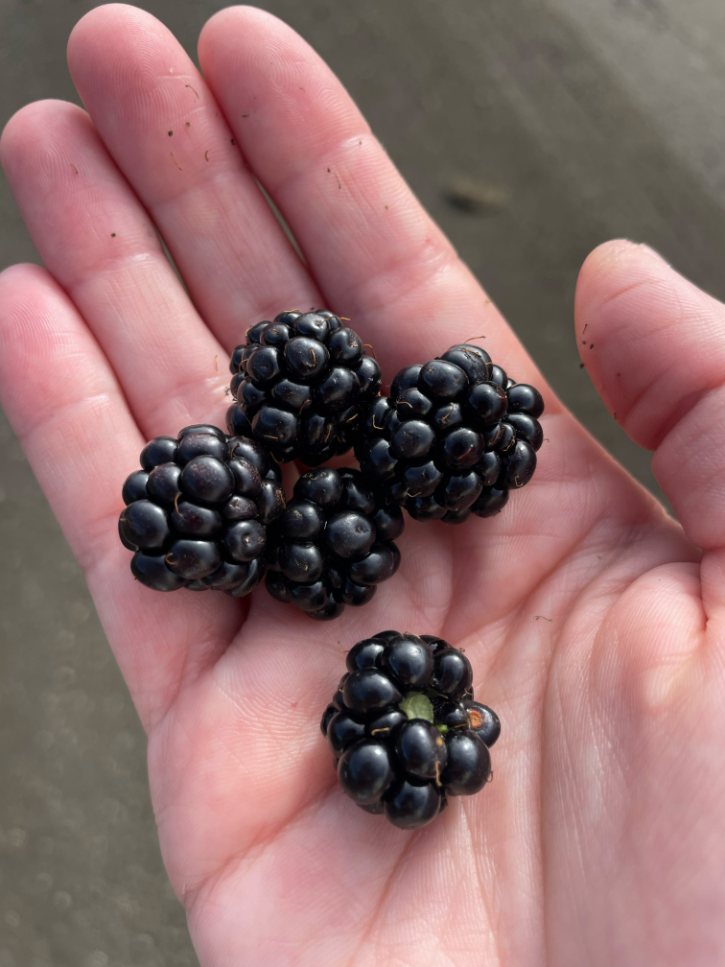
- Blackberries are eaten whole, so careful rinsing still matters.
- Their complex surface makes it harder to remove residue once it has settled.
- They need gentle rinsing and careful drying after washing.
Blackberries are tricky because they need cleaning, but rough washing can damage them.
8. Pears
Why They Can Have Higher Residue
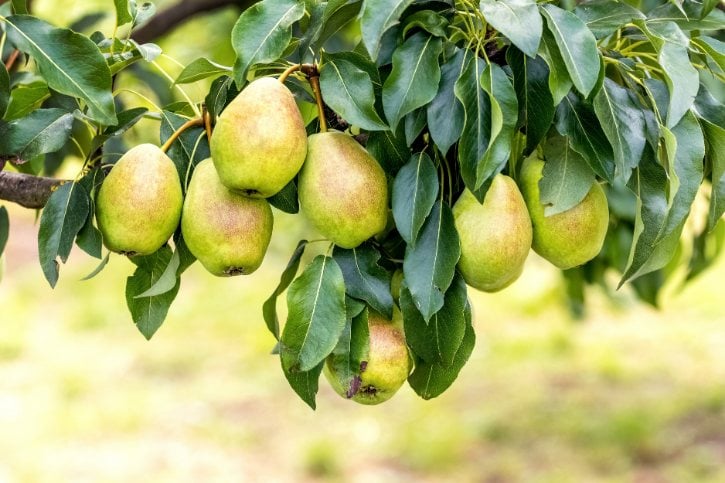
- Pears have thin edible skin that can carry more residue than you might expect.
- They are prone to surface blemishes, pests, and fungal issues while growing.
- After harvest, pears are sometimes treated with additional chemicals to prevent decay during storage.
What to Watch For
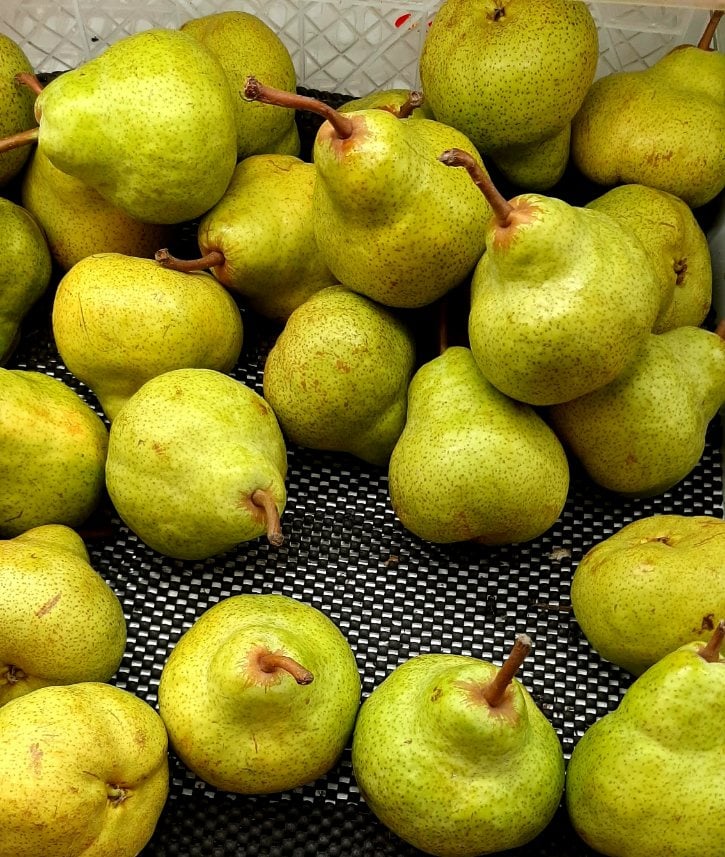
- Pears are usually eaten without peeling, so surface residue is consumed directly.
- The deep indent at the stem and bottom can collect dirt and residue.
- They bruise easily when ripe, so they need gentle handling.
Pears look simple, but their thin skin and soft texture make careful washing important.
9. Blueberries
Why They Can Have Higher Residue
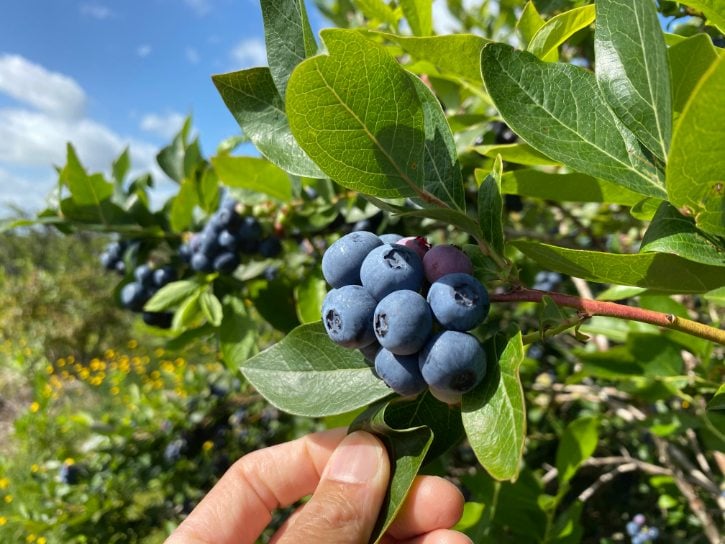
- Blueberries are small and eaten whole, so the skin is consumed directly.
- They can be affected by insects, birds, fungi, and mold during growing.
- The natural dusty coating on blueberries, called bloom, is harmless, but it can also trap certain residues on the surface.
What to Watch For
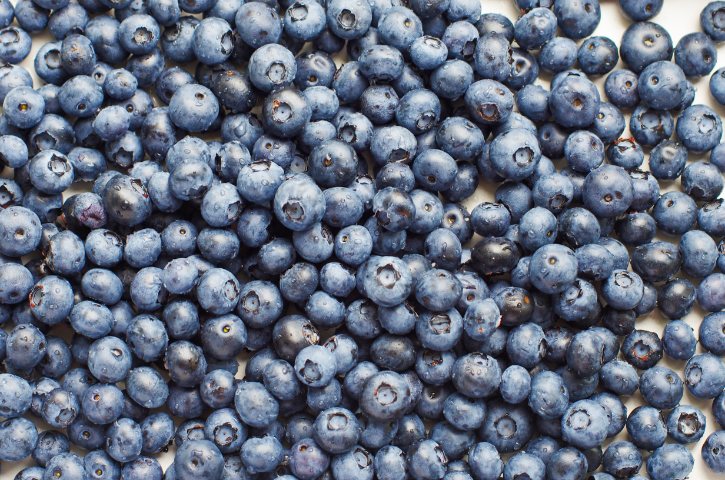
- Their small size and delicate surface make them difficult to scrub.
- Mold spreads quickly if blueberries are stored wet.
- The bloom should not make you assume the berries are already clean. They still need gentle rinsing and thorough drying.
The dusty coating on blueberries is often natural, but they still need careful washing before eating.
Best Way to Wash High-Residue Fruits Properly
You do not need expensive commercial fruit washes. A few simple household methods can make a real difference when it comes to reducing pesticide residue on your fruit.
a. Start by Sorting the Fruit First
- Remove any moldy, cracked, bruised, leaking, or mushy pieces.
- Check the bottom of berry containers, that is where damaged fruit often hides.
- Look around stems, soft spots, and any damaged areas.
- Do not wash spoiled fruit together with good fruit.
Why this matters: Damaged fruit can spread moisture, mold, and spoilage to the rest of your batch faster than you might expect.
b. Wash Your Hands and Prep a Clean Area
This is easy to miss, but it makes a difference.
- Wash your hands with soap and water before touching fruit.
- Use a clean bowl, colander, knife, and cutting board.
- Clean your sink area if you are washing fruit directly there.
- Do not place washed fruit back into the container it came in.
Why this matters: Washing fruit is less useful if it touches dirty surfaces afterward.
c. Use Running Water and Gentle Rubbing for Firm Fruits
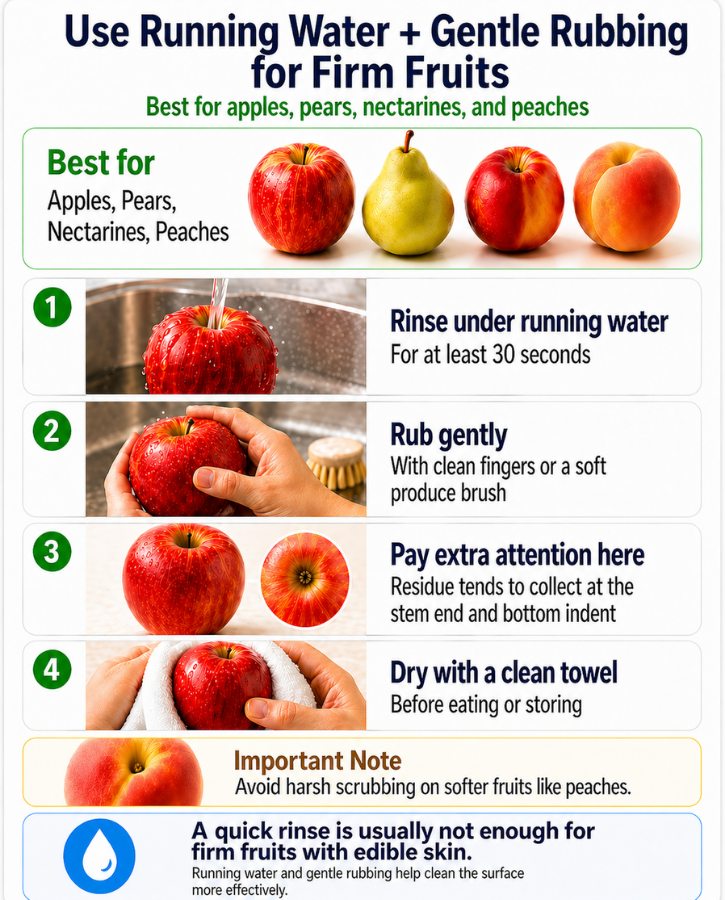
Best for: Apples, Pears, Nectarines, Peaches
- Rinse under running water for at least 30 seconds.
- Rub the skin gently with clean fingers or a soft produce brush.
- Pay extra attention to the stem end and bottom indent, where residue tends to collect.
- Avoid harsh scrubbing on softer fruits like peaches.
- Dry with a clean towel before eating or storing.
A quick rinse is usually not enough for firm fruits with edible skin.
d. Wash Grapes in Smaller Sections
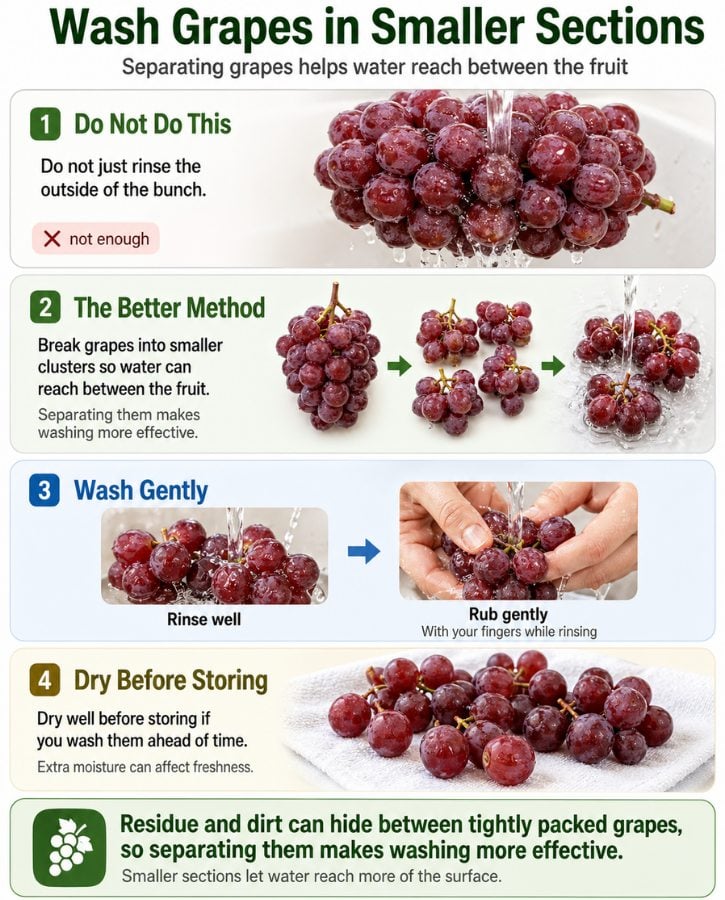
- Do not just rinse the outside of the bunch.
- Break grapes into smaller clusters so water can reach between the fruit.
- Rub gently with your fingers while rinsing.
- Dry well before storing if you are washing them ahead of time.
Residue and dirt can hide between tightly packed grapes, so separating them makes washing more effective.
e. Handle Berries Gently
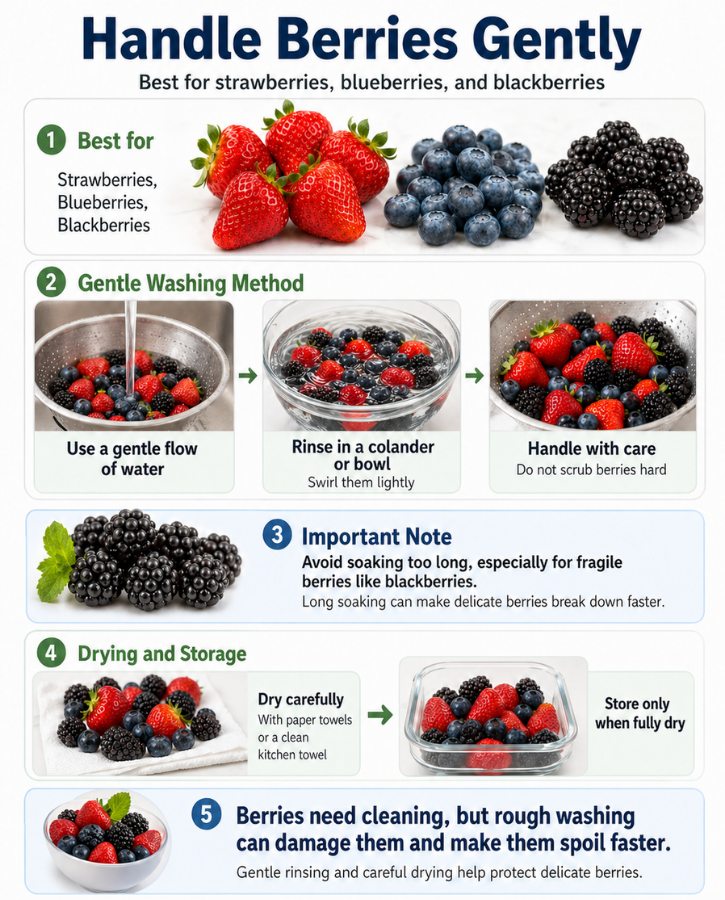
Best for: Strawberries, Blueberries, Blackberries
- Do not scrub berries hard, they crush easily.
- Use a gentle flow of water.
- Rinse in a colander or a bowl, swirling them lightly.
- Avoid soaking too long, especially for fragile berries like blackberries.
- Dry carefully with paper towels or a clean kitchen towel.
- Store only when fully dry.
Berries need cleaning, but rough washing can damage them and make them spoil faster.
f. Use Baking Soda Wash for Better Residue Reduction
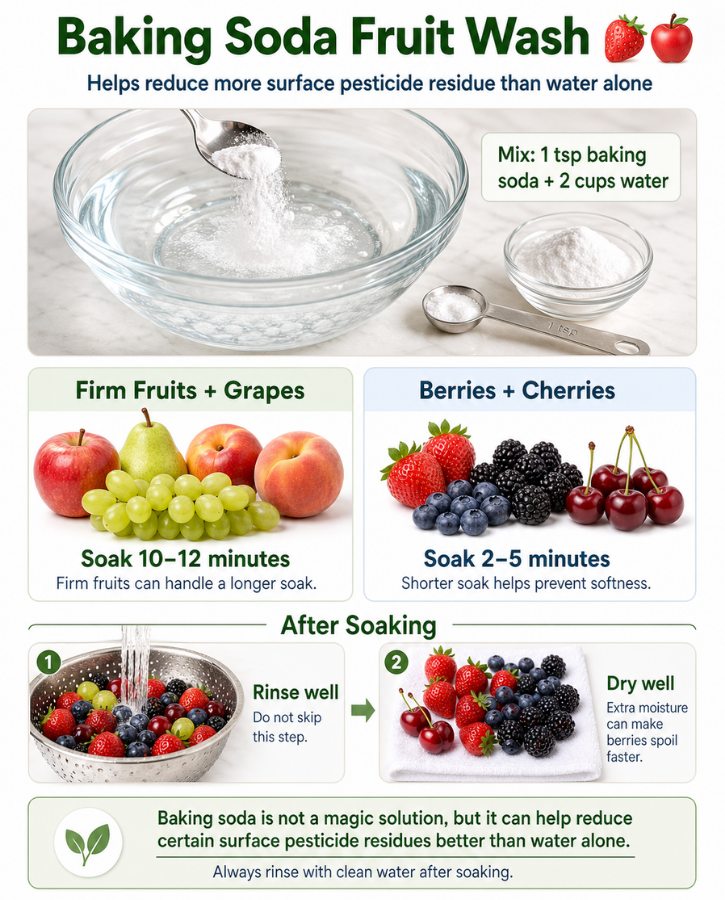
Here is a simple trick that can help reduce more pesticide residue than water alone.
Research from the University of Massachusetts found that a baking soda soak was significantly more effective than plain water at removing surface pesticide residues.
How to do it:
- The ratio: Mix about 1 teaspoon of baking soda into 2 cups of water.
- For firm fruits and grapes (apples, pears, nectarines, peaches, grapes): Soak for 10 to 12 minutes. These fruits can handle a longer soak without damage.
- For berries (strawberries, blueberries, blackberries) and cherries: Soak for 2 to 5 minutes. A shorter soak helps avoid making them too soft or waterlogged.
- Always rinse: After soaking, rinse the fruit thoroughly under clean running water. Do not skip this step.
- Dry well: Pat fruit dry with a clean towel after washing.
This method works for all nine fruits on this list. Baking soda is not a magic solution, but it can be more effective than plain water alone for helping reduce certain surface pesticide residues.
For berries, make sure they are dried properly before storing because extra moisture can make them spoil faster.
g. Dry Fruit Properly After Washing
- Use clean paper towels or a clean kitchen towel.
- Spread berries in a single layer and gently blot them dry.
- Let fruit air-dry briefly if needed before storing.
- Do not seal wet fruit in airtight containers.
Why this matters: Moisture encourages mold, and wet berries spoil much faster in the fridge.
h. Store Washed Fruit the Right Way
- Store berries dry and cool.
- Use breathable containers or line containers with a paper towel to absorb extra moisture.
- Keep delicate berries from being stacked or crushed.
- Refrigerate ripe fruit when needed.
- Do not mix spoiled fruit with fresh fruit.
- Eat delicate berries sooner rather than later.
Why this matters: Poor storage can make clean fruit spoil quickly, even if you washed it perfectly.