You pick up an apple at the supermarket. It gleams under the lights, almost too perfect.
That shine looks beautiful, but something feels off. Is it natural? Did someone coat it with something? And more importantly, is it safe to eat?
The answer is more interesting than you might expect. Here’s what’s really going on with that shiny apple in your hand. 😊
1. Do Apples Naturally Have Wax?
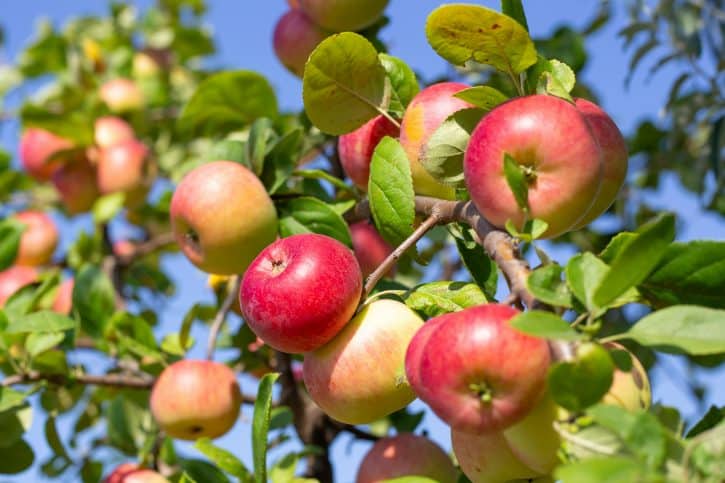
Yes, apples grow their own wax. It’s not a human invention.
Every apple develops a thin protective layer called a cuticle as it ripens on the tree. This natural coating is made from a mix of biological compounds, including something called ursolic acid, which makes the surface water-repellent.
Why does the apple need this? Because apples are 80% to 95% water. Without that waxy shield, they would lose moisture quickly and shrivel up.
The natural wax also protects against fungi and bacteria by sealing tiny cracks in the skin.
You may have noticed a grayish-white, powdery film on freshly picked apples. That’s called the “bloom”, and it’s completely natural. When you rub it, the wax flattens out and creates a subtle shine.
So yes, nature gives apples their own protective coating. But the story doesn’t end there.
2. Why Supermarket Apples Look So Shiny
Here’s what most people don’t realize.
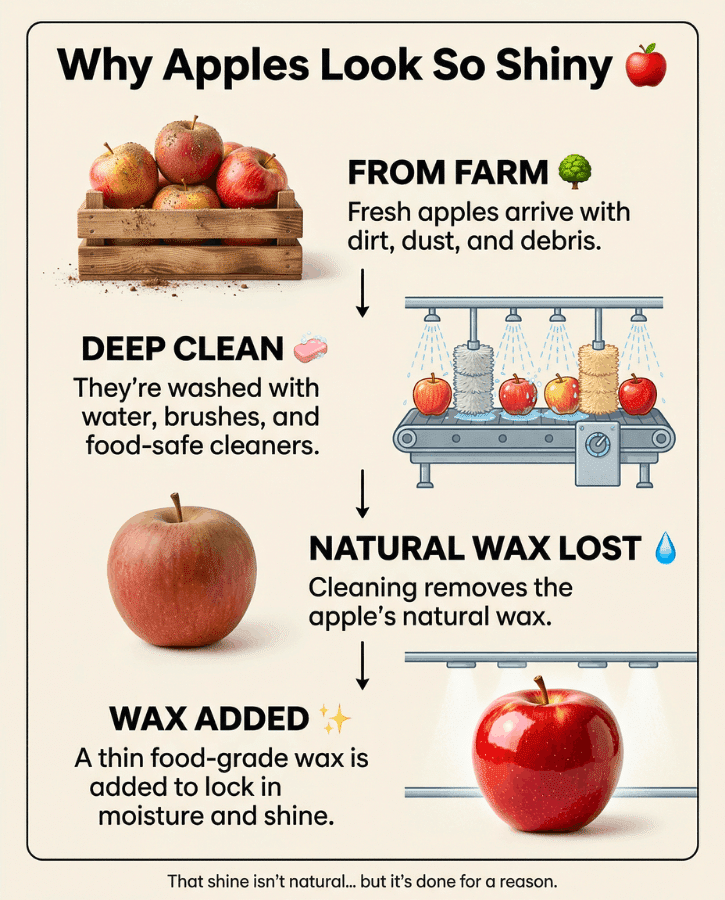
When apples arrive at packing facilities, they’re covered in dust, dirt, and debris from the orchard. To meet food safety standards, they go through a serious cleaning process with high-pressure water, brushes, and food-grade detergents.
This cleaning removes contaminants, but it also strips away much of the apple’s natural wax.
Without that protective layer, apples lose moisture faster and don’t last as long. They also look dull instead of fresh.
To fix this, packinghouses apply a thin replacement wax. This practice has been standard since 1924.
The added wax does three things:
- Prevents moisture loss so the apple stays crisp during storage and shipping
- Slows down ripening by reducing the apple’s natural respiration
- Creates that glossy appearance consumers associate with freshness
Here’s the surprising part. The amount of wax used is incredibly small. One pound of wax can coat up to 160,000 apples. You’re looking at just a few drops spread across the entire fruit.
3. What Kind of Wax Is Used?
Commercial apple coatings come from several different sources. All of them must be approved by food safety authorities like the FDA in the United States and the European Food Safety Authority.
Natural biological waxes:
- Shellac comes from the secretion of the lac bug, found in India and Thailand. It creates a high-gloss, glass-like finish. You’ll also find shellac used in chocolate coatings and pharmaceutical pills.
- Carnauba wax is harvested from the leaves of a Brazilian palm tree. It’s extremely durable and handles temperature changes well.
- Beeswax offers a softer, more pliable coating.
- Candelilla wax comes from a desert shrub in the Southwestern United States and Mexico.
Synthetic and petroleum-based options:
- Polyethylene wax is a synthetic polymer that creates a consistent, water-resistant film.
- Paraffin (petroleum-based) is more common on vegetables like cucumbers but sometimes appears in apple wax blends.
These waxes are often mixed with emulsifiers to help them spread evenly. One common emulsifier is morpholine, which we’ll discuss in the safety section.
4. Is Apple Wax Safe to Eat?
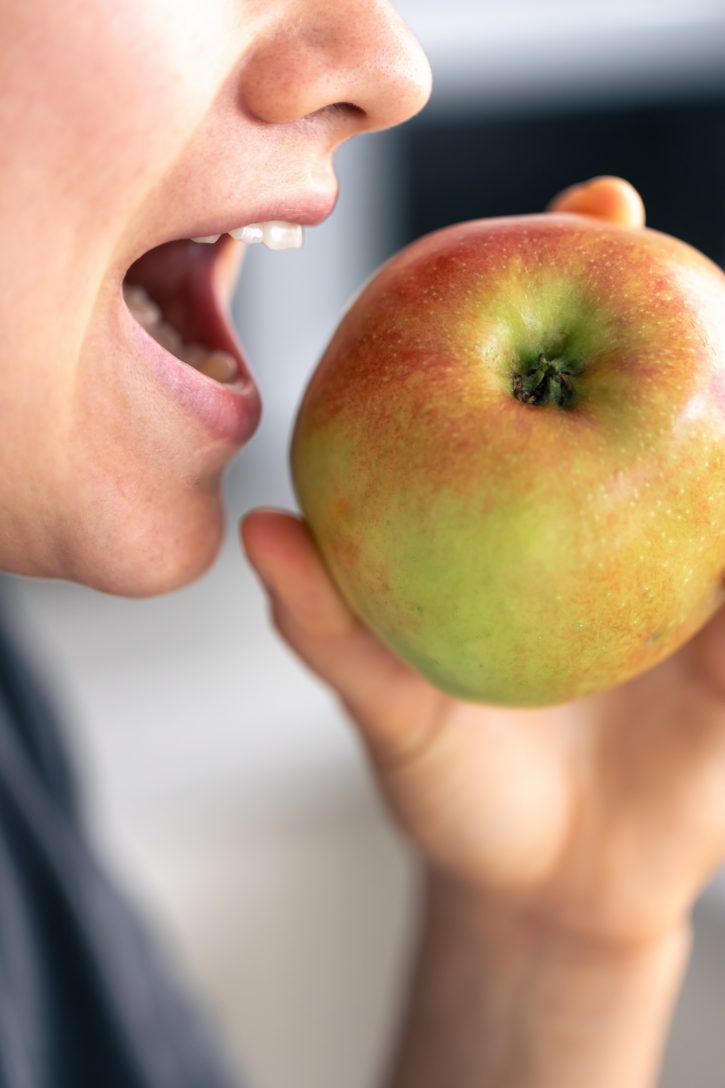
The short answer is yes.
Global health authorities consistently confirm that food-grade waxes are safe for human consumption. Here’s why.
The wax is inert. Your body doesn’t have the enzymes to break down shellac or carnauba wax. They simply pass through your digestive system without being absorbed.
The amount is tiny. The wax on a single apple is measured in millionths of a gram. Safety studies test these substances at doses thousands of times higher than what you’d ever consume.
For example, the European Food Safety Authority found no adverse effects in rats even at doses of 8,800 mg of carnauba wax per kilogram of body weight per day. That’s an enormous margin of safety compared to the trace amount on your apple.
What about morpholine?
This emulsifier gets attention because, under specific laboratory conditions, it can form a compound linked to cancer in rodents. However, Health Canada and the World Health Organization concluded that the risk to humans is negligible.
Why? The morpholine is present in trace amounts, much of it evaporates during drying, and what remains is locked inside an indigestible wax matrix. Your stomach can’t access it in a way that would cause harm.
The European Union does ban morpholine-treated fruit imports as a precaution, but this is a regulatory choice rather than evidence of actual danger.
5. Can Wax Trap Pesticides?
This is a common worry. Does the wax seal pesticides into the apple, making them impossible to remove?
Here’s what the research actually shows.
Apples are washed before waxing. The commercial cleaning process removes a significant portion of surface pesticides before any wax is applied. Most pesticides used during growing are surface-level and come off during this stage.
Systemic pesticides are a different issue. Some pesticides are designed to penetrate the fruit’s skin. Research from the University of Massachusetts found that certain fungicides can absorb up to 80 micrometers into the apple peel.
The important point: the wax doesn’t cause this penetration. These pesticides absorb into the biological tissue of the apple itself, not the wax coating.
Residue levels are closely monitored. According to the USDA, 99% of produce samples tested have pesticide residues well below legal safety limits.
So while wax doesn’t “trap” pesticides in the way many people fear, it’s still reasonable to want to clean your apples thoroughly. Here’s how to do it effectively.
6. How to Remove Wax Properly
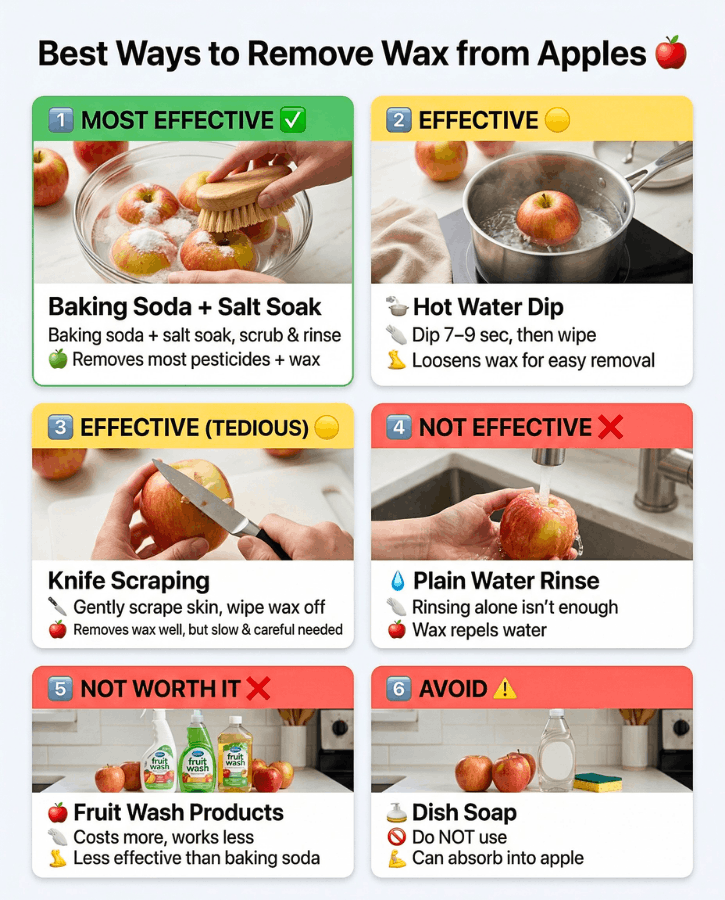
Here are the main methods people use to clean apples, along with what actually works.
a. Baking soda soak (most effective):
- Mix 2 teaspoons of baking soda and 2 teaspoons of salt with 4 cups of warm water in a bowl
- Place 3 to 4 apples in the solution
- Soak for 12 to 15 minutes
- Scrub with a veggie brush
- Rinse with clean water
Research shows this removes up to 96% of surface pesticides and breaks down a significant portion of the wax coating. The alkaline solution degrades chemical bonds that other methods can’t touch.
b. Hot water dip (effective for loosening wax):
- Dip apples in hot water for 7 to 9 seconds
- Remove and wipe the surface with a clean cloth
The heat causes the wax to expand and crack, loosening it from the skin. You’ll notice a white, milky appearance as this happens. This makes the wax much easier to wipe away.
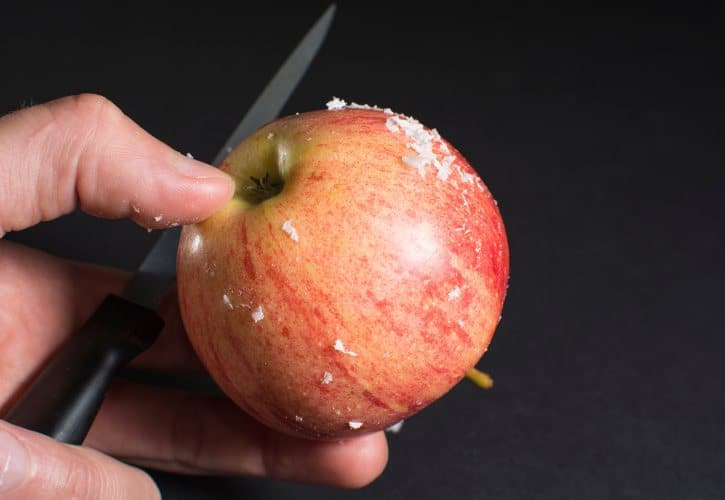
c. Using a small knife (effective for wax, but tedious):
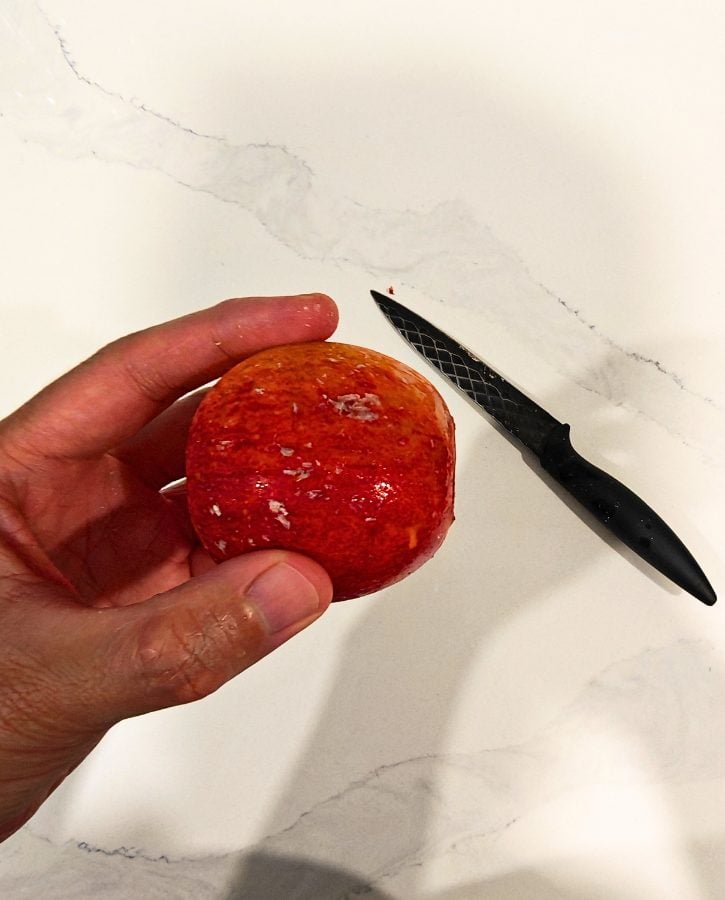
- Gently run the blade over the apple skin using slow, back-and-forth movements
- Wipe away the white wax shavings as they build up
This method removes the wax coating well, but it’s time-consuming and works best for just one or two apples. Be careful not to puncture or bruise the skin. Keep in mind that scraping removes wax but does not remove pesticides that have penetrated the skin.
d. Plain water rinse (not effective):
Running apples under tap water does very little. The wax is hydrophobic, meaning water simply rolls off without breaking it down.
e. Commercial fruit washes (not effective):
Studies found these products perform worse than a simple baking soda solution, despite costing more.
f. Dish soap (avoid completely):
Never use dish soap or household detergents. Apples are porous, and these non-food-grade chemicals can absorb into the flesh. You may create a bigger problem than the wax you’re trying to remove.
Bottom line: The baking soda soak is your best option for removing both wax and pesticides. Hot water works well for loosening wax quickly. A knife is effective for wax but takes more effort and won’t address pesticide residues.
7. How to Tell If an Apple Has Wax
Some apple varieties are naturally shinier than others, so it’s not always obvious whether commercial wax has been added. Here are a few ways to check.
The hot water test:
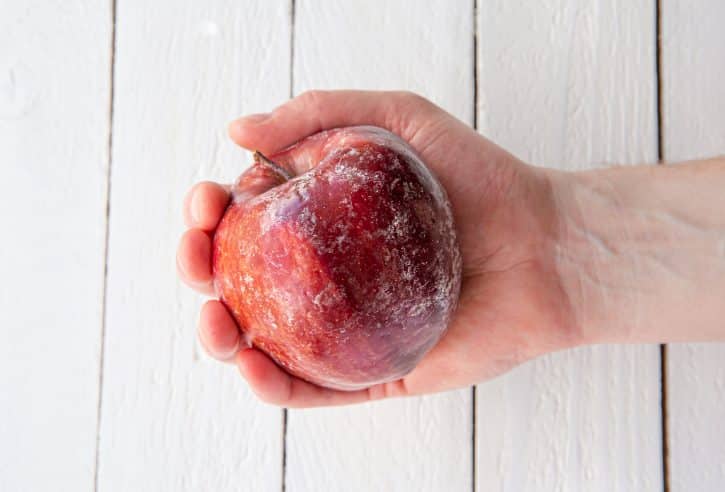
Pouring hot water over an apple often produces white, milky patches. Some people claim this proves harmful chemicals are present. In reality, this “blushing” effect happens because heat causes any wax (natural or added) to expand and crack, trapping air that scatters light.
It confirms wax is present but doesn’t tell you whether it’s natural or commercial, and it says nothing about safety.
Practical indicators:
- Scrape test. Run a fingernail across the surface of a room-temperature apple. A fine white powder suggests a heavier wax coating.
- Shine level. Shellac-coated apples have an intense, glassy shine. Natural wax tends to look more matte or satin.
8. Organic Apples vs Regular Apples
Many people assume “organic” means no wax at all. That’s not quite accurate.
What organic standards allow:
Under USDA organic rules, synthetic and petroleum-based waxes are prohibited. However, certain natural coatings are permitted:
- Carnauba wax (from palm leaves)
- Wood rosin (from pine trees)
- Beeswax (if organically sourced)
- Orange shellac (meeting non-synthetic criteria)
So organic apples can still have a coating. It just has to come from approved natural sources.
Regional differences matter:
- In the European Union, waxing organic fruit is much rarer due to stricter post-harvest treatment rules.
- In Australia, major retailers like Coles and Woolworths switched many apple lines to “no added wax” starting in 2017, responding to consumer preferences.
- Conventional apples in the US typically receive both natural and synthetic coatings, including polyethylene and morpholine-based formulations that organic standards prohibit.
If avoiding added wax entirely is important to you, look for local, seasonal fruit or check with your retailer about their specific practices.
9. Should You Be Worried?
Based on current scientific evidence, apple wax is not a significant health risk.
The substances used are either inert (passing through your body unabsorbed) or present in amounts far below any level that causes harm. Global food safety authorities continue to affirm this conclusion.
The real risk is peeling your apples.
Many people, worried about wax and pesticides, remove the skin entirely. This actually reduces the nutritional value of what you’re eating.
The apple’s skin contains:
- The majority of the fruit’s fiber
- Over 50% of its vitamins and antioxidants
- Ursolic acid (from the natural wax), which researchers are studying for potential anti-inflammatory benefits
Removing the peel to avoid a trace of inert wax means losing significant nutritional content.
Practical takeaways:
- Apples, waxed or not, remain one of the safest and most nutritious fruits you can eat.
- If added wax bothers you, buy local seasonal fruit or certified organic apples, which are less likely to contain synthetic coatings.
- For the most effective cleaning, use a 15-minute baking soda soak. It works better than plain water or commercial fruit washes.
- Don’t peel your apples unless you have a specific reason to. The skin is where much of the good stuff is.
The “truth” about apple wax? It’s a well-regulated preservation tool that lets you enjoy crisp, fresh apples year-round, even when they were harvested months ago and shipped across the world.
That shiny coating is doing exactly what nature intended the original wax to do. It’s just been restored after cleaning removed what was there first.