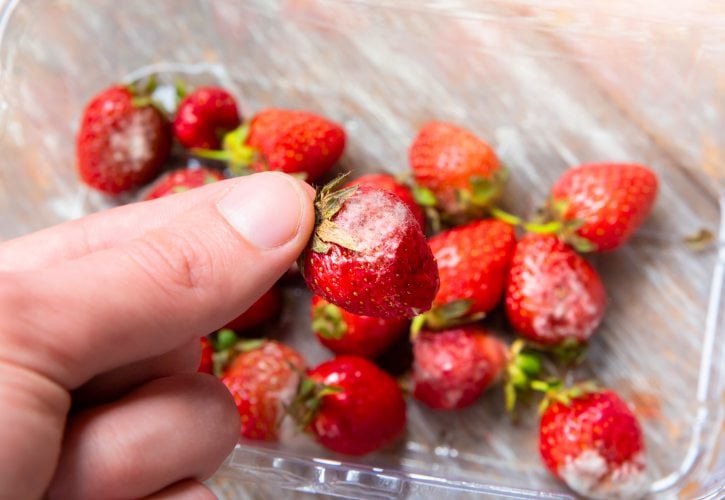
Strawberries can look perfect at the store, then turn fuzzy or mushy almost overnight at home. That is not just bad luck.
A few small things, especially bruising, warmth, and hidden moisture, can turn one good-looking box into a fast-spoiling mess.
Once you understand what is really going on, you can make your strawberries last much longer. 😊
1. Why Strawberries Go Moldy So Fast
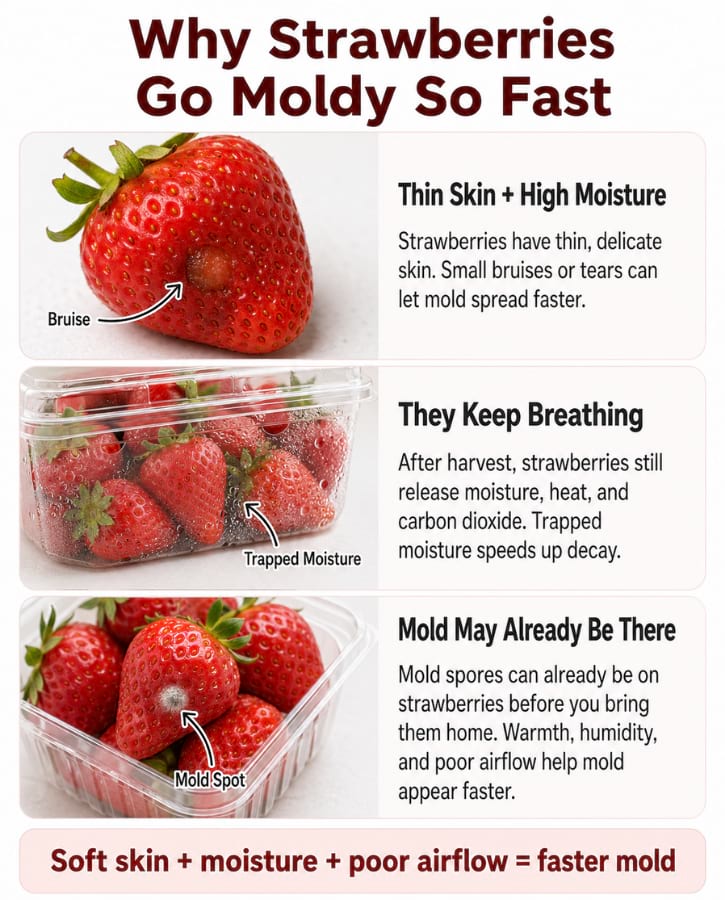
a. Thin Skin and High Moisture
Strawberries are soft and extremely delicate compared to fruits like apples or oranges.
They don’t have a thick protective skin or waxy coating to shield them from damage, so they bruise easily during picking, packing, transport, and handling.
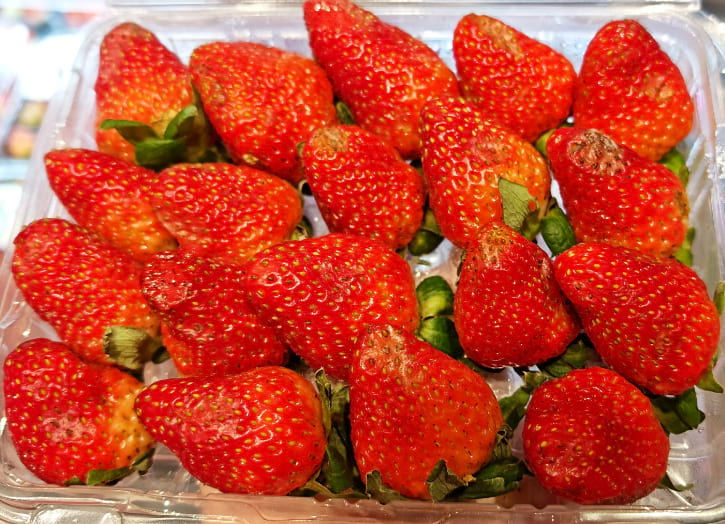
Every small bruise or tear in the skin becomes an entry point for mold. And because strawberries are about 90 percent water with plenty of natural sugars, they provide the perfect environment for mold to grow.
b. They Keep Breathing After Harvest
Unlike some fruits that slow down after picking, strawberries have a very high respiration rate.
They keep releasing moisture, heat, and carbon dioxide. All of that trapped moisture speeds up decay.
c. Mold May Already Be There
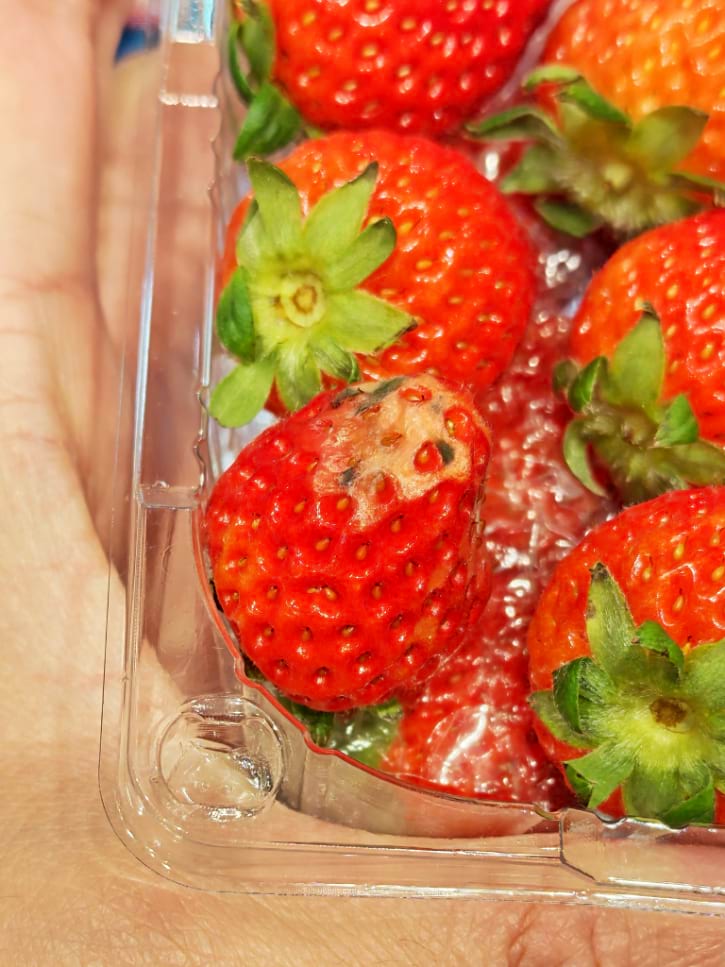
Most people don’t realize this, but mold spores are often already on the berries before you bring them home.
A common type called gray mold can infect strawberries while they’re still growing in the field, staying invisible until conditions like warmth and humidity wake it up.
When berries sit in a container with poor airflow, the moisture they release gets trapped inside, creating the damp environment mold thrives in.
2. The Common Home Mistakes That Make Strawberries Mold Faster
a. Washing and Moisture Mistakes
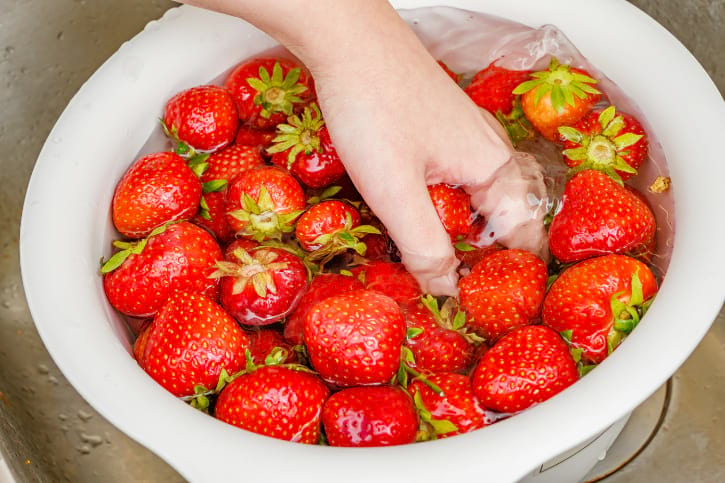
- Washing strawberries before storing them. Water left on the surface after rinsing encourages mold. Moisture hides under the green caps and in the tiny dimples, creating perfect spots for growth.
- Storing strawberries while they are still damp. Even slightly wet berries will spoil much faster than dry ones.
- Keeping them in a fully sealed container. Strawberries release water vapor as they breathe. A sealed container traps that moisture, leading to condensation and faster rot.
b. Handling and Placement Mistakes
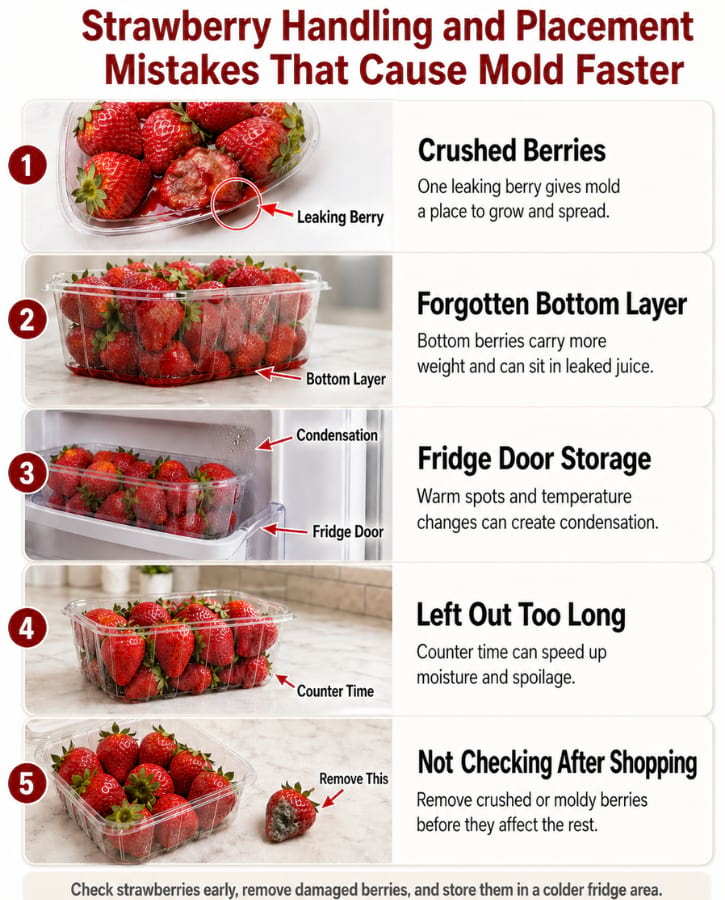
- Leaving crushed or leaking berries in the box. A single leaking berry provides an immediate food source for mold, which then spreads to its neighbors.
- Ignoring the bottom layer. The berries at the bottom carry the most weight and are most likely to be crushed or sitting in leaked juice.
- Storing them near the fridge door. It’s the warmest spot, and temperature shifts cause berries to “sweat” and create more condensation.
- Leaving them at room temperature too long. Even an hour or two on the counter can jumpstart the mold process.
- Not inspecting the container right after shopping. The damage may already be starting. If a few berries are crushed or moldy, they need to be removed immediately.
3. The Moisture Problem Most People Don’t Notice
Even if your berries look dry, they’re constantly releasing water into the air around them.
In a plastic container, that moisture quickly turns into visible droplets when the temperature shifts.
If you’ve ever noticed the lid looking foggy, that’s condensation.
The warmer air inside hits the cold plastic and forms water droplets that drip back onto the fruit, giving mold exactly what it needs.
Even a small amount of extra moisture causes big problems.
A saturated paper towel or a few trapped droplets can give a mold colony enough hydration to double in size in hours.
Keep your strawberries as dry as possible until you’re ready to eat them.
4. Why One Bad Strawberry Can Affect the Whole Box
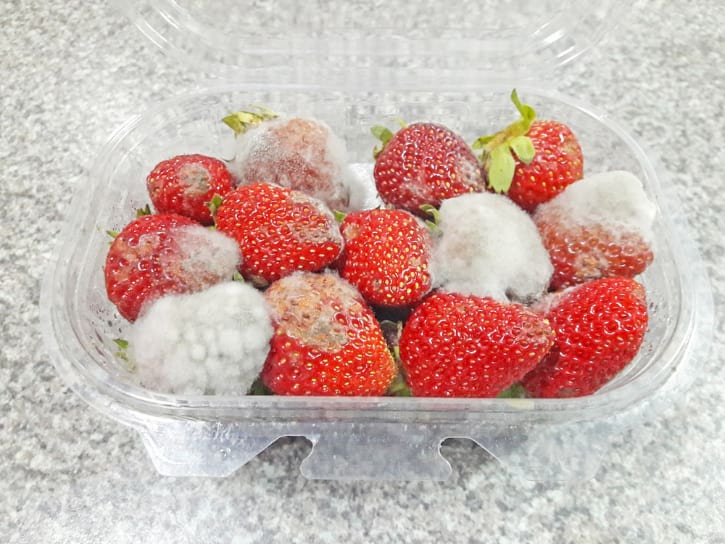
One bad strawberry really can ruin the rest. When a berry starts to rot, the mold produces thread-like structures that grow outward and grab onto neighboring fruit.
By the time you see gray fuzz on one berry, it’s likely already releasing thousands of microscopic spores inside the container.
Crushed berries are especially dangerous because they leak juice, a concentrated mix of sugars that acts like a highway for mold.
This is why the bottom berries often spoil first, they carry the most weight and sit where moisture collects.
Removing problem berries early is one of the most effective things you can do. Take out the soft or leaking ones right away to protect the rest.
5. Should You Wash Strawberries Before Storing?
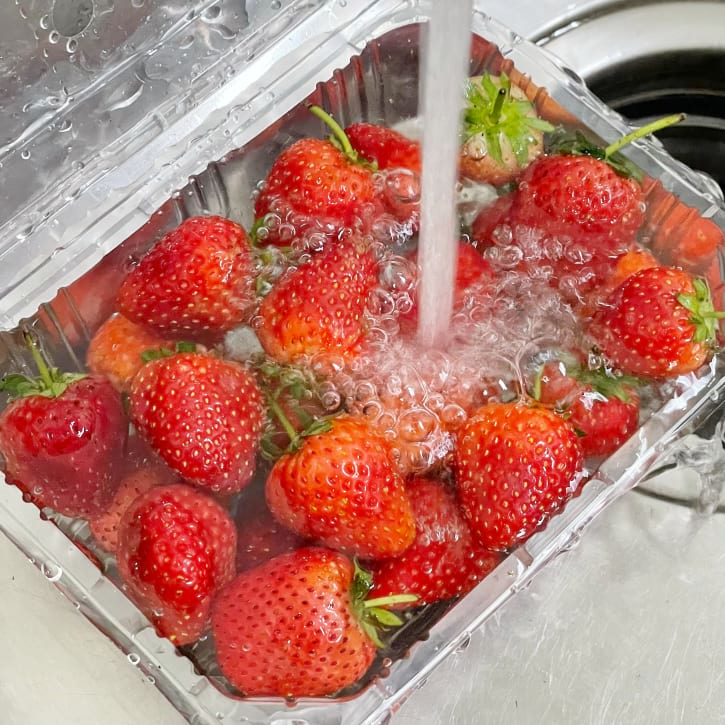
For most people, the best advice is simple: wash strawberries only right before you eat them.
Washing early is risky because it’s very hard to get them completely dry afterward. Water hides under the leaves and in the pores, creating a humid environment that mold loves.
If you must wash early, lay the berries in a single layer on a clean towel and let them dry completely, or use a salad spinner lined with paper towels.
Strawberries also have porous skin that can absorb water, making them taste diluted and become mushy faster. Keeping them dry preserves their freshness and sweet flavor.
6. Does a Vinegar Wash Help?
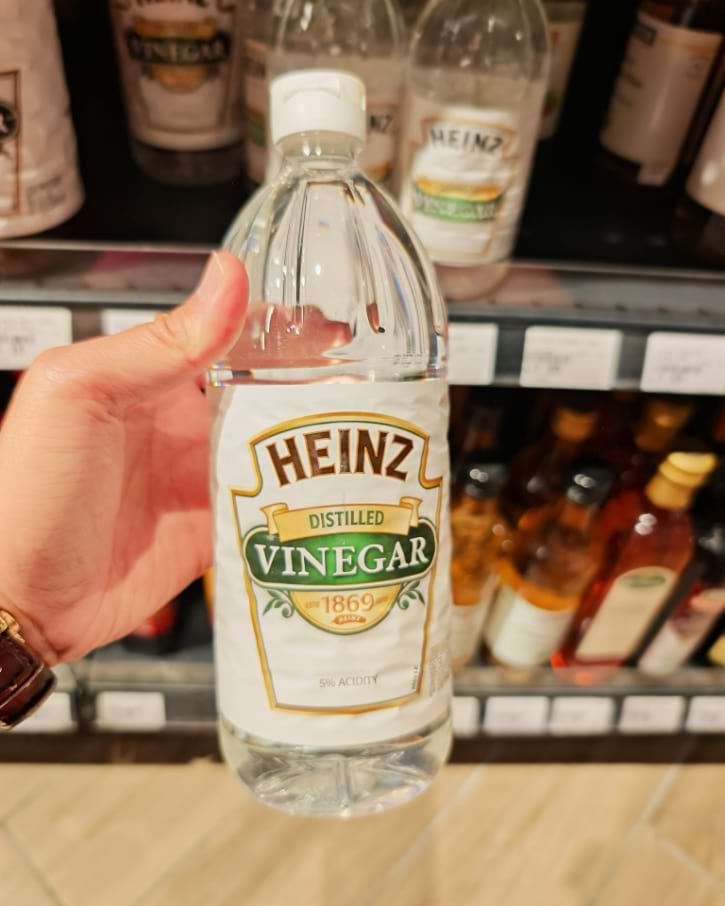
A vinegar-and-water rinse can help, but it’s not a magic solution. Vinegar contains acetic acid, which can kill some surface mold spores and bacteria, giving your berries a cleaner start in the fridge.
But here’s what matters most: the drying step after the wash is far more important than the vinegar itself.
If berries go into the fridge still wet, they’ll mold just as fast as berries washed in plain water. A vinegar wash also can’t reach infections already present inside the fruit.
It may be useful if the berries look dusty or have been heavily handled. It may be unnecessary if the berries already look clean and firm. The extra handling involved in a vinegar soak can sometimes bruise delicate berries more than it helps.
If you use one, mix about one part white vinegar to three parts water, and always dry thoroughly afterward.
7. How to Store Strawberries the Right Way
a. Inspect and Sort
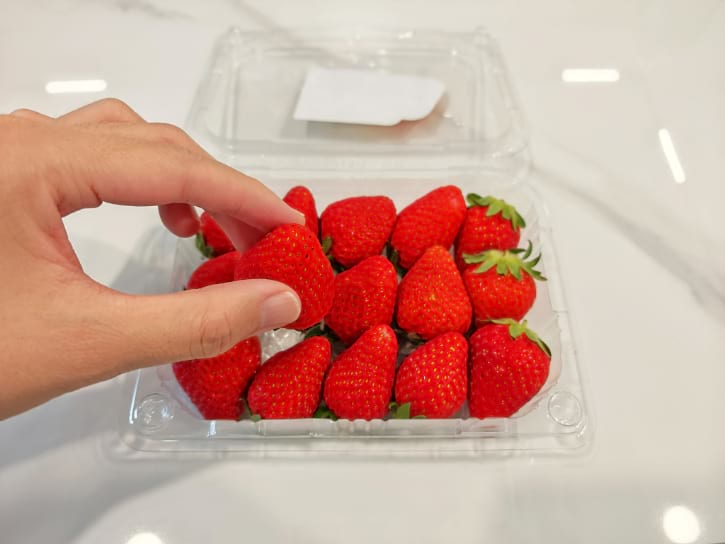
- Check every berry as soon as you get home. Don’t just shove the box into the fridge.
- Remove any berries that show fuzz, feel mushy, or are leaking juice. If a berry has even a small soft spot, eat it right away or discard it.
- Don’t wash them yet. If there’s condensation inside the container, wipe it out with a clean cloth.
b. Set Up Your Container
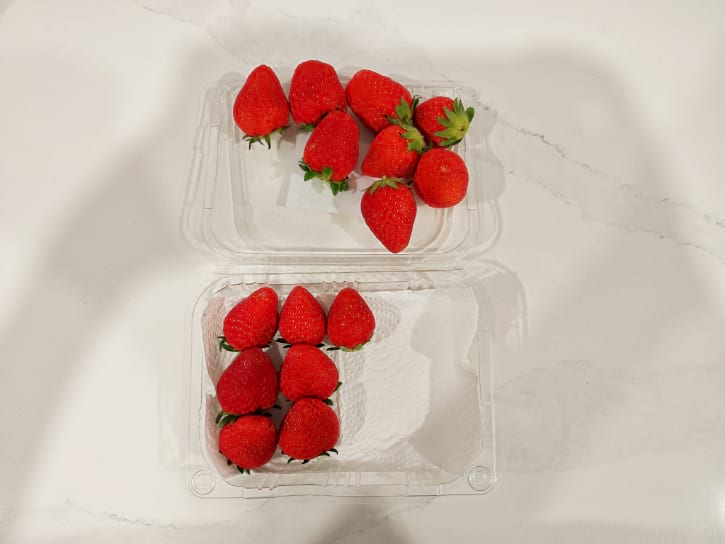
- Line the bottom with a dry paper towel. It will absorb the moisture berries naturally release.
- Avoid overcrowding. A single layer is best. For larger quantities, use two layers with a paper towel between them.
- Use a breathable lid. Leave it slightly open or use a container with built-in vents so excess moisture can escape.
c. Store and Monitor
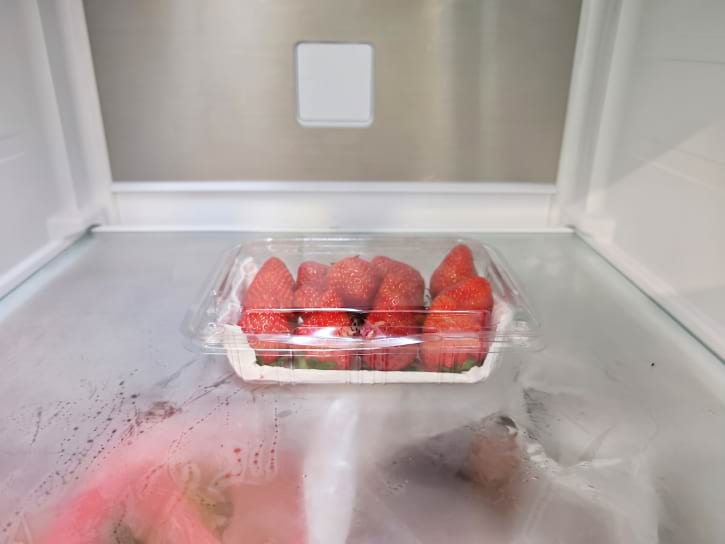
- Place the container on a shelf in the main section of the fridge, not in the door.
- Wash only before eating. Take out only the berries you plan to eat and rinse them right before serving.
- Check after 1 to 2 days. If the paper towel feels damp, replace it with a fresh one. A quick daily look catches problems early.
8. Best Place to Store Strawberries in the Fridge
Cold temperature is your best tool. The colder your fridge, the slower berries breathe and the slower mold grows.
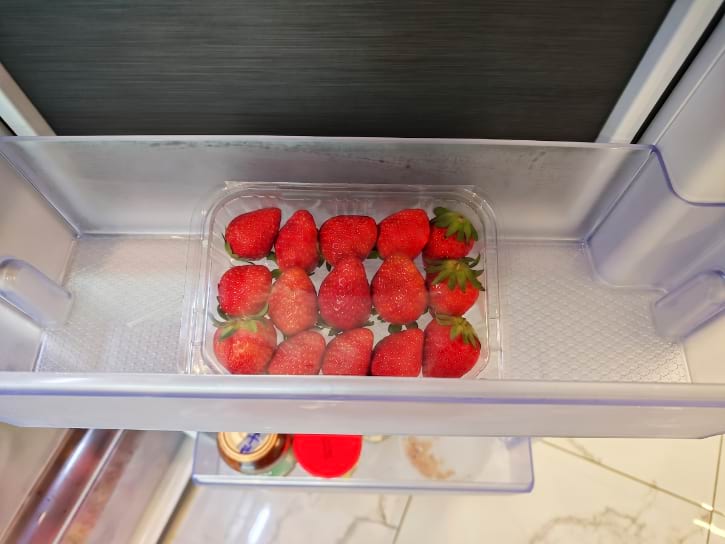
Avoid the fridge door. It’s the warmest spot, and the temperature changes every time someone opens it. Those shifts cause berries to release moisture, which condenses into water when the air cools again.
Be careful with the crisper drawer. A high-humidity setting can be too damp for strawberries if they’re not well protected.
The best spot is a cold, steady shelf toward the back or center of the fridge, where the temperature stays consistent and there’s enough airflow. Also make sure nothing heavy can get pushed against the berries and crush them.
9. How to Tell Strawberries Are Starting to Go Bad
a. What You Can See
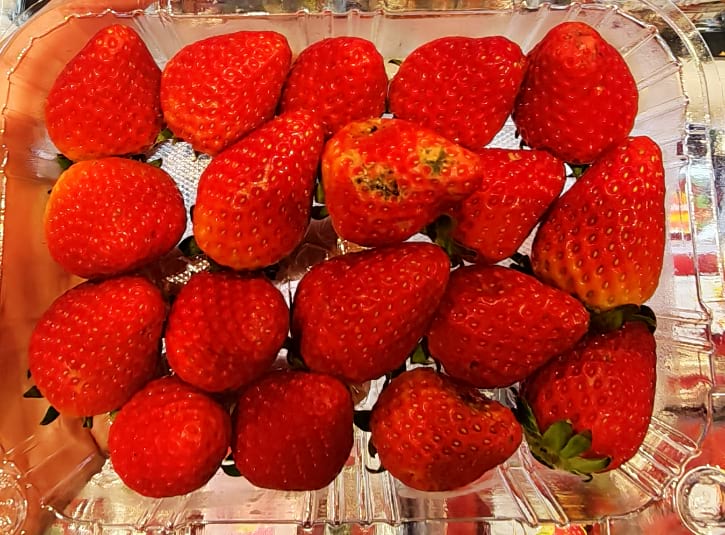
- White or gray fuzzy mold. The most obvious sign. It looks like cotton or velvet patches on the surface.
- Dark wet spots. Small, circular areas that look darker and water-soaked are often the first signs of infection.
- Leaking juice. Red liquid pooling at the bottom of the box means advanced bruising or decay.
- Berries sticking together. If you pick up one and others come with it, mold threads have started binding them.
b. What You Can Feel and Smell
- Soft or mushy texture. If a berry feels like it’s collapsing when you press gently, it’s starting to rot.
- Slimy surface. If the skin feels slick instead of smooth, bacterial spoilage is happening alongside mold.
- Wilted or slimy leaves. Green caps turning dark brown, black, or slimy mean the berry is past its prime.
- Sour or fermented smell. Fresh strawberries smell sweet. An alcohol or vinegar-like odor means the fruit is fermenting.
10. Can You Eat Strawberries Near a Moldy One?
This is one of the most common questions, and it’s worth being cautious.
Mold doesn’t just sit on the surface. It has microscopic “roots” that can grow deep into the soft flesh. These roots can be present even if you can’t see them.
- Throw away the moldy berry. No question about it.
- Discard any berries that were touching it. They are very likely already infected.
- Toss any that look soft, wet, or damaged, even if not right next to the mold.
- Berries farther away may still be okay. If they look firm and clean, they are generally safe after washing well under running water.
When in doubt, throw it out. It’s better to lose a few berries than to risk getting sick.
11. How Long Strawberries Usually Last
- Room temperature: Best eaten the same day. Mold can appear in as little as 24 hours.
- In the fridge (properly stored): Often 3 to 7 days, depending on freshness at purchase.
- Washed strawberries: If not dried well, they may only last 1 to 2 days before softening.
- Cut strawberries: The exposed inside invites bacteria. Eat within 24 hours.
- Frozen strawberries: Safe for many months. Best used in smoothies or cooking, as the texture softens when thawed.
Storage life comes down to ripeness at harvest, how gently the berries were handled, and how consistently they were kept cold.