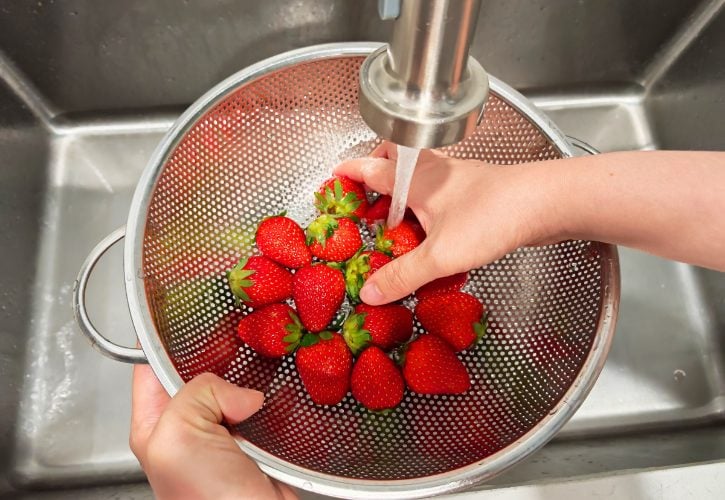
You probably wash your strawberries the same way every time. A quick rinse under the tap, maybe a soak in vinegar because you saw it on social media, and that’s it.
But most of those common habits don’t actually clean strawberries the way you think they do.
Plain water isn’t enough. And vinegar, despite all the attention it gets online, isn’t the best everyday method either.
The better approach comes down to a few details most people skip: timing, baking soda, gentle handling, proper rinsing, and thorough drying. Let’s walk through it step by step. 😊
1. Why Strawberries Are Different From Many Other Fruits
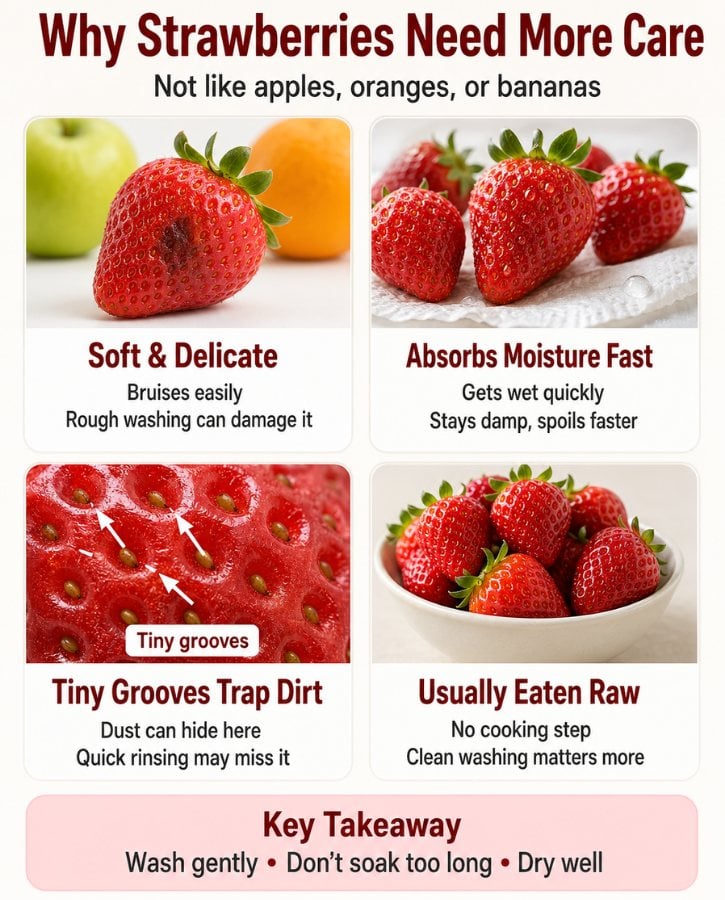
Strawberries are not like apples, oranges, or bananas. You can’t just give them a quick wipe and call it done.
Soft and Easy to Damage
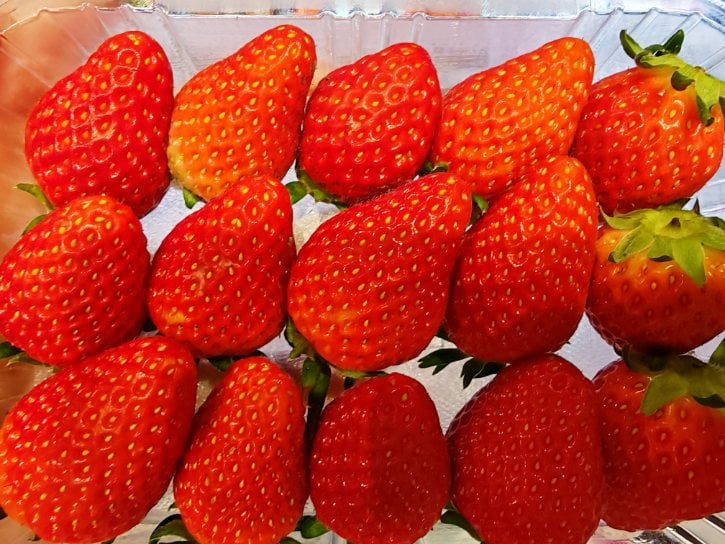
- Delicate skin. Strawberries bruise easily. Even a little rough handling can damage them.
- Harsh washing can ruin them. Scrubbing or soaking too long can break down their delicate texture.
They Absorb Moisture Fast
- Unlike harder fruits, strawberries soak up water quickly, which can make them mushy and speed up spoilage.
- Leaving strawberries damp after washing is one of the quickest ways to shorten their life.
Their Surface Traps Dirt
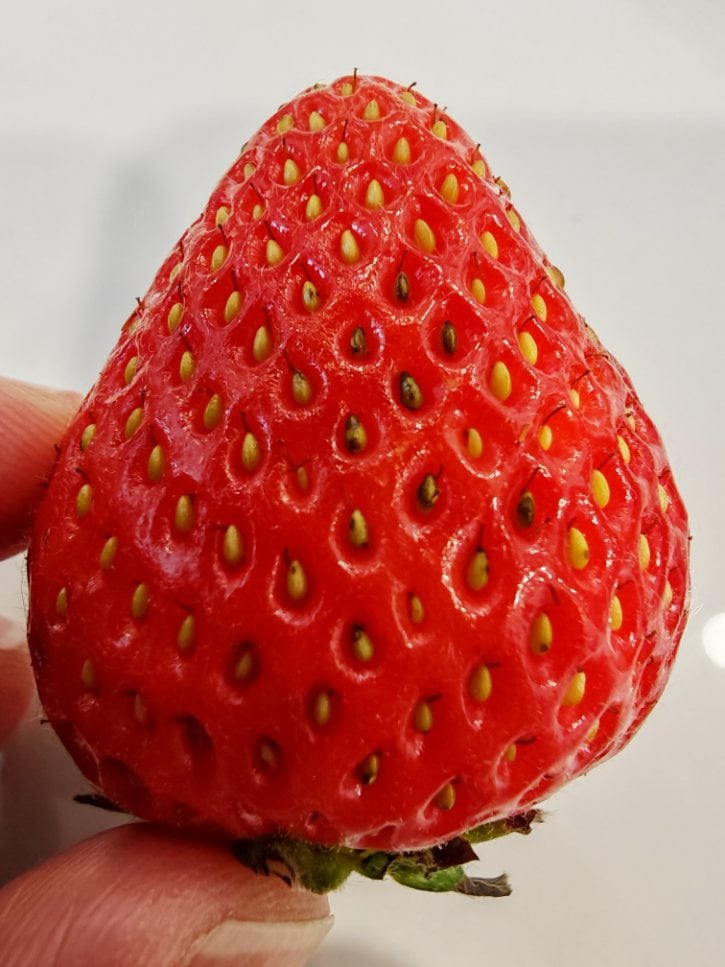
- Those tiny “seeds” on the outside sit inside small dips on the skin. Dirt, dust, and residues can hide in those little grooves.
- A quick rinse with plain water often isn’t enough to reach what’s trapped in those surface details.
They’re Usually Eaten Raw
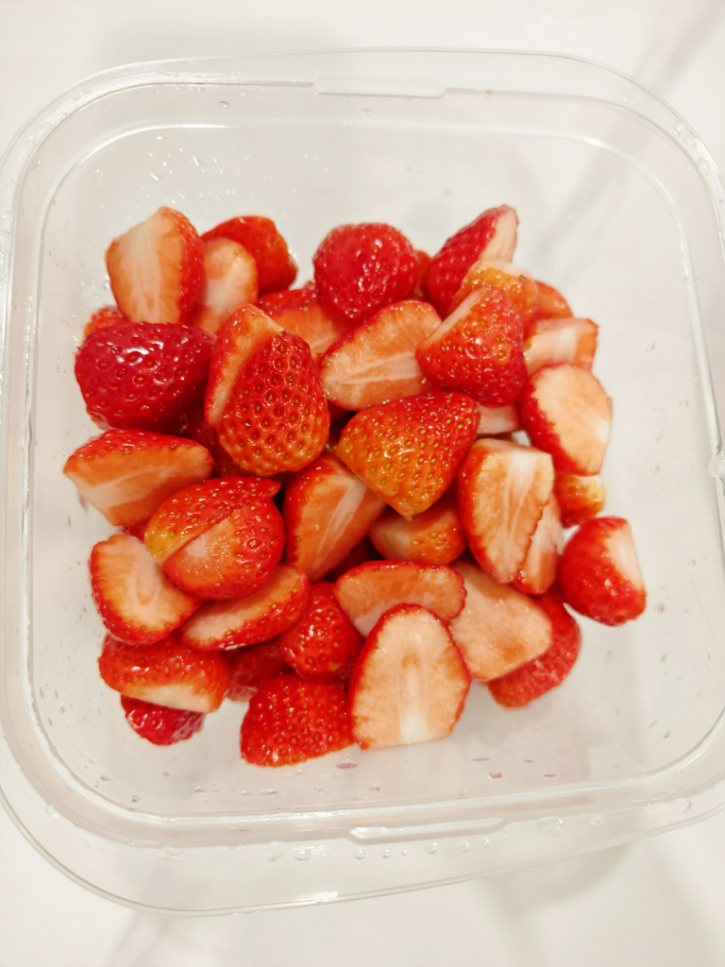
- Since you don’t cook strawberries before eating, proper washing matters even more.
- Any dirt or residue left on the surface goes straight into your mouth.
Most people don’t realize just how different strawberries are from other produce. That’s why the same washing habits that work for apples or bell peppers can actually backfire with strawberries.
2. Why Most People Wash Strawberries Wrong
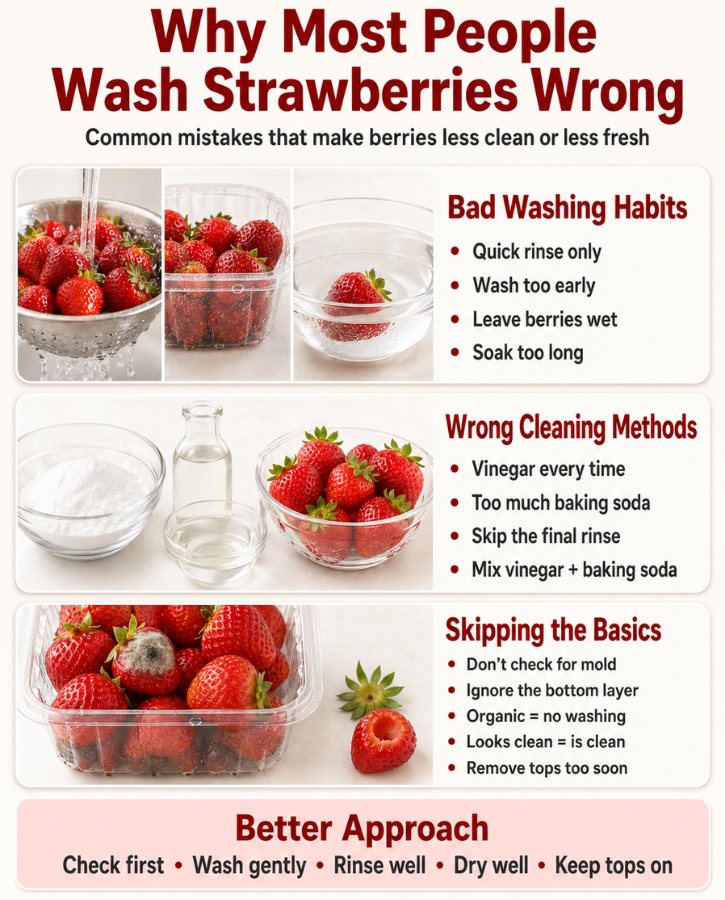
Let’s be real. Most of us have been doing at least one of these.
Bad Washing Habits
- Rinsing only the top. A quick pass under the faucet barely touches the surface. Water tends to roll right off strawberries without reaching the tiny grooves where dirt hides.
- Washing them too early. Washing strawberries right after buying them and putting them back in the fridge speeds up spoilage.
- Leaving them wet in the container. Moisture sitting at the bottom of the container is one of the biggest causes of mold.
- Soaking them too long. Strawberries are like little sponges. Long soaks make them soft and waterlogged.
Wrong Cleaning Methods
- Using vinegar as the go-to method. Vinegar has its place, but it’s not the best everyday choice.
- Using too much baking soda. More baking soda doesn’t mean cleaner berries. Too much can affect their texture.
- Skipping the rinse after baking soda. If you don’t rinse baking soda off properly, you’ll taste it.
- Mixing vinegar and baking soda together. This looks impressive with the fizz, but it actually makes both less effective.
Skipping the Basics
- Not checking for bad berries first. One moldy berry can spread spores to the rest of the container fast.
- Not checking the bottom of the container. The berries at the bottom are often the most bruised or damaged.
- Thinking organic means no washing needed. Organic strawberries still carry dirt, dust, and natural residues.
- Thinking clean-looking berries are already clean. Just because a strawberry looks bright and shiny doesn’t mean it’s free of surface residues.
- Removing the green tops before washing. When you pull off the green cap before washing, water can enter the berry through the opening, making it softer and less fresh.
Read More: These 10 Signs Tell You Which Strawberries Are Actually Sweet
3. What Washing Strawberries Actually Does
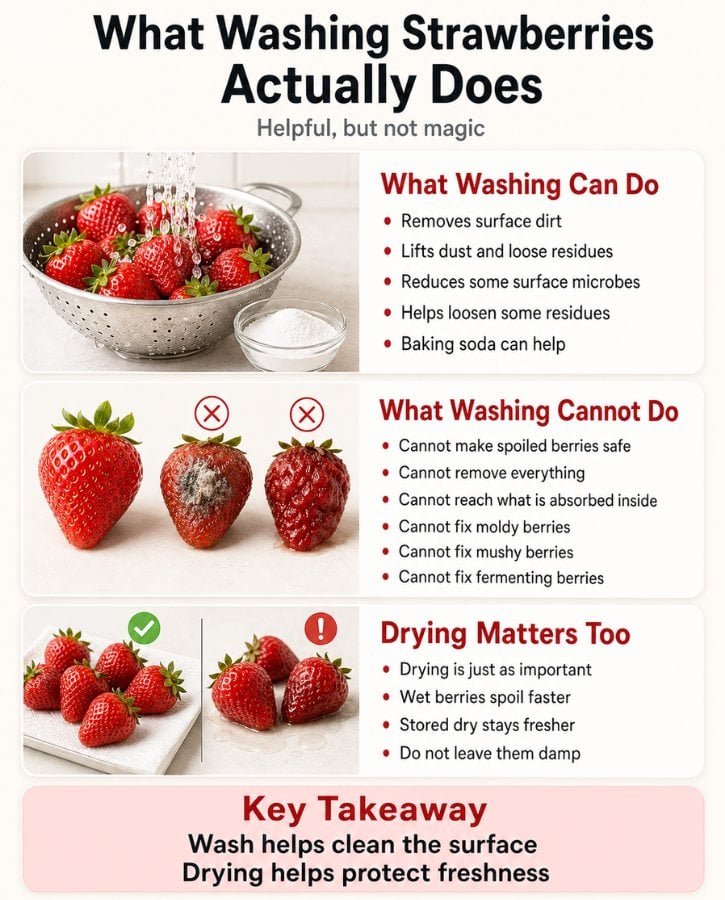
What washing can do:
- Remove surface dirt, dust, and some loose residues
- Reduce some surface microbes
- Help loosen certain surface residues when using baking soda properly
What washing cannot do:
- Make a spoiled berry safe to eat again
- Remove every possible contaminant, especially residues absorbed into the fruit
- Fix berries that are already moldy, mushy, or starting to ferment
Here’s something most people overlook. Drying after washing is just as important as the washing itself. A perfectly washed strawberry that stays wet will spoil faster than an unwashed one stored dry.
4. The Simple Right Way to Wash Strawberries
Each step is simple, but every one of them matters.
Step 1: Sort the strawberries first
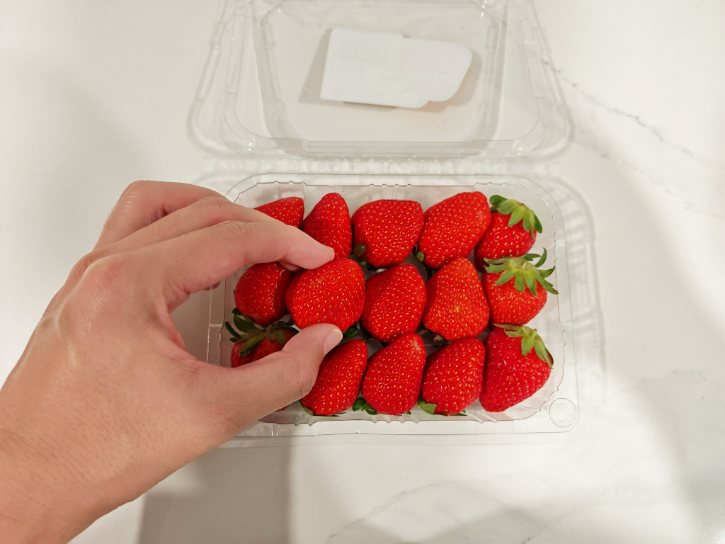
Go through the whole container before washing. Check the top, middle, and bottom layers. Look for berries that are soft, leaking, bruised, or showing signs of mold.
Step 2: Remove bad berries
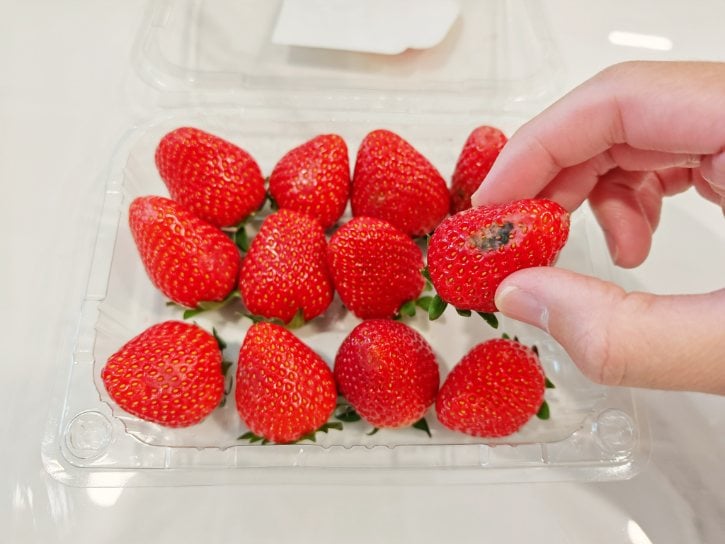
Take out any berry that looks moldy, mushy, leaking, or badly bruised. Washing cannot make a spoiled strawberry fresh again, and mold spreads quickly.
Step 3: Keep the green tops on while washing
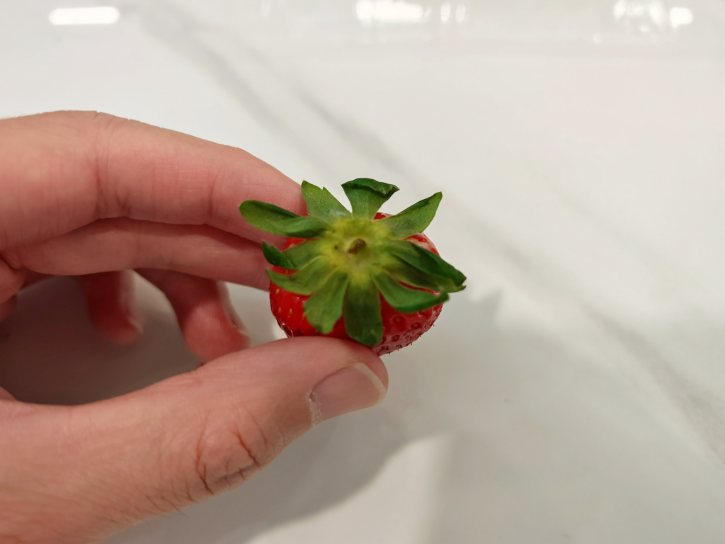
Removing the green cap before washing lets water flow inside the berry. That extra moisture dilutes flavor and reduces freshness. Always wash first, then remove the tops before eating.
Step 4: Prepare a gentle baking soda wash
Mix about 1 teaspoon of baking soda per 2 cups of water in a clean bowl. Keep it mild. Too much baking soda can affect the berry’s delicate skin.
Step 5: Soak for about 5 minutes
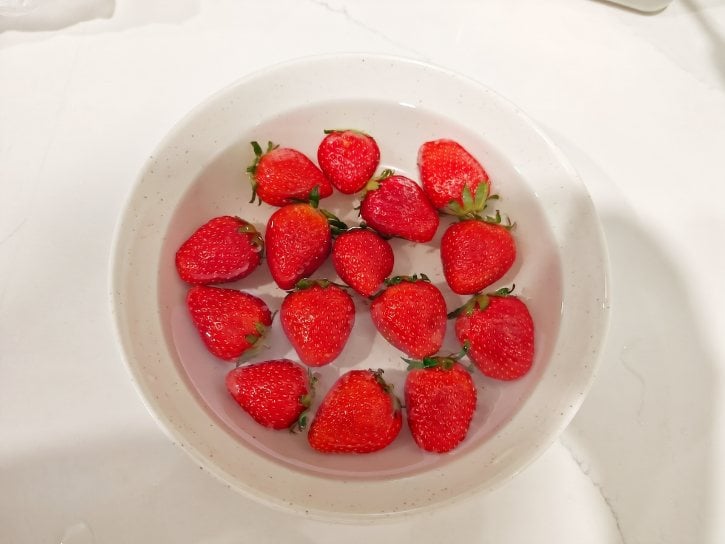
Place the strawberries in the baking soda water and let them sit for about 5 minutes. Don’t soak much longer. Extended soaking can make them softer or waterlogged.
Step 6: Gently swirl the berries
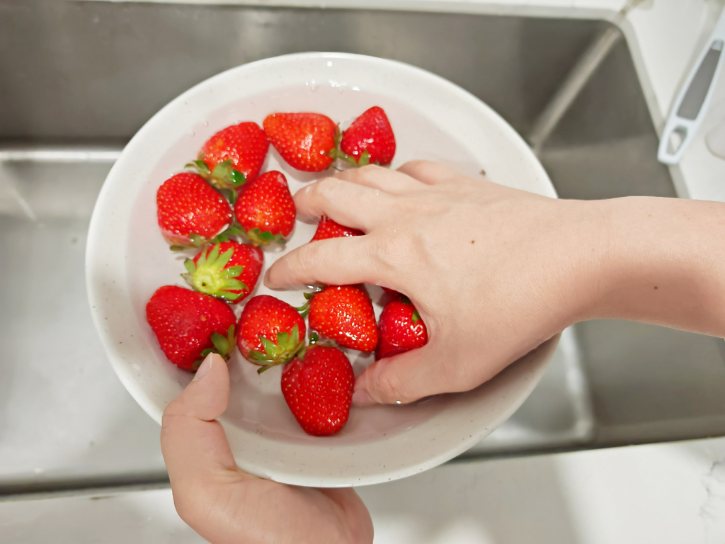
Gently move the berries around with your hands a few times. This helps the baking soda water reach more of the surface without bruising the fruit.
Step 7: Rinse thoroughly under running water
Transfer the berries to a colander and rinse under running water for at least 30 seconds. This removes any baking soda residue so you don’t taste it.
Step 8: Drain and handle gently
Let the water drain completely. Don’t scrub or squeeze the berries. Strawberries bruise easily, and rough handling damages the surface.
Step 9: Dry completely
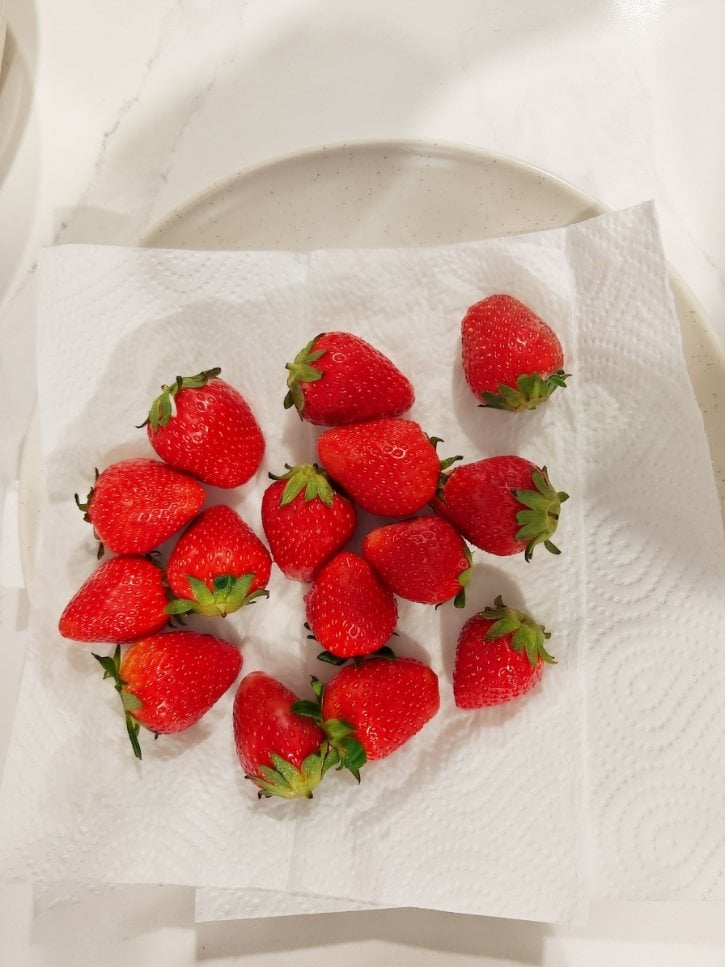
Lay the berries on a clean paper towel or kitchen towel and gently pat them dry. Turn them carefully so hidden moisture can dry too. This is one of the most important steps. Wet berries spoil faster.
Step 10: Eat soon after washing
Washed strawberries are best enjoyed soon, especially if they’re already ripe.
5. Should You Use Vinegar to Wash Strawberries?
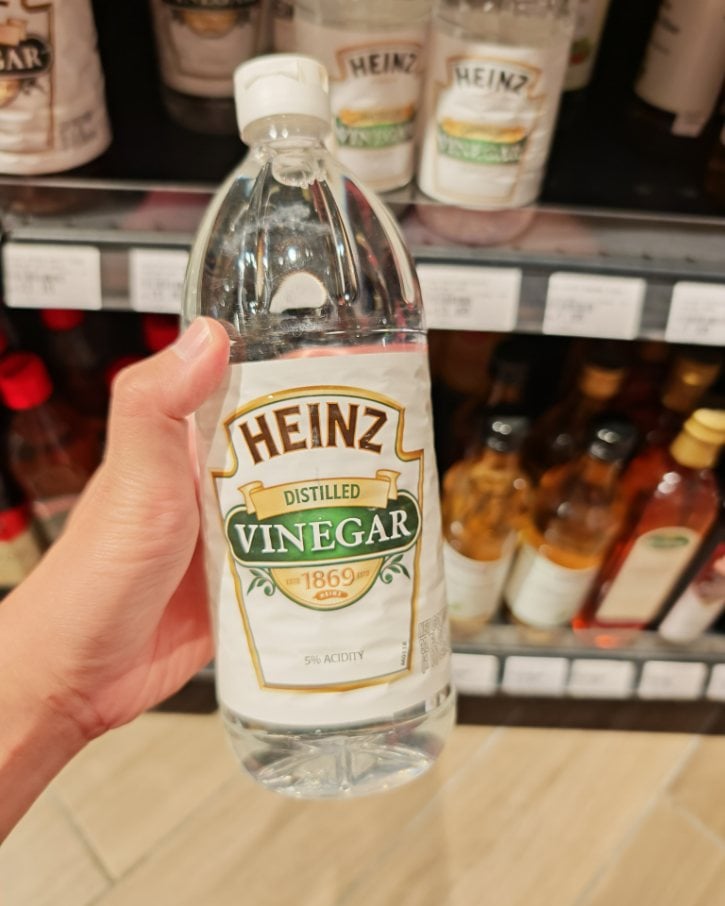
Vinegar is one of the most popular strawberry-cleaning methods online. But despite all the hype, it’s not actually a great everyday option.
Here’s why people reach for it:
- It’s a natural, food-safe option
- It can help reduce some surface bacteria and mold spores
- Many social media tips recommend it
But there are real downsides:
- It’s not effective at removing surface residues. Vinegar works more as an antimicrobial agent, not a residue remover. For that, baking soda is the better choice.
- Too much vinegar can affect taste. If you don’t rinse well, that sour vinegar flavor stays on the berry.
- Soaking too long can damage texture. Strawberries are delicate, and acid can break down their skin over time.
- Vinegar smell can linger. Even with rinsing, some people notice a faint aftertaste.
If you choose to use vinegar, here’s a safe, simple option:
- Mix 1 part white vinegar to 3 parts water
- Soak for no more than 5 minutes
- Rinse thoroughly under cool running water
- Dry completely before eating or storing
Vinegar can be helpful in some situations, but it’s not the best default method.
6. Should You Use Baking Soda to Wash Strawberries?
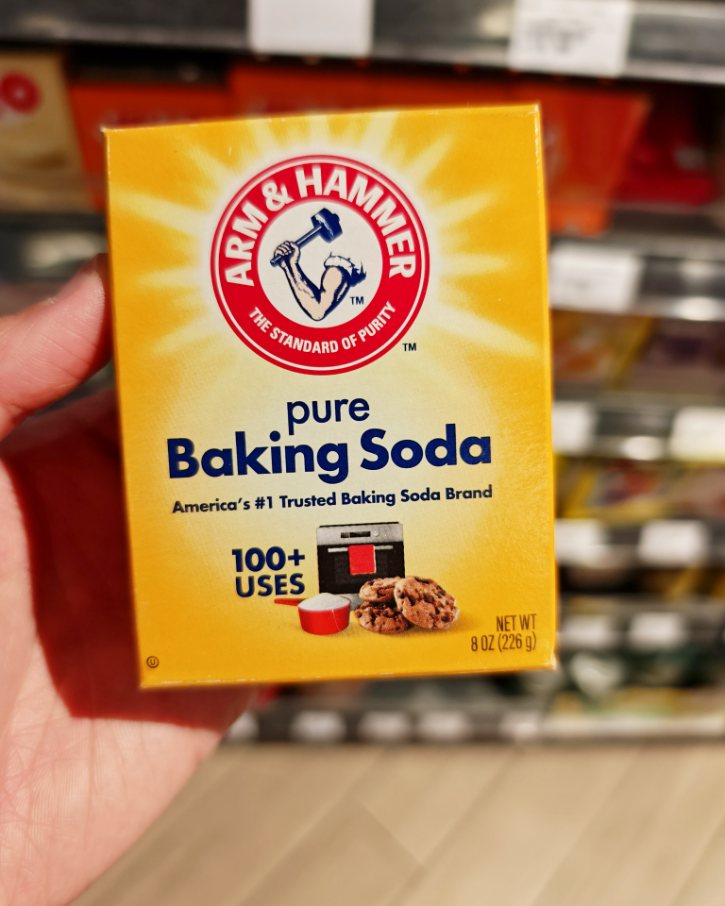
Baking soda is a practical, gentle option that many food researchers support for everyday strawberry washing.
Why people use baking soda:
- It can help loosen some surface dirt and residues
- It’s mild and food-safe
- It’s inexpensive and easy to find
How to use it properly:
- Use about 1 teaspoon per 2 cups of water
- Soak for about 5 minutes. This is enough time to help loosen surface residues without damaging the berries.
- Don’t overdo it. Using too much baking soda or soaking too long can break down the delicate skin.
- Always rinse thoroughly. Baking soda must be completely washed off, or you’ll taste it.
After washing with baking soda, dry the berries completely. This step is essential no matter which method you use.
7. Vinegar vs Baking Soda vs Water
Each method has its place, but they’re not equally effective. Here’s a simple comparison:
Plain water rinse:
- Removes some loose dirt and dust
- Quick and easy, but limited. Water tends to roll off the strawberry’s surface without reaching the tiny grooves where dirt and residues hide.
- Better than nothing, but not the most effective everyday method
Baking soda rinse:
- The best practical option for everyday washing
- Helps loosen surface dirt and some residues that plain water can’t reach
- Gentle enough for delicate strawberries when used properly
- A good choice whether you’re eating the berries right away or shortly after
Vinegar rinse:
- Can help reduce some surface bacteria and mold
- Not effective at removing surface residues, which is what most people are trying to do
- Risk of lingering taste or smell if not rinsed well
- Optional for specific situations, but not the best everyday choice
Keep in mind:
- More cleaning does not always mean better. Soaking too long or using too many methods can damage the berries.
- Drying matters no matter which method you use. This makes the biggest difference for freshness.
8. Why You Should Not Mix Baking Soda and Vinegar
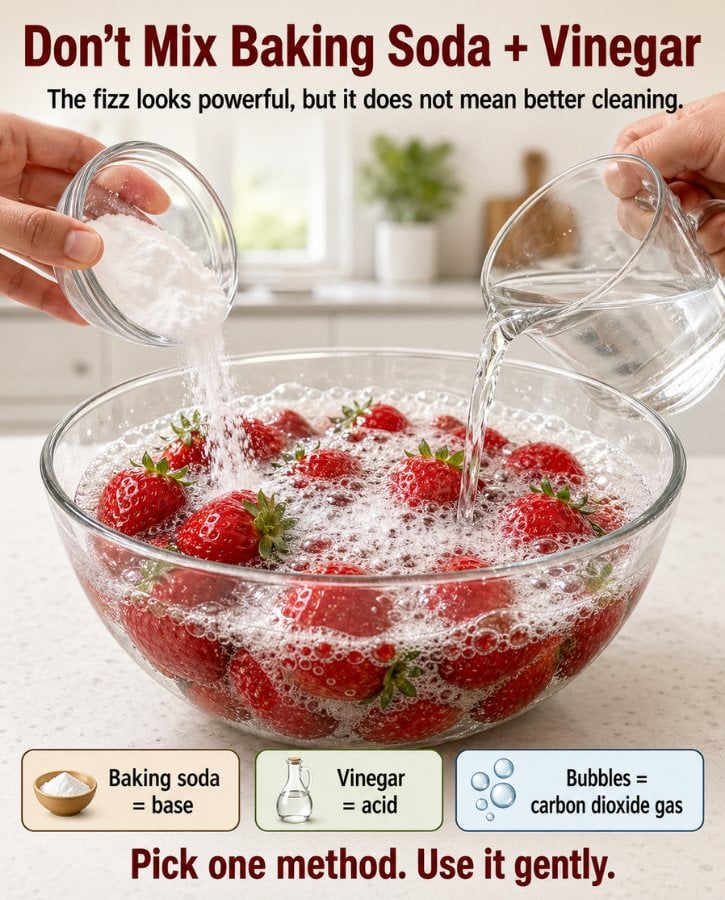
You’ve probably seen the viral videos where someone mixes vinegar and baking soda in a bowl of strawberries. The fizzing looks powerful, but here’s what’s actually happening:
- Baking soda is a base. Vinegar is an acid. When mixed, they cancel each other out.
- The bubbles are just carbon dioxide gas escaping. They’re not cleaning anything.
- What you’re left with is mostly salty water, much weaker than either ingredient on its own.
The bottom line: Pick one method and use it properly. Simple and gentle always beats dramatic-looking tricks.
9. Should You Remove the Green Tops Before Washing?
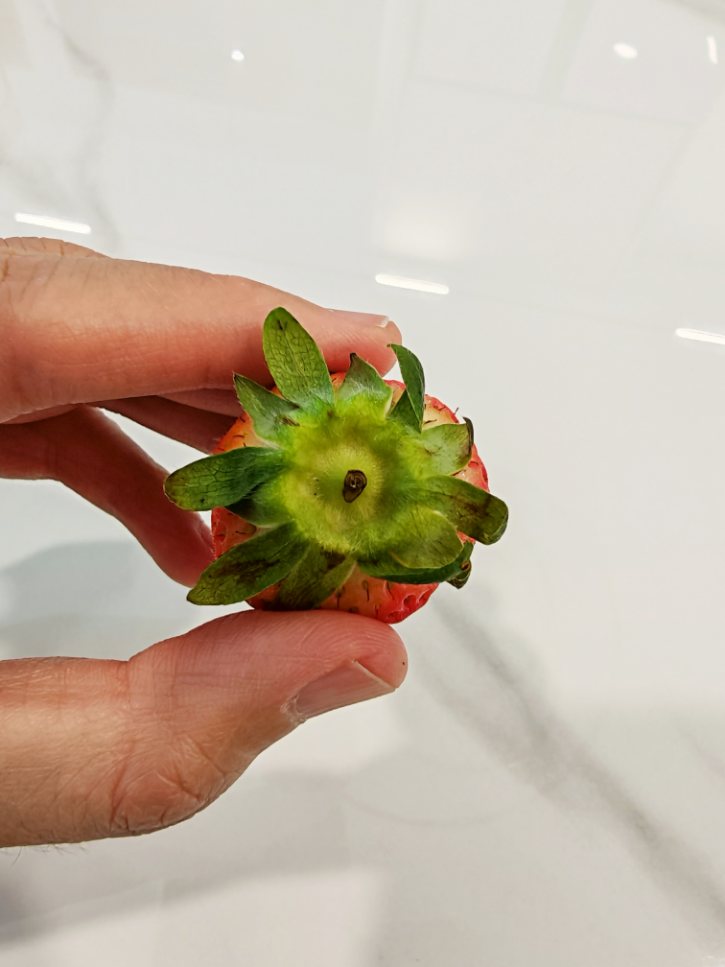
Most people pull off the green tops first. It feels natural, but it’s better to do it the other way around.
Removing the tops creates an opening where water can enter the berry. This makes them softer, waterlogged, and less fresh, especially with ripe berries.
The best practice: Wash with the green tops on. Dry completely. Then remove the tops right before eating or cutting.
10. How to Dry Strawberries Properly
If there’s one thing to take away from this article, it’s this: drying is not optional.
You can wash strawberries perfectly, but if you skip the drying step, they’ll spoil faster than if you hadn’t washed them at all.
How to dry them properly:
- Lay washed berries on paper towels or a clean kitchen towel
- Gently pat them dry. Don’t press too hard.
- Turn the berries carefully so hidden moisture near the cap or underside can dry
- Make sure they feel dry to the touch before eating, cutting, or storing
If you need to store them after washing:
- Line a container with a dry paper towel
- Place the berries in a single layer if possible
- Keep the container loosely covered
- Store in the fridge and eat within a day or two