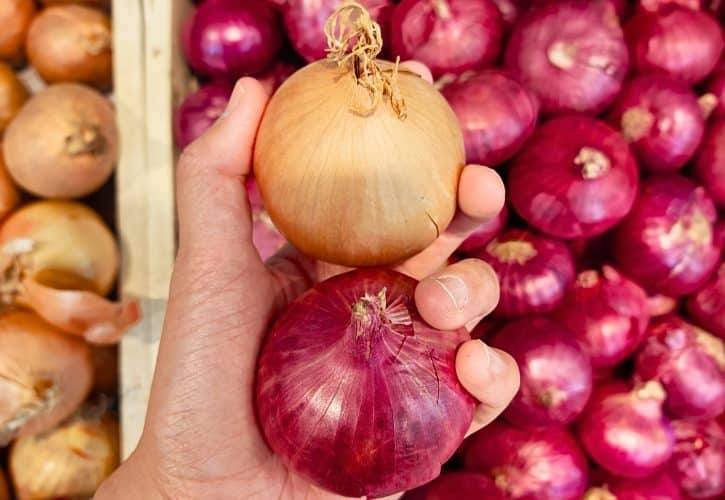
You grab an onion from the kitchen counter, chop it up, and toss it into whatever you’re cooking. Yellow, red, it doesn’t matter. They’re all onions, right?
That’s what most people think. And that’s exactly why the same recipe can taste amazing one day and just “okay” the next.
Here’s the thing. Yellow and red onions are not the same. They behave differently when you cook them, taste completely different when eaten raw, and each one works best in specific dishes.
Ever wonder why restaurant food just seems to have more depth and flavor? One of the reasons is simple. Professional cooks never reach for “any onion”. They pick the right one for the job.
And once you know the difference, you will too. 😊
1. Why Most People Get This Wrong
a) The “All Onions Are the Same” Belief
Most people grow up thinking onions are just onions. They look similar, sit next to each other at the supermarket, and they all make you cry when you cut them.
So it’s easy to assume they’re interchangeable. But they’re not.
b) Cooking by Habit
Let’s be honest. Most of us just use whatever onion we already have at home.
If there’s a red onion in the fridge, it goes into the stir-fry. If there’s a yellow one, it goes into the salad. No real thought behind it.
c) Recipes Don’t Help
This is a big one. Most recipes just say “1 onion” without telling you which kind.
That leaves you guessing. And when you guess wrong, you get inconsistent results without knowing why.
The truth is, people aren’t making a mistake on purpose. They were simply never taught the difference.
2. The Core Difference
Let’s skip the science and focus on what actually matters in your kitchen.
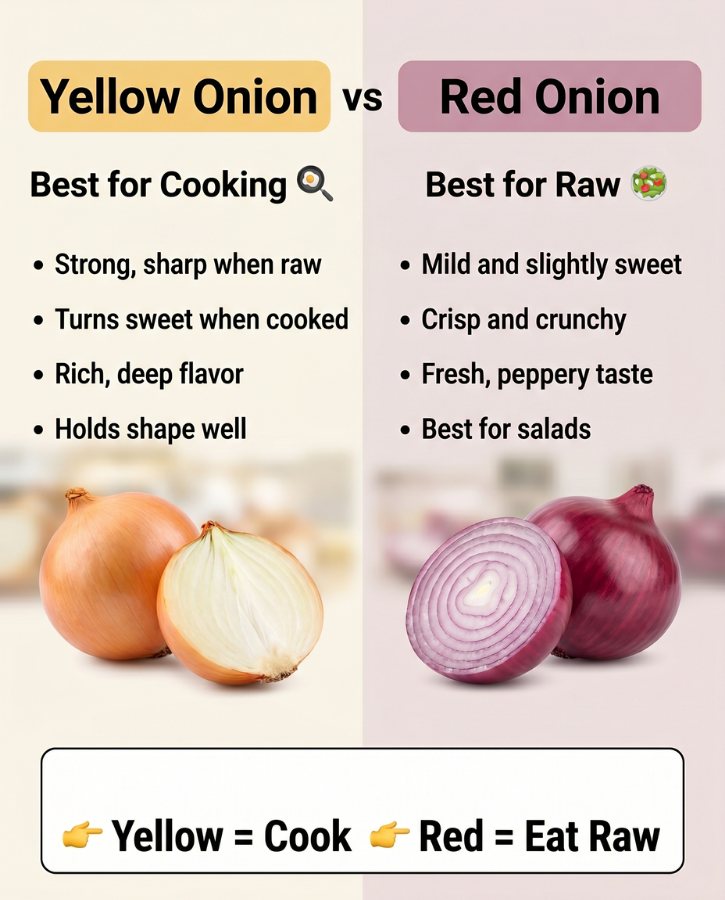
Yellow Onion
- Has a strong, sharp flavor when raw
- Becomes sweet and rich when cooked for a long time
- Holds its structure well during cooking
Red Onion
- Naturally milder and slightly sweet
- Crisp and crunchy when eaten raw
- Has a fresh, peppery taste
The simple takeaway:
- Yellow onion = best for cooking
- Red onion = best for eating raw
Once you remember that, you’ll already be ahead of most home cooks.
3. What Really Happens When You Cook Them
Yellow Onion: The Slow Transformer
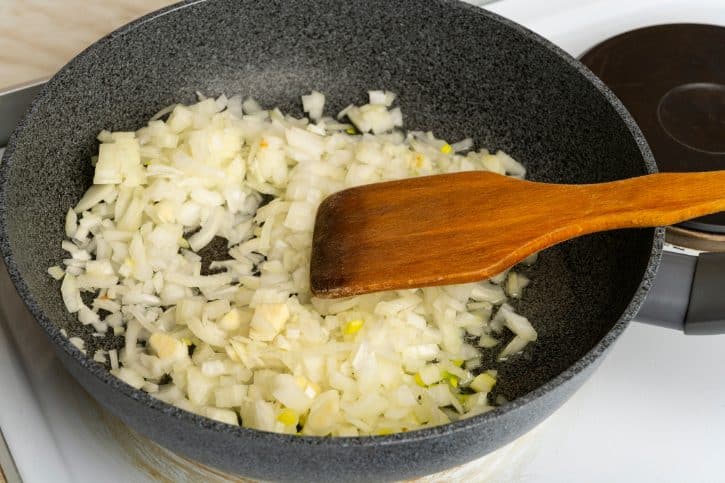
Yellow onions are built for heat. When you cook them slowly, something wonderful happens.
Their natural sugars break down gradually and create a deep, nutty sweetness. The sharp, raw flavor disappears and turns into something rich and savory.
This is why yellow onions are the go-to choice for French onion soup, beef stews, and long-simmered sauces. The longer they cook, the better they get.
They reach their best flavor after about 20 minutes of cooking. That patience pays off with real depth in your dish.
Red Onion: The Quick Fader
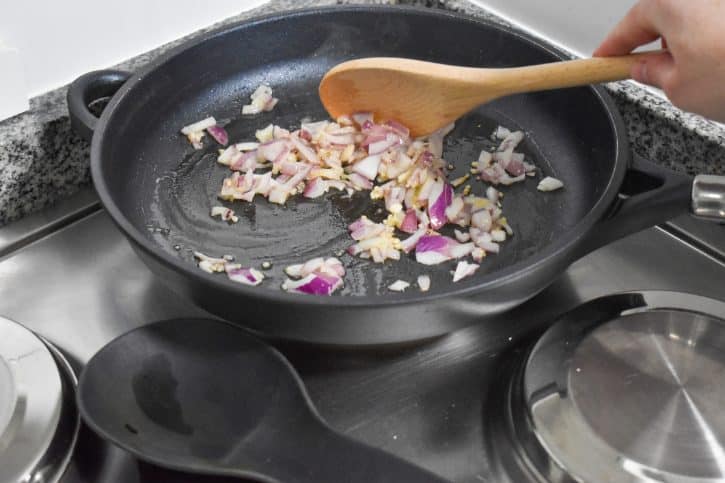
Red onions tell a different story. They hit their sweetness peak quickly, but then the flavor starts to fade just as fast.
Cook them too long, and two things happen. First, they lose that fresh, bright taste that makes them special. Second, their beautiful purple color can turn muddy grey or brown.
That’s why red onions work best for quick cooking, like a fast stir on the grill or a short sauté. Get them in, get them out.
The bottom line: If your dish cooks for more than 15 minutes, reach for a yellow onion. For quick heat, red onions can still work, but keep it brief.
4. What Happens When You Eat Them Raw
Yellow Onion: Too Strong for Most Raw Dishes
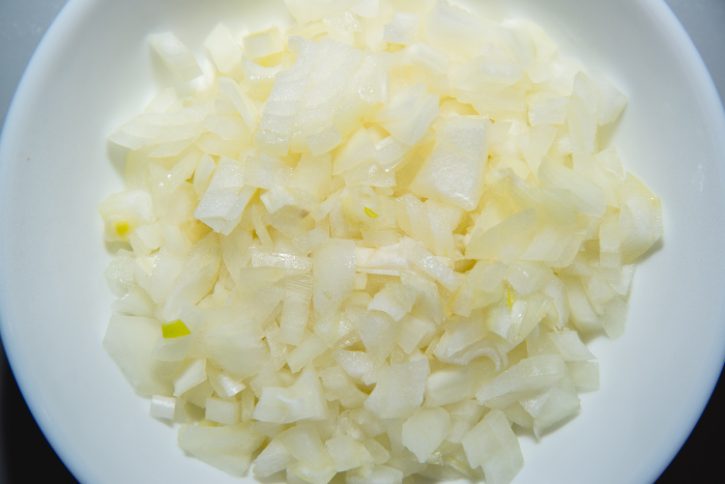
Biting into a raw yellow onion is intense. It has a sharp, almost burning flavor that sticks around on your tongue long after you’ve eaten it.
In a fresh salad or a sandwich, that harshness can overpower everything else. You’ll taste onion and not much else.
Raw yellow onion can also add bitter, metallic notes to dishes like salsa or fresh dips. It clashes instead of complementing.
Red Onion: The Raw Champion
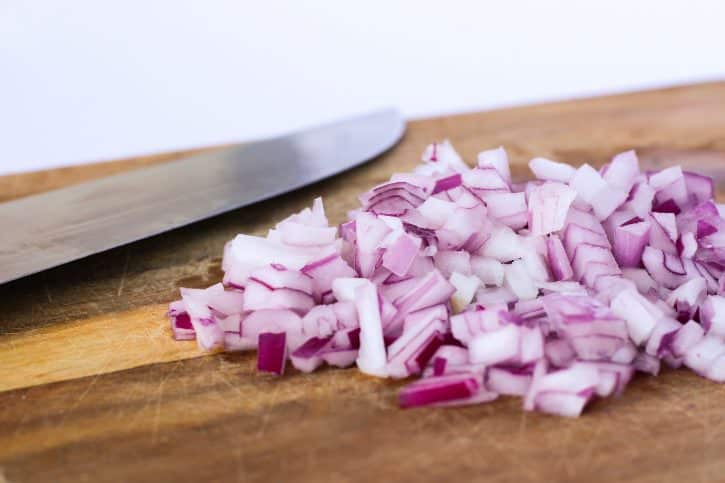
This is where red onions shine. They’re milder, crisper, and have a clean, peppery bite that adds freshness without taking over.
On a burger, in a garden salad, or as a topping for tacos, red onion gives you that satisfying crunch and just the right amount of flavor.
A quick tip: If your red onion still tastes a bit too sharp, soak the slices in ice water for 10 to 15 minutes. This removes the extra bite while keeping the crunch.
Slicing tip: Cutting your onion from top to bottom (with the grain) gives you a milder flavor. Cutting sideways (against the grain) makes it more pungent. Choose your cut based on how strong you want the taste to be.
5. The Biggest Mistakes People Make
Using yellow onion in salads: Yellow onions are too harsh when raw. They’ll overpower the other ingredients and leave a lingering sharp taste. Stick with red onion for fresh salads.
Using red onion for soups and stews: Red onions lose their color and flavor during long cooking. Your stew won’t get that deep, rich base it needs. Yellow onion is the right call here.
Swapping onions without thinking: Replacing one for the other might seem harmless, but it changes the final result more than you’d expect. A soup made with red onion will taste thinner and look greyish. A salad with yellow onion will taste too sharp.
Following recipes blindly: When a recipe just says “1 onion”, don’t grab whatever is closest. Think about the dish. Is it cooked or raw? Long simmer or quick toss? That tells you which onion to pick.
Adding baking soda to red onions: Some cooking tips suggest adding baking soda to speed up caramelizing. This works for yellow onions, but with red onions, it turns them into a grey, unappetizing mess. If you caramelize red onions, skip the baking soda entirely.
6. When to Use Each (A Clear Guide)
Yellow Onion: Use for Cooked Dishes
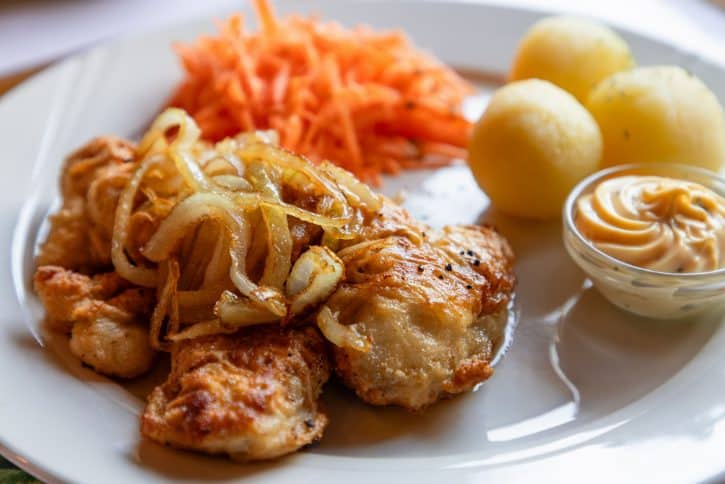
- Stir-fries
- Soups and stews
- Pasta sauces and gravies
- Caramelized onions
- Curries and braised dishes
Purpose: Building deep, savory flavor that forms the backbone of your dish.
Red Onion: Use for Raw and Quick-Cook Dishes
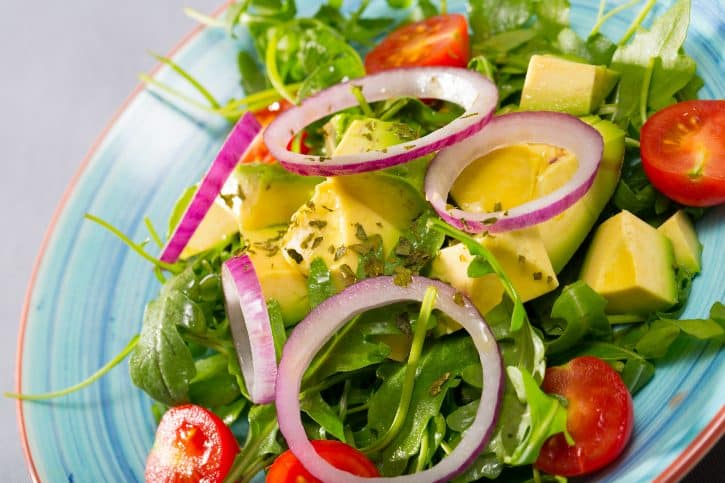
- Green salads
- Burgers and sandwiches
- Tacos and wraps
- Quick-pickled onion (they turn a beautiful bright pink)
- Grilled skewers (short time on the grill)
Purpose: Adding freshness, crunch, and a pop of color without overwhelming the dish.
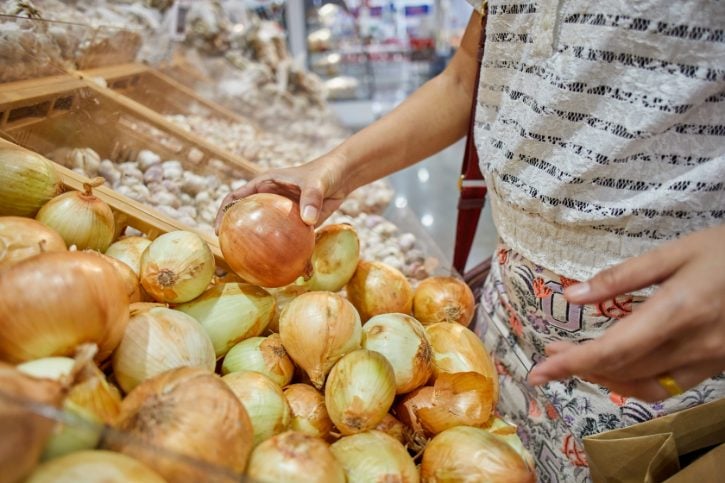
7. Quick Visual Check (Supermarket Hack)
Not sure which is which at the store? Here’s how to tell at a glance.
Yellow Onion
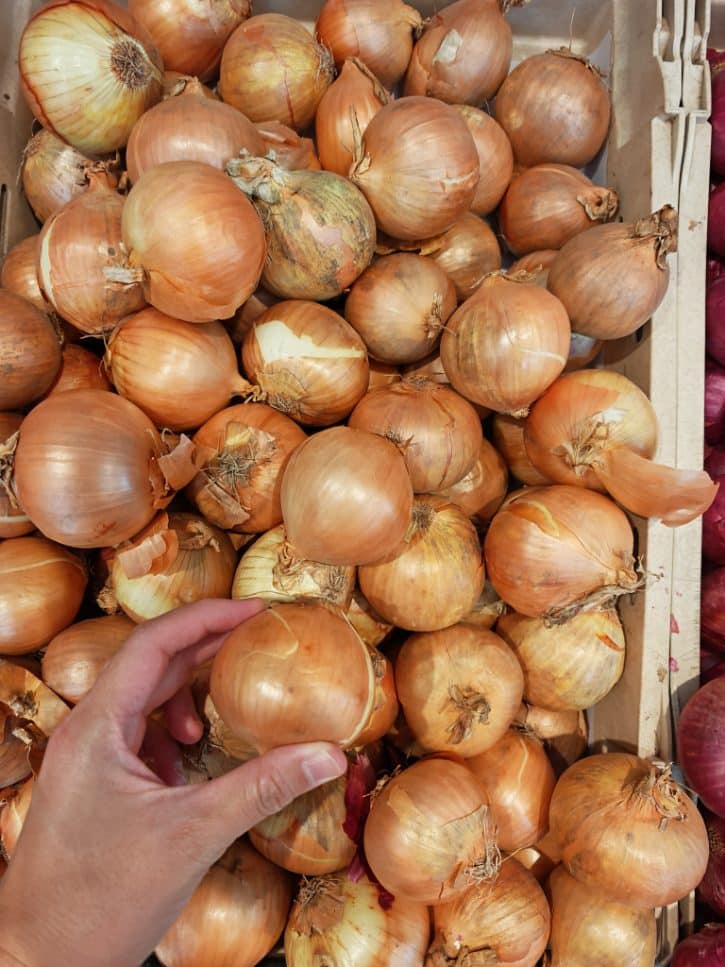
- Thick, papery skin with a golden-brown color
- Multiple dry outer layers
- Feels firm and dense when you pick it up
Red Onion
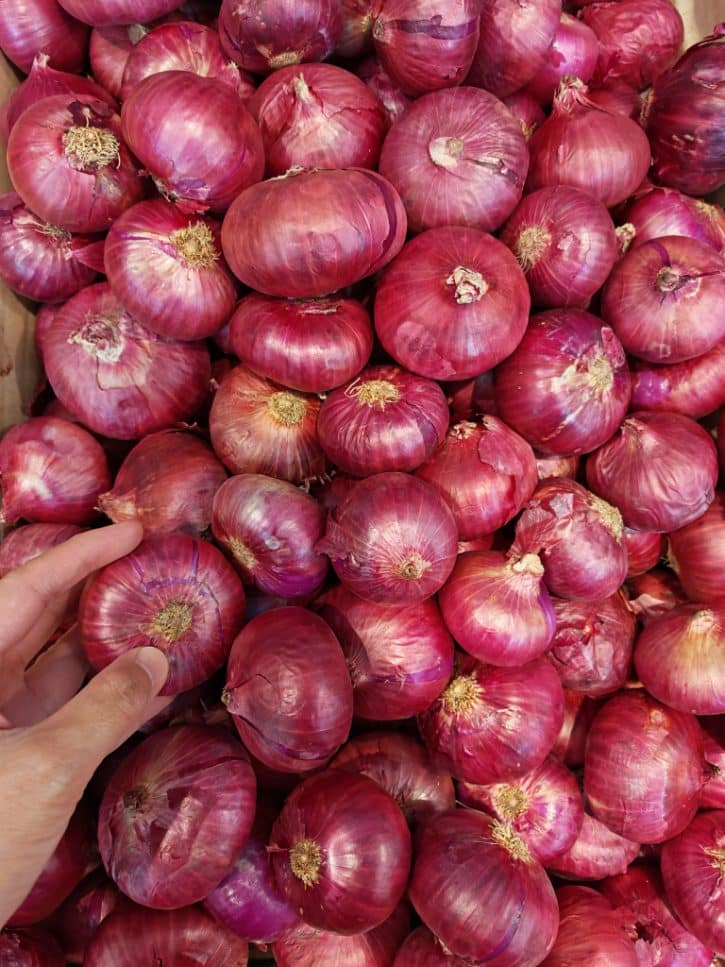
- Thinner skin with a deep burgundy or reddish-purple color
- Usually has fewer dry outer layers
How to Pick a Good One (Any Type)
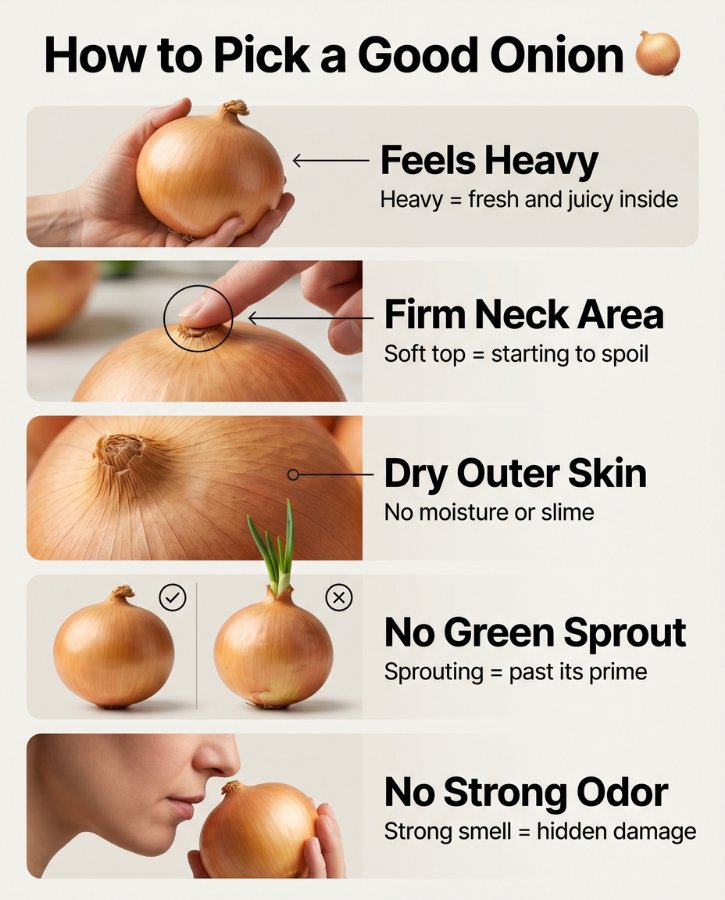
- Pick it up. A good onion feels heavy for its size. If it feels light or hollow, it’s dried out inside.
- Gently press near the top. The top where the stem was cut should feel firm, not soft. Softness means it’s starting to go bad or sprout.
- Check the skin. It should be dry and papery, with no moisture, slime, or dark spots.
- Look for sprouts. A green shoot coming out of the top means the onion is past its prime. The flavor will be weaker and the texture more fibrous.
- Give it a sniff. A whole, uncut onion should have almost no smell. If you can smell it through the skin, there’s likely a bruise or decay inside.