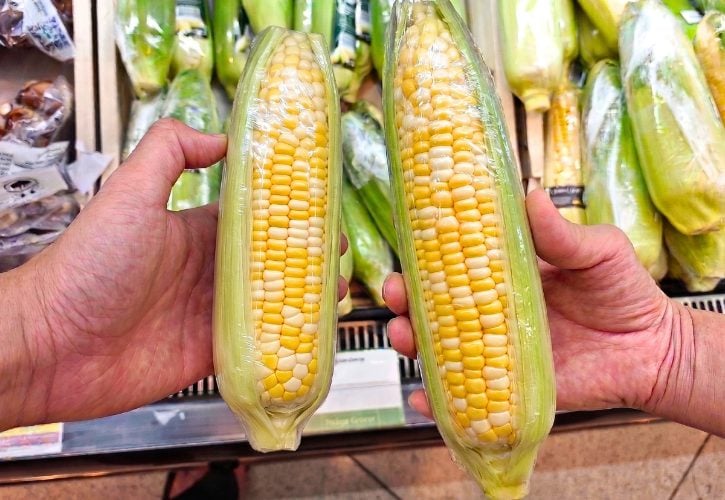
You grab a pre-packed tray of corn, drop it in your cart, and move on. It looks clean and neatly trimmed, so it must be a good choice.
But that quick grab is often why your corn turns out bland and starchy. The problem isn’t the corn. It’s what you’re not checking before you buy it.
In this guide, you’ll learn why common habits lead to disappointing corn, what actually controls sweetness, and the simple signs that help you pick better corn every time. 😊
1. Why Most People Pick Corn Wrong
a. Real Shopping Behavior
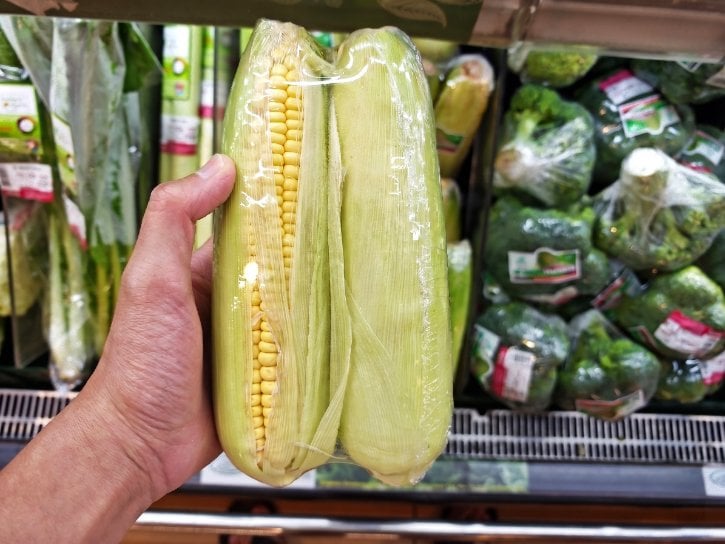
Most of us don’t really “choose” corn. We just grab it.
You see a tray that looks clean and neat, and you drop it in your cart without a second thought.
The assumption is simple: if it’s already packed, someone must have checked the quality for you.
But that’s rarely the case.
Here’s what usually happens:
- You skip the inspection entirely. Pre-packed corn feels like it’s already been sorted, so you don’t squeeze it, lift it, or look at the details.
- You judge by appearance. If the corn looks clean and the color is bright, you assume it’s fresh.
- You’re in a rush. Grocery shopping is rarely a slow, careful process. You make fast decisions and move on.
- You buy the same way every time. Once you develop a habit of grabbing the nearest tray, you repeat it on every trip without questioning it.
None of these habits help you find sweet corn. They just help you shop faster.
b. Common Mistakes
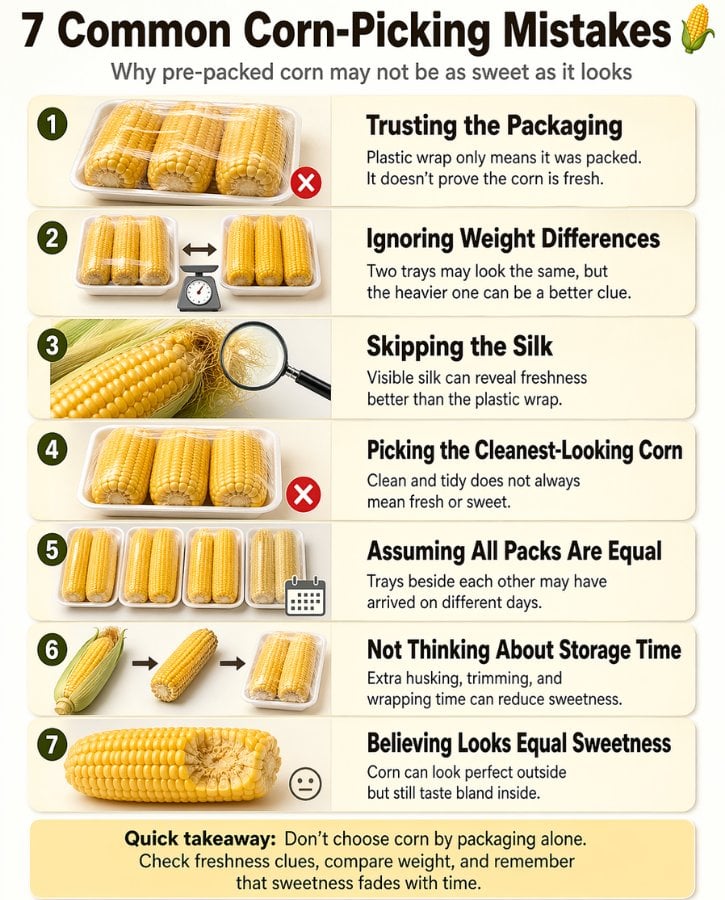
Even when people try to choose carefully, they usually focus on the wrong things. Here are the most common traps.
Trusting the Packaging
A plastic-wrapped tray doesn’t mean the corn inside is fresh. It only means it was packed at some point, and you don’t know when. The neat presentation creates a false sense of security that skips right past actual quality.
Ignoring Weight Differences
Two trays can look identical but feel very different in your hand. Most people never bother to compare. They grab whichever tray is closest without lifting a second one to check.
Skipping the Silk
If any silk is visible, most shoppers ignore it completely. But it’s actually one of the best freshness clues you have. A quick glance at the color and texture of the silk can tell you more than the packaging ever will.
Picking the Cleanest-Looking Corn
Clean doesn’t mean fresh. Corn that’s been sitting on the shelf for days can still look tidy. A spotless appearance is more about store presentation than actual quality.
Assuming All Packs Are Equal
Different trays may have arrived at the store on different days. Some may have been stored in better conditions than others. Just because they’re sitting side by side doesn’t mean they were packed or shipped at the same time.
Not Thinking About Storage Time
Pre-packed corn goes through extra steps before it reaches the shelf, including husking, trimming, and wrapping at a separate facility. That added handling time matters more than most people realize, because sweetness is fading with every hour.
Believing Appearance Equals Sweetness
This is the biggest trap of all. Corn can look perfect on the outside and still taste like cardboard. Bright color and a clean surface tell you nothing about what’s happening inside the kernels.
If any of these sound familiar, you’re not alone. Almost everyone shops for corn this way.
2. What Actually Controls Sweetness in Corn
Here’s the part most people miss.
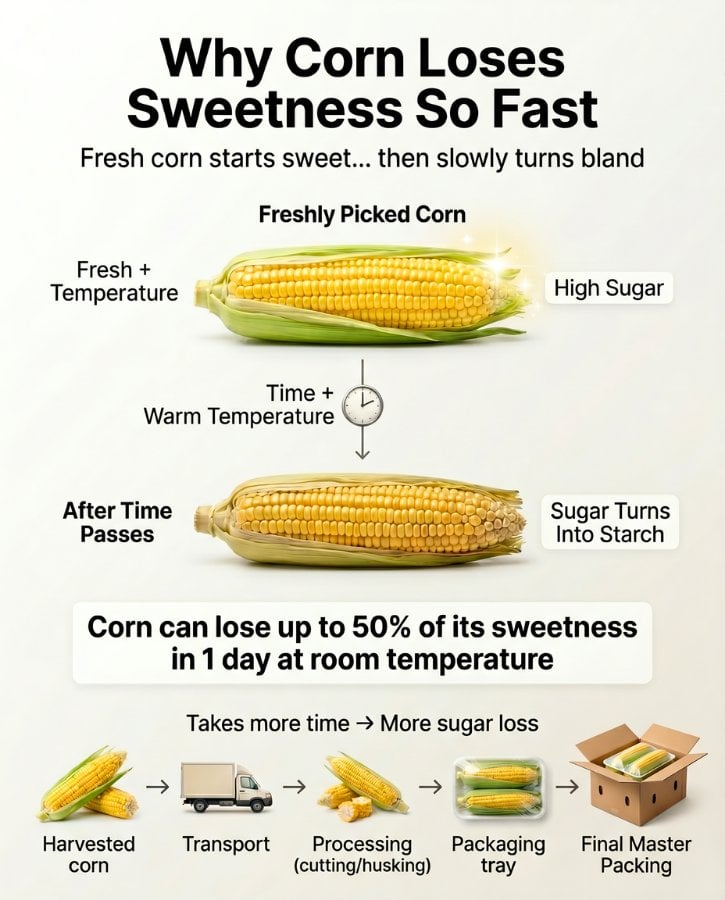
Corn starts losing its sweetness the moment it’s picked. That’s because the sugar inside the kernels begins turning into starch right after harvest. It’s a one-way process. Once the sugar is gone, it doesn’t come back.
Think of it like this: freshly picked corn is at its sweetest. Every hour after that, the sweetness slowly fades.
Time is the biggest factor. At room temperature, corn can lose up to half of its sugar in just one day. That means a perfectly sweet ear of corn can become bland within 24 hours if it’s not kept cold.
Temperature matters too. Corn needs to be cooled down quickly after harvest to slow down the sugar loss. If it sits in warm conditions, even for a few hours during transport, the sweetness drops fast.
Here’s why this matters for pre-packed corn: it goes through more handling steps than loose corn.
It has to be moved to a facility, husked, trimmed, placed on trays, and wrapped.
Each of those steps takes time, and each one is a chance for the corn to warm up and lose more sugar.
So even if the corn looks great on the outside, it may have already lost much of its sweetness before it ever reached the shelf.
3. The Real Signs of Sweet, Fresh Corn
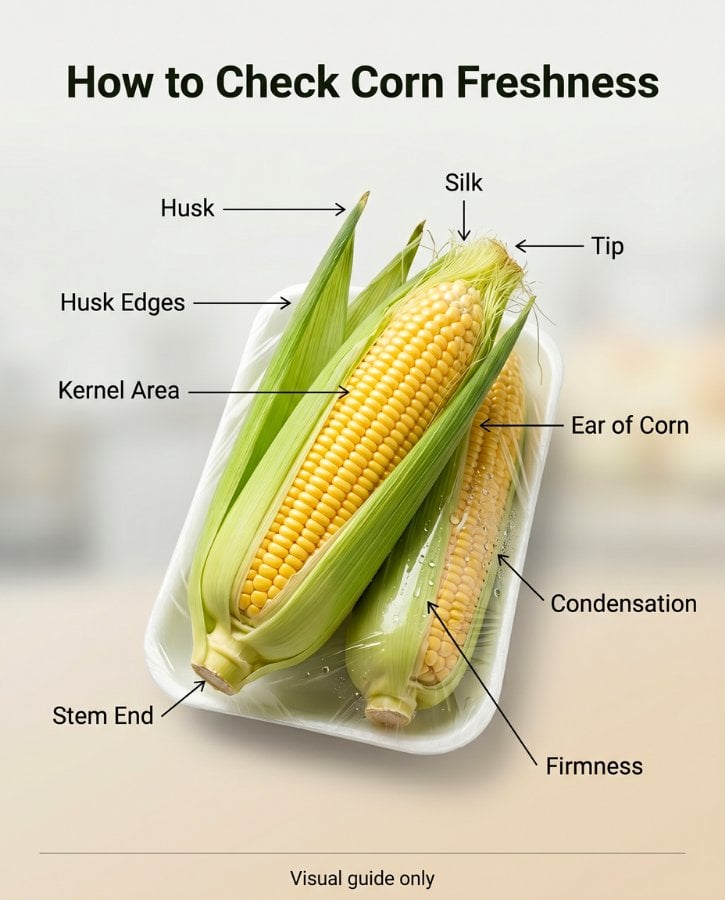
Even when corn is behind plastic wrap, you can still check for freshness. Here’s your grocery checklist.
a. Husk Color and Condition
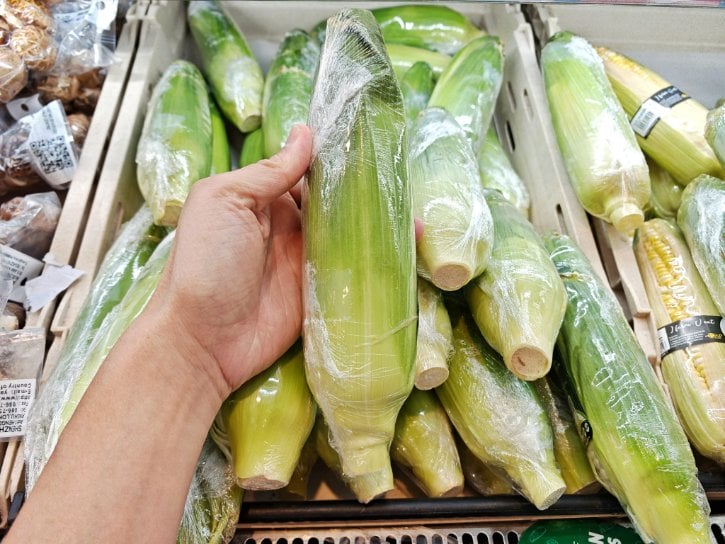
- What to look for: A deep green color with no yellowing or dry edges.
- Why it matters: Green husks mean the corn is still hydrated. Yellowing, fading, or papery edges are signs the corn is drying out and aging.
b. Tight Wrap
- What to look for: The husk should feel snug around the kernels, like it’s clinging tightly.
- Why it matters: Fresh kernels are plump and push against the husk. When corn loses moisture, the kernels shrink and the husk starts to feel loose or baggy. If it feels hollow or has gaps, put it back.
c. Silk Condition
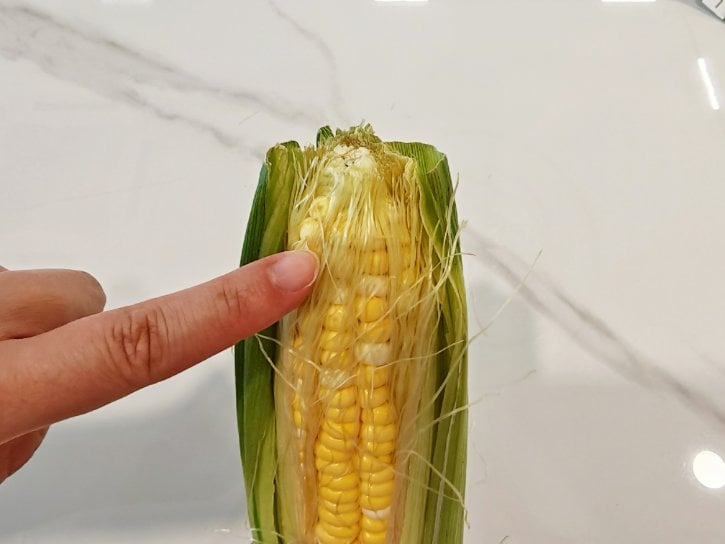
- What to look for: Dark brown or golden silk that feels soft and slightly sticky or tacky.
- Why it matters: The silk is connected to each kernel. Moist, tacky silk usually means the corn was harvested recently and is still well-hydrated.
- Red flag: Dry, brittle, or matted silk means the corn is old. Black or slimy silk means it’s past its prime.
d. Stem Condition
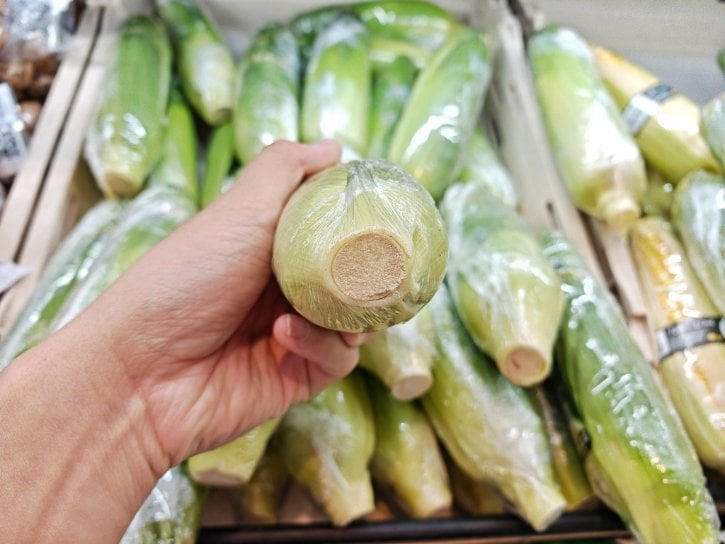
- What to look for: A pale green or white stem end that looks slightly moist.
- Why it matters: Just like a cut flower, the stem dries out and turns brown over time. A dry, woody stem is a clear sign the corn has been off the stalk for several days.
e. Weight Comparison
This is one of the most important checks you can do.
- What to look for: Pick up two similar packs and compare their weight. Choose the heavier one.
- Why it matters: Weight equals moisture. As corn ages, it loses water. A heavier ear has plump, juicy kernels full of sugary liquid. A lighter ear has likely been drying out and turning starchy.
Always compare similar packs when possible. This simple step can make a real difference.
f. Plumpness from Bottom to Tip
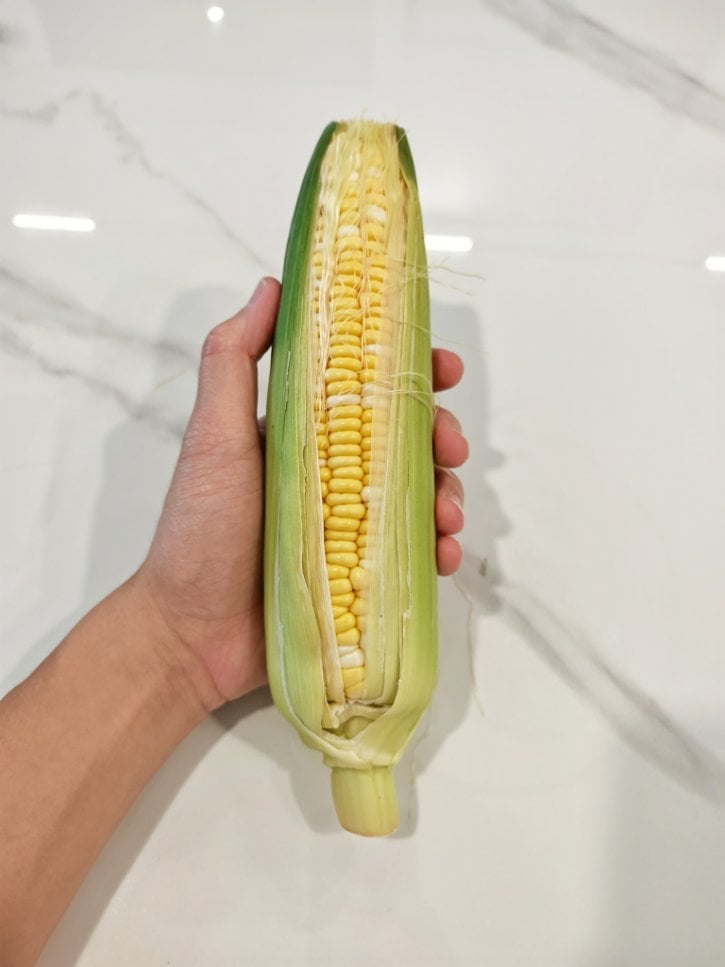
- What to look for: The ear should feel full and rounded from the base all the way to the tip. A blunt, rounded tip is a good sign.
- Why it matters: A blunt tip means the kernels developed fully and were picked at the right time. A pointy tip often means the kernels at the end never filled out properly. Avoid ears with visible dents, gaps, or hollow-looking spots.
g. Firmness Under Pressure
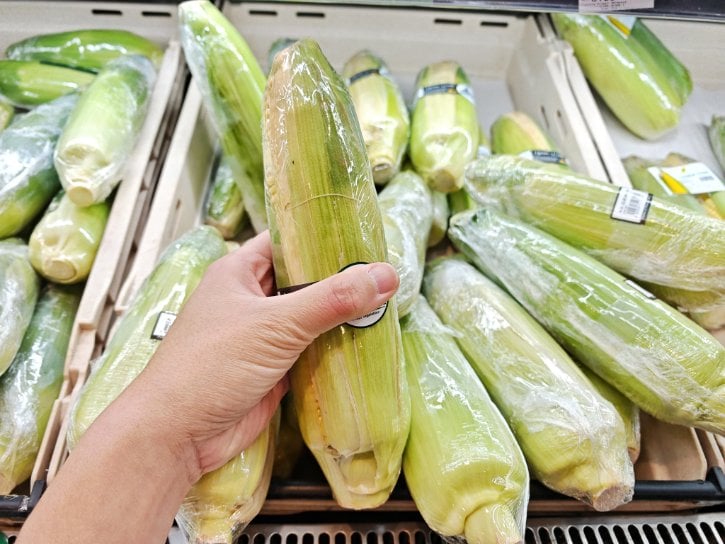
- What to look for: Gently squeeze the ear through the husk. It should feel firm and springy.
- Why it matters: Soft or mushy areas suggest the corn has lost moisture and is becoming starchy. Fresh corn has a satisfying firmness to it.
h. Moisture Clues Inside Packaging
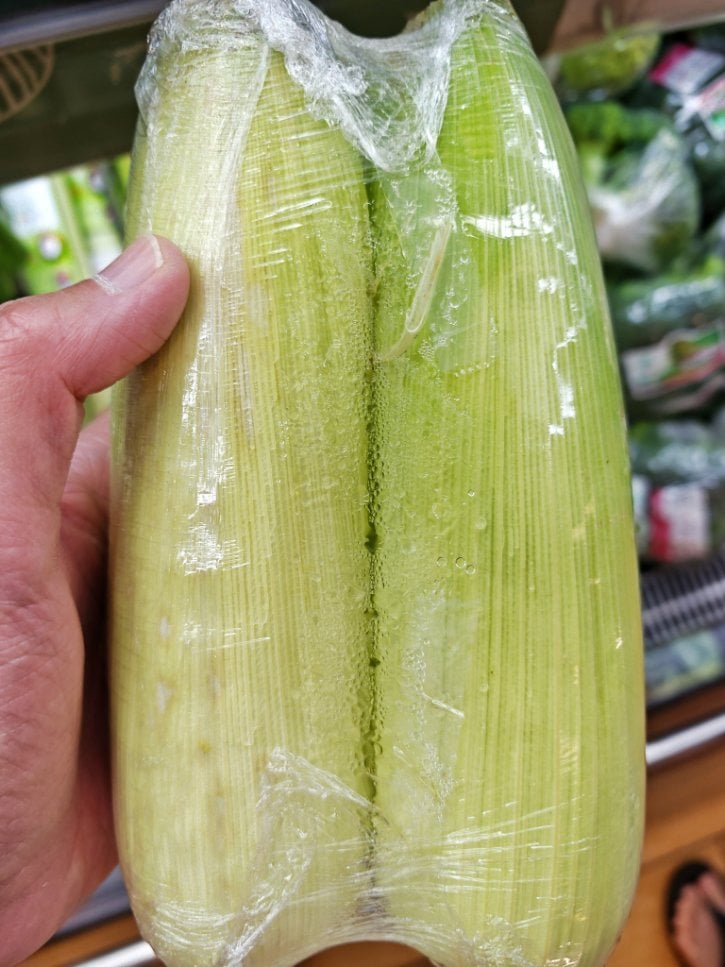
- What to look for: A tiny bit of moisture inside the wrap is normal and even expected.
- Why it matters: But heavy condensation or pools of water at the bottom of the tray are a warning sign. That usually means the corn went through temperature changes during storage, warming up and then being cooled again. This kind of cycle speeds up sugar loss significantly.
i. Color Traps, What Not to Trust
- Bright green alone doesn’t guarantee sweetness. Stores often mist their produce to keep it looking vibrant and fresh. That green color might just be surface hydration, not a sign of quality inside.
- Clean-looking corn can still be old. Don’t let a tidy appearance fool you. Always combine the visual check with the weight test and silk check for better results.
4. Pre-Packed vs Loose Corn: What People Don’t Realize
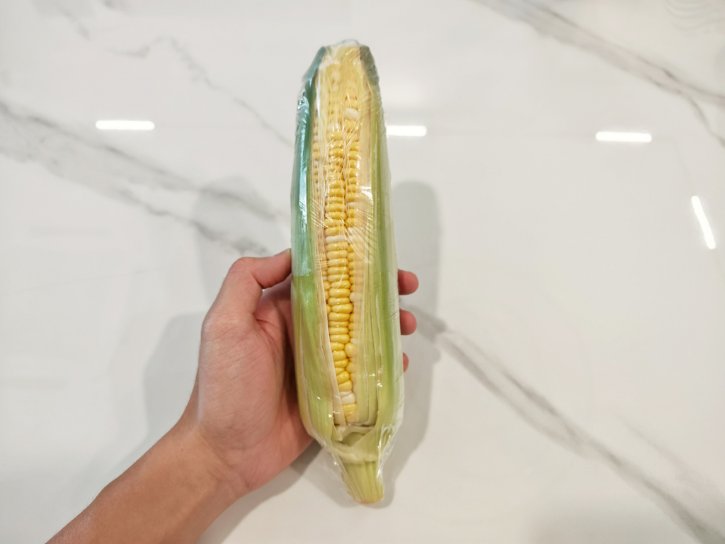
Why Pre-Packed Corn Exists
Pre-packaging isn’t just about making your life easier at the store. It’s also a logistics strategy.
Trimming the stems and outer leaves reduces the weight and size of each ear, which means stores can ship and display more corn at once.
The plastic wrap also acts as a barrier that protects the corn from being handled by dozens of shoppers throughout the day.
In some cases, the packaging is even designed to slow down the corn’s natural aging process by controlling the air around the kernels.
The Hidden Downside
The trade-off is that you lose control over what you’re getting.
- You can’t fully inspect each ear. The wrap hides the silk, the stem, and sometimes the full shape of the corn.
- It may not be the freshest batch. Pre-packed corn goes through extra processing steps before reaching the shelf. That means it often arrives a day or two later than loose corn from the same harvest.
When Pre-Packed Corn Is Still Okay
Pre-packed corn isn’t always a bad choice. If you plan to store the corn for a couple of days before cooking, the packaging can actually help preserve it a little longer.
It’s also a reasonable option when you’re short on time or prefer not to handle loose produce.
When Loose Corn Is the Better Choice
If you’re cooking the corn the same day, loose corn gives you a clear advantage. You can inspect every ear individually. You can check the silk, feel the weight, squeeze for firmness, and look at the stem. You’re in full control of what goes into your cart.
The key takeaway here isn’t that one is always better than the other. It’s about understanding the trade-off so you can choose based on what matters most for that meal.