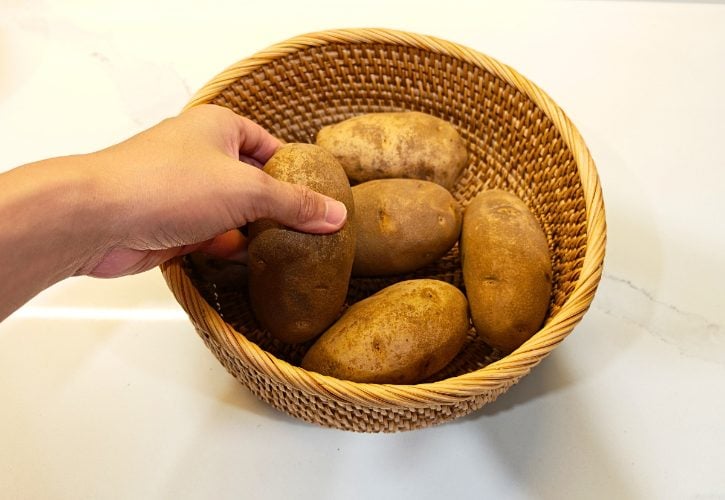
You bring home a fresh bag of potatoes, tuck them away like you always do, and just days later, tiny sprouts are already poking out.
Frustrating, right?
You probably blame the potatoes themselves. But here’s the uncomfortable truth. You’re likely making them sprout faster without even realizing it.
And no, the real culprit isn’t what most people assume. It’s not just “old potatoes”.
There’s a surprisingly simple fix that almost nobody uses, and it changes everything.
1. Why Potatoes Sprout So Easily
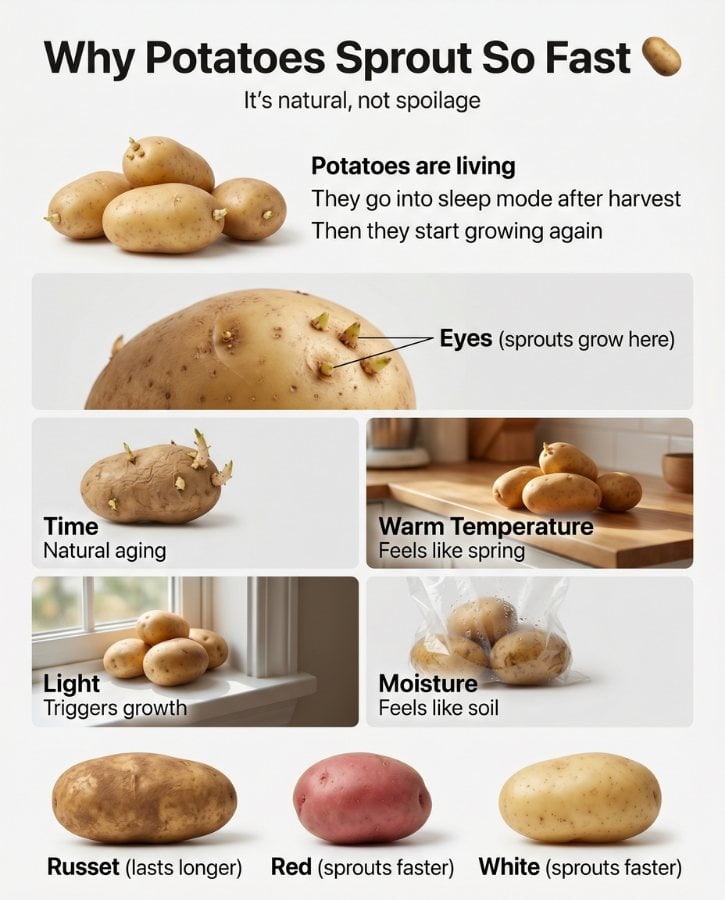
A potato isn’t dead food like a box of crackers. It’s a living tuber, designed by nature to grow into a whole new plant.
After harvest, potatoes enter a natural rest period called dormancy. Think of it like a built-in sleep mode.
But once that internal timer runs out, the potato shifts into survival mode. It starts converting stored starches into fuel, pushing energy toward its “eyes” to grow new sprouts.
Sprouting isn’t spoilage. It’s the potato doing exactly what nature designed it to do.
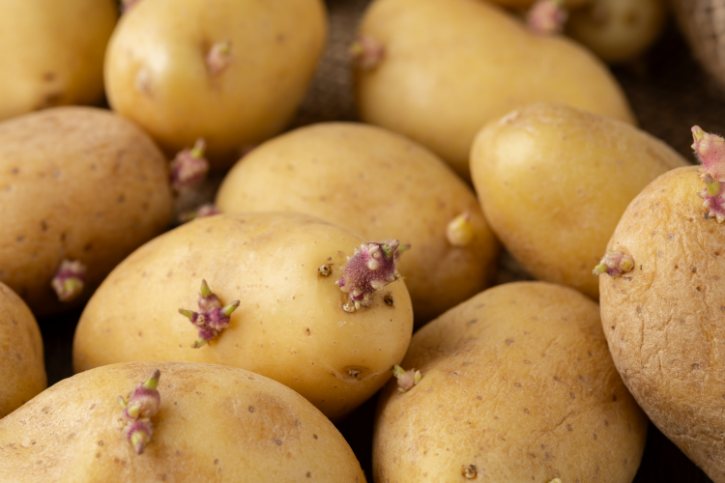
Four everyday conditions flip the switch from “sleep” to “sprout” faster than anything else.
- Every potato has a dormancy clock that eventually runs down.
- Warm conditions signal “spring is here, time to grow”.
- Even dim kitchen light triggers internal growth signals.
- Too much humidity trapped around the skin mimics soil conditions.
Variety matters too. Russets tend to keep longer thanks to their denser structure. Red and white varieties, with thinner skins and higher moisture, often sprout the fastest.
2. What’s Actually Making Your Potatoes Go Bad Faster
Here’s where it gets practical. These are the most common causes, and chances are, you’re doing at least a few without realizing it.
a) Storing in the Refrigerator
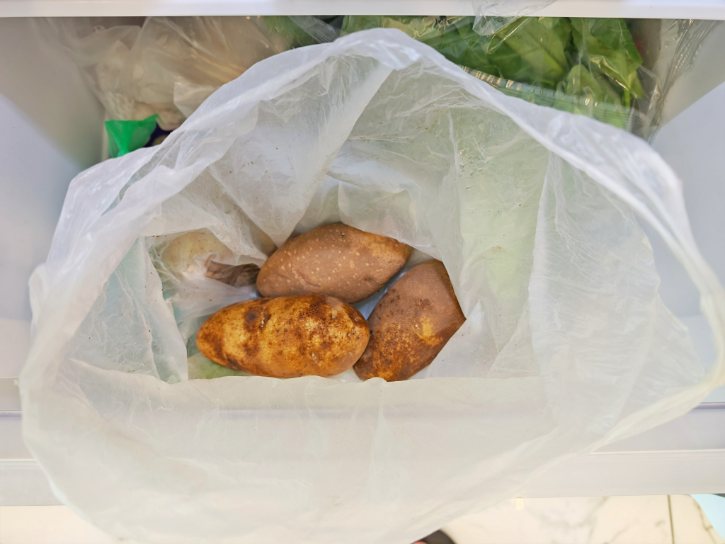
This one surprises a lot of people. Cold temperatures cause the starch inside potatoes to convert into sugar. This doesn’t just change the taste. It also causes uneven browning when you cook them, especially when frying.
Potatoes need cool, not cold. Move them out of the fridge and into a cooler spot in your kitchen or pantry instead.
b) Too Much Light Exposure
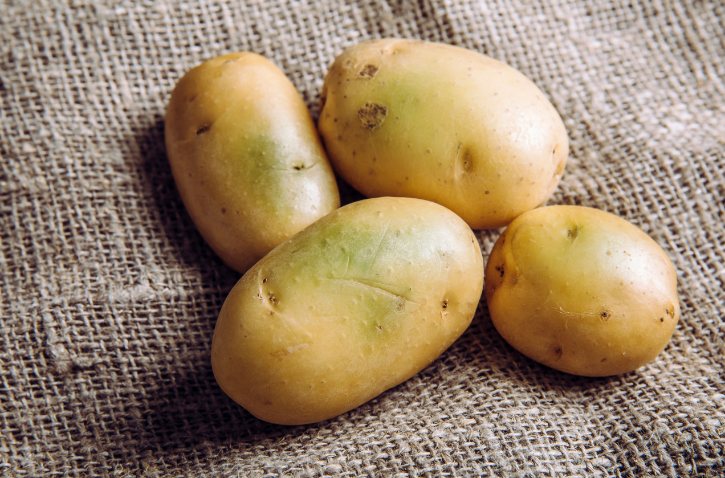
Leaving potatoes on the counter or near a window triggers chlorophyll production, which turns the skin green. While chlorophyll itself is harmless, it shows up alongside solanine, a naturally occurring toxin.
Light also signals the potato to start sprouting. Keep them in the dark as much as possible.
c) Warm Kitchen Storage
Most kitchens are much warmer than potatoes like. At typical room temperature, a potato burns through its stored energy fast and sprouts much sooner.
The warmer the spot, the quicker they’ll sprout. Even moving them to a slightly cooler area makes a difference.
d) High Humidity and Poor Airflow
When air can’t circulate, moisture builds up around the potatoes. This creates the perfect environment for sprouting and rot.
If you notice small white bumps on the skin, those are usually swollen breathing pores, a sign that humidity is too high. Improve ventilation right away.
e) Storing in Plastic Bags
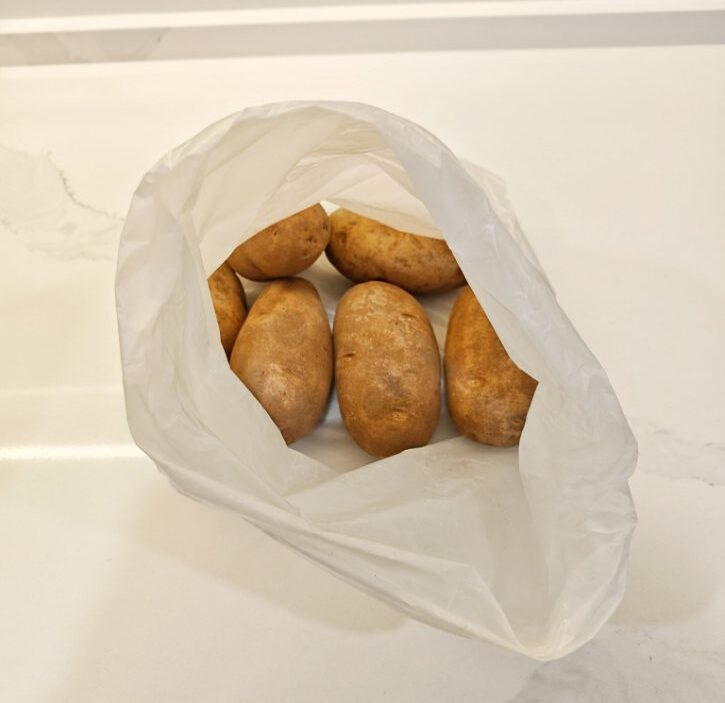
The plastic bag from the store traps moisture and heat. It creates a mini greenhouse effect, which is exactly what you don’t want.
Remove potatoes from plastic as soon as you get home and transfer them to a breathable container.
f) Storing Potatoes With Onions
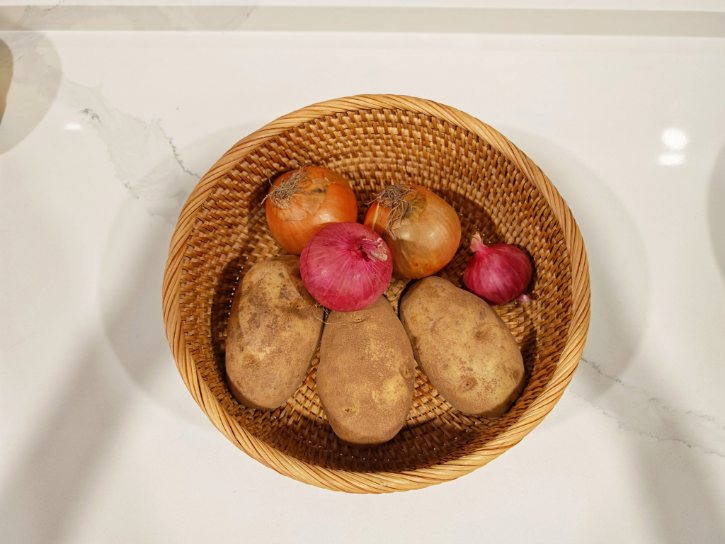
This is a classic mistake. Onions release gases that can break the potato’s dormancy and trigger sprouting. Meanwhile, the moisture from potatoes makes onions go soft and moldy.
Even though both vegetables prefer cool, dark storage, they should never share the same space.
Read More: Why Storing Onions Near Potatoes Ruins Both
g) Buying Already-Older Potatoes
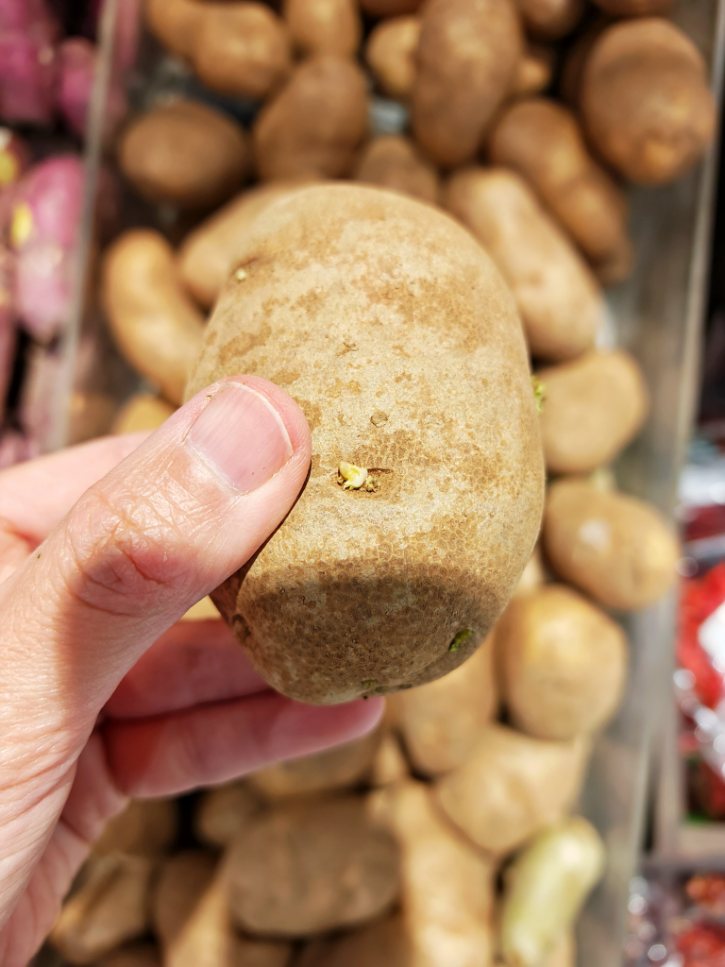
Not all potatoes at the store are freshly harvested. Some have been sitting in supply chains for weeks.
If they’re already closer to the end of their dormancy, they’ll sprout much faster at home. Look for firm potatoes with tight, unblemished skin.
Read More: How to Pick the Best Potatoes
h) Washing Before Storage
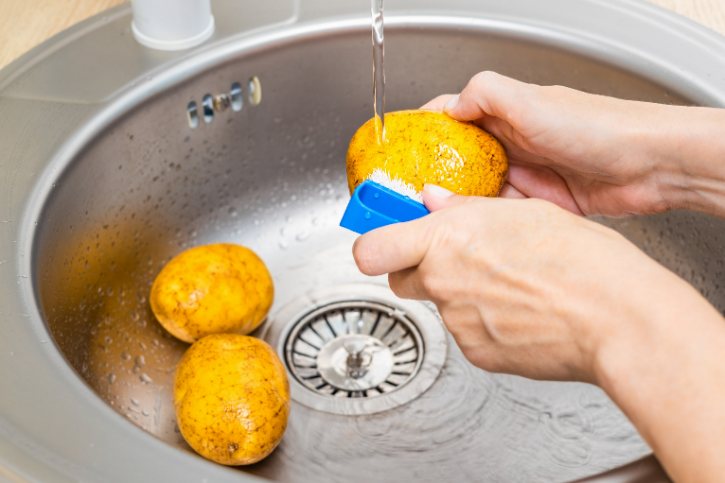
Adding moisture before storage is a fast track to sprouting and rot.
Only wash potatoes right before you’re ready to cook them. Keep them dry until then.
i) Damaged or Bruised Potatoes
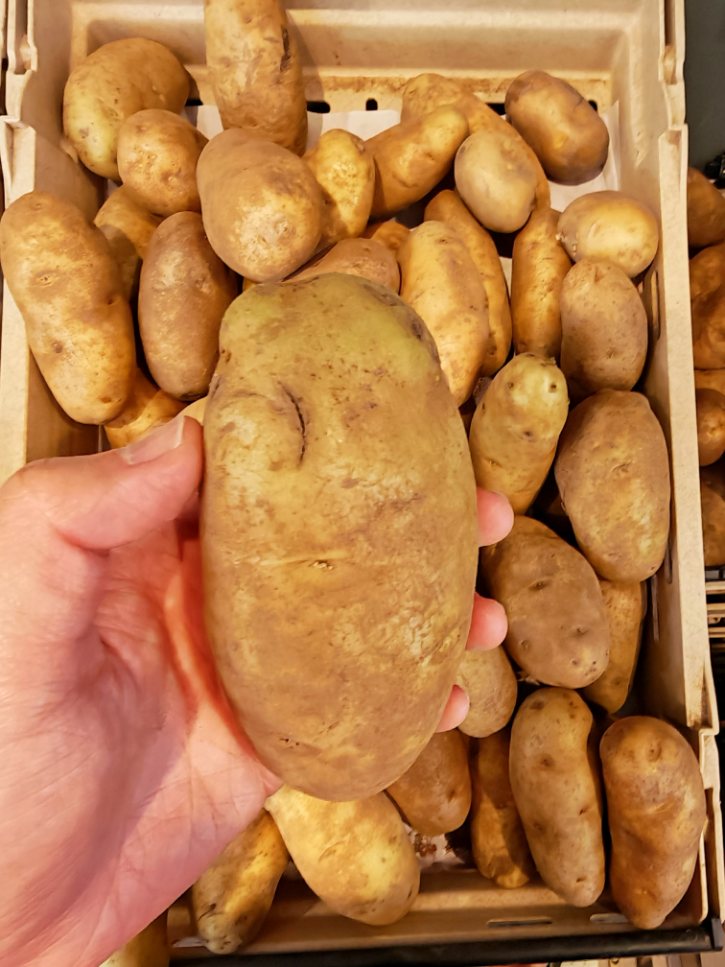
Any cuts or bruises break the potato’s natural protective barrier. Damaged areas are more vulnerable to moisture loss, bacteria, and faster sprouting.
Sort through your potatoes when you get home and use any damaged ones first.
j) Storing Near Heat Sources
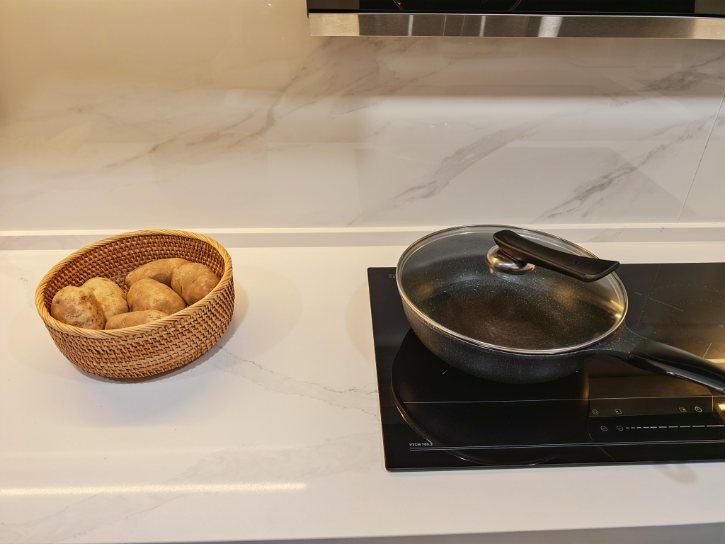
The top of the fridge, next to the oven, near a radiator, or beside any appliance that generates warmth. These are common spots people use because they’re convenient.
But heat is one of the biggest sprouting triggers. Even a small increase in temperature makes a real difference.
k) Not Checking on Them Regularly
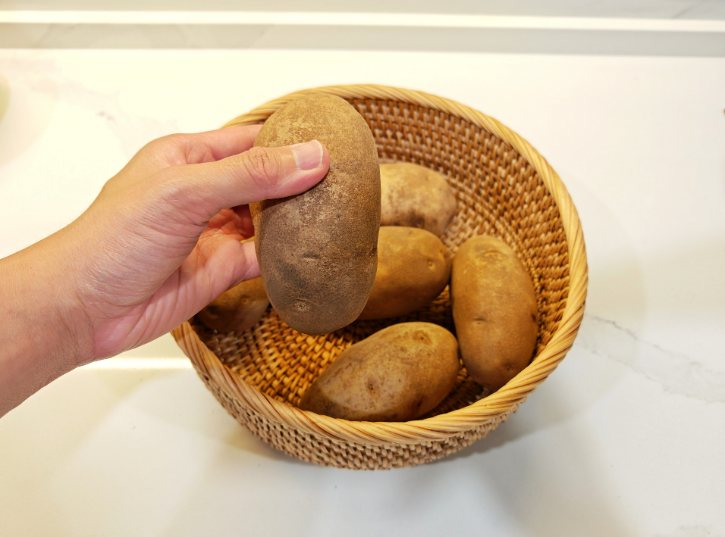
One bad potato can release moisture and gases that affect the rest of the batch.
A quick weekly check lets you catch problems early and remove any potatoes that are starting to turn.
3. The Signs Your Potatoes Are About to Sprout
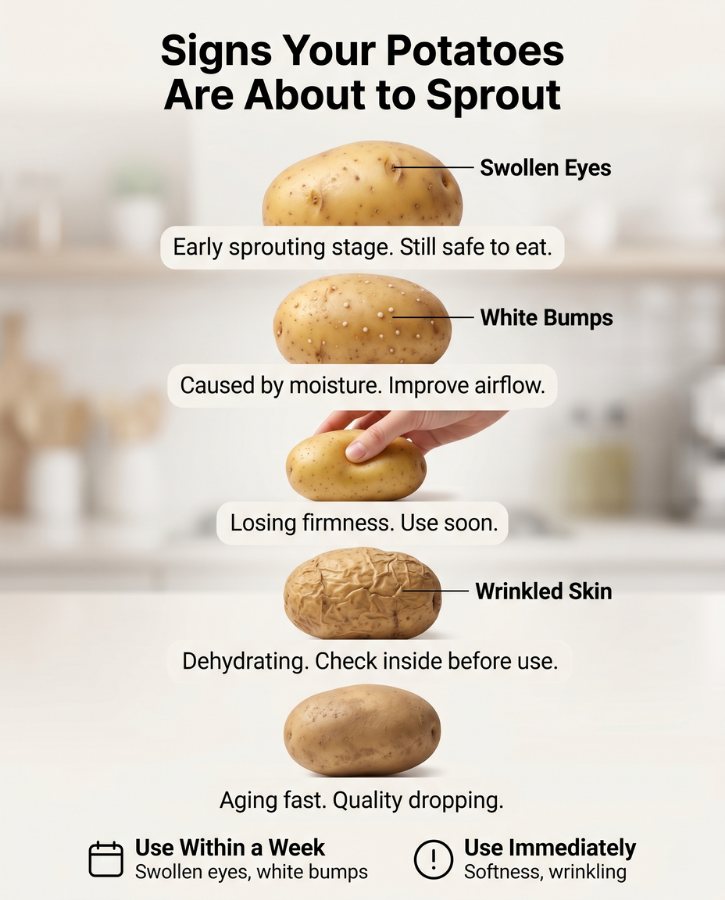
Catching early warning signs gives you time to use your potatoes before it’s too late.
- Small “eyes” starting to swell. The little indentations on the surface are getting ready to sprout. At this stage, the potato is still perfectly fine to eat.
- Tiny white bumps forming. These are swollen breathing pores caused by too much moisture. Improve ventilation, but the potato is still usable.
- Slight softness developing. The potato is losing moisture and energy. Use it soon.
- Wrinkling skin. The potato is dehydrating. It may still be usable if the flesh inside is firm.
- Color dulling. Fresh potatoes have a slight sheen. When the color looks flat and lifeless, it’s aging fast.
Swollen eyes and tiny bumps mean “use within a week”. Softness and wrinkling mean “use immediately”.
4. The Easy Fix Most People Miss
Here’s where it all comes together.
a) The Core Storage Setup
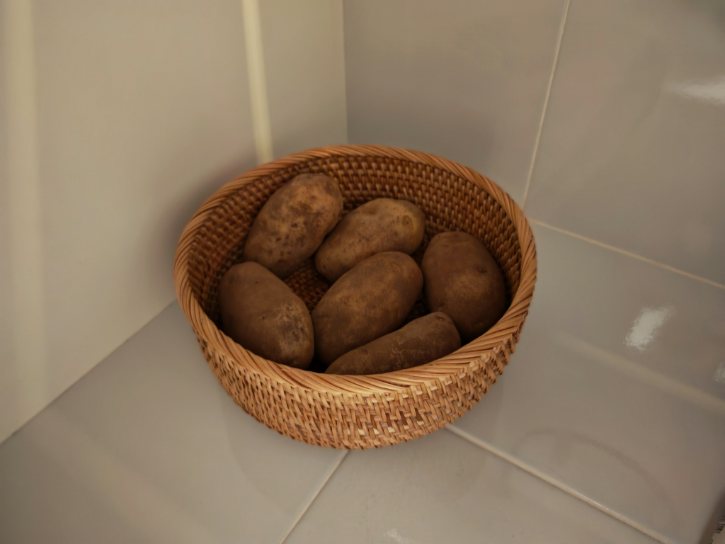
Your potatoes need four things:
- Cool (not cold). Think “unheated pantry” or “cool basement”, not “refrigerator”. The sweet spot is somewhere between fridge cold and room temperature.
- Complete darkness is ideal. Any light accelerates sprouting.
- Low humidity prevents the moisture buildup that triggers sprouting and rot.
- Well-ventilated. Air needs to move around the potatoes to carry away moisture and heat.
b) Best Storage Options
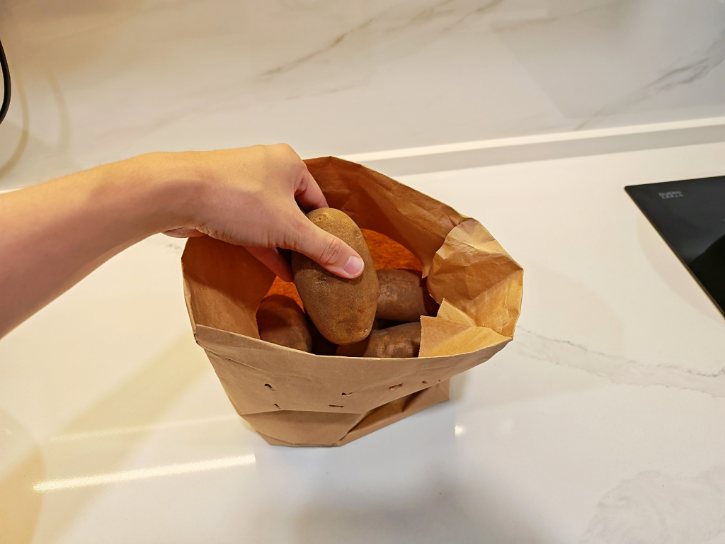
- A paper bag with a few holes poked in it
- A wicker basket or open wooden crate
- A cardboard box with the top open or holes in the sides
Avoid sealed containers, plastic bags, or anything that traps air.
c) The Separation Rule
Keep potatoes and onions in completely separate areas. The gases from onions break potato dormancy and speed up sprouting.
d) The Apple Trick
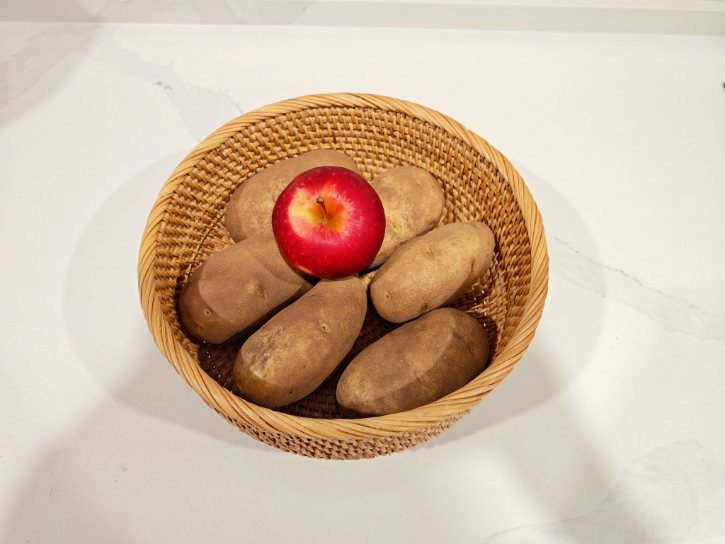
Here’s the part that surprises most people.
Placing a ripe apple with your potatoes can help slow down sprouting.
It sounds odd, but it works. As apples ripen, they naturally release a small amount of ethylene gas.
When potatoes are exposed to a steady, low level of this gas, it slows down the internal process that leads to sprout growth.
In simple terms, the gas from the apple tells the potato’s growing points to stay asleep a little longer.
How to do it:
- Use one ripe, unblemished apple for every 3 to 6 pounds of potatoes
- Place the apple right in with the potatoes inside a breathable container
- Replace the apple every two to three weeks, or whenever it starts getting overly soft
Important: The apple trick works best when your storage conditions are already good. If your potatoes are sitting in a hot, bright kitchen, an apple alone won’t save them. Think of it as an extra layer of protection on top of the basics.
5. When Sprouted Potatoes Are Still Safe
Not every sprouted potato needs to go in the bin.
Still safe to eat:
- Small sprouts. Just snap or cut them off, peel the potato generously around the eye area, and cook as normal.
- The potato is still firm and the flesh looks white or cream-colored inside.
- No green color on the skin or flesh.
Time to throw them out:
- Long, thick sprouts growing from multiple eyes. The potato has used up too much energy.
- Green skin, especially if it goes deeper than the surface. Green signals higher levels of solanine, a natural toxin. Peeling deeply can reduce it, but if the green goes deep or the potato tastes bitter, discard it. This is especially important if young children are eating the meal, as even small amounts can affect them more.
- Soft, shriveled, or spongy texture. Too much moisture and nutrition is gone.
- Bitter taste. A direct sign of high solanine levels. Don’t eat it.
One important note: Cooking does not destroy solanine. Boiling, baking, or frying won’t remove it. However, peeling a potato can significantly reduce the amount since solanine concentrates mostly in the skin and the outer layers. So cutting away affected areas and peeling generously before cooking is the only safe approach. When in doubt, throw it out.
6. Quick Checklist
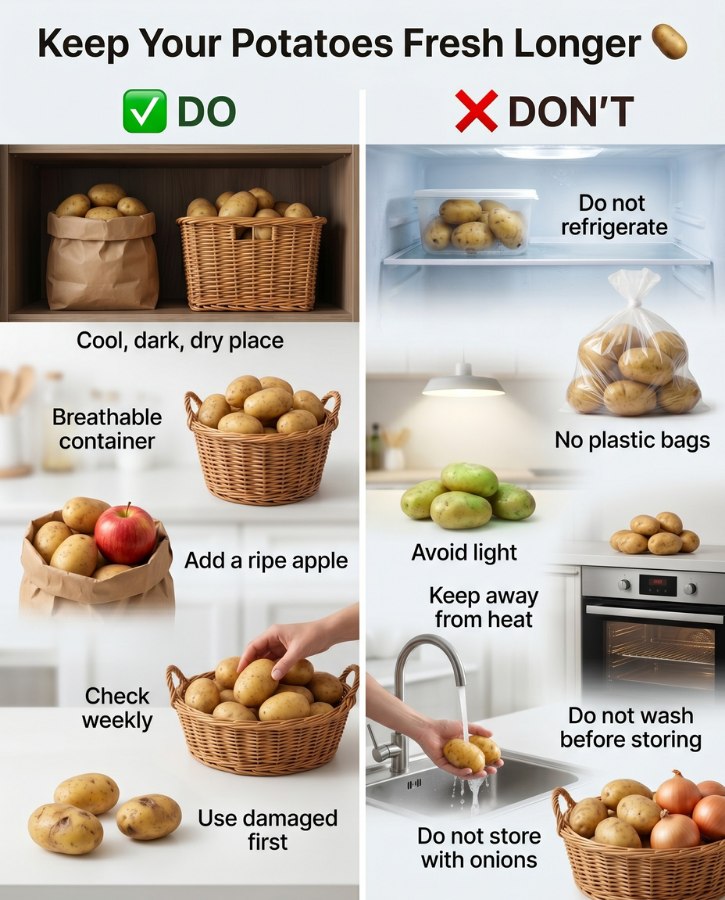
Do:
- Store in a cool, dark, dry place
- Use a breathable container (paper bag, basket, cardboard box)
- Keep potatoes away from onions
- Add a ripe apple to help slow sprouting
- Check your potatoes weekly
- Use damaged or bruised potatoes first
Don’t:
- Refrigerate your potatoes
- Use plastic bags for storage
- Expose them to light (including kitchen lights)
- Store near heat sources (oven, fridge top, radiators)
- Wash potatoes before storing
- Store them together with onions