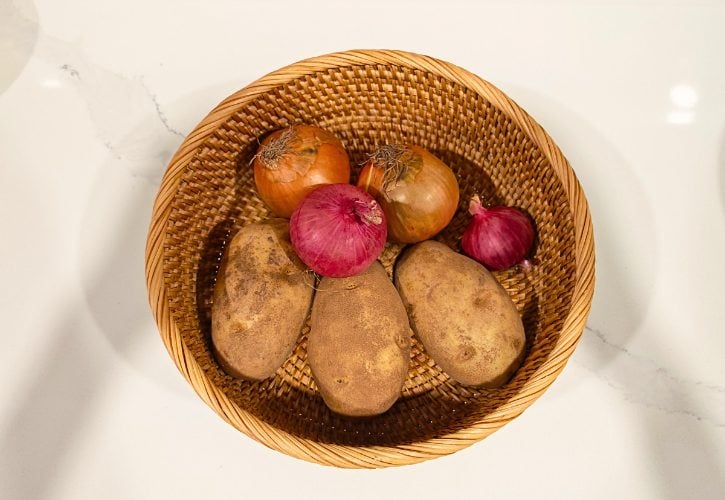
Most people unpack their groceries and toss onions and potatoes into the same basket or pantry drawer. It seems like a harmless, space-saving habit.
But it’s actually a hidden mistake that makes both go bad faster than they should.
The real reason isn’t just “humidity” or “bad produce” from the store.
There’s a specific thing happening between these two vegetables that most people never notice. And the fix? Surprisingly simple. 😊
1. Why People Store Them Together (And the Common Mistakes That Make It Worse)
Why This Habit Is So Common
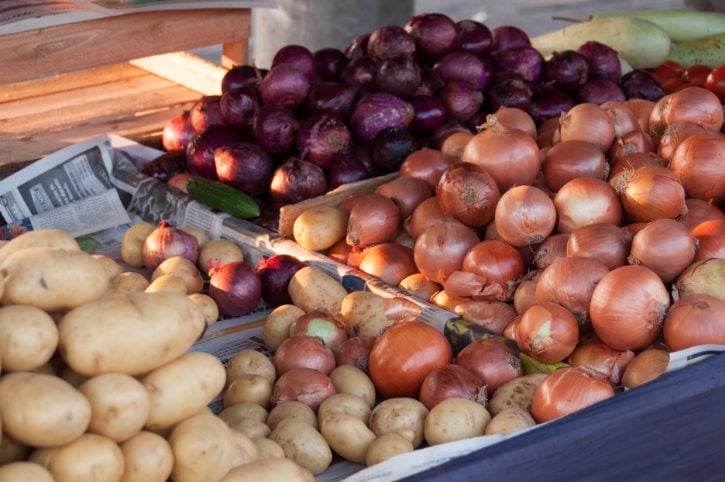
Onions and potatoes feel like natural pantry partners. You buy them often, use them in all kinds of meals, and they both look like tough, dry vegetables that can sit for weeks.
So most people assume they belong together.
That assumption gets reinforced by stores that actually sell “potato and onion” bins, making it seem like they’re meant to be stored side by side. They’re not.
Common Storage Mistakes That Speed Up Spoilage
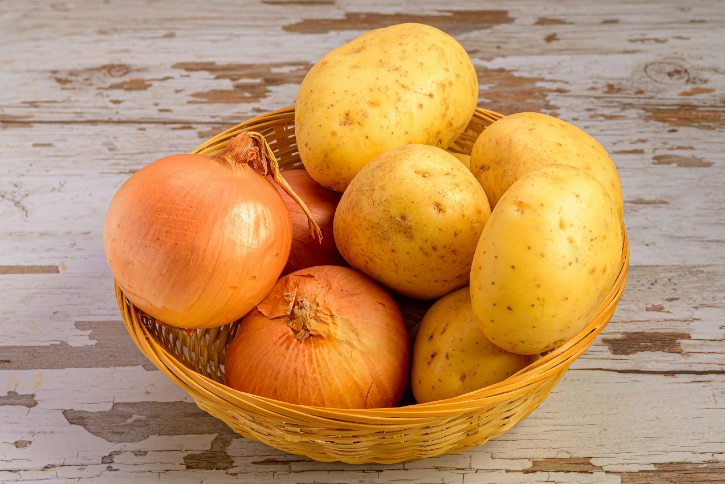
On top of storing them together, most people also make a few other mistakes without realizing it:
- Storing both in the same basket or drawer. Close quarters concentrate the problem and speed up spoilage for both.
- Using plastic bags. Plastic traps moisture and creates a humid environment that accelerates decay.
- Keeping them in closed cabinets with no airflow. A stuffy, dark space with zero ventilation is a breeding ground for mold and trapped gases.
- Storing near heat sources. Placing them next to a warm dishwasher, oven, or stovetop mimics spring weather. This tricks both vegetables into “waking up” and aging faster.
- Not checking regularly. A single bad potato or onion can spread rot to the rest surprisingly fast.
2. What’s Actually Happening
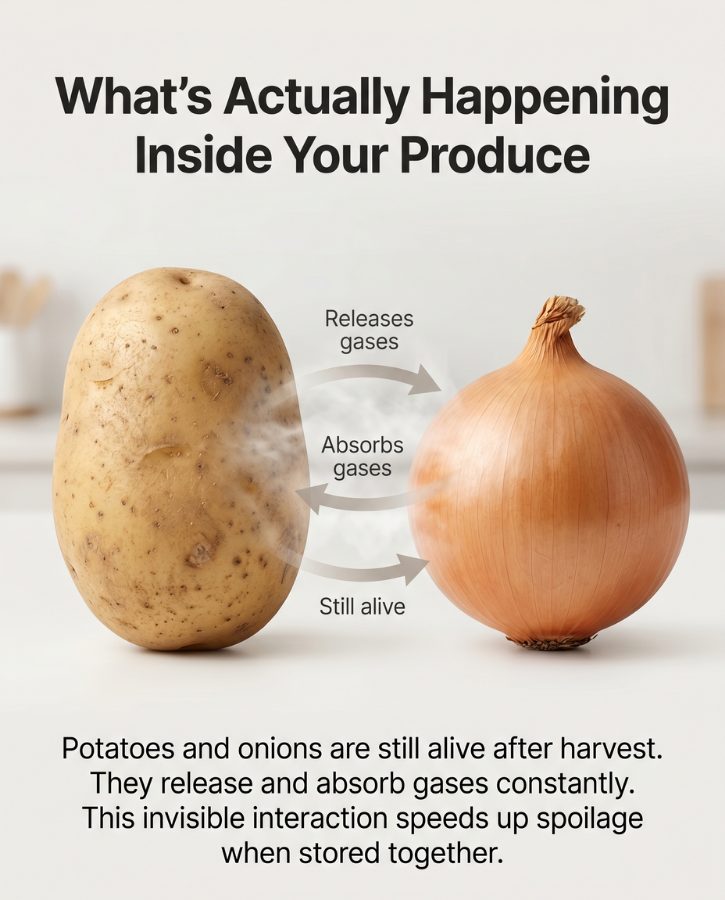
Here’s something most people don’t realize. Potatoes and onions are not dead. They are living, breathing organisms, even after harvest.
They are still biologically active. They take in air, release gases, and interact with whatever is around them.
Because they’re alive, they are constantly giving off something and absorbing something. This invisible exchange is the real reason your produce sometimes goes bad all at once.
Your storage environment directly controls how fast this process happens.
3. The Real Reason Onions Go Bad Faster Near Potatoes
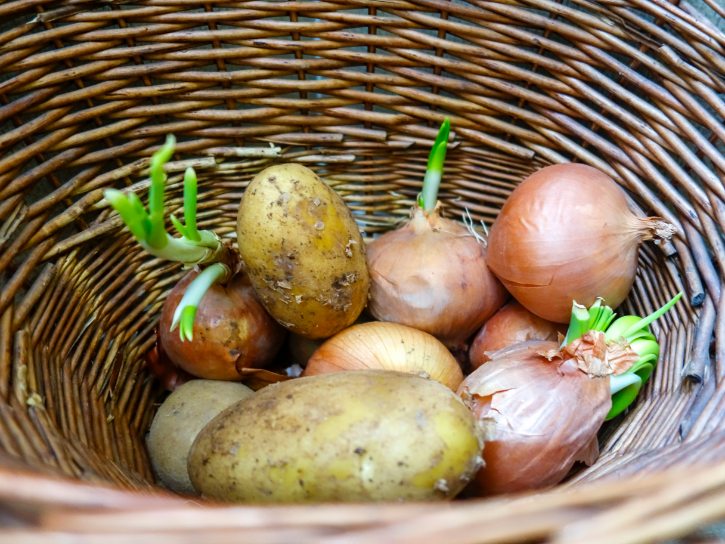
Onions have a fatal flaw. They cannot handle moisture.
Potatoes are roughly 80% water. As they “breathe”, they constantly release moisture into the surrounding air.
When you put an onion next to a potato, that porous, papery onion skin acts like a sponge. It absorbs all that moisture from the potato. This creates the perfect conditions for fungal rot.
Poor airflow makes it even worse because the moisture has nowhere to go.
Early Signs Most People Miss
- Slight softness near the neck. A spongy spot where the stem was cut is the first warning sign.
- Damp or sticky outer skin. Healthy onion skin should feel dry and crackly, not moist or slimy.
- A faint sour smell. If your onion has an “off” odor, moisture damage has already started inside.
4. The Real Reason Potatoes Get Worse Near Onions
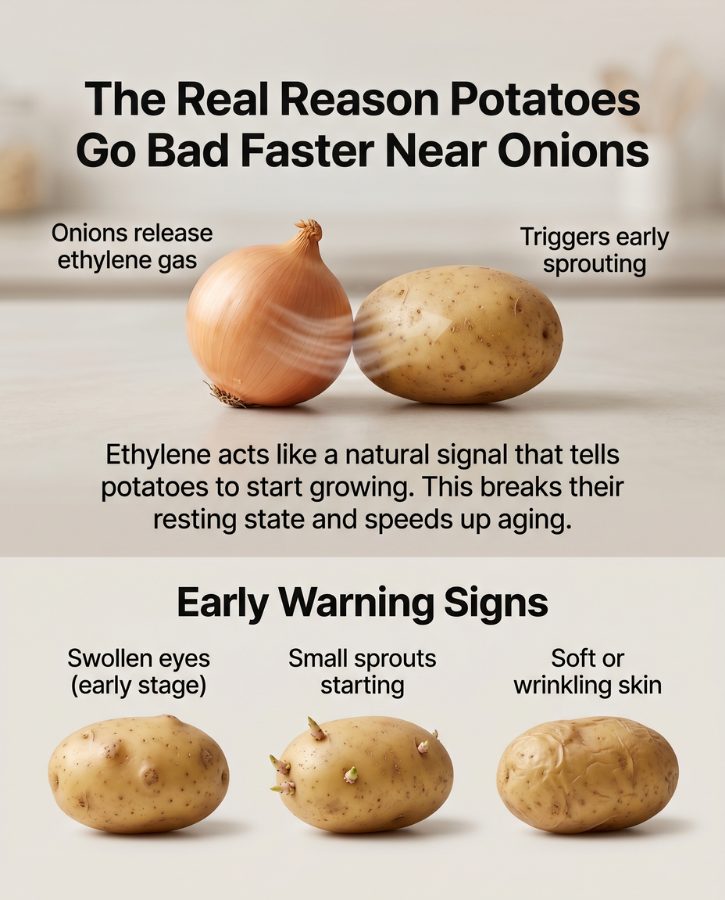
Onions release a natural gas called ethylene. Think of it as a chemical alarm clock that tells nearby produce, “It’s spring! Time to grow!”
Potatoes are extremely sensitive to this gas. Even small amounts of ethylene can break a potato’s natural rest period and trigger sprouting.
Once sprouting starts, the potato ages faster, loses firmness, and breaks down in texture. It’s not just cosmetic. The potato is using up its own nutrients to fuel those sprouts.
Early Warning Signs
- Swollen or raised “eyes” that look like small bumps on the surface.
- Tiny white or purple sprouts beginning to push through the skin.
- Slight softness or wrinkling. A healthy potato should feel firm and solid, not spongy.
Read More: These Onion Signs Tell If It’s Fresh or Already Going Bad
5. Why This Combination Is Worse Than People Think
Here’s where it gets really destructive. It’s not just two separate problems. It’s a feedback loop.
Moisture from the potato rots the onion. Gas from the onion sprouts the potato. Poor airflow in a shared drawer traps both the moisture and the gas, concentrating the effect.
As soon as one item starts to turn, it raises the local humidity and gas levels even higher. This causes everything nearby to fail faster.
This is why you sometimes think, “They were all fine yesterday, and now half the basket is bad!”
It’s not bad luck. It’s a chain reaction.
6. The Easy Fix Most People Miss
You don’t need special equipment or a root cellar. You just need to understand one thing: distance matters more than most people think.
It’s not enough to simply keep them from touching. You need real separation.
How to Store Potatoes
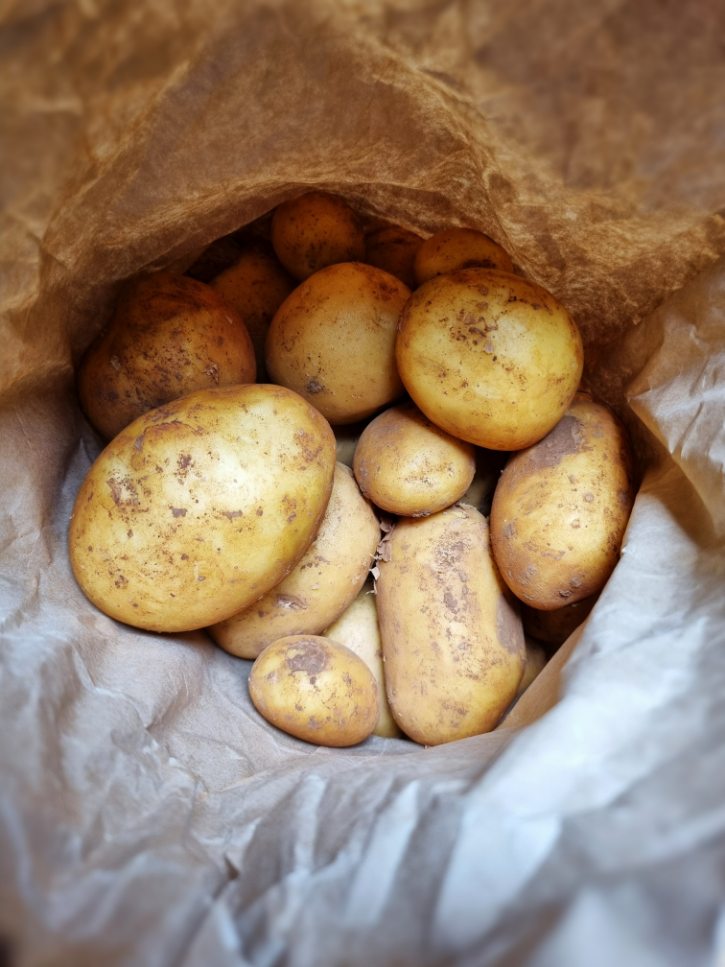
- Keep them in a cool, dark, dry place like a pantry, basement, or garage (as long as it doesn’t freeze).
- Use a breathable container such as a paper bag, cardboard box, or ventilated basket.
- They actually prefer higher humidity (around 85 to 90%) to prevent shriveling.
- Never store potatoes in the fridge. Cold temperatures turn starch into sugar and change the taste.
How to Store Onions
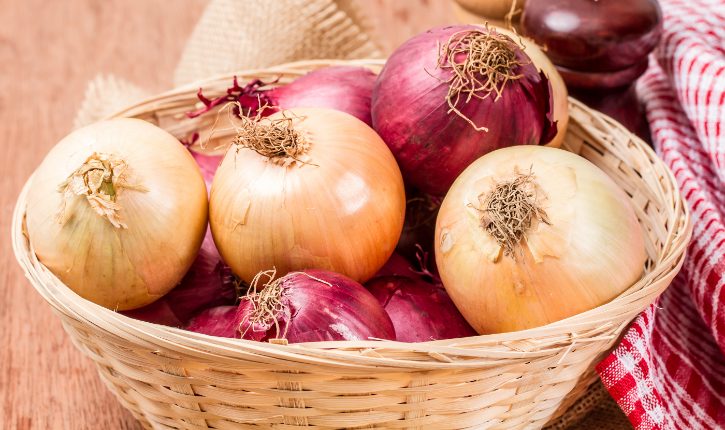
- Keep them in a dry, well-ventilated space with low humidity (well under 70%).
- Use a mesh bag, open basket, or hanging wire basket. Maximum airflow is the goal.
- Store them in a separate cabinet, a different shelf, or even a dry closet away from any moisture sources.
- Keep them away from sinks, dishwashers, and steam-producing appliances.
7. Signs You’ve Already Stored Them Wrong
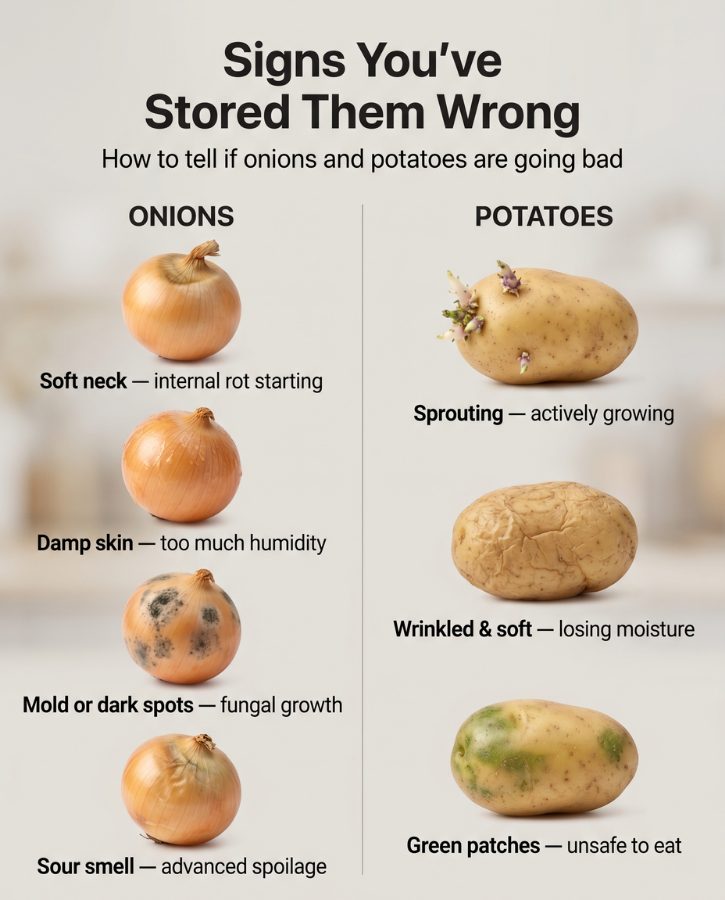
If you’ve been storing onions and potatoes together, check them now. Here’s a quick guide to help you decide what’s still usable and what needs to go.
For Onions
- Soft neck: If the area near the stem feels pliable, the onion has started rotting inside.
- Damp skin: Any moisture on the outer scales means it’s absorbed too much humidity.
- Mold or dark spots: Black mold or gray fuzzy growth means fungal infection.
- Sour smell: A sharp, vinegar-like odor means bacterial spoilage is advanced.
For Potatoes
- Active sprouting: Any white, green, or purple growth from the eyes.
- Wrinkling and softness: A potato that feels spongy or looks shriveled is past its prime.
- Green patches: Greening means light exposure and potential toxicity.
8. Quick Do and Don’t Checklist
DO
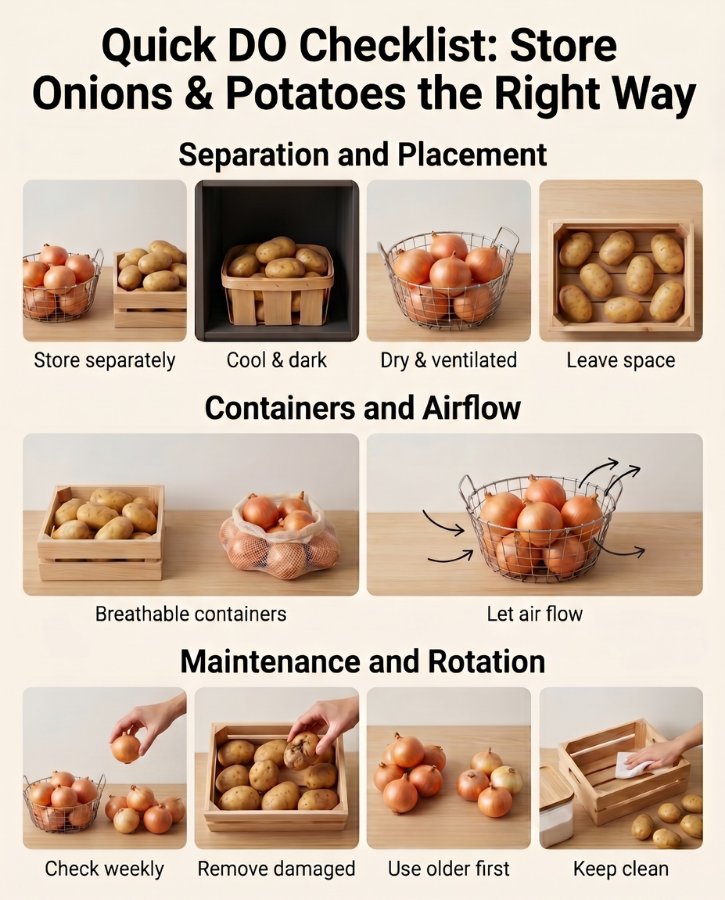
a. Separation and Placement
- Store onions and potatoes in completely separate spaces. Different cabinets or areas of the kitchen, not just different baskets.
- Keep potatoes in a cool, dark spot. Darkness prevents greening and solanine buildup.
- Keep onions in a dry, well-ventilated area. Air circulation is their best friend.
- Leave space between individual items. This prevents heat and moisture from building up.
b. Containers and Airflow
- Use breathable containers for both. Paper bags, cardboard boxes, mesh bags, or wire baskets.
- Allow gases to escape. Make sure containers and storage areas aren’t sealed tight.
c. Maintenance and Rotation
- Check your stored produce weekly. Catching one bad item early saves the rest.
- Remove any damaged or bruised items immediately. Damaged produce spoils faster and spreads rot.
- Use older items first. Practice “first in, first out” to reduce long-term waste.
- Keep storage areas clean. Dirt and old debris carry fungal spores.
DON’T
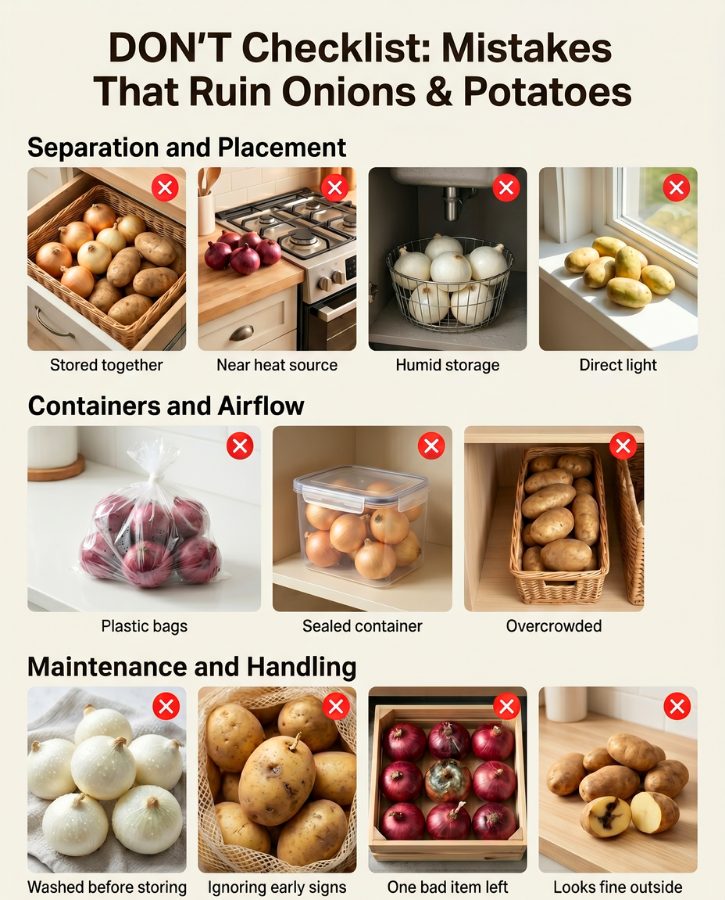
a. Separation and Placement
- Store onions and potatoes together. Not in the same basket, drawer, bag, or shelf.
- Store near heat sources. Ovens, dishwashers, and other appliances speed up respiration and aging.
- Store in humid areas. Under the sink or near the stove introduces moisture that triggers decay.
- Store in direct light. Light accelerates greening in potatoes and can reduce onion quality over time.
b. Containers and Airflow
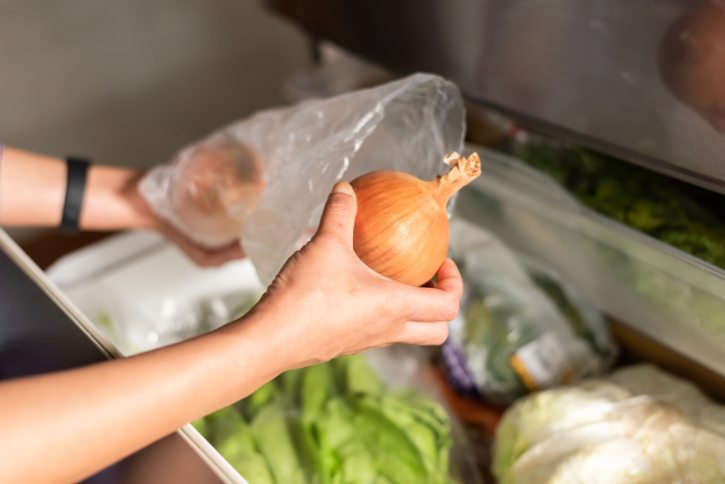
- Use plastic bags for storage. They trap moisture and create a greenhouse effect that accelerates rot.
- Keep them in sealed containers. Airtight spaces concentrate gases and prevent breathing.
- Overcrowd your storage space. Tight packing restricts airflow and creates hot spots.
c. Maintenance and Handling
- Wash produce before storing. The added moisture from washing starts bacterial rot almost immediately.
- Ignore early warning signs. Small soft spots, tiny sprouts, and faint smells quickly lead to total loss.
- Leave a single bad item in the group. One rotting onion or potato can trigger a chain reaction that spoils everything around it.
- Assume they’re fine just by looking at them. Pick them up, press gently, and smell them. Soft spots, unusual odors, and dark rot inside potatoes often go unnoticed until you actually handle them.