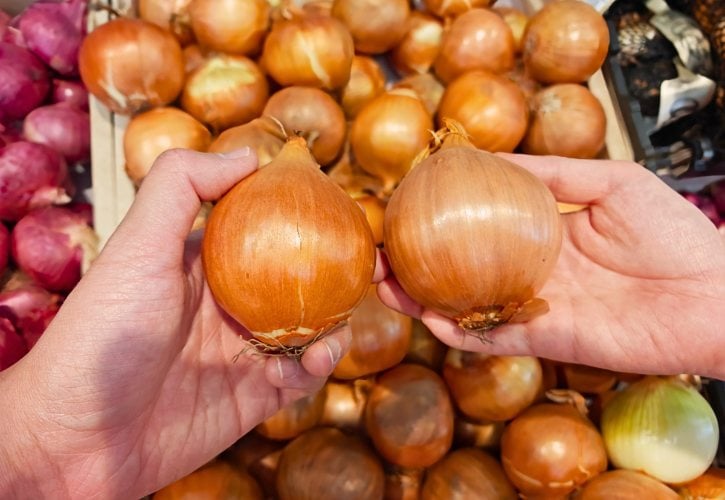
Every onion in that pile looks about the same. Round, papery, and harmless. Most people grab one that looks decent and toss it in the cart without a second thought.
But onions are masters of disguise. Some look flawless on the outside while quietly going bad on the inside. That smooth, firm-looking onion you just picked? It might already be past its prime.
This guide works for yellow, red, and white onions. By the end, you’ll never pick one the same way again. 😊
1. Why Onions Are So Easy to Misjudge
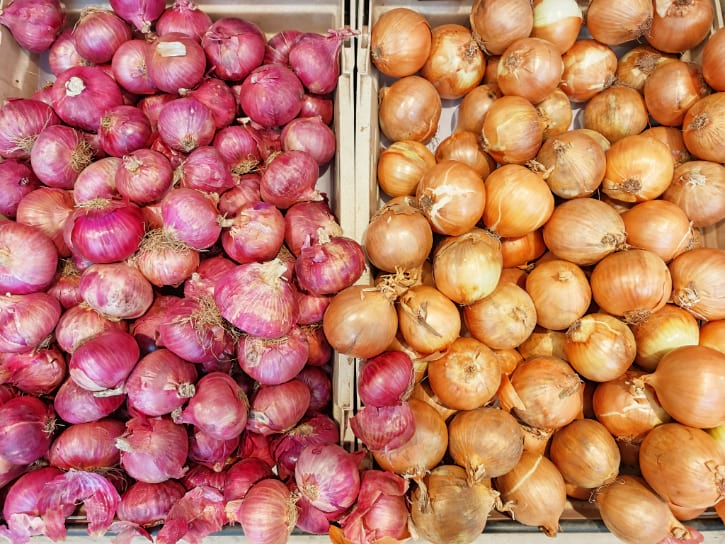
That dry, papery skin hides everything happening underneath. Spoilage often starts deep inside the bulb, in the inner layers or around the neck, long before anything shows on the surface.
Some onions feel perfectly fine when you pick them up, but inside they’re already drying out or developing rot. The layered structure makes things worse.
A problem in one layer can stay hidden until it suddenly spreads. And the early texture changes? So subtle that most people miss them entirely.
That’s why grabbing the first decent-looking onion doesn’t work. You need to know what to actually check.
2. The Core Signs That Actually Matter
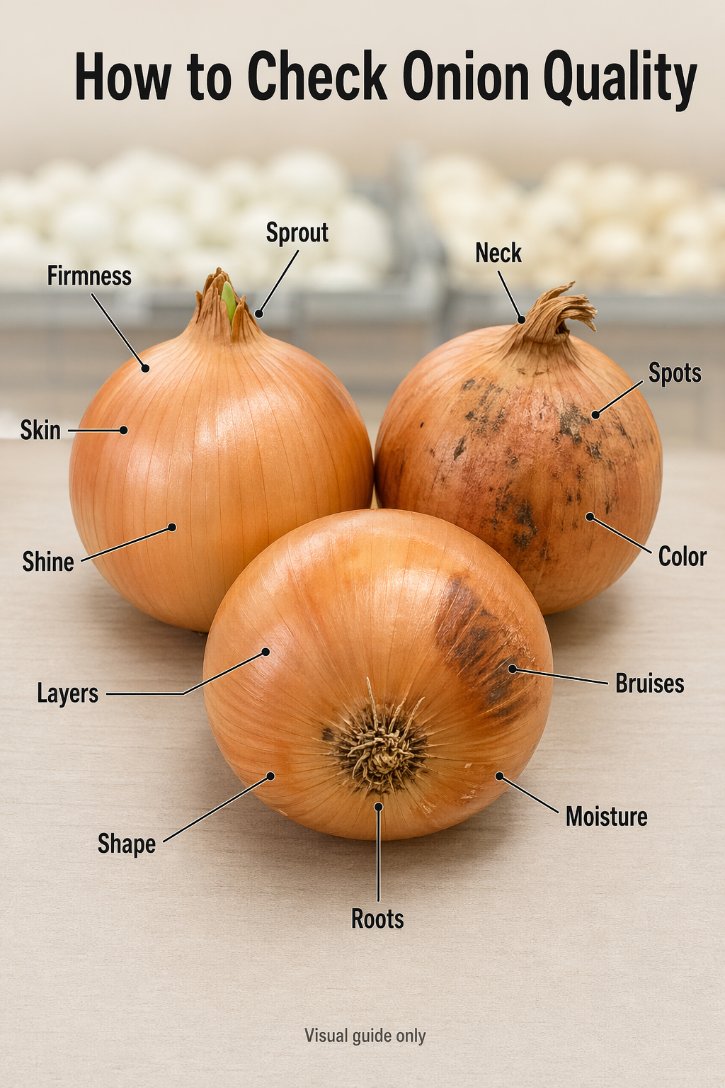
These 13 signs separate a fresh onion from one that’s already on its way out.
a. Weight: Heavy vs. Light for Size
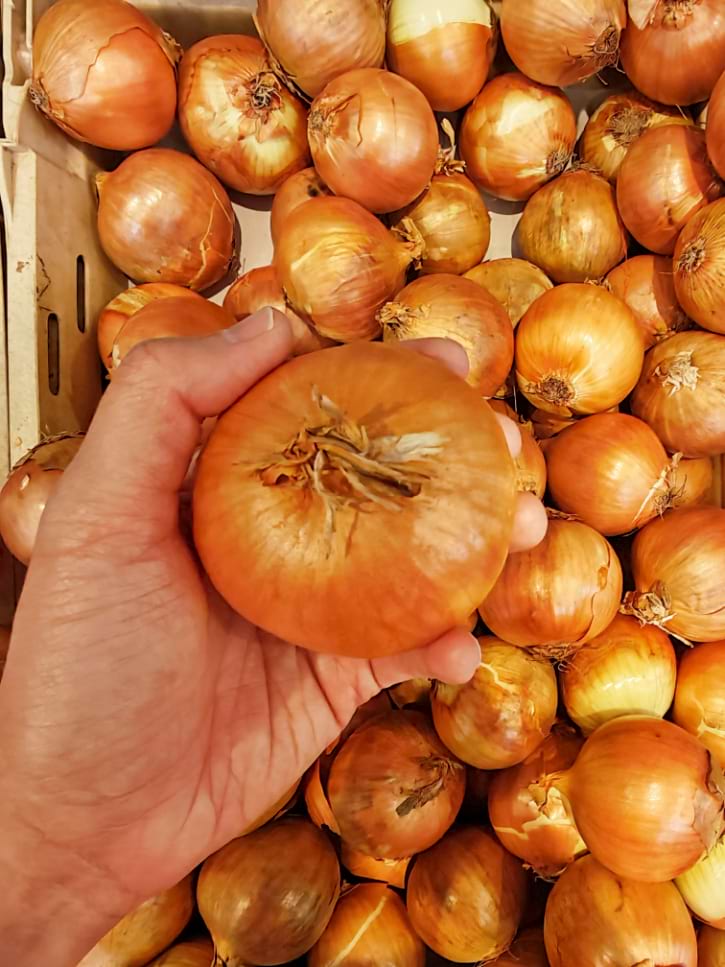
- What to Look For: A fresh onion feels heavy for its size, dense and solid.
- What It Means: Heavy means full of moisture with tightly packed layers. Light means it’s drying out or has hollow pockets inside.
- Why It Matters: Weight is the fastest freshness check you can do.
- Real-Life Tip: Pick up two onions of similar size, one in each hand. The heavier one is almost always fresher.
b. Firmness: Solid vs. Soft Spots
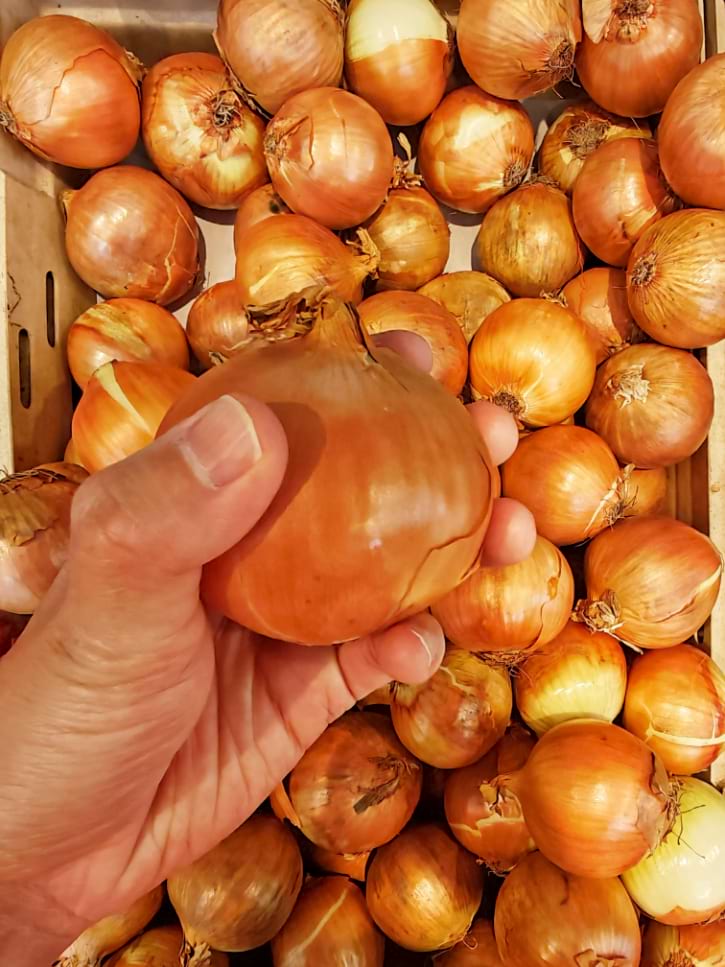
- What to Look For: Squeeze gently all around. It should feel rock-hard with no give anywhere.
- What It Means: Any softness or sponginess signals internal decay. Bacterial rot starts as water-soaked tissue that breaks down into pulp.
- Why It Matters: Soft spots are irreversible. Even a small one can mean deeper rot spreading through multiple layers.
- Real-Life Tip: Press around the entire bulb, not just one spot. Rot can be localized, and a quick grab might miss it.
c. Skin Texture: Dry and Papery vs. Damp or Slimy
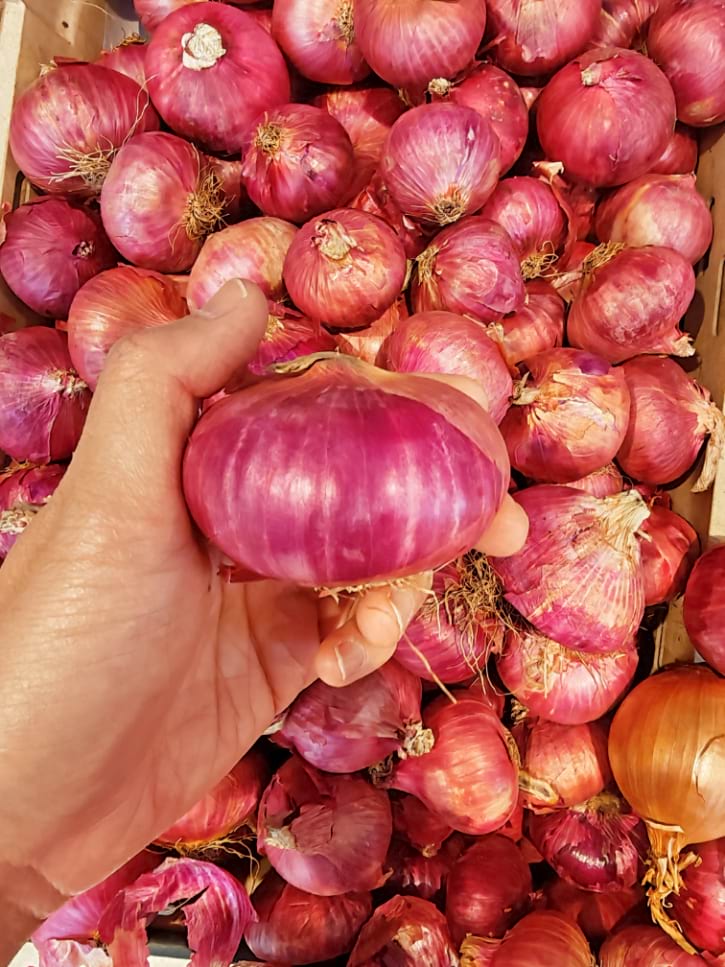
- What to Look For: The skin should feel dry, crisp, and make a faint crackling sound. Not wet, sticky, or tacky.
- What It Means: Moisture on the skin creates perfect conditions for fungal and bacterial growth. Neck rot often shows up first as water-soaked scales in the neck area.
- Why It Matters: Once the protective dry layer is compromised, the inner flesh is vulnerable to rapid spoilage.
- Real-Life Tip: Run your thumb across the skin. If it’s not dry, skip it.
d. Dark Spots, Mold, and Discoloration
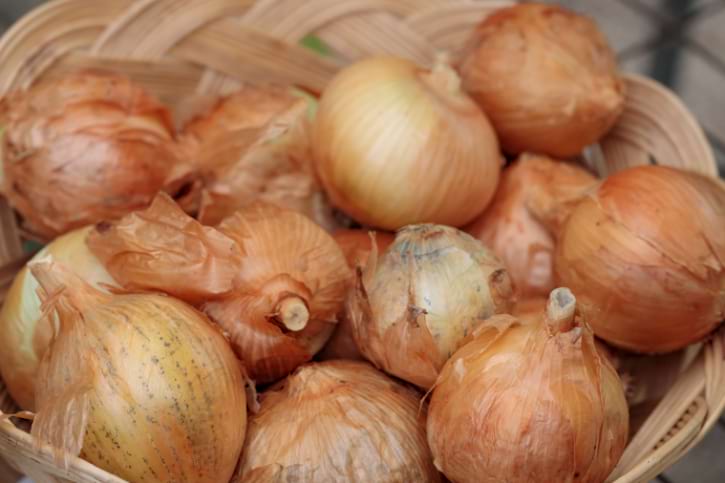
- What to Look For: Uniform color across the entire surface. No dark patches, black specks, or gray fuzzy spots.
- What It Means: Black discoloration around the neck is often a postharvest fungus. Gray fuzzy growth indicates another type of rot. Any visible mold means spoilage has set in.
- Why It Matters: Don’t assume you can peel away a moldy layer. By the time mold is visible, the problem often runs deeper.
- Real-Life Tip: Inspect from all angles, especially around the neck where mold tends to appear first.
e. Sprouting: Green Shoots
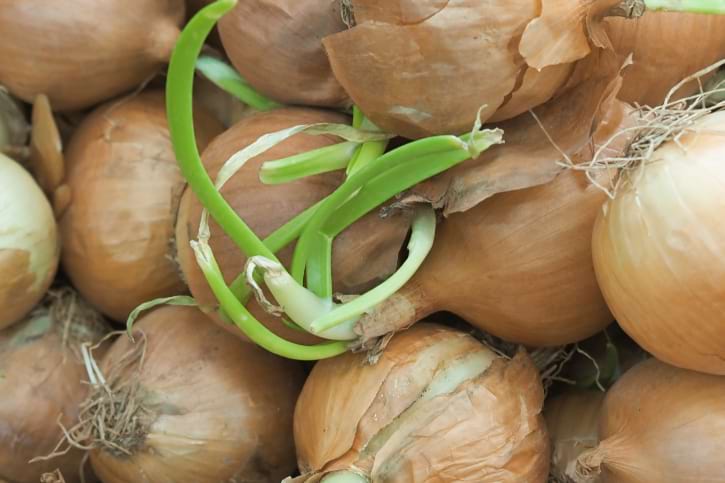
- What to Look For: Any green growth emerging from the top, even a tiny tip.
- What It Means: The onion has broken dormancy and is using its stored energy to grow a new plant.
- Why It Matters: A sprouting onion becomes softer, less flavorful, and more prone to decay. It’s not spoiled yet, but it’s heading there.
- Real-Life Tip: Look directly at the top opening. Sprouts sometimes barely peek out and are easy to miss.
f. Smell from an Uncut Onion

- What to Look For: Little to no scent. Whatever smell exists should be mild and clean.
- What It Means: A strong, sharp, or sour smell from an uncut onion means bacteria or fungi are breaking down the tissue inside.
- Why It Matters: If you can smell it before cutting, the decay is already advanced.
- Real-Life Tip: Bring it to your nose. Anything sour, overly pungent, or “off” means skip it. Trust your nose.
g. Neck Softness: The Top (Stem End)
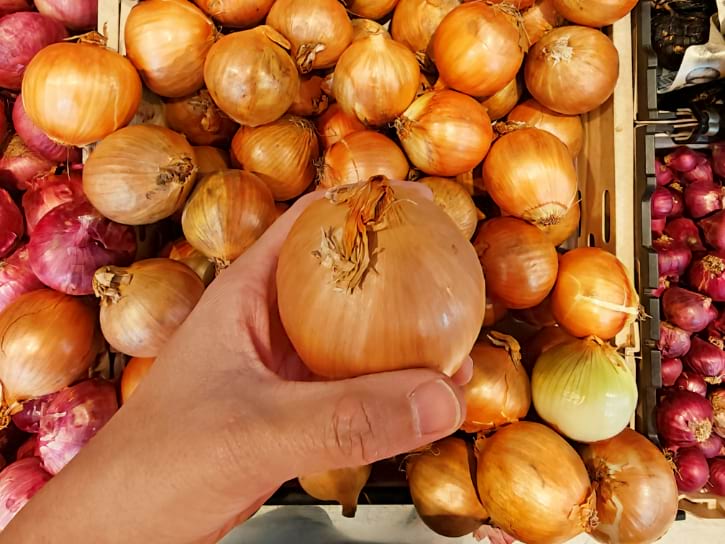
- What to Look For: Press the dried, tapered top. It should be firm, tight, and completely dry.
- What It Means: A soft or damp neck means the onion wasn’t cured properly, or rot has already started traveling down into the core.
- Why It Matters: A soft neck is the single most common warning of total internal breakdown. The inside can liquefy while the outside still looks fine.
- Real-Life Tip: Press the neck with your thumb. It should not yield at all. This is one of the most important checks you can do.
h. Root Condition: Dry vs. Moldy or Wet
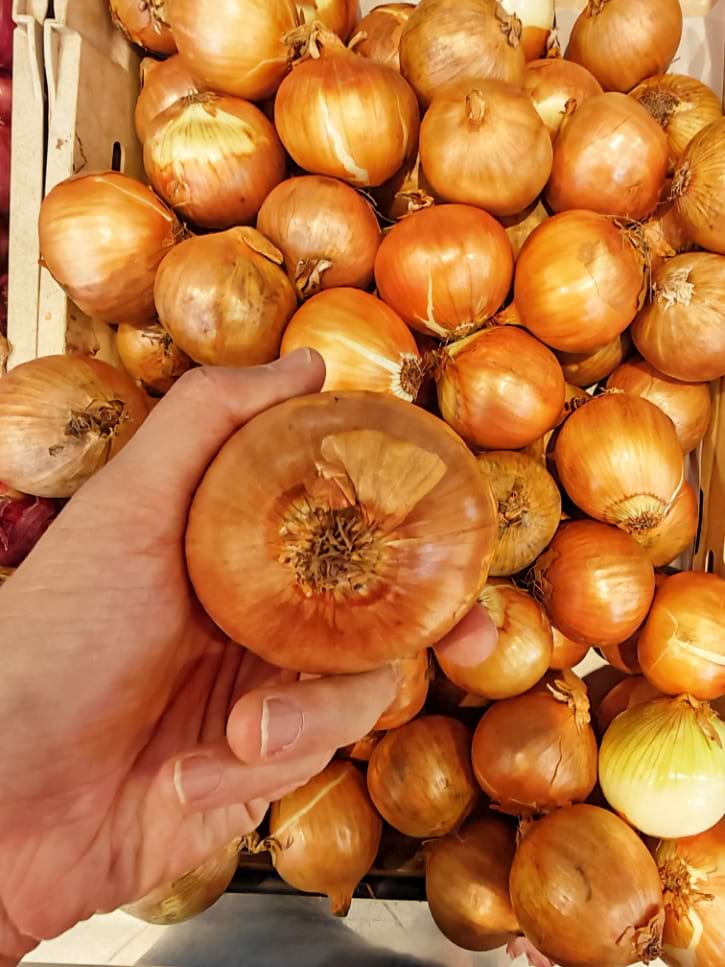
- What to Look For: The flat, hairy bottom should have dry, papery, clean root remnants. No fuzz, dark discoloration, or moisture.
- What It Means: Wet or moldy roots indicate basal rot, a fungal infection that enters through the base plate and moves upward.
- Why It Matters: This type of rot can destroy the entire bulb from the bottom up, often before signs show at the top.
- Real-Life Tip: Flip the onion over. If the root end looks fuzzy, dark, or damp, move on.
i. Visible Bruising or Dents
- What to Look For: A smooth, well-shaped surface. No indentations, flattened areas, or impact marks.
- What It Means: Physical damage exposes inner tissue to bacteria and fungi. Mold typically starts at injury points and spreads inward.
- Why It Matters: A minor bruise can quickly become a soft, rotting spot, especially after weeks in storage.
- Real-Life Tip: If buying from a bulk bin, dig gently for bulbs that haven’t been crushed or dropped.
j. Hollow or Dehydrated Feel
- What to Look For: The onion feels light and almost empty, as if there are air pockets inside.
- What It Means: Inner layers have lost moisture and separated, leaving gaps.
- Why It Matters: A dehydrated onion isn’t rotten, but it’s old, low on flavor, and will have a rubbery texture.
- Real-Life Tip: Bounce it gently in your palm. A good onion feels dense. A hollow one doesn’t.
k. Loose vs. Tight Skin Layers
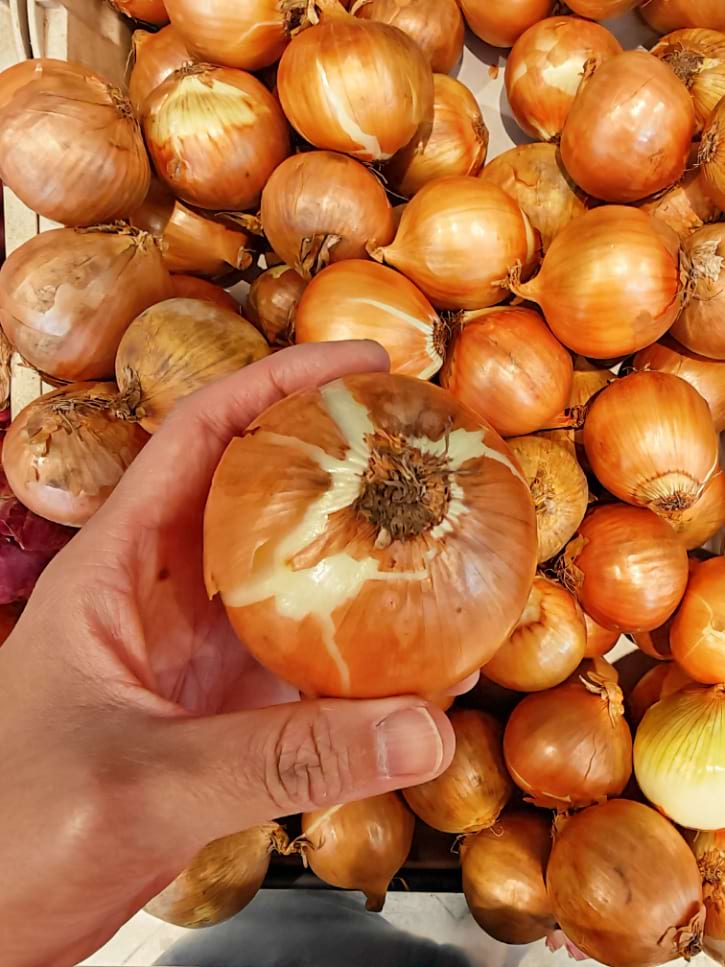
- What to Look For: Skin should fit snugly. Not peeling away in large loose sheets.
- What It Means: Tight skin means proper handling and curing. “Bald” patches with exposed flesh mean the onion is more vulnerable to decay.
- Why It Matters: Missing skin reduces the onion’s natural protection.
- Real-Life Tip: A few loose flakes are fine. If the flesh is exposed, pick another one.
l. Leaking Moisture
- What to Look For: Any wetness, stickiness, or signs of liquid seeping out. Check the bin or bag around it too.
- What It Means: Advanced bacterial soft rot. The cellular structure has broken down completely.
- Why It Matters: A leaking onion is actively rotting, and the liquid carries bacteria that spread to nearby onions.
- Real-Life Tip: If it’s sitting in a puddle or looks damp on one side, it’s rotting from the inside. Non-negotiable. Do not buy.
m. Shine vs. Dullness: A Misleading Visual Cue
- What to Look For: A natural sheen on the outer skin. Clean and bright, not flat or dusty.
- What It Means: Dull, faded skin usually indicates an older onion that’s been in storage a long time.
- Why It Matters: Shine alone doesn’t guarantee freshness. An onion can be shiny but still rotting inside. Use it as a visual filter alongside the other checks, not a standalone test.
- Real-Life Tip: Among onions that pass every other test, pick the one with the brightest skin. But always do the full check first.
3. The Root vs. Stem End Secret
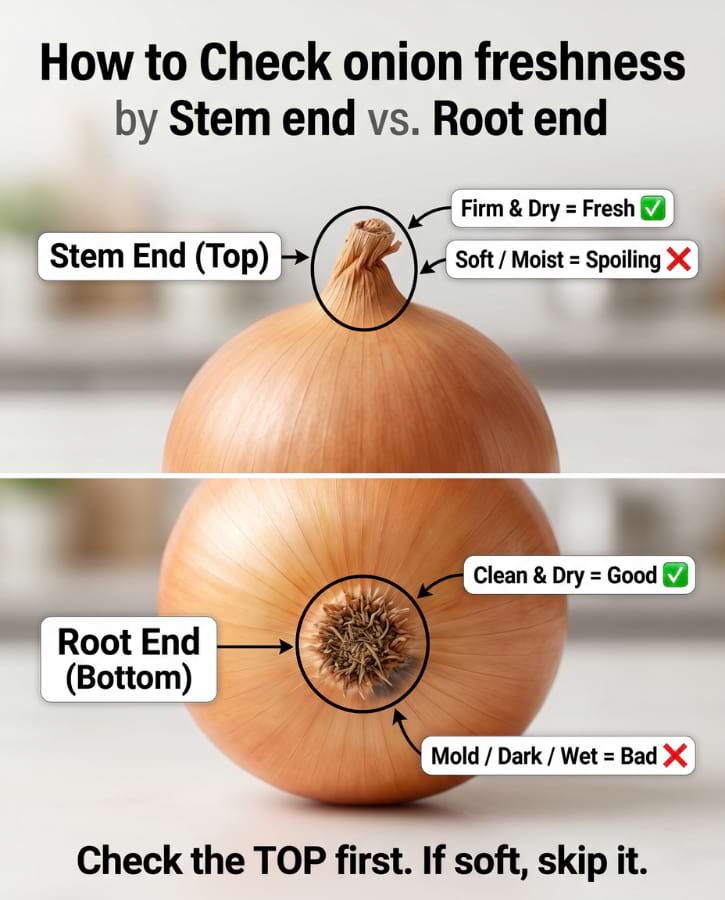
Most shoppers check the wrong end of the onion first. Here’s what to know.
The stem end (top) is the tapered, dried part where the leaves once grew. This is where neck rot starts, making the tissue soft and water-soaked. Press it with your thumb. Completely firm and dry is what you want.
The root end (bottom) is the flat, hairy base where roots attached. Basal rot enters here and moves upward through the bulb. Check for mold, dark discoloration, or moisture.
Here’s the trick most people miss. Problems at the stem end develop faster and show earlier. Problems at the root end are often more advanced before they become visible. Start at the top. If the neck is soft, you don’t need to check anything else.
4. Yellow vs. Red vs. White Onions: What’s Different
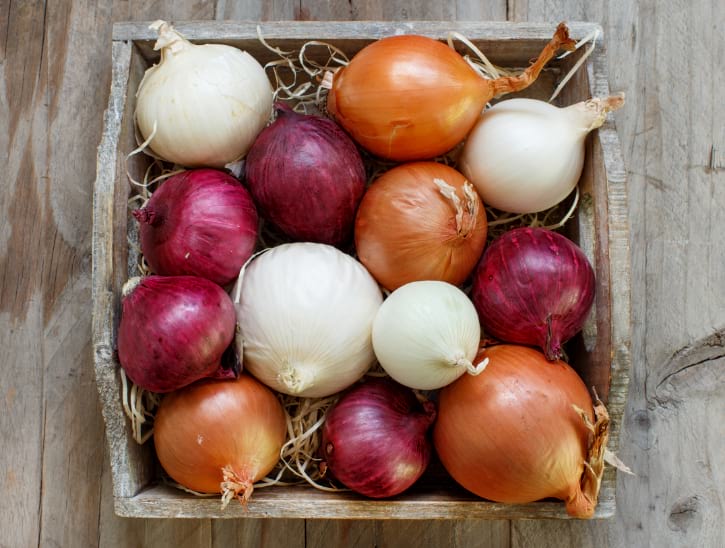
All three follow the same freshness rules. But a few visual differences help.
- Yellow onions have thicker, darker skin that provides good contrast for spotting mold or dark spots. They’re generally the hardiest.
- Red onions have thinner, more delicate skin and bruise a bit more easily. Spoilage tends to show as dark purple-black spots.
- White onions have the thinnest skin of all, making them the most susceptible to bruising and discoloration. Spoilage may appear as yellow, brown, or pinkish patches.
Regardless of color, you’re checking for the same things. Heavy, firm, dry, tight skin, no sprouts, no smell.
5. Signs an Onion Is Already Going Bad
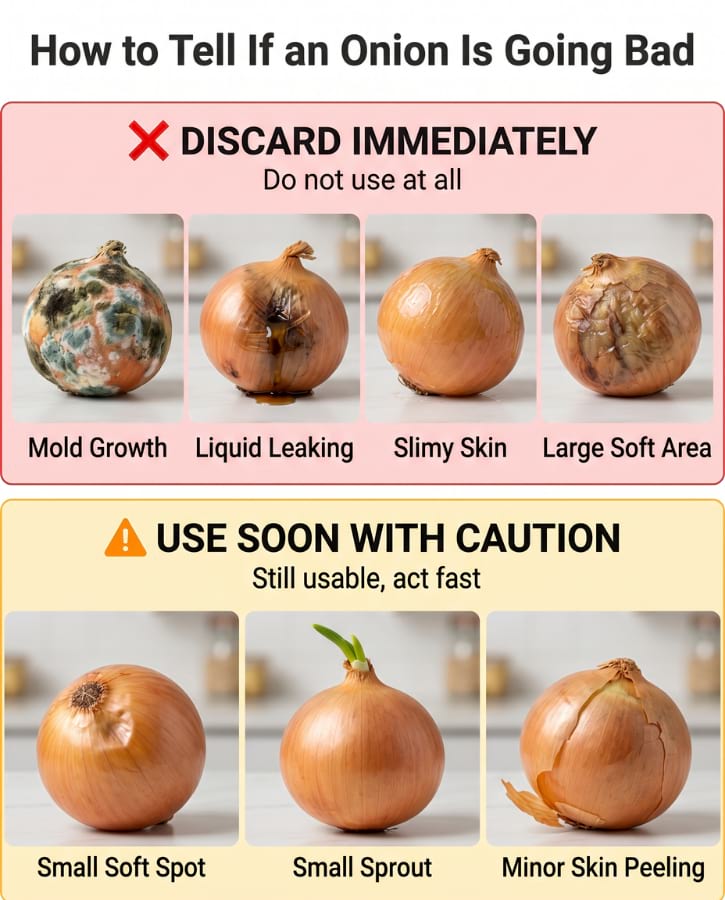
Discard immediately:
- Visible mold (black, green, blue, or white)
- Liquid oozing from the neck or skin
- Strong sour or ammonia smell before cutting
- Wet, sticky, or slimy skin
- Large soft, mushy areas
Use soon with caution:
- A small soft spot or minor bruise (cut it away if the rest is firm and odorless)
- A single small sprout (remove it, but expect slightly more bitter flavor)
- Minor skin peeling
6. The Quick 5-Second Store Test
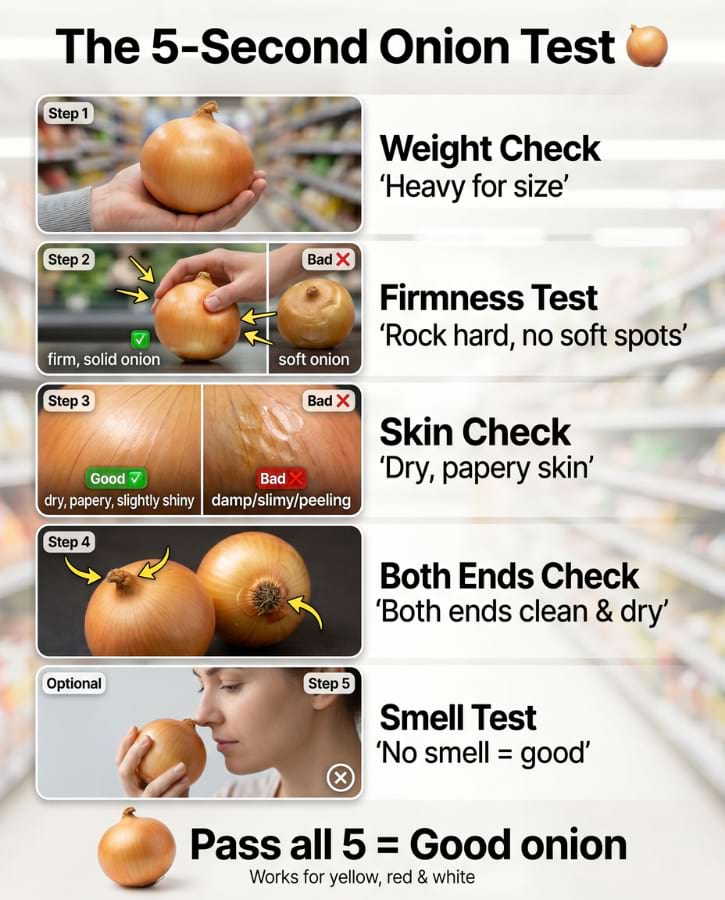
Do this every time. It takes about 5 seconds once you get the hang of it.
- Pick it up. Heavy for its size? Good.
- Press gently. Squeeze all around. Rock-hard with no soft spots? Good.
- Look at the skin. Dry, papery, natural shine? Good. Damp, slimy, or loose? Put it back.
- Check both ends. Neck firm and dry? Root end clean with no fuzz? Good.
- Smell it. Almost no scent? Good. Sour or “off”? Skip it.
If it passes all five, it’s a good onion. Works for yellow, red, and white, every time.
7. Final Takeaway
Picking a good onion isn’t complicated once you know what matters. Forget about the prettiest one. Forget about size or the exact shade of color.
It’s about weight. Firmness. Dryness.
A heavy, hard onion with crackly-dry skin, a tight neck, a clean root end, and no smell is a fresh onion. Every time.
Now you know what to look for. Next time you’re at the store, you’ll pick the best one in the bin.