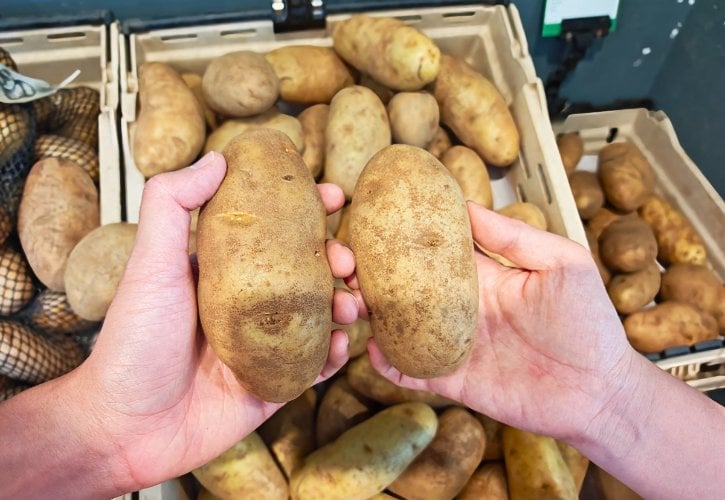
They all look the same sitting in the bin, don’t they? Most shoppers just grab whatever’s on top and toss it in the cart. That’s the number one mistake.
Not all potatoes are created equal, and the difference between a fresh, crisp one and a stale, mushy one comes down to a handful of signs most people never check.
This guide breaks down exactly what to look for when choosing Russet and Yukon Gold potatoes.
By the end, you’ll shop the potato section like someone who actually knows what they’re doing. 😊
1. Russet vs. Yukon Gold: What You’re Actually Looking At
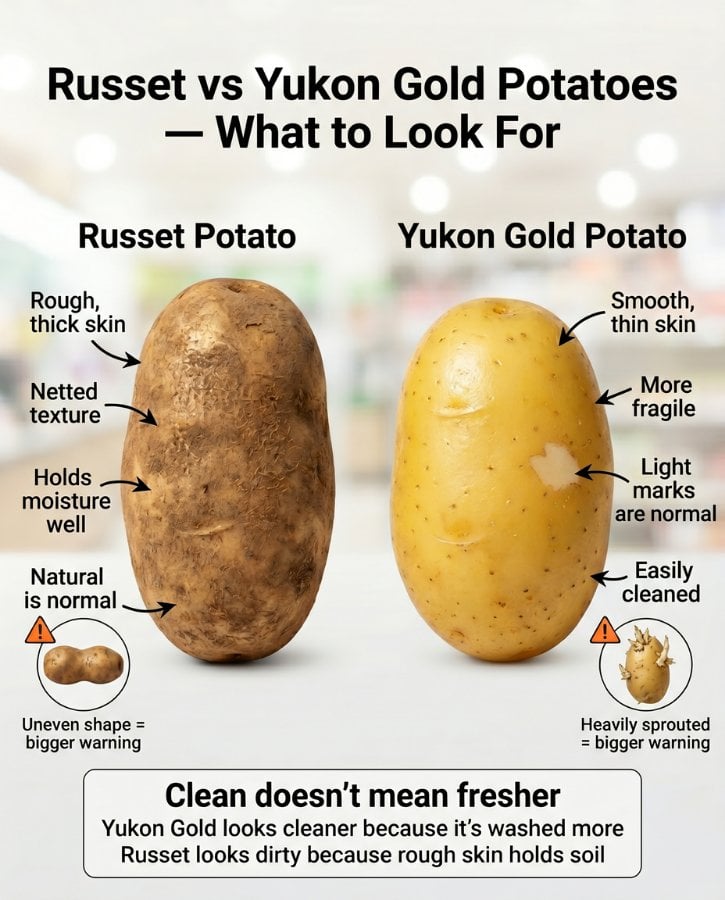
These two potatoes look completely different, and those differences change how you judge freshness.
a) The Russet
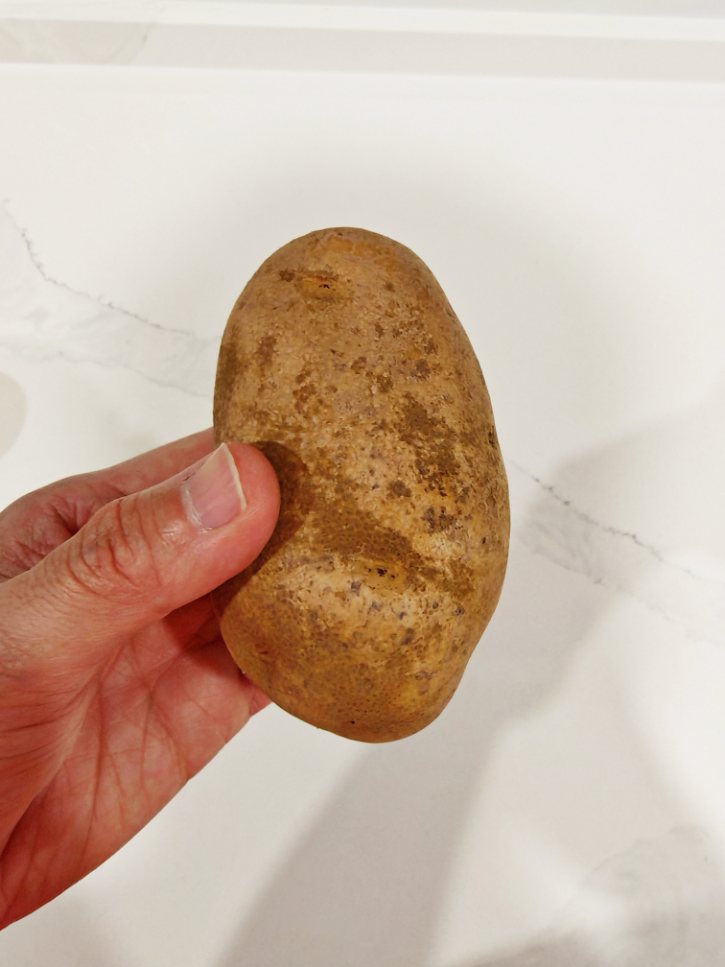
Russet potatoes have thick, rough, netted skin that feels almost like sandpaper. That rugged texture is actually a built-in shield. It locks in moisture and protects the flesh from damage.
A fresh Russet should be oblong and cylindrical. If it looks like a dumbbell or has small knobs growing off it, the potato went through uneven growing conditions, and the inside may have inconsistent texture.
b) The Yukon Gold
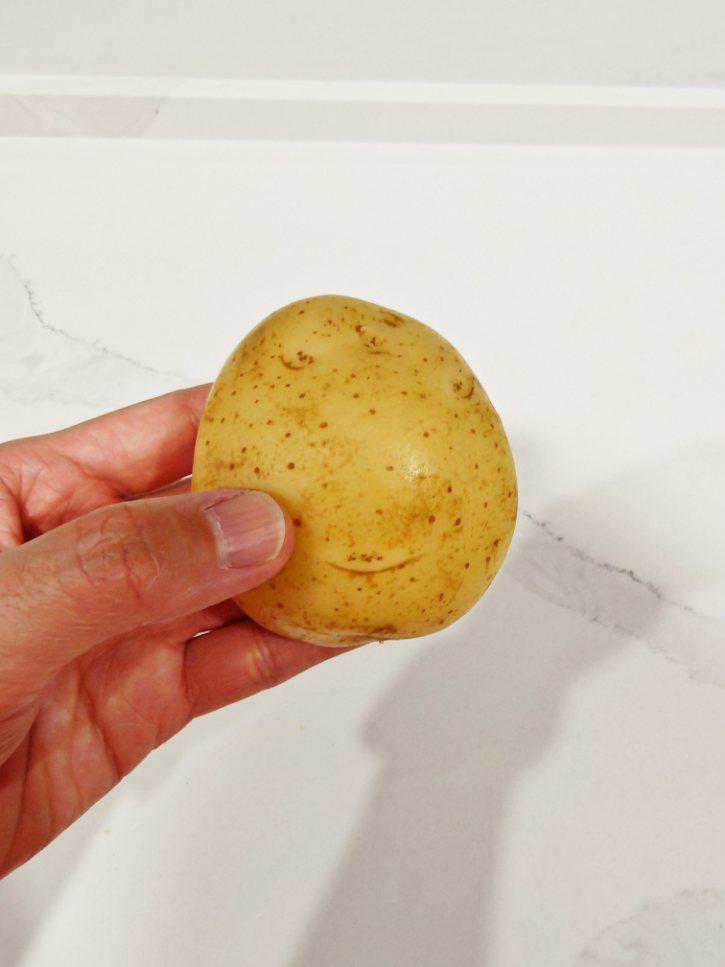
Yukon Gold potatoes have thin, smooth, slightly translucent skin. That smoothness makes them more fragile, which is why you’ll often see small patches where the skin has rubbed off during shipping. That’s normal.
A Yukon Gold should be round or oval and slightly flattened. Any extreme shape irregularity here is a bigger warning sign than it would be in a Russet.
c) The “Clean” Misconception
Most people don’t realize this, but Yukon Golds aren’t naturally “cleaner” than Russets. They just get washed more aggressively because their smooth skin allows it.
A Russet’s rough skin holds onto dirt, so it looks dirtier. But that dirt is actually helpful for freshness.
2. The Core Signs That Actually Matter
These are the practical checks you can do right there in the produce aisle. Each one tells you something specific about the potato’s freshness and quality.
Sign 1: Firmness vs Softness
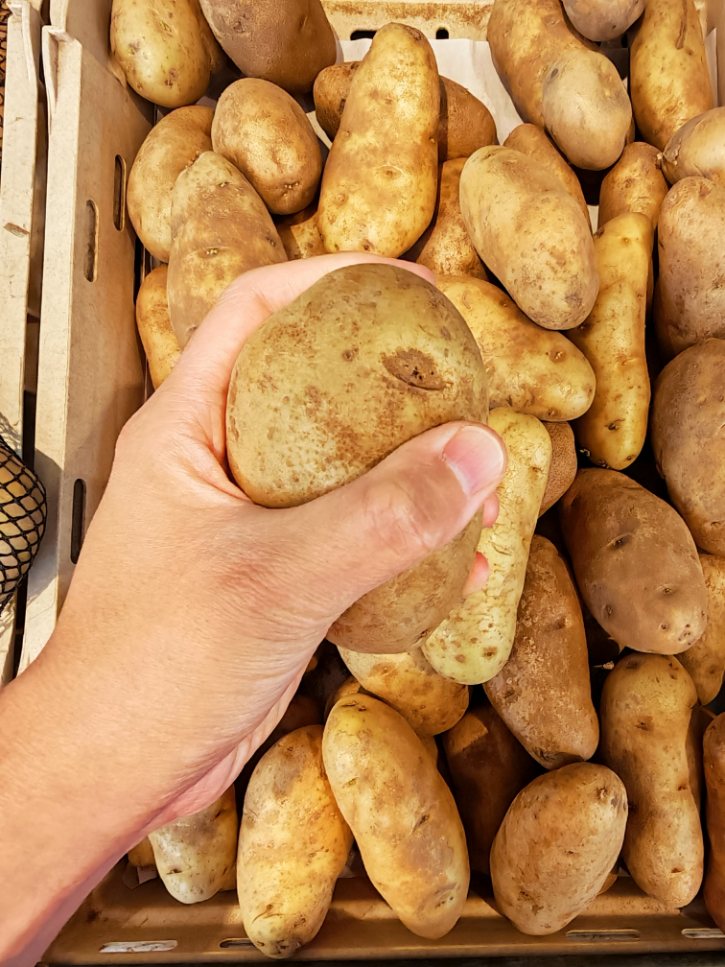
- What to look for: Gently squeeze the potato. It should feel as hard as a rock.
- What it means: Firmness is the single best indicator of a fresh, well-hydrated potato.
- Why it happens: As a potato ages, it loses moisture and the cell walls break down, causing it to go soft.
- Common mistake: Thinking a soft potato is just “ripe”. Potatoes don’t ripen like fruit. They only degrade. Softness is always a bad sign.
Sign 2: Weight for Size
- What to look for: Pick up two potatoes of similar size and hold one in each hand. Choose the heavier one.
- What it means: A heavier potato has more water content and is fresher. A lighter one has dried out and the flesh inside is probably chalky.
- Why it happens: Potatoes naturally respire and lose water over time, causing them to shrink and get lighter.
- Common mistake: Judging a potato only by its size. A large but light potato is an old potato.
Sign 3: Skin Condition (Wrinkles and Cuts)
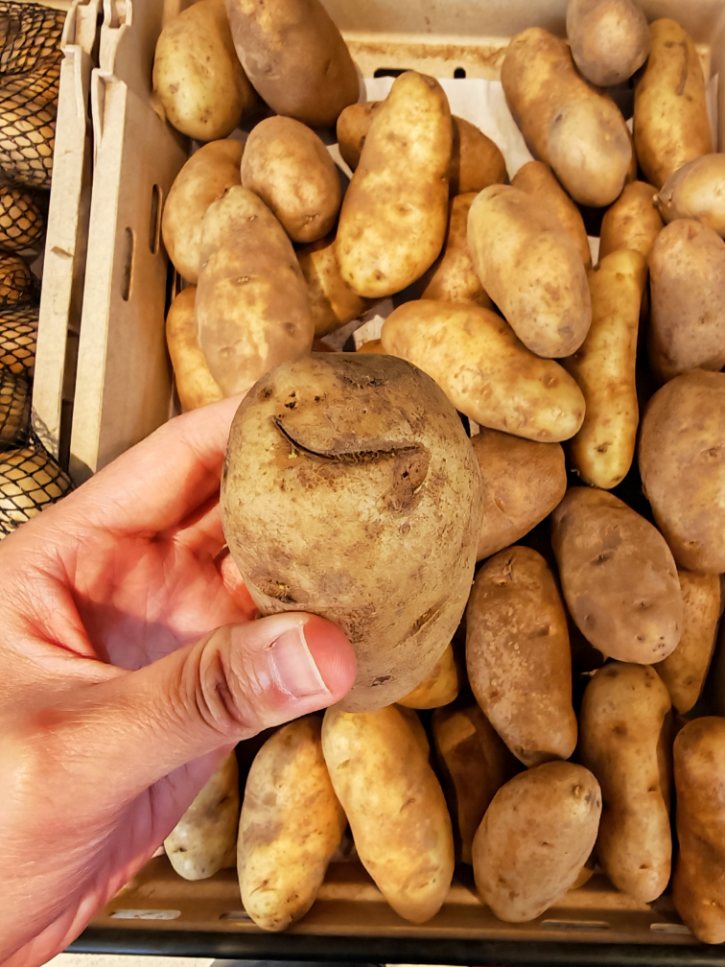
- What to look for: The skin should be taut, either smooth (Yukon Gold) or consistently textured (Russet). Check for any wrinkles, cuts, or punctures.
- What it means: Tight skin tells you the moisture inside is still intact. Wrinkled or shriveled skin means dehydration and age. Any cut or puncture is an open door for bacteria and mold.
- Why it happens: Dehydration causes the skin to slacken. Physical damage happens during harvest, transport, and stocking.
- Common mistake: Ignoring small nicks. Even a tiny cut can cause the whole potato to spoil faster than you’d expect.
Sign 4: Sprouting (“Eyes”)
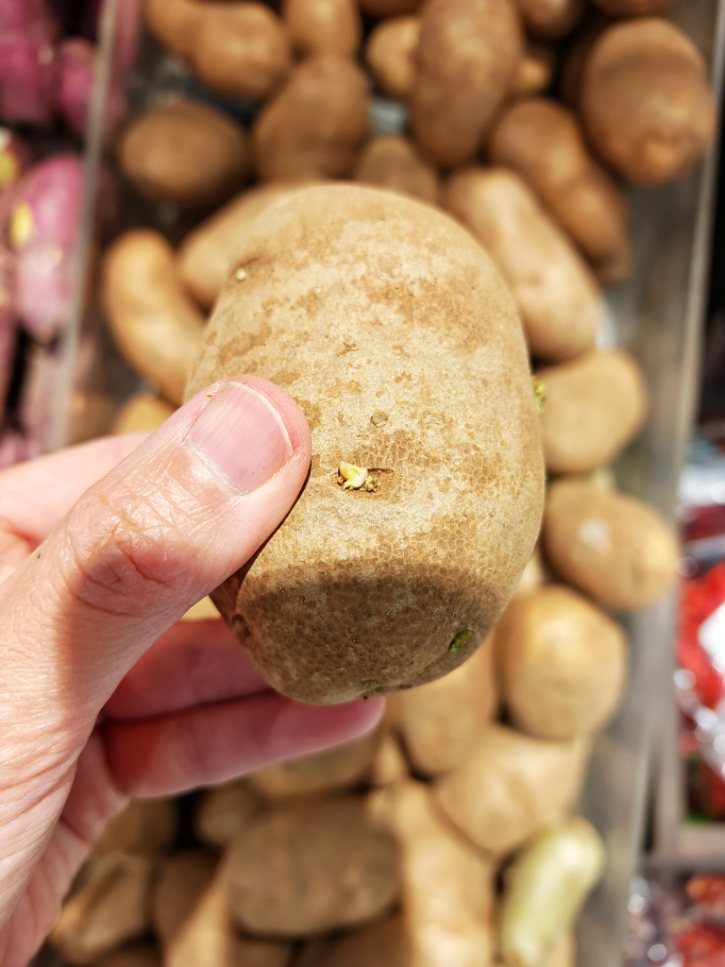
- What to look for: Small, flat, dormant eyes are perfectly normal. But any actual sprouting, even small ones, means the potato is already aging. Your best bet is to pick potatoes with no sprouts at all.
- What it means: Sprouting is a sign the potato is burning through its stored energy trying to grow. This process converts starch to sugar, making the potato less firm and drier inside.
- Why it happens: It’s a natural biological process triggered by time, warmth, and light exposure.
- Common mistake: Assuming dormant eyes and sprouts are the same thing. Eyes are just small indentations and are completely fine. Sprouts are active growth, and that’s your cue to pick a different potato.
Sign 5: Green Discoloration
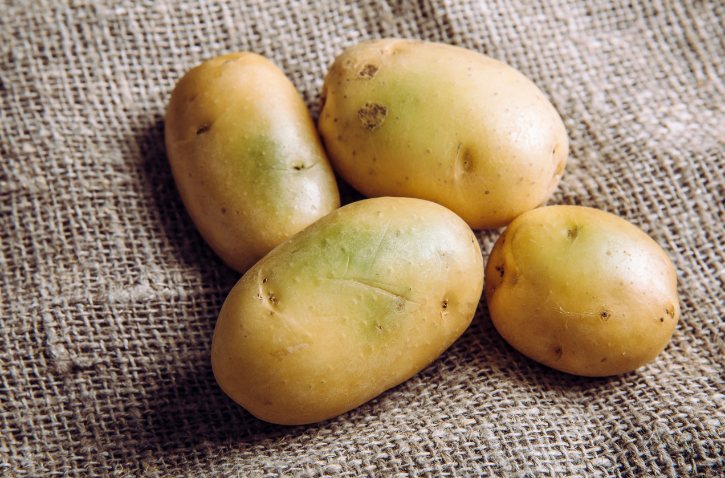
- What to look for: Any green patches, tint, or hue anywhere on the skin.
- What it means: This is a dealbreaker. Green skin signals the presence of solanine, a natural toxin that can cause digestive problems.
- Why it happens: When a potato is exposed to light, it produces chlorophyll (the green color) and solanine as a defense mechanism.
- Common mistake: Thinking “a little green” is fine. Even small amounts of green indicate solanine production. Choose a different potato.
Sign 6: Black Spots and Internal Bruising Clues
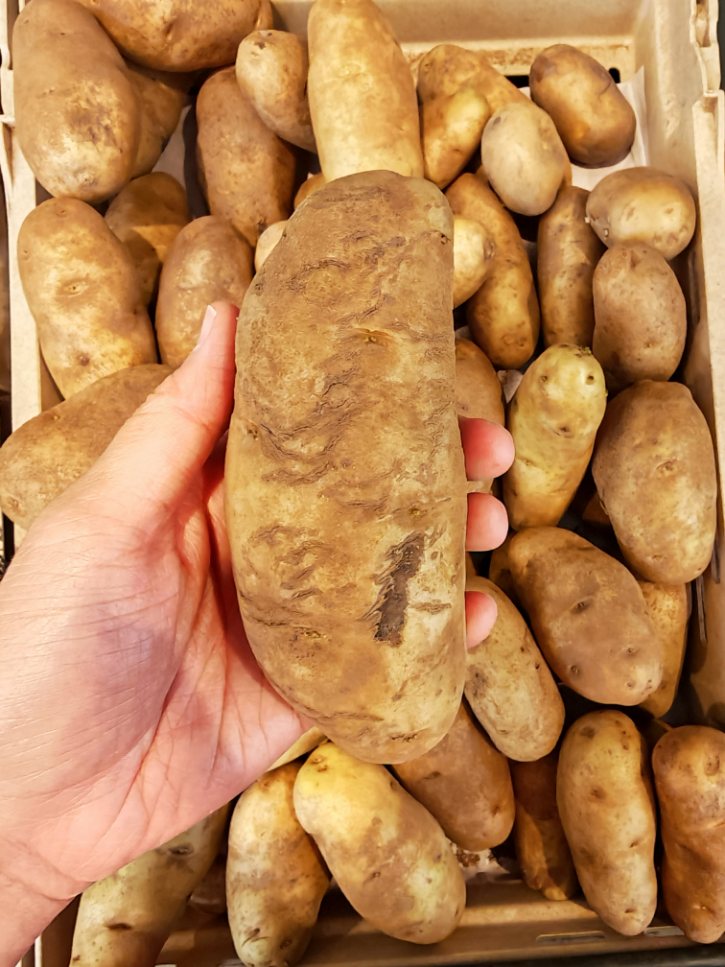
- What to look for: Dark spots, visible bruises, or large scabs on the surface. These are often clues to deeper damage underneath.
- What it means: An external bruise frequently means there’s a larger discolored area hiding just below the skin. Deep scabs can also let rot creep in.
- Why it happens: Bruising results from impacts during harvest and handling. Scabs come from soil-borne conditions.
- Common mistake: Only looking at the surface. A small dent on the outside can hide a large black spot on the inside.
Sign 7: Moisture or Dampness
- What to look for: Feel the surface. It should be dry. If you’re buying a bag, check the inside for any condensation or wet spots.
- What it means: Dampness is a breeding ground for bacteria and mold. A wet or slimy potato is already starting to break down.
- Why it happens: Moisture can come from a burst potato in the same bag or from condensation caused by temperature changes during storage.
- Common mistake: Grabbing a bag without checking for moisture inside. One wet potato can spoil the entire bag.
Sign 8: Dirt vs Overly Clean Skin
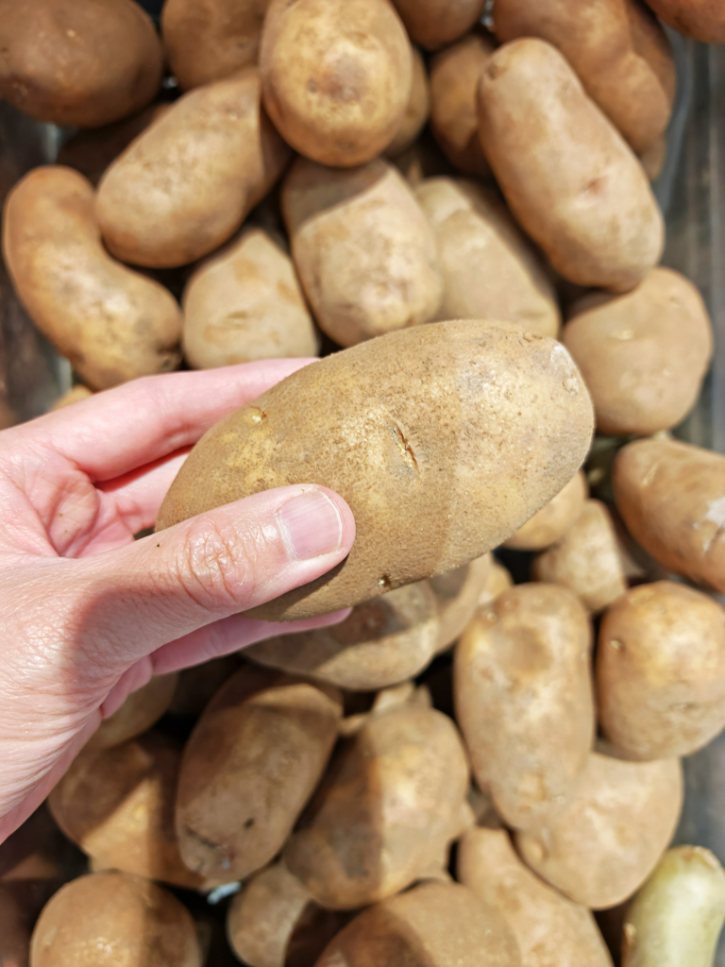
Here’s something most people don’t realize.
- What to look for: A thin layer of dry field dirt is actually normal and fine. What you want to avoid is a potato that looks like it’s been aggressively scrubbed.
- What it means: Lightly dirty potatoes still have their natural protective skin layer intact. Overly washed potatoes may have had that layer stripped away, leaving them more vulnerable to bruising and rot.
- Why it happens: Potatoes are cleaned for the market, but when the process is too harsh, it damages the periderm (the potato’s outer protective layer).
- Common mistake: Always choosing the cleanest-looking potatoes, thinking they’re better. A little bit of dirt can actually be a sign of better protection.
Sign 9: Shape Irregularities
- What to look for: Potatoes that are extremely knobby, pointed, or oddly misshapen.
- What it means: An irregular shape isn’t a freshness problem. It’s a practical one. You’ll end up with more waste when peeling or cutting. The potato itself is usually perfectly fine inside.
- Why it happens: Growing conditions like soil consistency and water availability during development affect the shape.
- Common mistake: Confusing an ugly shape with a bad potato. It’s cosmetic, not a spoilage issue.
Sign 10: Shriveling and Dehydration
- What to look for: Potatoes that have lost their plumpness and look deflated or wrinkled all over.
- What it means: The potato is old and has lost a significant amount of its internal moisture.
- Why it happens: Over weeks and months in storage, potatoes naturally lose water through their skin.
- Common mistake: Thinking a shriveled potato is still good to cook with. The texture and overall quality will be noticeably poor.
3. Signs Specific to Russet Potatoes
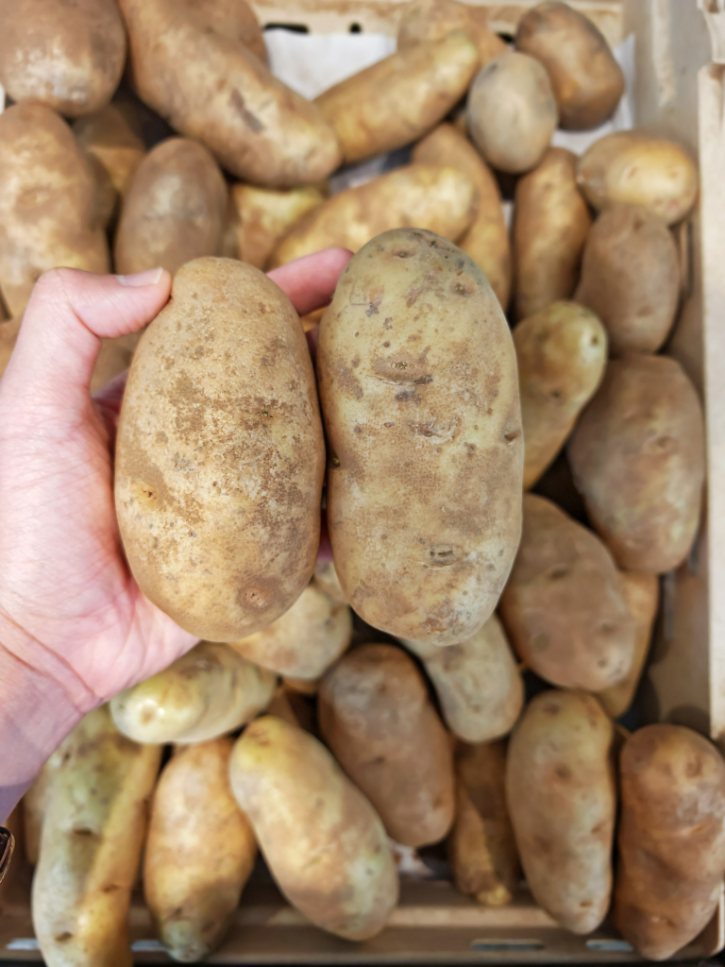
Russets are often misunderstood because their naturally rough appearance can make people second-guess what’s normal.
- Rough, netted skin is completely normal and actually desirable. Don’t mistake it for damage.
- Dry vs slightly waxy feel. The skin should feel dry and papery. If it feels waxy, sticky, or damp, the potato may have been stored improperly or is starting to go bad.
- Deep eyes. Russets naturally have more prominent eyes than Yukon Golds. Flat, dormant eyes are normal and nothing to worry about. But when it comes to sprouts, your best bet is to pick potatoes that have none at all.
- What’s normal vs what’s not. A rough, earthy-brown Russet that’s rock-hard? That’s a good potato. A rough, earthy-brown Russet that feels soft, has any green patches, or smells musty? Put it back.
4. Signs Specific to Yukon Gold Potatoes
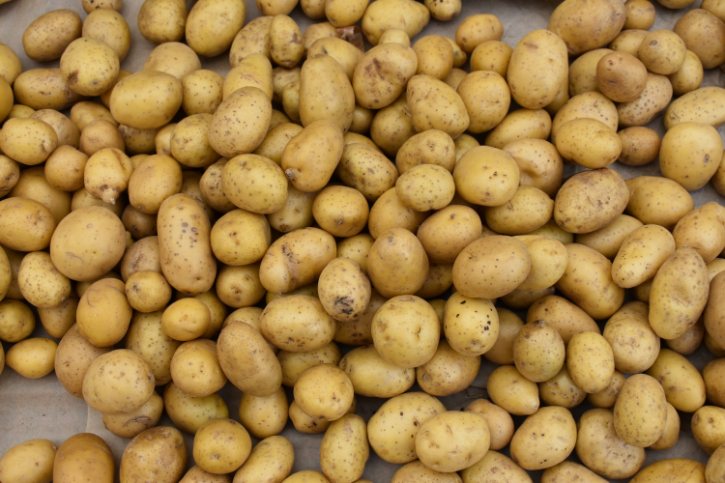
People tend to over-reject Yukon Golds because their thin skin puts every little mark on display.
- Smooth, thin skin is the hallmark of this variety. Because it’s thin, it wrinkles more easily as the potato ages, which actually makes it simpler to spot an old one.
- Yellow and golden tone variations. The color can range from light tan to a rich gold, and that’s all normal. A green tint, however, is the same warning sign as it is with Russets.
- Surface marks are more visible. You’ll see more minor blemishes, light scabs, or small brown spots than you would on a Russet. Most of these are purely cosmetic. The real test is firmness. If a blemished Yukon Gold is still rock-hard, it’s a perfectly good potato.
- What’s normal vs what’s not. A smooth, firm potato with a few cosmetic marks? Totally fine. A soft potato, even one with perfect-looking skin? Leave it behind.
5. “Do Not Buy” Warning Signs
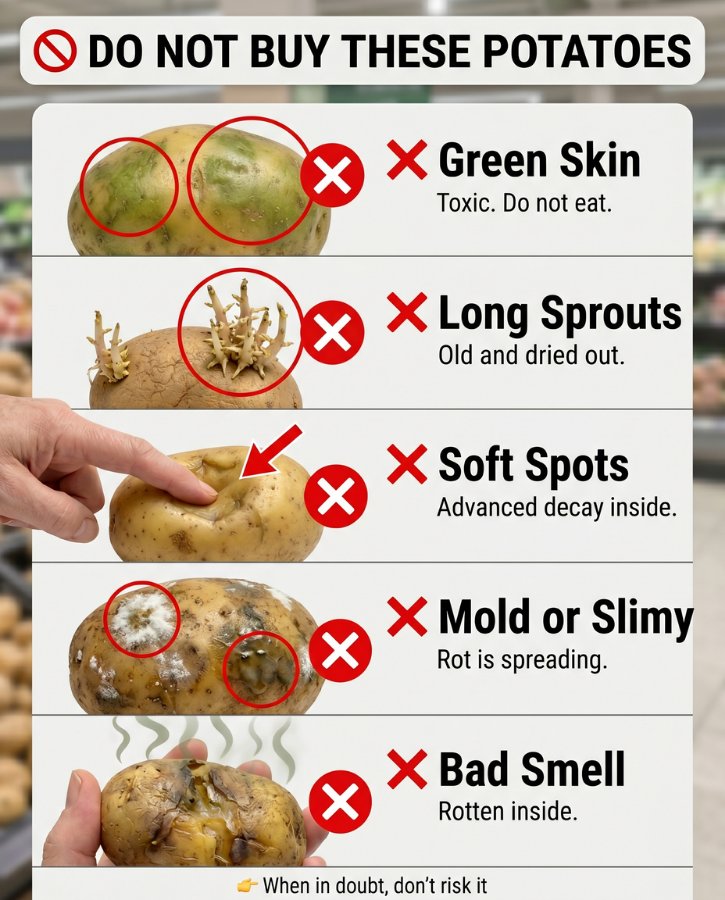
These are the absolute dealbreakers. If you see any of the following, put the potato back without hesitation.
- Green skin. This signals the presence of the toxin solanine. No exceptions.
- Sprouting clusters. Long, actively growing sprouts tell you the potato is old and dried out. Quality is already degraded.
- Soft spots. Any area that gives way under gentle pressure means advanced decay has set in.
- Mold or damp, slimy patches. This indicates bacterial or fungal rot. It will spread and ruin any other potatoes stored with it.
- Strong or unusual odor. A healthy potato smells like earth. Any musty, sour, or fermented smell means it’s rotting from the inside out.
6. How to Compare Potatoes Like a Pro
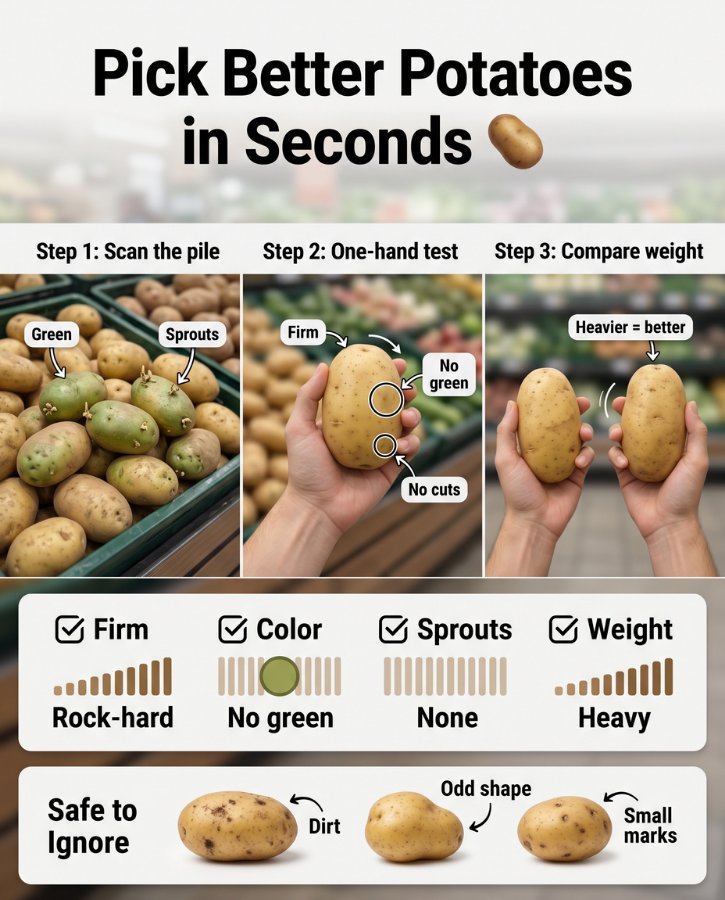
You don’t have time to inspect every single potato. Here’s a simple trick: follow this quick routine and you’ll consistently pick winners.
- Step 1: Scan the whole pile. Take a quick look at the overall condition. Are there many green or sprouted potatoes in the batch? This tells you the general quality before you even pick one up.
- Step 2: The one-hand test. Grab a potato. Is it firm? Does it feel heavy for its size? Turn it over in your hand to check for cuts, bruises, and green spots.
- Step 3: The side-by-side. If you’re torn between two potatoes, hold one in each hand. Same size? The heavier one wins.
- Step 4: If you only check four things. Short on time? Focus on these:
- It must be rock-hard.
- Zero green, anywhere.
- None is best. Skip any potato with visible sprouts.
- It should feel dense and solid.
What you can safely ignore: Small cosmetic blemishes, a thin layer of dry dirt, and slightly irregular shapes. None of these affect freshness or quality.