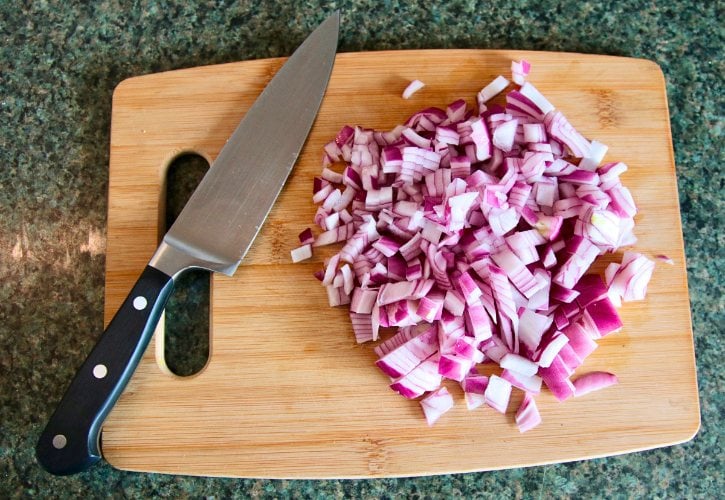
You know the routine. You grab an onion, reach for your knife, and within seconds your eyes are burning, your vision is blurry, and you’re blinking like crazy trying to finish the job.
It happens every single time, and most people just accept it as part of cooking.
But here’s the thing. You don’t have to suffer through it. Once you understand why onions make you cry, a few simple tricks can reduce the tears, or stop them completely.
Some of these methods take zero extra effort. Others might surprise you. 😊
1. Why Onions Make You Cry
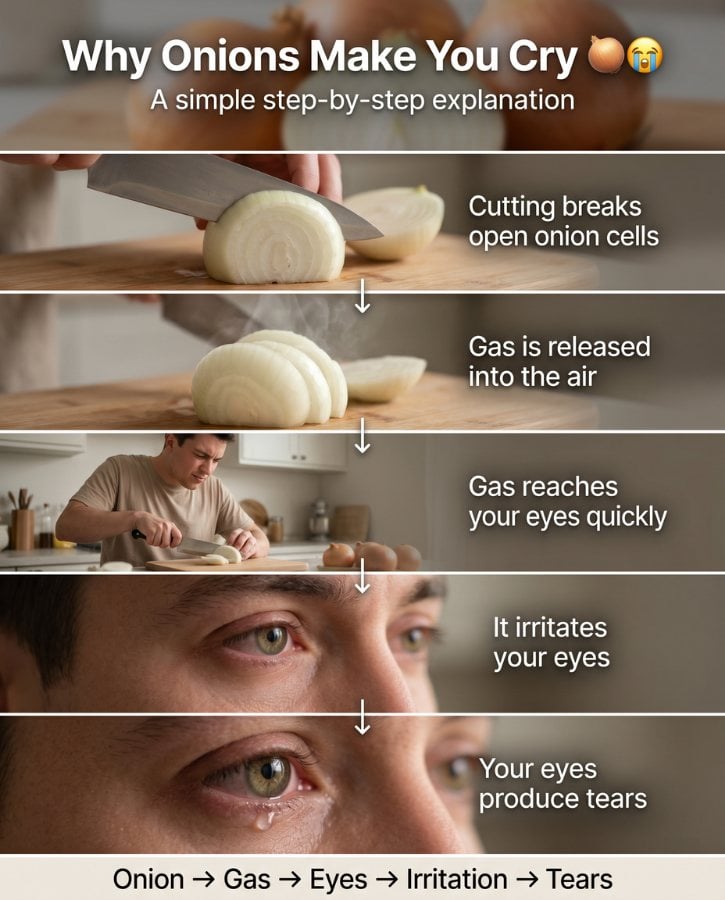
When your knife cuts through an onion, it breaks open tiny cells inside the flesh. Those cells release compounds that mix together and form an irritating gas.
This gas floats up from the cutting board and reaches your eyes within seconds.
When it touches the moisture on the surface of your eyes, it creates a mild acid
Your body treats this as a threat, so it does the only thing it knows how to do. It produces tears to flush the irritant out.
That’s it. The onion releases a gas, the gas hits your eyes, and your eyes fight back with tears. Once you understand this chain, every method below will make perfect sense.
2. Why Most People Still Struggle
It’s not your fault if you’ve been crying over onions your whole life. Most people were simply never taught what’s really going on.
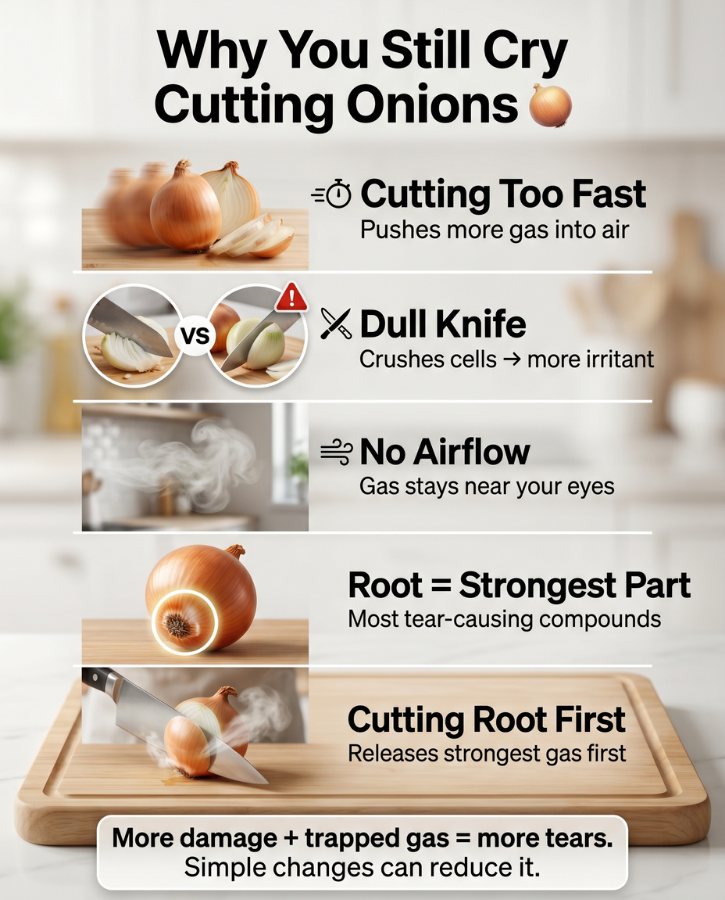
Here’s what usually happens. You rush through the cutting because you want it over with.
But cutting fast with a dull knife is the worst combination. The dull blade crushes cells and releases far more gas, while the speed stirs up the air and sends it straight toward your face. A sharp knife makes a clean slice with much less gas, even at a quicker pace.
On top of that, most kitchens have little to no airflow near the cutting board. Without moving air, the gas just builds up in a cloud around your face.
And here’s one most people don’t know. The root end of the onion holds the highest concentration of the compounds that create the gas. If you cut the root off first, you’re releasing the strongest part of the onion’s defense right at the start.
3. The 7 Methods
Method 1: The Quick Chill Trick
a. What to do
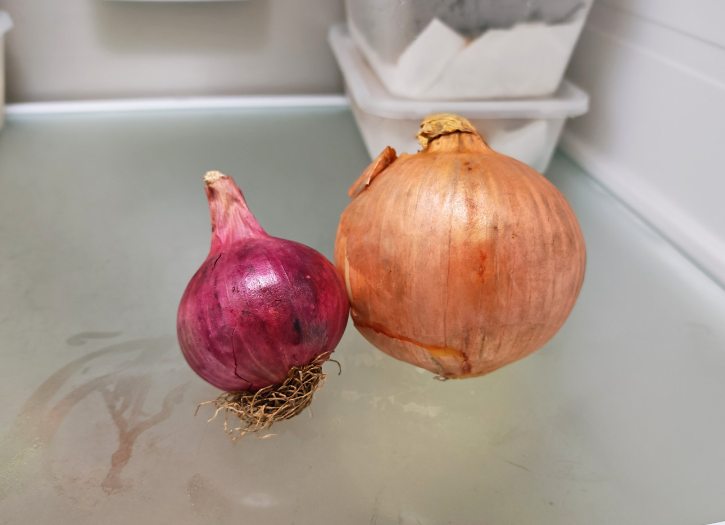
- Place the whole, unpeeled onion in your freezer for 15 to 20 minutes before cutting.
- If you only have a fridge, give it at least 30 minutes, though this is less effective.
- Keep the papery skin on while it chills. Don’t peel it first.
- Once you take the onion out, start cutting right away. The chilling benefit fades quickly once the onion starts warming up in room temperature air.
b. Why it works
Cold temperatures slow down the enzymes inside the onion that create the irritating gas.
The cold also makes it much harder for the gas to evaporate into the air.
At freezer temperatures, the amount of gas released drops significantly compared to a room-temperature onion.
c. Common mistakes
- Leaving it too long. Don’t go past 45 minutes in the freezer. Ice crystals will form inside the cells and turn your onion mushy once it thaws.
- Peeling before chilling. Removing the skin first exposes more surface area and reduces the protective thermal barrier.
d. When it works best
This is your top choice for raw preparations like salsa, salads, or sandwiches. It keeps the onion crisp while giving you the biggest reduction in tears.
Method 2: The Root-First Rule
a. What to do
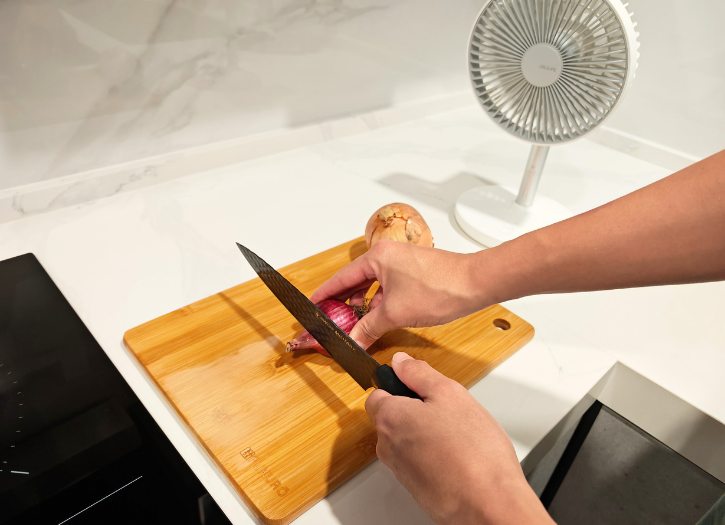
- Make sure your knife is sharp. A dull blade crushes the cells and releases far more irritating gas than a clean slice.
- Slice off the stem end (the pointy top), not the root.
- Cut the onion in half from top to bottom, but keep the root attached on both halves.
- When dicing, make your horizontal and vertical cuts stopping about half an inch before the root.
- Let the root hold all the layers together while you work.
- Discard the root nub only after the rest of the onion is fully diced.
b. Why it works
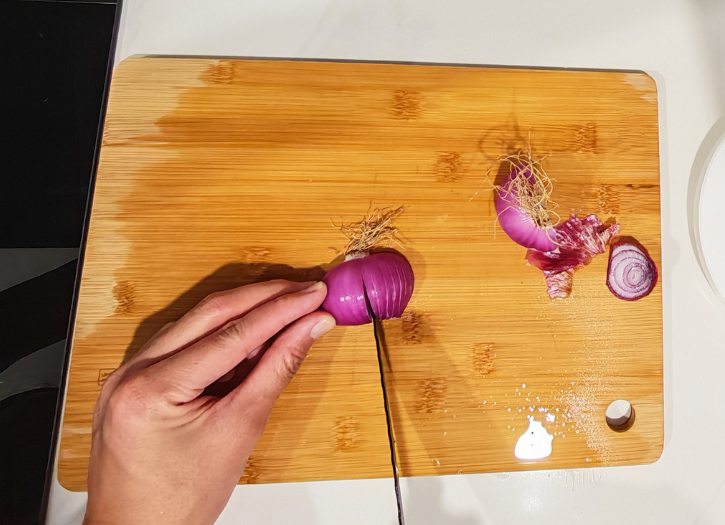
The root end is where the onion stores its highest concentration of sulfur compounds, the raw materials for the tear gas.
By keeping the root intact, you prevent the most potent part from being disturbed.
It also holds the layers together, which means less surface area is exposed to the air, further slowing the gas release.
c. Common mistakes
- Cutting the root off first. This is the most common mistake in home kitchens. It immediately releases the strongest burst of irritant.
d. When it works best
This is a fundamental technique you should use every time you dice or mince an onion, no matter what other method you combine it with.
Method 3: The Stove Vent Shortcut
a. What to do
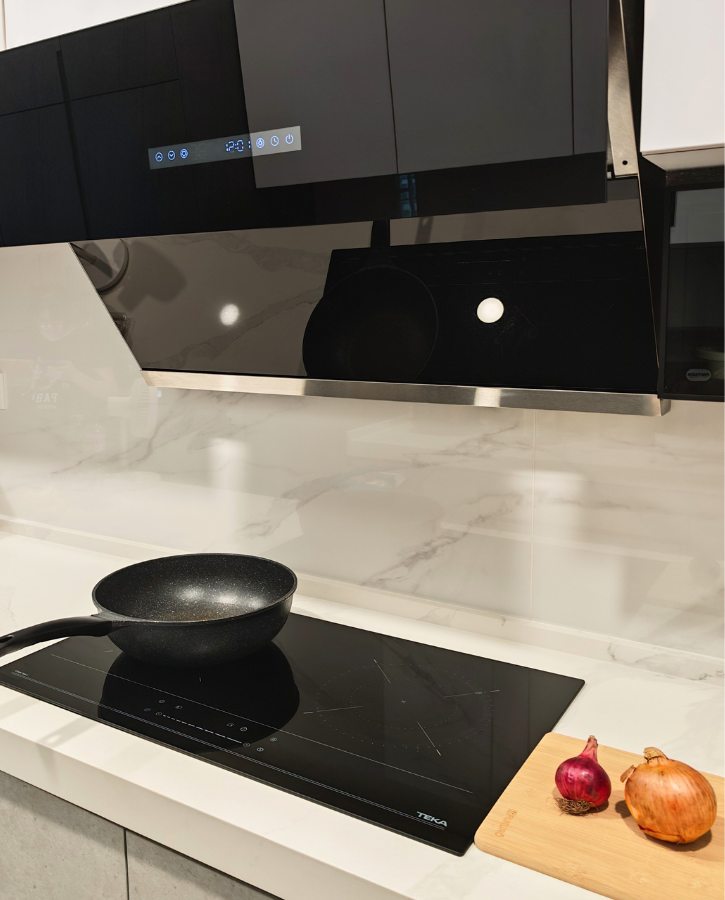
- Clear a spot on your stovetop and place your cutting board near the back burners.
- Turn your range hood vent to the highest setting.
- Do all your cutting directly underneath or right next to the vent intake.
b. Why it works
The irritating gas naturally floats upward from the cutting board toward your face.
A range hood creates a strong suction that captures the gas and pulls it away before it can reach your eyes. It essentially removes the problem from the room entirely.
c. Common mistakes
- Using a recirculating vent. Some microwave-mounted vents only filter air through a small screen and blow it right back into the kitchen. These are far less effective than vents that exhaust air outside.
- Standing between the onion and the vent. Your body can block the airflow and trap the gas around your face instead of letting the vent pull it away.
d. When it works best
This is perfect for big prep jobs like caramelized onions or French onion soup, where you need to cut multiple onions over a longer period.
Method 4: The Kitchen Goggle Shield
a. What to do
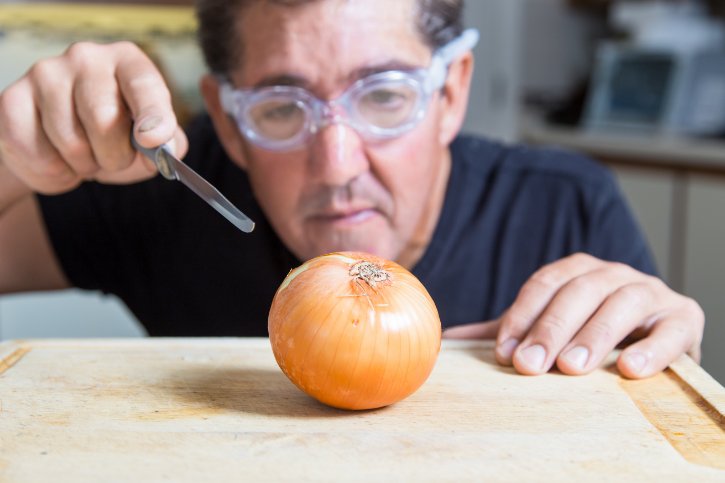
- Wear tight-fitting goggles with a foam or silicone seal around the edges. Specialized onion goggles or snug swim goggles both work well.
- Put them on before you make the first cut so no gas gets trapped against your eyes.
- When you’re finished, wash your hands first before removing the goggles. Onion juice on your fingers transferred to your eyes will sting just as much.
b. Why it works
The gas only causes tears when it makes direct contact with the moisture on the surface of your eyes. Goggles with an airtight seal create a physical barrier the gas simply cannot get past.
c. Common mistakes
- Using regular glasses or sunglasses. These don’t seal around your eyes. Gas drifts behind the lenses easily.
- Gaps around the nose bridge. Cheap goggles often have small openings near the nose that let gas in.
- Forgetting about your nose. Even with goggles, you may still feel a sting in your nose from breathing in the gas. This can sometimes trigger mild tearing through your tear ducts.
d. When it works best
This is the ultimate option for people with extra-sensitive eyes, contact lens wearers, or anyone cutting large amounts of strong red onions.
Method 5: The Running Water Fix
a. What to do
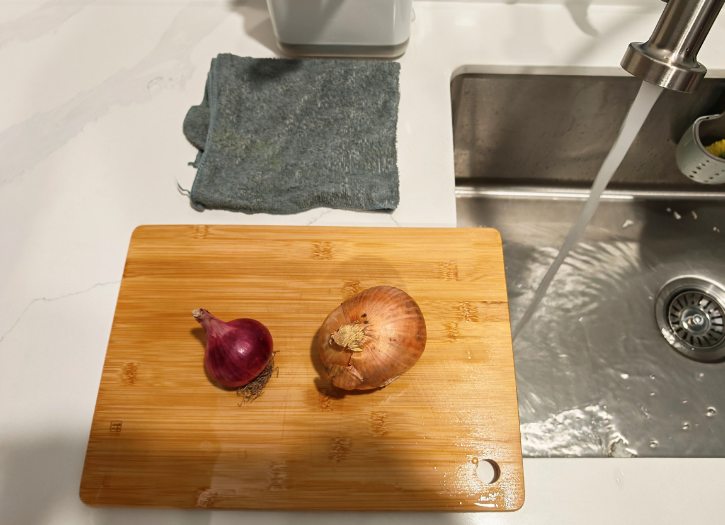
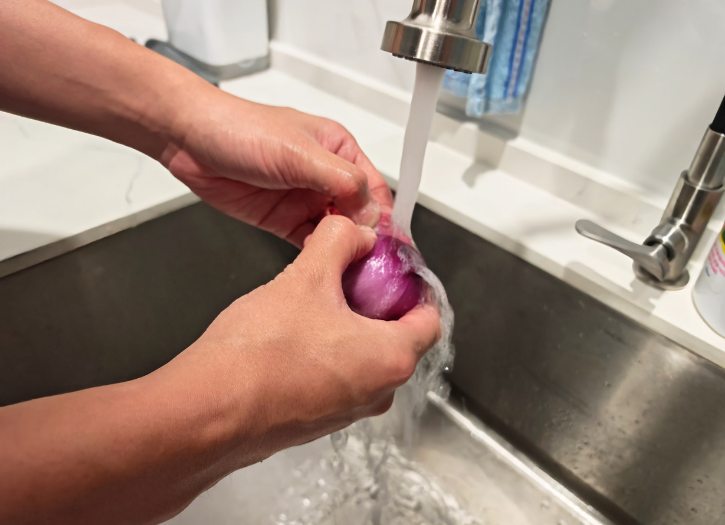
- Place your cutting board in the sink or right next to it.
- Turn on the water faucet to a steady, medium flow.
- If you can, peel the onion under the running water.
- While cutting, keep the onion close to the stream and rinse the cut surfaces frequently.
b. Why it works
The irritating gas is naturally attracted to moisture. Normally, the nearest moisture source is your eyes. But a stream of running water gives the gas a closer target.
The gas reacts with the faucet water instead, forming a mild acid that gets washed straight down the drain before it ever reaches your face.
c. Common mistakes
- Knife safety. A wet cutting board and wet onion increase the risk of slipping. Take extra care with your grip and cutting speed.
- Rinsing away flavor. Too much water contact can wash away the compounds that give onions their savory taste. Keep the rinsing moderate.
d. When it works best
This is a great quick fix for small tasks when you don’t have time to chill the onion or dig out goggles.
Method 6: The Fan or Open Window Trick
a. What to do
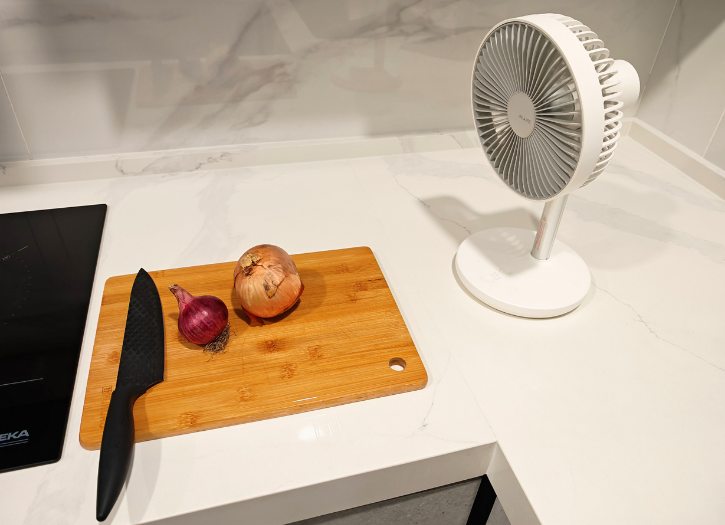
- Place a small desk fan on the counter beside your cutting board.
- Point the fan so it blows air across the onion and away from your face.
- If you don’t have a fan, cutting near an open window with a cross-breeze works in a similar way.
b. Why it works
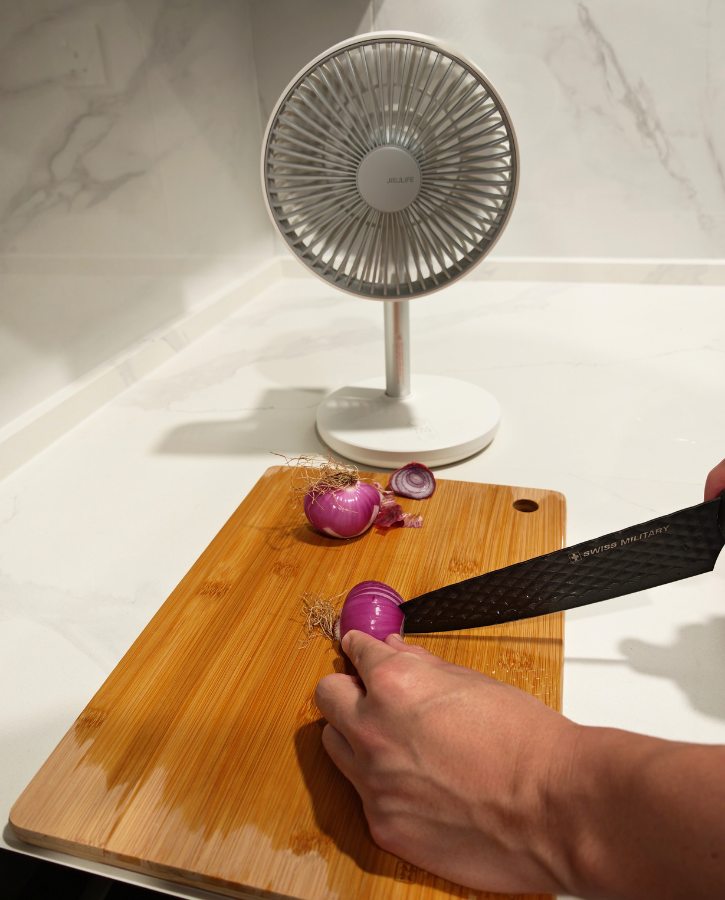
The gas normally rises in a straight path from the cutting board toward whoever is standing over it.
A fan creates a sideways air current that’s much stronger than the gas’s natural upward drift.
It pushes the irritant away from your face and disperses it into the wider room where it becomes too diluted to bother you.
c. Common mistakes
- Blowing the gas toward someone else. Make sure the fan isn’t sending onion fumes directly at another person in the kitchen.
- Too much wind. A very powerful fan can blow onion slices and papery skins right off the board.
d. When it works best
This is the most practical everyday solution for home cooks. A small fan and a few seconds of setup keep you tear-free with almost no effort.
Method 7: The Wet Knife and Board Method
a. What to do
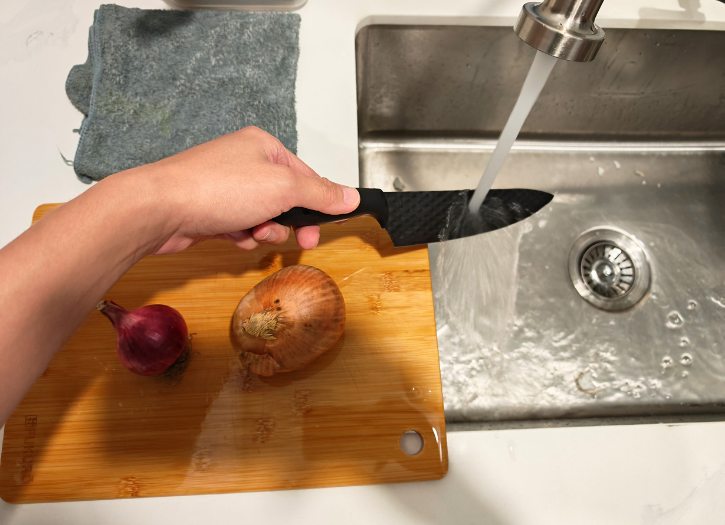
- Before your first cut, run the knife blade under water.
- Every three to four slices, re-dip the blade in water or wipe it with a damp paper towel.
- Place a damp cloth or paper towel on the cutting board close to the onion as an extra gas absorber.
b. Why it works
When the knife slices through the onion, the gas is released right along the surface of the blade.
If the blade is already wet, a good portion of that gas reacts with the water on the knife before it ever enters the air.
The damp towel close to the onion acts as an additional attractor, pulling in escaping gas the same way running water does, just in a more controlled, less messy way.
c. Common mistakes
- Wet knife handle. Never let the handle get wet or greasy. A slippery handle is a serious safety hazard.
- Ignoring knife sharpness. This method can’t overcome the massive gas release caused by a dull blade crushing cells. It works best as a supplement to a sharp knife, not a replacement for one.
d. When it works best
This is an excellent everyday habit, especially when you want to minimize irritation without any special equipment or setup.