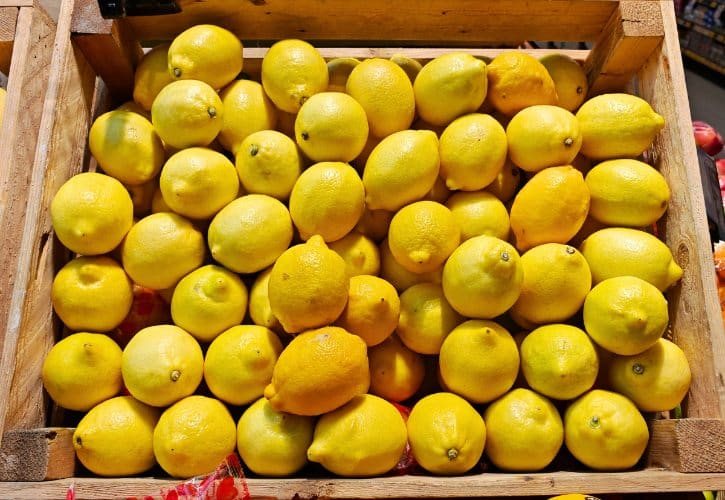
Most people reach for the brightest, most perfect-looking lemon in the pile. It seems logical. Bright yellow should mean ripe and juicy, right?
Not exactly.
That glossy, neon-yellow lemon might actually be older, drier, and less flavorful than the slightly duller one next to it. Supermarkets use wax coatings and other tricks to make lemons look perfect, even when they’re not.
The good news? There are simple, reliable ways to spot a truly great lemon. Let’s break them down. 🙂
1. Why Bright Yellow Fools Most People
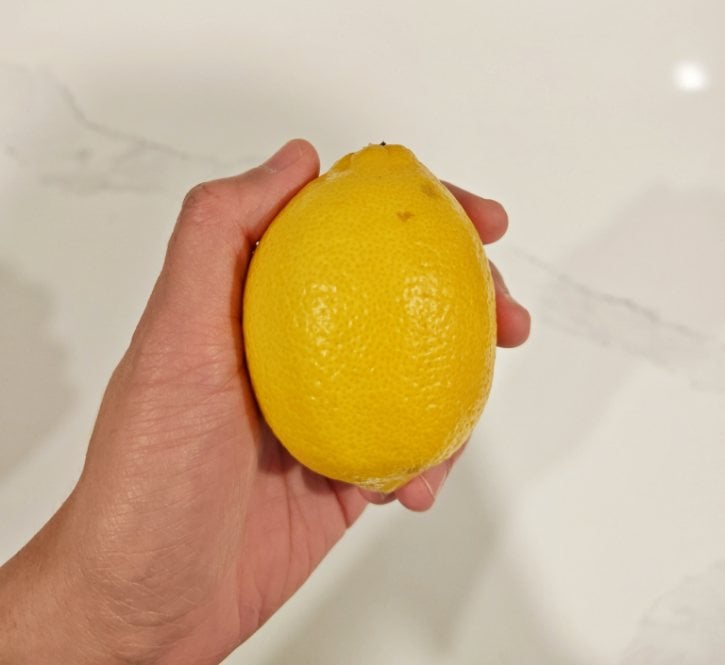
a. Your Eyes Play Tricks on You
We’re wired to trust bright colors.
Vibrant yellow signals “fresh” and “ripe” to our brains. Supermarkets know this. They arrange produce to catch your eye with the most colorful options front and center.
But with lemons, color is one of the least reliable indicators of quality.
b. What Supermarkets Do Behind the Scenes
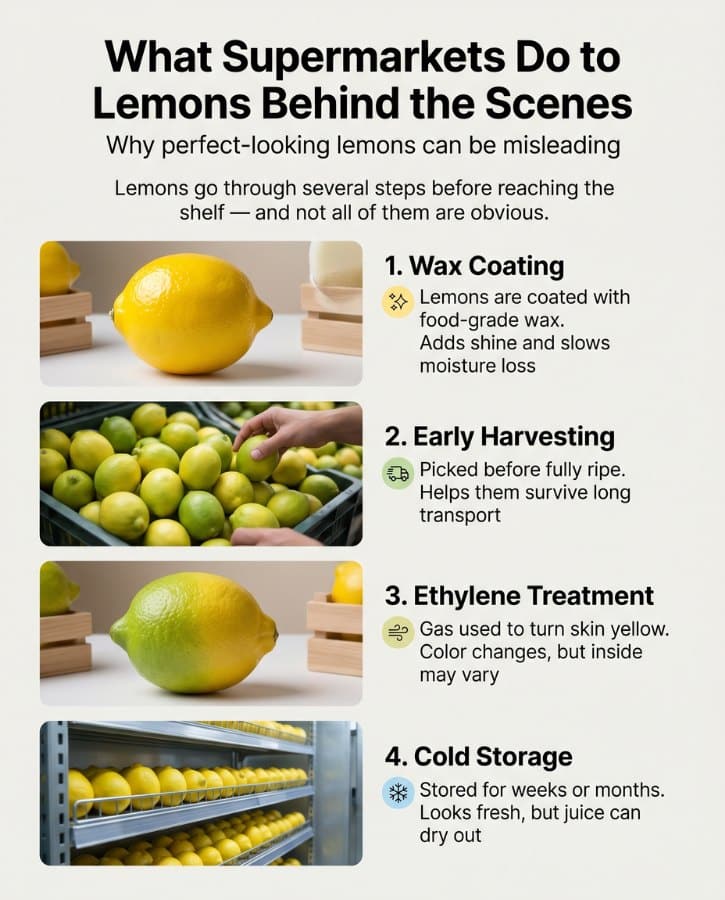
Here’s what happens before lemons reach the shelf:
- Wax coating: Lemons are washed after harvest, which removes their natural protective layer. To replace it, packers apply food-grade wax (like Carnauba or Shellac) to add shine and slow moisture loss.
- Early harvesting: Many lemons are picked before they’re fully ripe to survive long shipping times.
- Ethylene gas treatment: Some lemons are green-skinned but already ripe inside. These are exposed to ethylene gas, which turns the skin yellow to meet consumer expectations.
- Cold storage: Lemons can sit in cold storage for weeks or months. The color stays bright, but the juice slowly dries out.
The result? Color becomes unreliable. A bright yellow lemon might be fresh, or it might have been in storage for a long time with its appearance maintained by wax and processing.
c. Why Color Doesn’t Tell the Full Story
Here’s what color actually does NOT reliably indicate:
- Juice content: A bright yellow lemon can be dry inside.
- Ripeness: The yellow color may come from gas treatment, not natural ripening.
- Flavor quality: Lemons don’t ripen after picking. If it was harvested early, it stays that way.
A slight green tinge near the stem can actually be a sign of freshness and high acidity, not immaturity.
2. What Actually Makes a Good Lemon
Forget color for a moment. Here’s what truly matters inside a lemon.
a. Juice Content
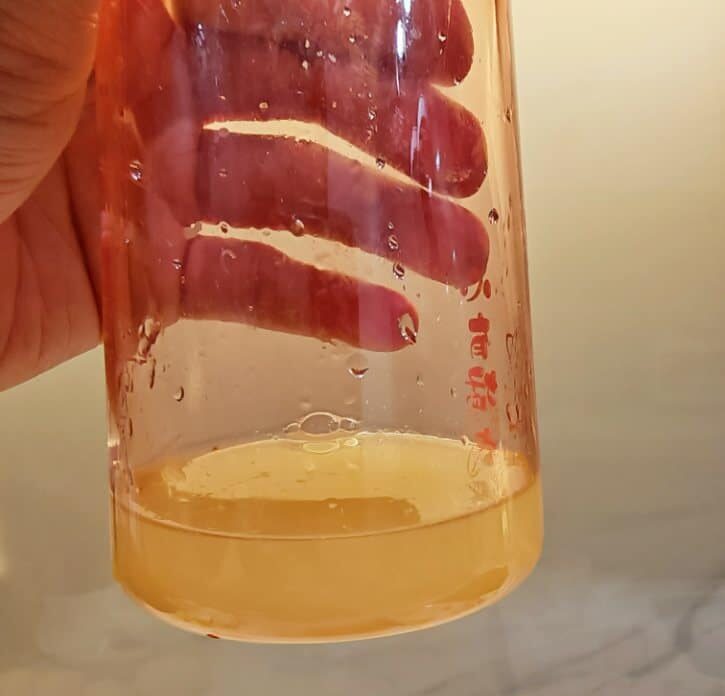
This is the most important factor.
Quality standards require lemons to have at least 28% to 30% juice by volume. A good lemon has fully developed pulp with juice sacs packed with liquid.
More juice means more flavor and more value for your money.
b. Ripeness
Lemons don’t ripen after being picked. Their sugar-to-acid ratio and juice volume are locked in at harvest.
A ripe lemon has balanced acidity and a bright, clean aroma. An under-ripe lemon will taste flat and may have less juice.
c. Skin Thickness
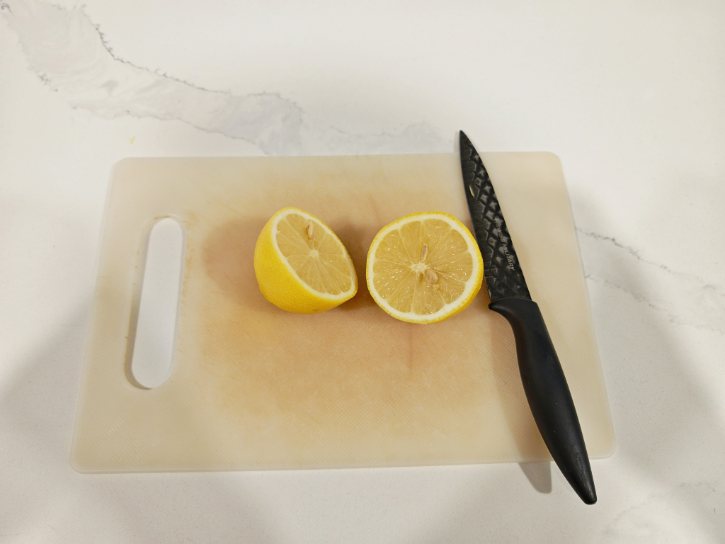
Thinner skin means more room for juice inside.
Thick-skinned lemons have more pith (the white layer), which takes up space and reduces the amount of usable flesh. However, thicker skins are better if you need zest, since they contain more essential oils.
d. Freshness
Lemons lose moisture over time.
As they age, water evaporates from the inside. The lemon becomes lighter and the juice sacs shrink. A fresh lemon feels heavy because it’s still full of liquid.
3. The 7 Real Signs of a Good Lemon
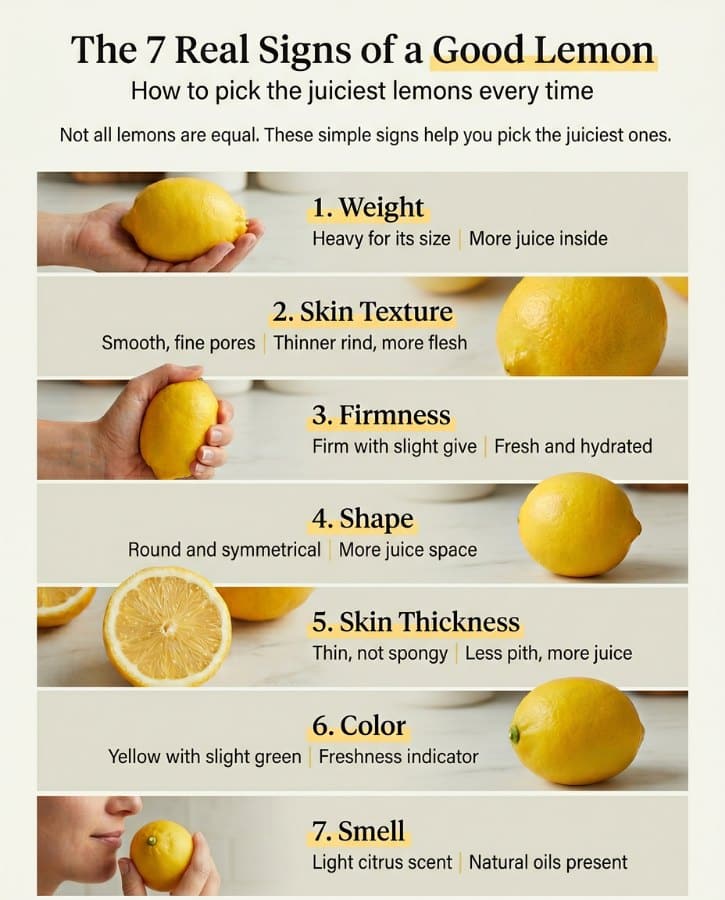
Use these checks every time you shop. They’re simple but surprisingly accurate.
Sign 1: Weight
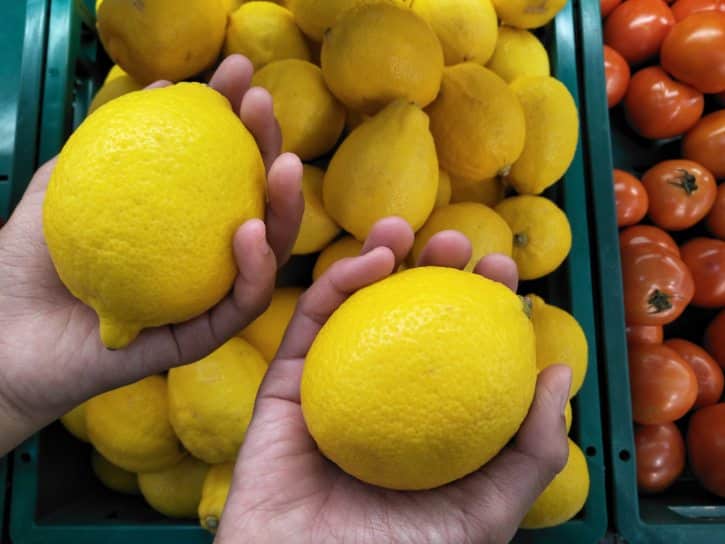
What to look for: Pick up the lemon. It should feel heavy for its size.
Why it works: A heavy lemon means the inside is packed with juice, not air or thick pith. This is the single best predictor of juice content.
Reliability: Very high. Always check weight first.
Sign 2: Skin Texture
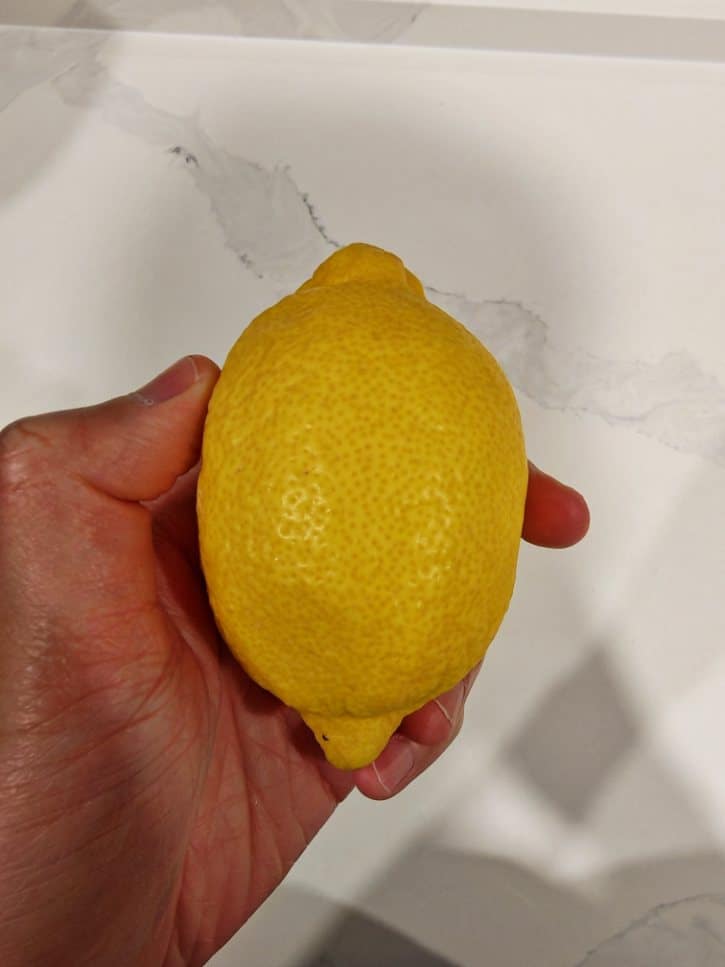
What to look for: Smooth skin with fine pores.
Why it works: Smooth skin usually means a thinner rind and more flesh inside. Rough, bumpy skin often indicates a thick pith layer.
Reliability: High for juicing. (Note: Some varieties are naturally bumpier.)
Sign 3: Firmness
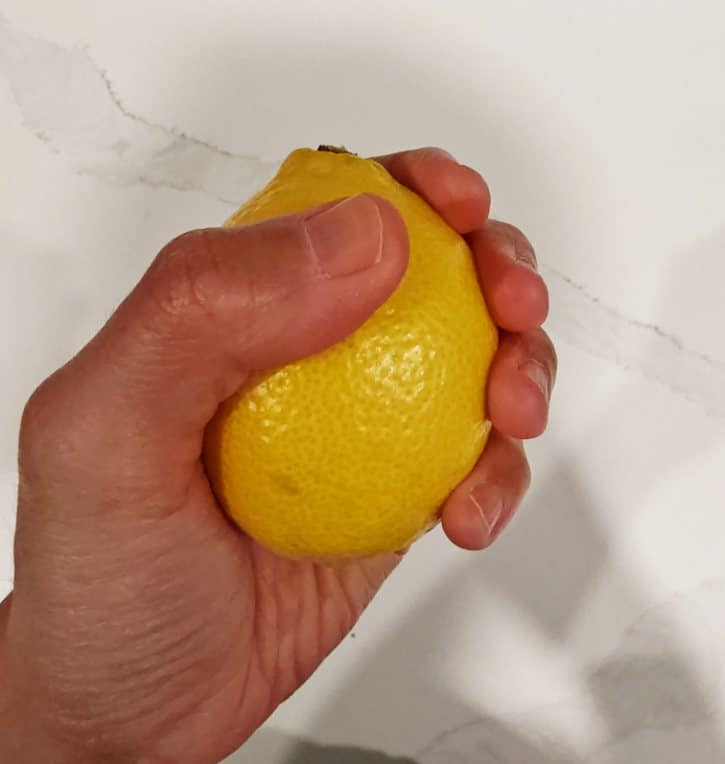
What to look for: Firm but with a slight “give” when you squeeze gently.
Why it works: This slight bounce means the lemon is well-hydrated. Rock-hard lemons may be under-ripe or thick-skinned. Soft or mushy lemons are old or spoiled.
Reliability: High. A quick squeeze tells you a lot.
Sign 4: Shape
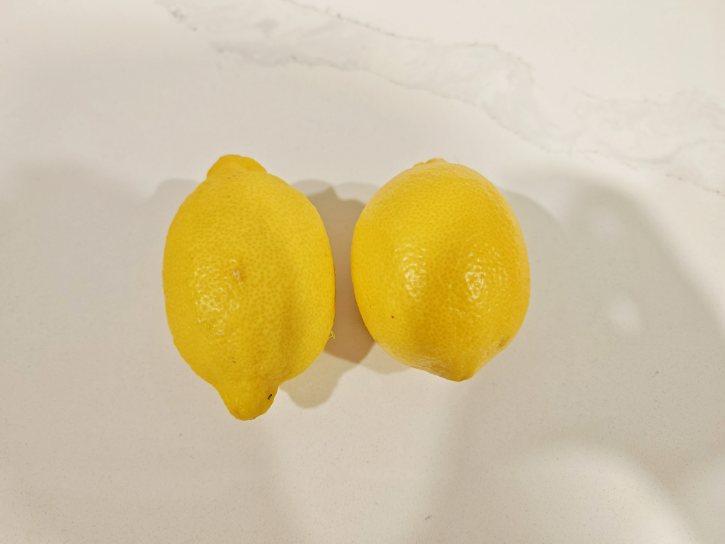
What to look for: Symmetrical shape. Rounder lemons are often juicier than very elongated ones.
Why it works: A rounder shape means more internal volume relative to the surface area of the rind. More space inside equals more juice.
Reliability: Moderate. Shape varies by variety, but symmetry is a good sign.
Sign 5: Skin Thickness
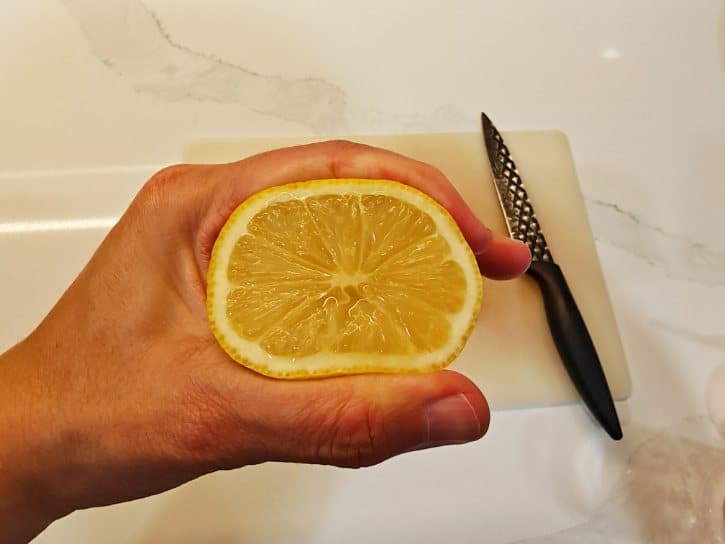
What to look for: If you can, gently press the skin. It should feel thin, not spongy.
Why it works: Thin skin (4 to 6 mm) maximizes the juice-filled interior. Thick, puffy skin means you’re paying for pith.
Reliability: High for juicing purposes.
Sign 6: Color
What to look for: Mostly yellow, but a slight green tinge at the stem end is fine.
Why it works: Full yellow with some green often means the lemon is fresh and hasn’t been over-processed. Avoid brown spots or fuzzy mold.
Reliability: Low on its own. Use color as a secondary check, not the main one.
Sign 7: Smell
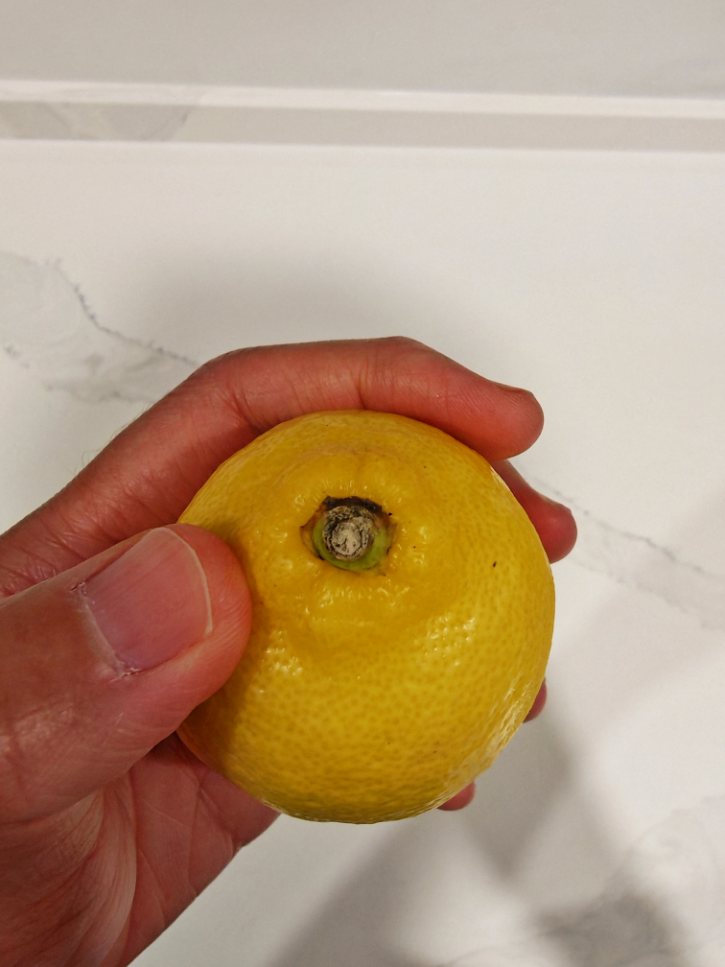
What to look for: Hold the lemon close to your nose, especially near the stem end. A fresh lemon gives off a subtle but clean citrus scent even through the skin.
Why it works: The aroma comes from essential oils in the skin. Fresh lemons naturally release some fragrance. If you smell nothing at all, the lemon may be old or heavily waxed. Any musty or off smell is a clear sign to skip it.
Reliability: Moderate in-store (wax can mask scent), but still useful for spotting bad lemons.
Tip: Once you’re home, you can lightly scratch the skin to check. A truly fresh lemon will release a sharp, zesty, floral scent immediately.
4. Common Mistakes People Make
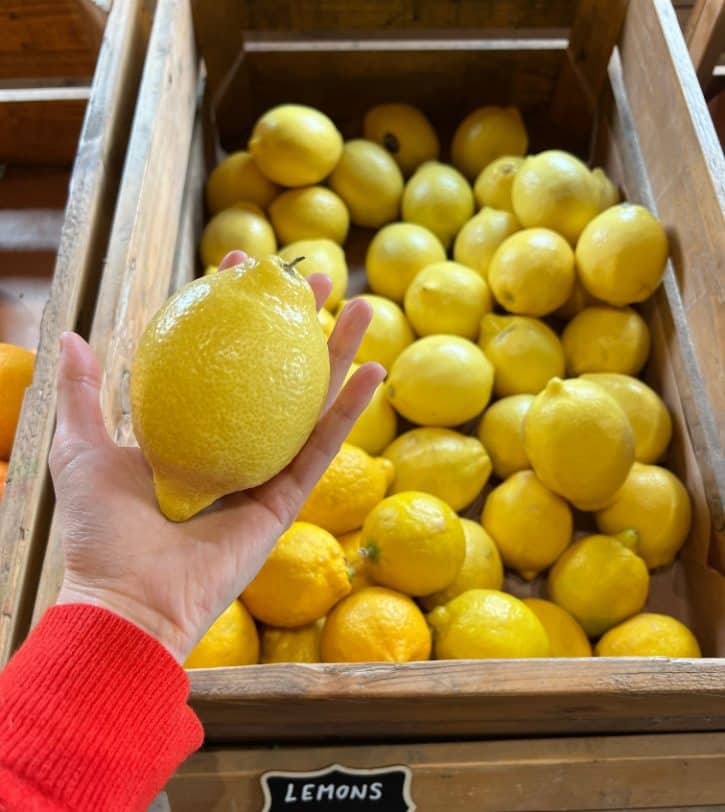
Even experienced shoppers fall into these traps.
Mistake 1: Choosing the Brightest Lemons
The assumption: Brighter yellow means riper and better.
What goes wrong: That neon-yellow lemon may have been in storage for weeks, losing moisture while its color was maintained by wax and ethylene treatment. It looks great but delivers less juice.
Mistake 2: Choosing the Biggest Lemons
The assumption: Bigger means more juice.
What goes wrong: Larger lemons often have thicker rinds and lower juice percentages. You end up paying more for extra pith, not extra juice. Medium-sized lemons usually offer the best balance.
Mistake 3: Ignoring Weight
The assumption: All lemons of the same size have similar juice content.
What goes wrong: Two lemons can look identical but feel completely different. The lighter one has lost moisture or has more pith. Always compare weight.
Mistake 4: Avoiding Imperfect Lemons
The assumption: Surface blemishes mean lower quality.
What goes wrong: Minor scars from wind or branches don’t affect the juice inside. These “Choice” grade lemons are often better value and may have stayed on the tree longer, developing more flavor.
Mistake 5: Relying Only on Color
The assumption: If it’s yellow, it’s ready.
What goes wrong: Color can be artificially enhanced. A lemon with a slight green tint might actually be fresher and more acidic than a perfectly yellow one that’s been processed and stored.
5. Different Types of Lemons
Not all lemons are the same. Knowing the differences helps you choose the right one for your needs.
a. Eureka Lemons
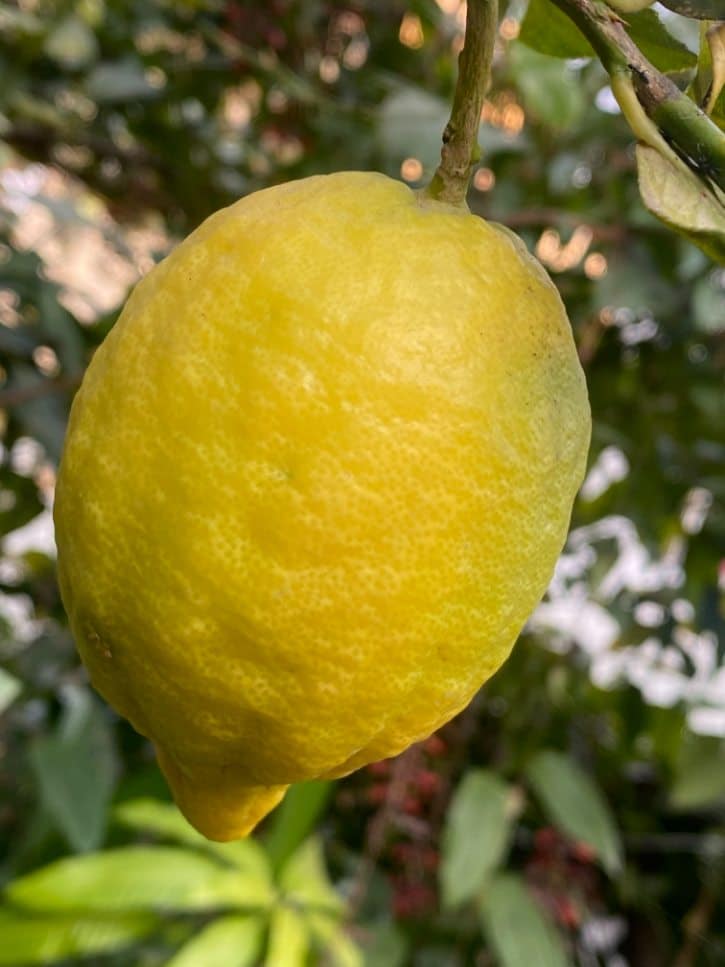
- Taste: Classic, tart lemon flavor with high acidity
- Skin: Thick and bumpy
- Juice level: Moderate (more pith takes up space)
- Best for: Zesting, garnishes, and cooking where you need firm slices
- Visual note: Elliptical shape with textured skin
b. Lisbon Lemons
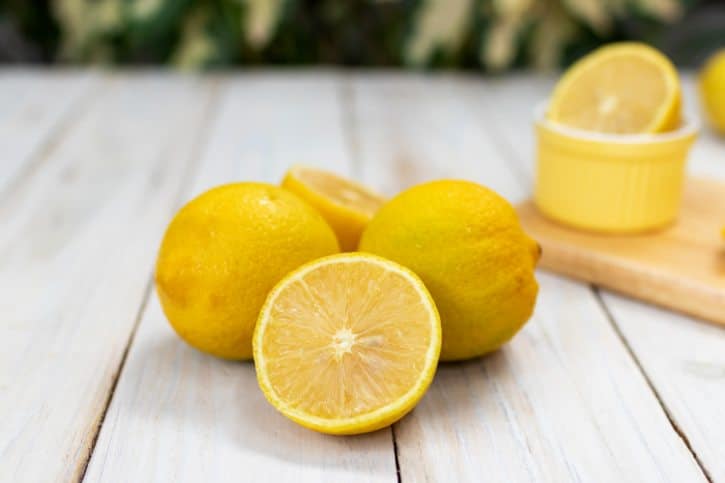
- Taste: Sharp, high acidity
- Skin: Thinner and smoother than Eureka
- Juice level: High
- Best for: Juicing, beverages, and recipes needing lots of lemon juice
- Visual note: Often confused with Eureka but generally smoother
c. Meyer Lemons
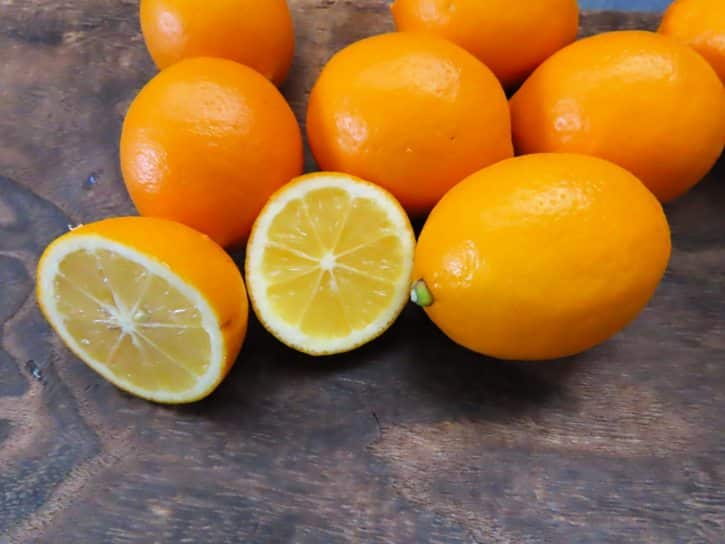
- Taste: Sweeter and less acidic, with a floral aroma
- Skin: Thin and smooth, deep yellow to orange hue
- Juice level: Very high (thin skin means more flesh)
- Best for: Desserts, salads, cocktails, and eating fresh
- Visual note: Rounder shape, more orange-tinted color
Important: Meyer lemons look more orange than other varieties. This doesn’t mean they’re unripe. It’s just how they naturally appear. Less yellow does NOT mean worse quality.
6. Quick Practical Checklist
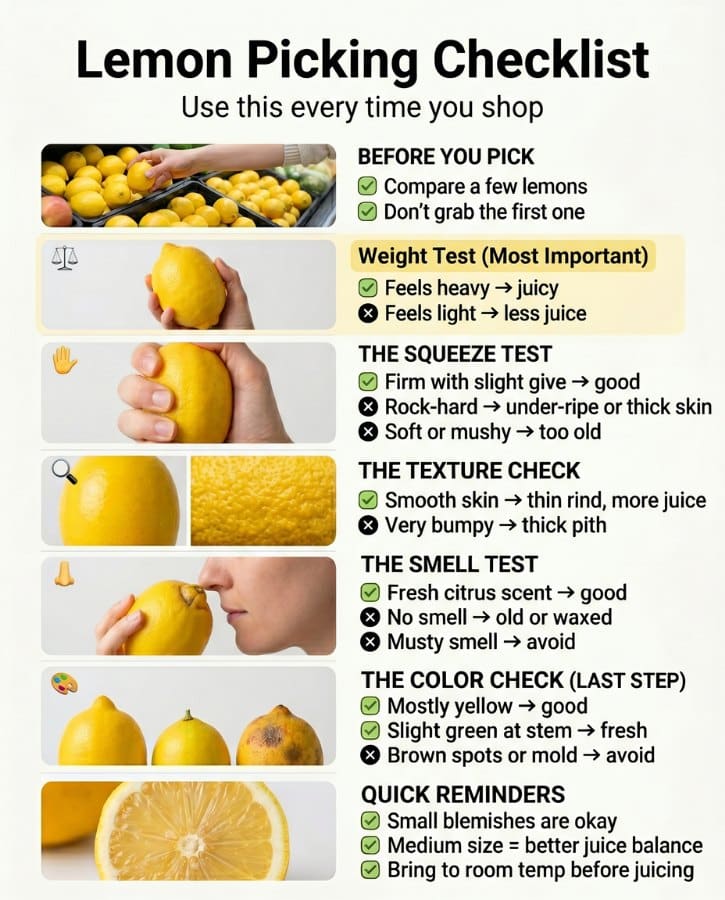
Use this simple guide every time you shop for lemons.
Before you pick:
- Compare several lemons, not just grab the first one
The weight test (most important):
- Pick it up. Does it feel heavy for its size? Heavy = juicy
The squeeze test:
- Gently squeeze. Is it firm with a slight give? Good
- Rock-hard? Possibly under-ripe or thick-skinned
- Soft or mushy? Too old, skip it
The texture check:
- Is the skin smooth with fine pores? Likely thin-skinned and juicy
- Very bumpy? May have thick pith
The smell test:
- Hold it near your nose, especially near the stem end. Does it have a fresh, citrusy scent?
- No smell? May be old or heavily waxed
- Musty or off odor? Skip it
The color check (last, not first):
- Mostly yellow is good
- Slight green at the stem? Often a sign of freshness
- Brown spots or fuzzy mold? Avoid
Quick reminders:
- Don’t fear minor surface blemishes, they don’t affect the juice
- Medium-sized lemons often have better juice-to-pith ratio than large ones
- If juicing, bring refrigerated lemons to room temperature first for better yield
The Bottom Line
The “best” lemon isn’t the one that looks most perfect on the shelf. It’s the one that feels heavy, smells fresh, and has smooth, thin skin. Trust your hands and nose more than your eyes, and you’ll get more juice and better flavor every time.