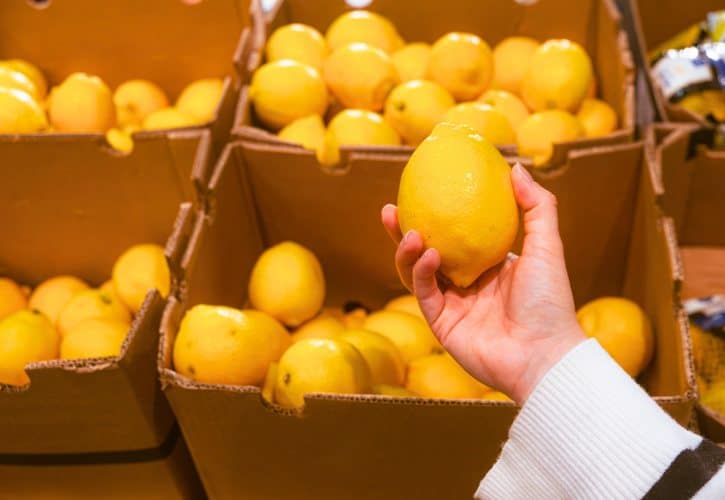
You cut open a lemon that looked perfect. Bright yellow. Smooth skin. No bruises. And yet, almost nothing comes out when you squeeze it.
This happens more often than you think, and it is not random.
The problem starts with how most people pick lemons. We rely on the same instincts every time, and those instincts lead us straight to the driest fruit in the pile.
Here is what actually works. 😊
1. Why Your Lemon Has No Juice (It Starts Before You Even Pick It)
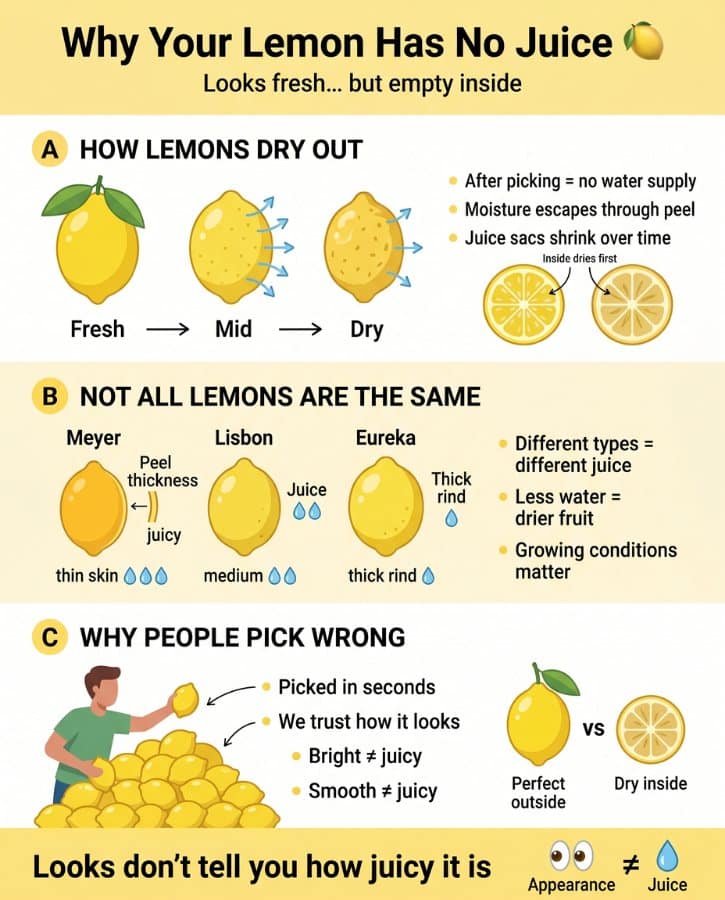
Before you walk into the store, your lemon may have already lost most of its juice. Understanding why helps you avoid the worst ones.
a. How Lemons Lose Juice Over Time
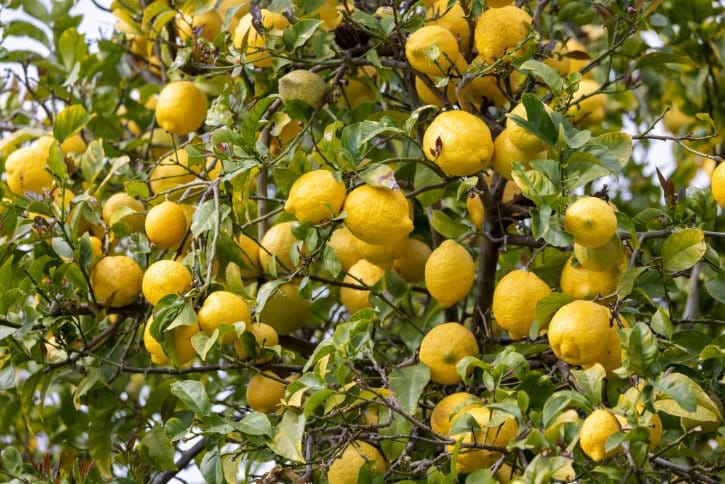
Once a lemon is picked from the tree, it is cut off from its water supply. From that moment, it slowly dries out from the inside.
Water escapes through the peel and evaporates into the air. The drier the environment, the faster this happens. Inside the lemon, the juice sacs gradually lose their fullness. They shrink, collapse, and eventually turn dry and fibrous.
Here is the tricky part: this happens long before the outside shows any signs. A lemon can look completely fresh while the inside is already half empty.
The peel can even thicken as it absorbs moisture from the dying juice sacs, making the fruit feel solid when it is actually hollow.
The longer a lemon sits after harvest, the less juice it has. This is true even if it looks brand new.
b. Why Not All Lemons Are Naturally Juicy
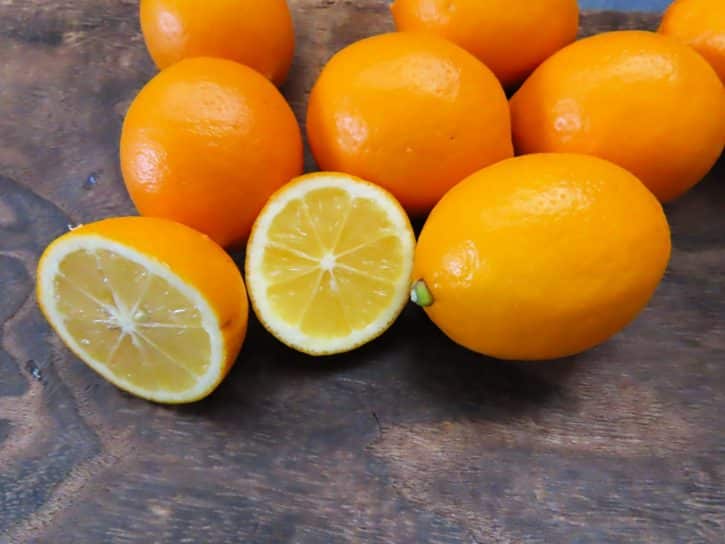
Even fresh lemons vary a lot in juice content. Two lemons that look identical can be completely different inside.
Why?
- Variety matters. Meyer lemons have the thinnest skin and the most juice. Eureka lemons have the thickest rinds. Lisbon lemons fall in between, with medium to thick skin. Among common supermarket lemons, Eureka and Lisbon vary more in juice yield than Meyers.
- Growing conditions matter. Water, soil, and climate affect how juicy a lemon becomes. A tree that got less water produces drier fruit.
- Tree maturity matters. Young, fast-growing trees often produce larger fruit with thicker rinds and less juice.
You cannot assume lemons in the same pile are the same inside. They are not.
c. Why Consumer Picking Habits Make It Worse
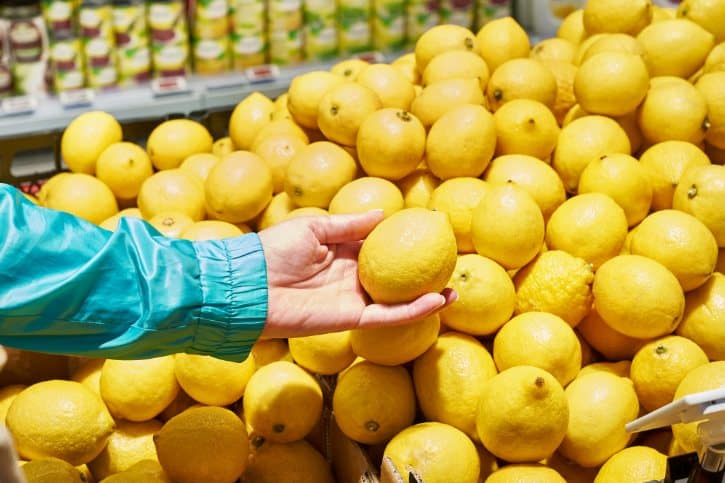
Most people pick lemons quickly and instinctively. We scan the pile, spot one that looks good, grab it, and move on. This takes about five seconds.
We trust our eyes. Bright color, smooth skin, no marks. That is our mental checklist.
But here is the problem: none of those things tell you how much juice is inside. By relying on appearance, we end up choosing based on signals that have nothing to do with what we actually want.
Quick, visual decisions lead to inconsistent results.
2. The Exact Way Most People Pick Lemons (And Why It Fails)
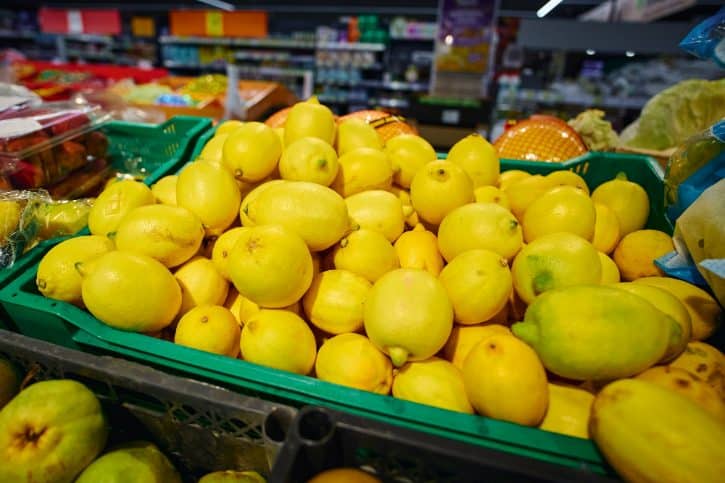
Let’s break down what actually happens at the grocery store.
Most shoppers:
- Approach the lemon pile and scan the top layer
- Look for bright yellow color and smooth, shiny skin
- Avoid any fruit with marks, scars, or spots
- Grab the one that looks “perfect”
- Move on without comparing it to others
The whole process is visual. We rarely touch more than one lemon. We never compare weights.
Why This Fails
This method ignores the only reliable indicators of juice: weight and density.
Visual cues are misleading for several reasons:
- Waxing hides age. Commercial lemons are often coated with wax to look shiny and fresh, even when they are old and dry inside.
- Surface blemishes mean nothing. A small scar or mark on the skin does not affect the juice sacs at all. It is purely cosmetic.
- Yellow color means advanced ripeness. A very yellow lemon is closer to the end of its shelf life. It may have been sitting in dry air for days.
By rejecting lemons with minor flaws and choosing the shiniest ones, you often pass over fresher, juicier fruit in favor of older, waxed lemons that have lost significant moisture.
You are picking based on how the lemon looks, not how much liquid it holds.
3. The 7 Reasons You Keep Ending Up With Dry Lemons
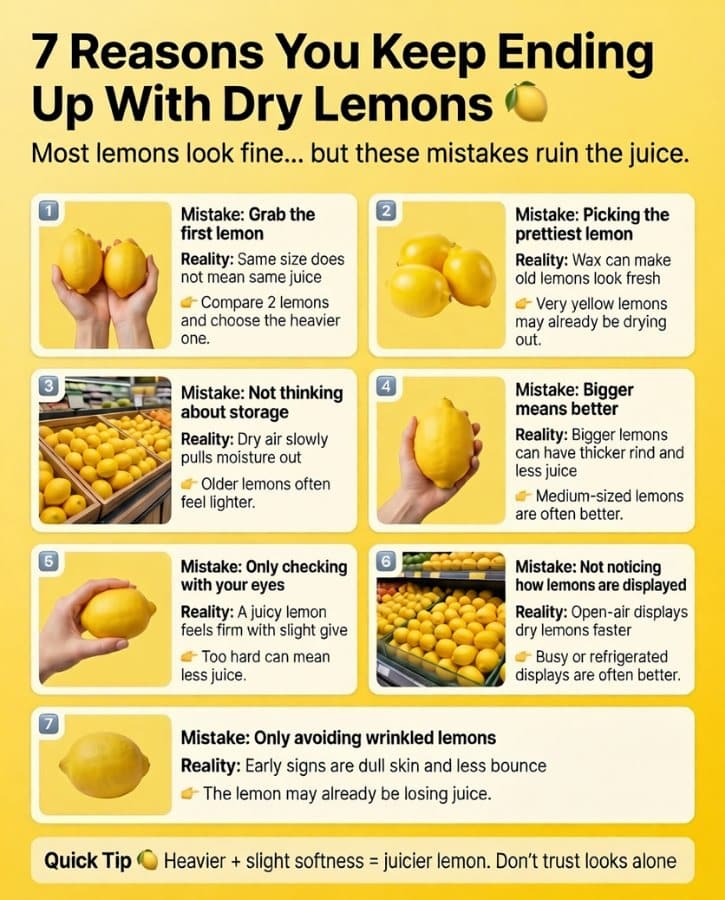
Here are the specific mistakes that lead to disappointing lemons.
Reason 1: Not Comparing Multiple Lemons
What people do: Grab the first good-looking lemon and move on.
What actually happens: Lemons in the same bin vary widely in juice content. Weight variation among similar-sized lemons can be as much as 20%.
The consequence: You miss the chance to find a heavier, juicier fruit. Comparing gives you a simple way to improve your odds.
Reason 2: Over-Relying on Appearance
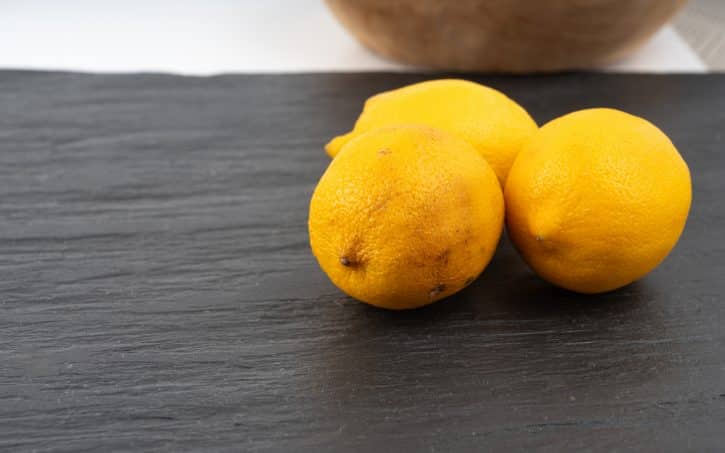
What people do: Prioritize bright yellow color and flawless skin.
What actually happens: Wax coatings make old lemons look fresh. Very yellow fruit is closer to drying out. Meanwhile, fruit with minor surface marks may be fresher and juicier.
The consequence: The most “attractive” lemons are often the ones that have been sitting longest.
Reason 3: Not Understanding Storage Impact
What people do: Buy lemons from open-air room-temperature displays without thinking.
What actually happens: At room temperature in dry air, lemons lose moisture rapidly. Water evaporates through the skin day by day. Older lemons feel noticeably lighter because the liquid has literally left the fruit.
The consequence: If you do not check for weight loss, you are buying fruit already halfway to dry.
Reason 4: Choosing Based on Size
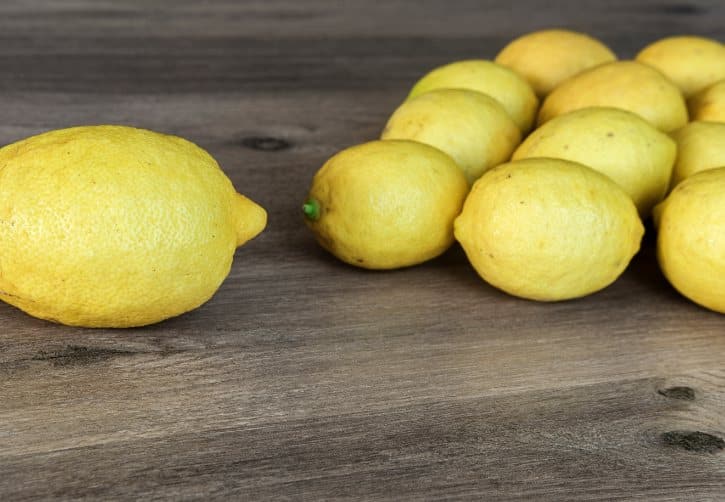
What people do: Pick the biggest lemon, thinking it offers the best value.
What actually happens: Large lemons often have thicker rinds and a higher proportion of dry, spongy pith. They are also more prone to granulation, where juice sacs turn into a gel-like substance instead of liquid.
The consequence: You end up with more peel and less juice. Medium-sized lemons typically have better juice-to-rind ratios.
Reason 5: Ignoring Subtle Physical Differences
What people do: Focus only on what they can see and skip any physical evaluation.
What actually happens: A lemon that is too hard may be under-ripe or have an extremely thick, dry rind. A juicy lemon should feel firm but have a slight “give” when you press it gently. That give indicates the juice sacs inside are full.
The consequence: You miss the tactile signals that indicate peak juiciness.
Reason 6: Ignoring Store Conditions
What people do: Shop without paying attention to how produce is displayed.
What actually happens: Open-air displays expose lemons to dry, moving air that speeds up moisture loss. Refrigerated cases or high-humidity bins preserve freshness better. High-turnover stores sell fresher stock.
The consequence: Where you shop affects what you get. A lemon from a busy refrigerated display will likely be juicier than one from a slow-moving dry bin.
Reason 7: Not Recognizing Early Dehydration Signs
What people do: Only reject lemons that look obviously shriveled or wrinkled.
What actually happens: Visible wrinkling is the final stage of dehydration, not the first. Early signs are subtle: a slight dulling of the skin’s shine and a change in elasticity. If you pinch the skin and it does not bounce back immediately, the lemon has already lost significant moisture.
The consequence: You buy lemons that have lost 10 to 15 percent of their juice, even though the skin still looks fine.
4. How to Pick a Juicy Lemon
Now that you know what goes wrong, here is how to do it right.
a. The “3-Lemon Comparison Trick”
This is the single most effective technique for everyday shopping.
How to do it:
- Pick three lemons that look roughly the same size
- Hold two of them, one in each hand, and feel which one is heavier
- Put the lighter one back
- Pick up the third lemon and compare it to the one you kept
- Keep whichever feels heavier
Why it works: Juice is liquid, and liquid is heavy. A heavier lemon of the same size has more juice inside. By comparing just a few, you improve your chances instead of grabbing blindly.
This takes about ten seconds and noticeably improves your results.
b. The “Heavy for Its Size” Rule
This is the core principle behind smart lemon selection.
Do not just look for a heavy lemon. Look for a lemon that feels heavy compared to others of similar size.
Why it works: Density is the key. When two lemons are the same size, the heavier one has more of its internal space filled with liquid rather than air pockets or dry pith.
This is more reliable than color, shininess, or overall size. A small, dense lemon will often give you more juice than a large, light one.
c. Finding Fresher Lemons in the Same Pile
Grocery store staff typically follow a stocking method that puts the newest produce at the bottom or back of the display so older stock sells first.
How to use this:
- Reach for lemons at the bottom of the bin or the back of the shelf
- These are likely the most recent arrivals
- They have had less exposure to dry air and store lighting
- They have retained more of their original moisture
This simple habit significantly increases your odds of getting fresher, juicier fruit.
5. Why Two Identical Lemons Can Be Completely Different
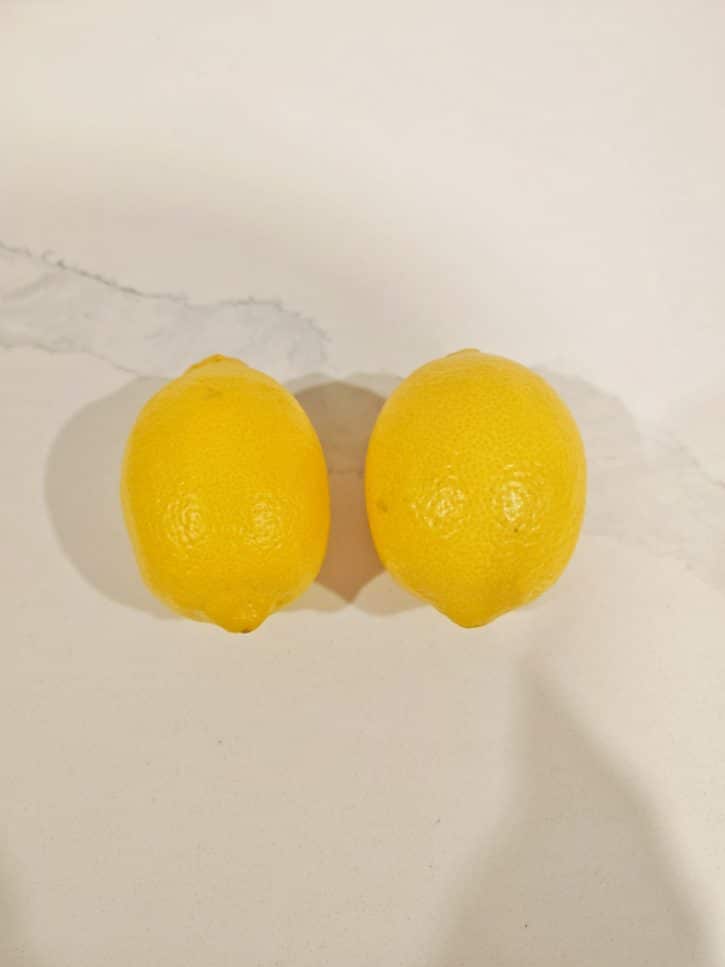
Two lemons that look exactly the same on the outside can be completely different inside. One might be bursting with juice. The other might be dry and fibrous.
Why does this happen?
- Harvest timing varies. Lemons picked at different times, even from the same tree, have different juice levels.
- Storage duration differs. Two lemons in the same pile may have arrived at the store days or weeks apart.
- Growing conditions vary. A lemon from the sunny side of a tree develops differently than one from the shaded interior.
- Internal disorders are invisible. Some lemons develop granulation, where juice sacs turn into a gel instead of liquid. You cannot see this from the outside.
Appearance is simply not a reliable signal. This is exactly why comparing by weight matters so much.
6. Even a Good Lemon Can Fail (If You Use It Wrong)
You found a great lemon. Heavy, fresh, full of juice. But you can still get disappointing results if you handle it wrong at home.
a. Temperature Makes a Difference
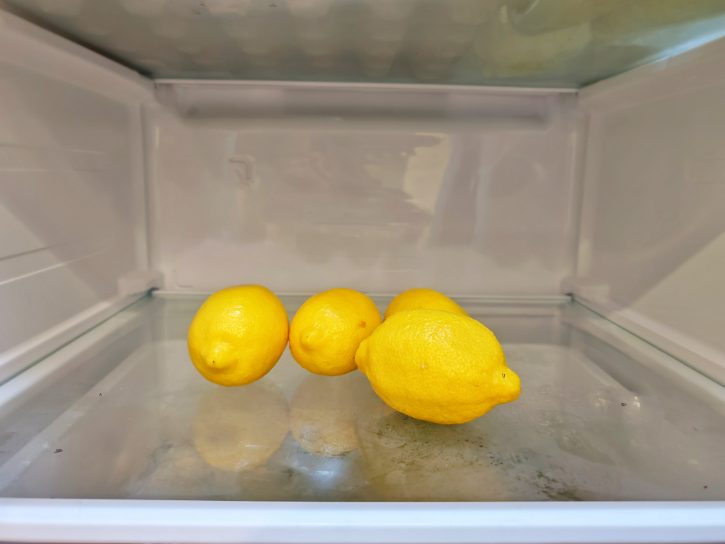
Most people juice lemons straight from the refrigerator. This is a mistake.
Cold lemons give less juice because the internal membranes are stiff and the liquid flows less freely.
What to do instead:
- Let your lemon sit at room temperature for 15 to 20 minutes before juicing
- If you are in a hurry, place it in warm water for a few minutes
- Room-temperature lemons release juice more easily
b. Roll It Before You Cut It
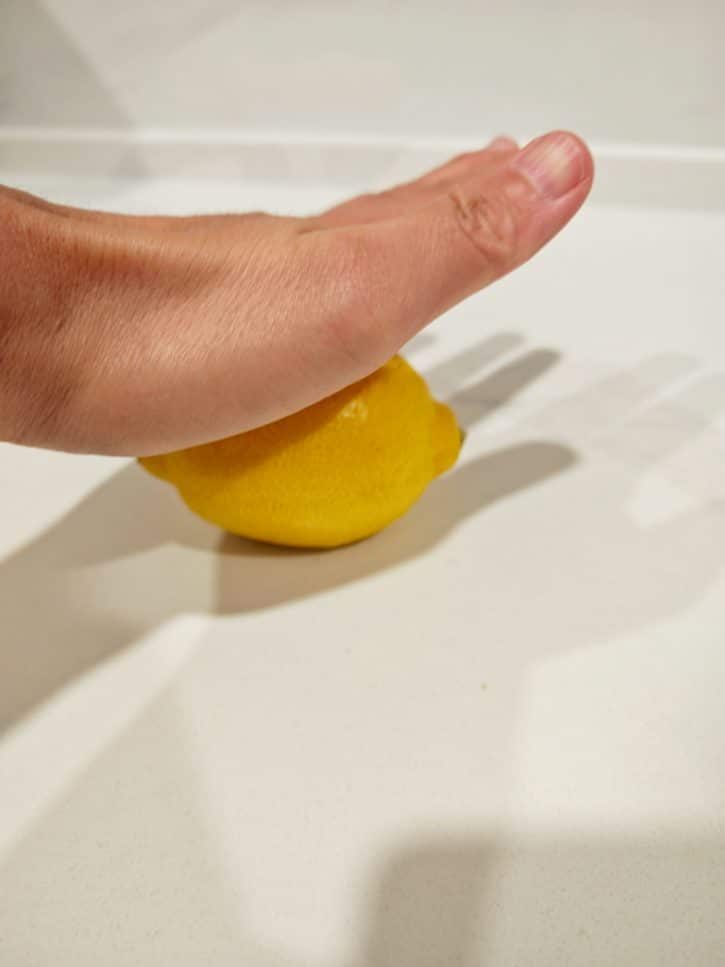
Rolling a lemon on a hard surface before cutting it is one of the most effective ways to increase juice yield.
How to do it:
- Place the lemon on a cutting board or countertop
- Press down firmly with your palm
- Roll it back and forth several times
Why it works: The pressure ruptures some of the juice sacs inside before you even cut the fruit open. This makes the juice more available when you squeeze. Studies show proper rolling can increase juice yield by up to 27 percent.
c. Cut and Extract the Right Way
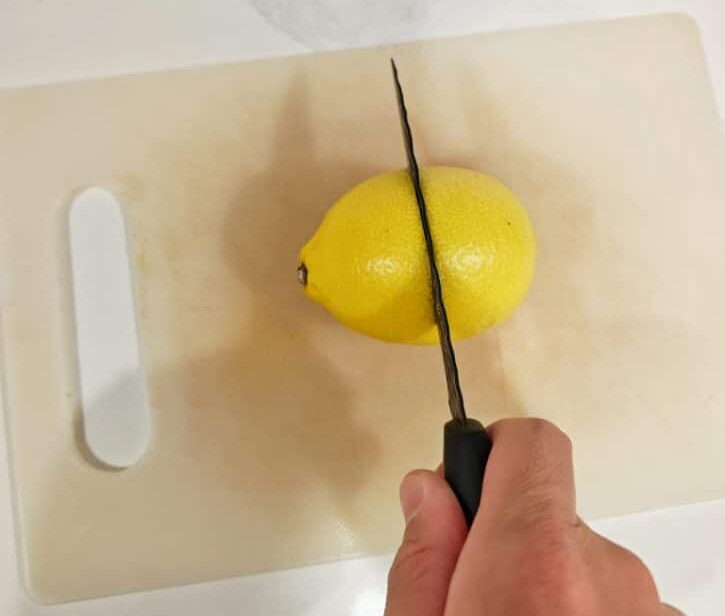
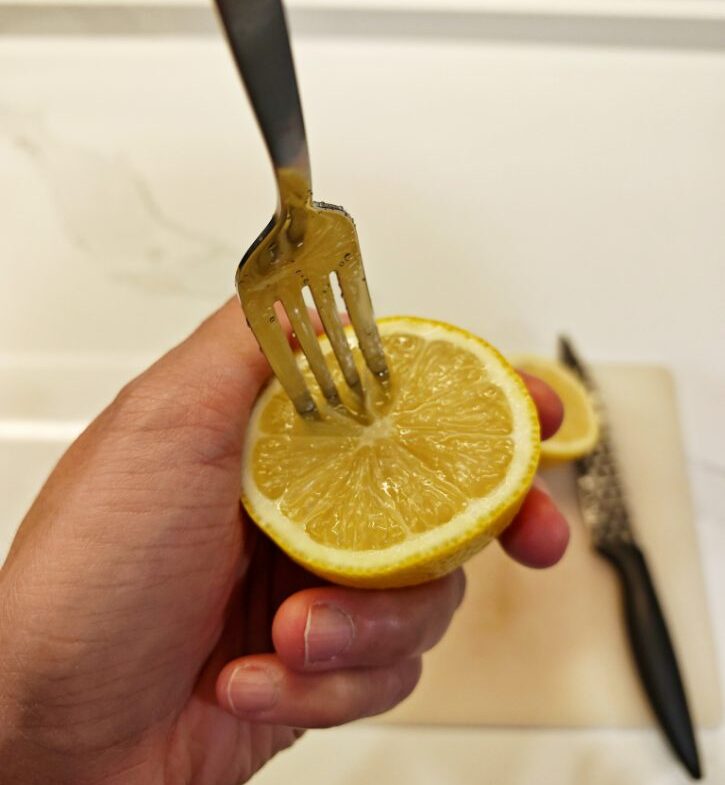
How you cut the lemon also matters.
Best practice:
- Cut the lemon horizontally through the middle (across the equator, not from stem to end)
- This exposes the maximum number of juice-containing segments
- Use a reamer, fork, or citrus juicer to twist through the segments and break down the internal membranes
Cutting from stem to end gives you fewer open segments and makes extraction less efficient.
7. Stop Doing This: The Real Reason Your Lemons Keep Disappointing
Here is the shift you need to make:
- Compare, don’t grab. Never accept a lemon without comparing it to at least two others. Natural variation means the difference between a great lemon and a disappointing one is often sitting right next to each other.
- Feel, don’t judge visually. A lemon with a small scar or a slightly dull color is often much juicier than a shiny, “perfect” one that has been waxed and sitting in dry air for days.
- Think freshness, not perfection. Freshness shows up as weight and skin elasticity, not as bright color. Reach for the back of the pile. Trust the heavy feeling in your hand.
The Bottom Line
The next time you are at the store, remember this: the most beautiful lemon in the pile is often the one that has been there the longest.
Stop shopping with your eyes. Start shopping with your hands. When you reject the visual trap and rely on density, every lemon you pick becomes a reservoir of juice instead of a disappointment of pith.