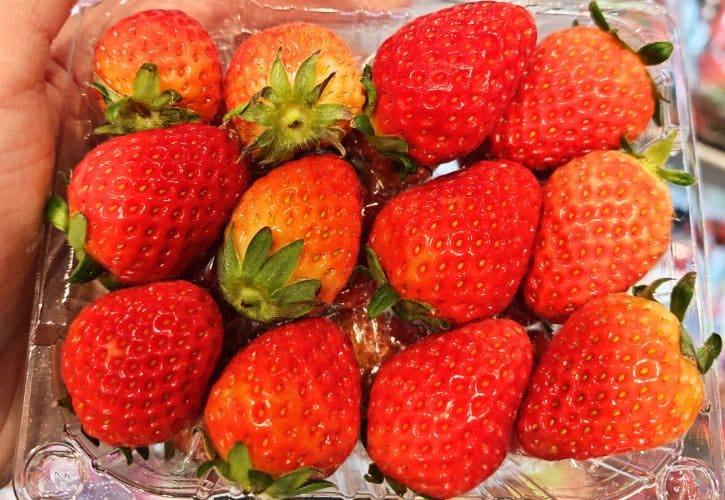
Most people grab the brightest red strawberries in the store, thinking they must be the sweetest. But that’s not always true.
Some of the best-tasting strawberries don’t look picture-perfect. And some “pretty” ones can taste watery or bland.
There are a few simple signs most shoppers overlook, because color can be misleading.
Here’s what actually matters when choosing sweet strawberries. 🙂
1. Why Color Fools Most People
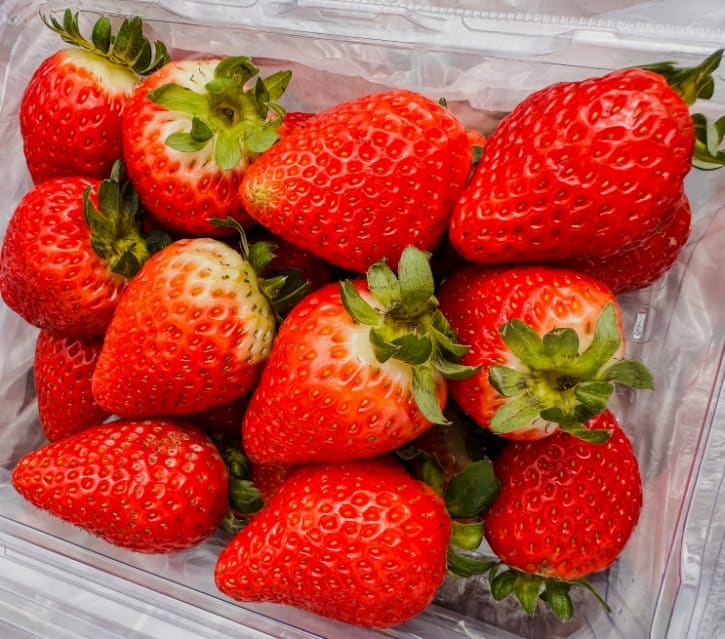
We’re naturally drawn to bright red strawberries. It makes sense, right? Our eyes tell us that a deep, vibrant red means the fruit is ripe and ready.
This visual habit goes back to survival instincts. In nature, red often signals that a fruit has moved from sour and unripe to sweet and nutritious.
But here’s the problem: modern strawberries have been bred to look red even when they’re not fully sweet.
The red color comes from pigments called anthocyanins. These pigments can keep developing even after the strawberry is picked. So a berry can turn bright red sitting in a warehouse, but its sugar level stays frozen at whatever it was when harvested.
Supermarket vs. Farm-Fresh Strawberries
Most supermarket strawberries are picked early, often when they’re only about three-quarters red. This keeps them firm enough to survive shipping and handling.
The berry continues to turn red on the shelf. But here’s what most people don’t realize: strawberries are “non-climacteric” fruits, meaning they stop developing sugar the moment they leave the plant.
Farm-stand strawberries are often picked at full ripeness. The plant has more time to move sugars into the fruit, resulting in a sweeter berry.
So that perfectly red supermarket strawberry? It may have gotten its color in transit, not on the vine.
2. What “Sweetness” Really Depends On
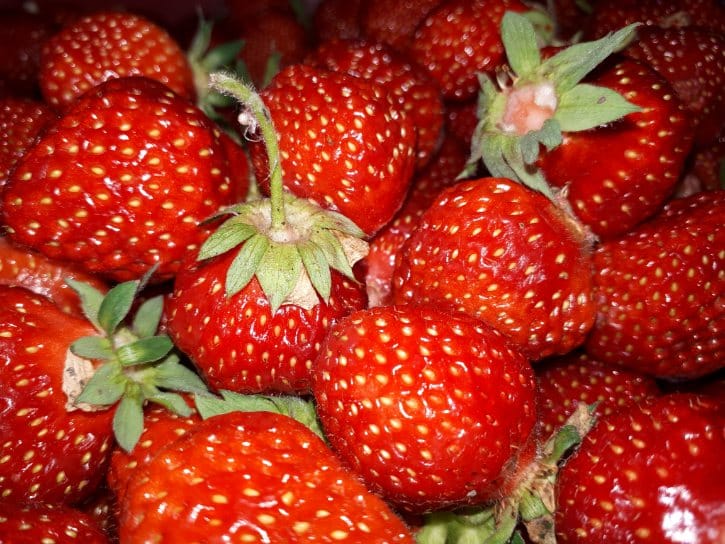
Sweetness isn’t just about sugar. It’s a combination of several factors working together.
a) Sugar Content
Strawberry sweetness is measured in Brix, which shows the percentage of natural sugars (like fructose and glucose) in the fruit’s juice.
A Brix level of 7.0 is the minimum for acceptable taste. Premium berries often reach 9.0 or higher.
b) The Dilution Effect
Here’s something most people don’t notice: bigger strawberries are often less sweet.
When a strawberry grows larger, usually from heavy watering, its sugars get spread across more water. This “dilution effect” is why the biggest, most impressive-looking berries in a container are often the most bland.
c) Sugar-to-Acid Balance
A berry can be high in sugar but still taste tart if it’s also high in acid.
The real key is the balance between sugar and acid. A strawberry with slightly less sugar but very low acidity will actually taste sweeter than a high-sugar, high-acid berry.
d) Ripeness at Harvest
The final 24 to 48 hours on the vine are critical. This is when the plant pumps the most sugar into the fruit.
Berries picked too early miss this final sugar boost and never catch up.
e) Variety Matters
Some strawberry varieties are simply bred for sweetness. Others are bred for size, firmness, or long shelf life.
The variety you’re buying affects sweetness more than most people realize.
3. The 5 Real Signs of a Sweet Strawberry

Since color alone can’t tell you much, here are the signs that actually work.
Sign 1: Smell It First

The most reliable indicator of sweetness is aroma.
A truly ripe, sweet strawberry gives off a noticeable fragrance, even through the container. You should be able to smell that classic sweet, fruity scent without cutting the berry open.
If a container of strawberries has no smell at all, they were likely picked before their flavor compounds fully developed. No scent usually means high acid and low sugar.
Sign 2: Check the Firmness
Ripeness and firmness are connected.
- Too hard = under-ripe and likely sour
- Mushy = overripe and losing its sugars
- Just right = plump and full, yielding slightly to gentle pressure without bruising
The sweet spot is a berry that feels firm but gives a little when you press it lightly.
Sign 3: Look at the Green Cap
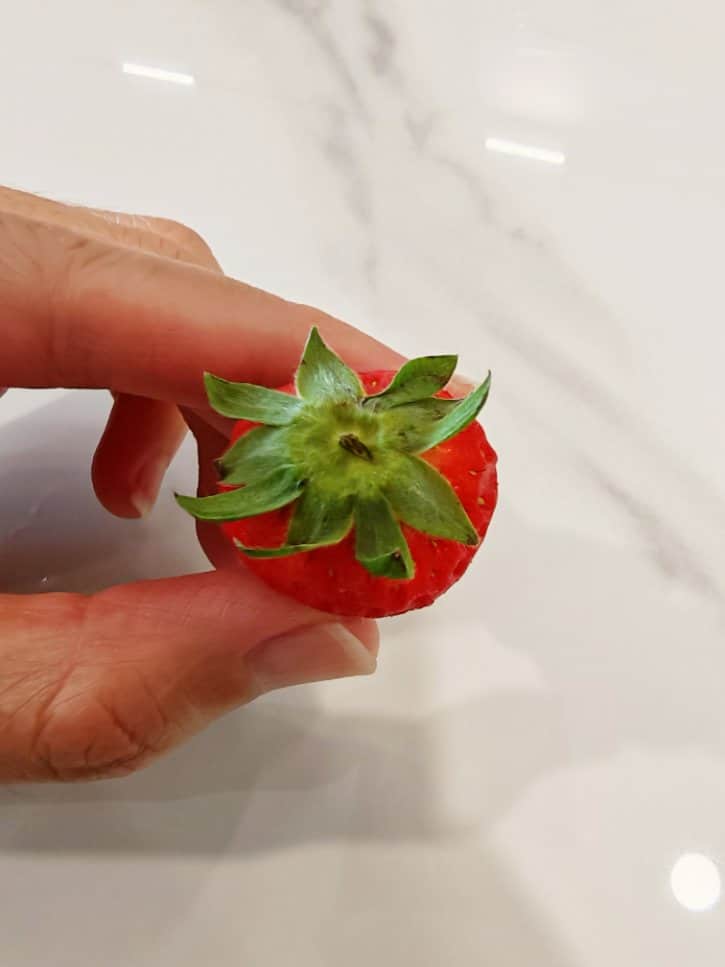
The green leafy cap (called the calyx) tells you a lot about freshness.
- Fresh, bright green cap = recently harvested, good moisture
- Brown, dry, or shriveled cap = the berry has been sitting in the supply chain too long
Berries with fresh green caps tend to have better sugar and aroma.
Sign 4: Notice Where the Seeds Sit
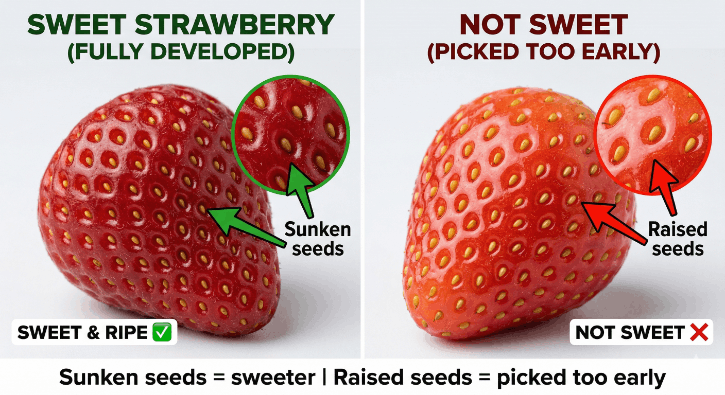
This is a trick most people don’t know.
In sweet, fully developed strawberries, the tiny seeds (called achenes) appear slightly sunken into the flesh. This happens because the fruit expands during its final sugar-loading phase on the vine.
If the seeds are sitting up on a tight, shiny surface, the berry may have been picked before that final growth stage.
Sign 5: Check for Even Color
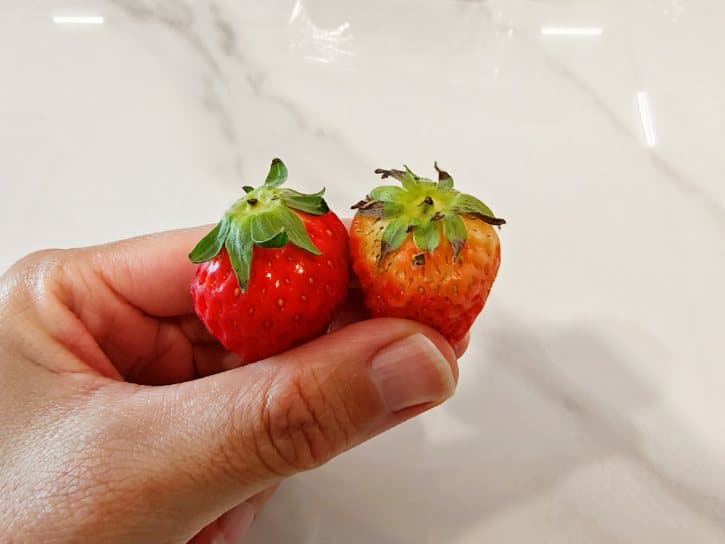
While bright red isn’t the goal, even coloring is a valid quality marker.
Look for berries that are red all the way to the top. A strawberry with “white shoulders” or a green tip near the cap was harvested too early. Those pale areas are significantly more acidic and less sweet.
A deep, natural red, rather than a neon or translucent bright red, often indicates better flavor development.
4. Why Some Pale Strawberries Can Taste Better
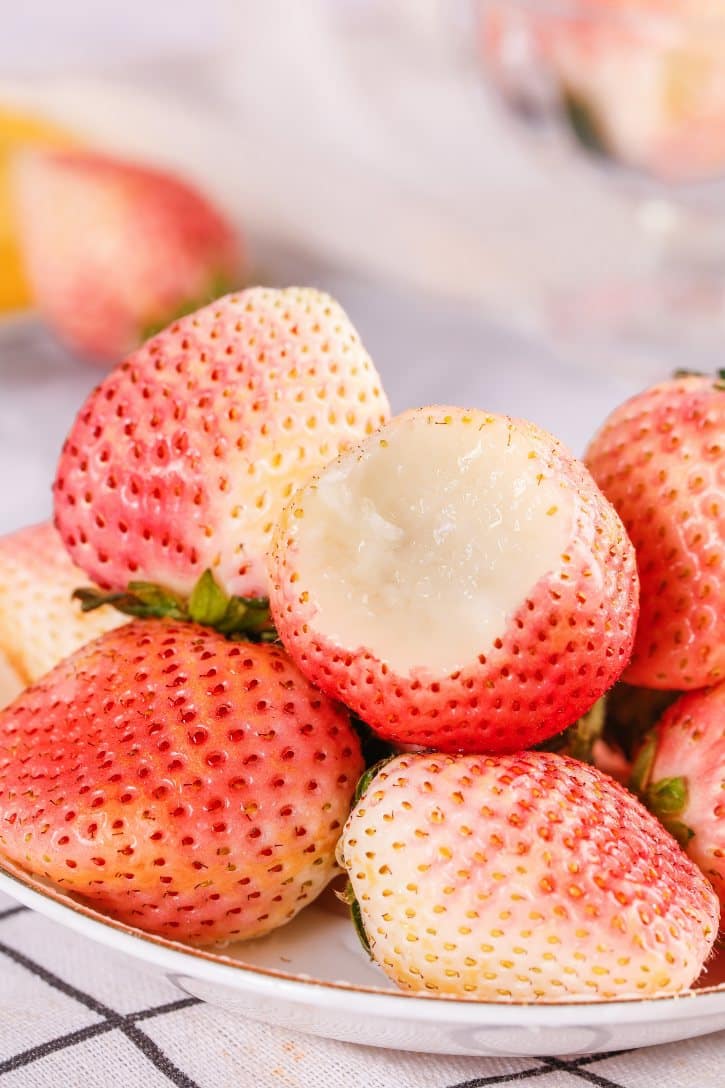
Here’s a surprise: some of the sweetest strawberry varieties are naturally lighter in color.
Color Is Bred, Not Earned
Strawberry breeders around the world face a choice: optimize for appearance or optimize for flavor.
Many commercial varieties are bred to look deep red and shiny because that’s what sells. But these same varieties often score lower on actual sweetness tests.
Meanwhile, some naturally lighter-colored varieties consistently deliver higher sugar levels and better aroma. They just don’t look as impressive in the package.
The lesson? A paler strawberry from a high-quality source may actually taste better than a picture-perfect red one bred for the supermarket shelf.
White and Pink Strawberries Are Real
You may have seen white or pale pink strawberries, especially from Japan or Korea. These aren’t unripe. They’re distinct varieties that lack the red pigment entirely.
What makes them interesting:
- They often contain high levels of sugar and flavor compounds
- They tend to be naturally low in acid
- Many people find them sweeter than traditional red strawberries, even when sugar levels are similar
White strawberries are more common in East Asia, but they’re becoming available in specialty stores worldwide.
5. Common Myths vs. Facts
Let’s clear up some common misconceptions.
Myth 1: “The reddest strawberries are always the sweetest”
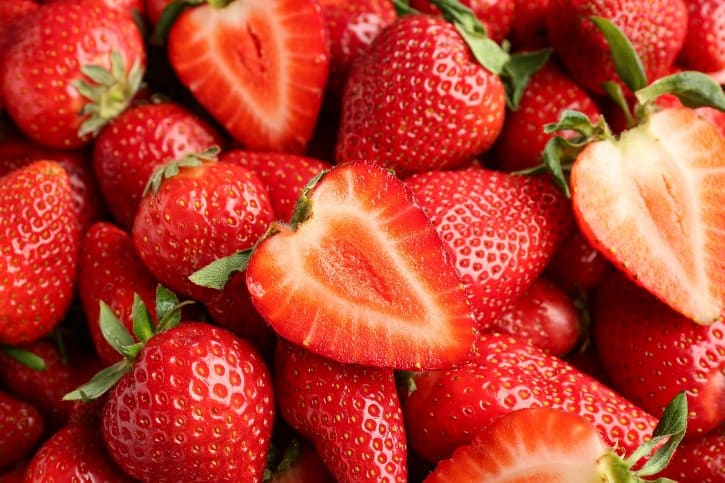
Fact: False.
Redness shows pigment accumulation, not sugar content. A strawberry can turn red after being picked, but it can only develop sugar while still attached to the plant.
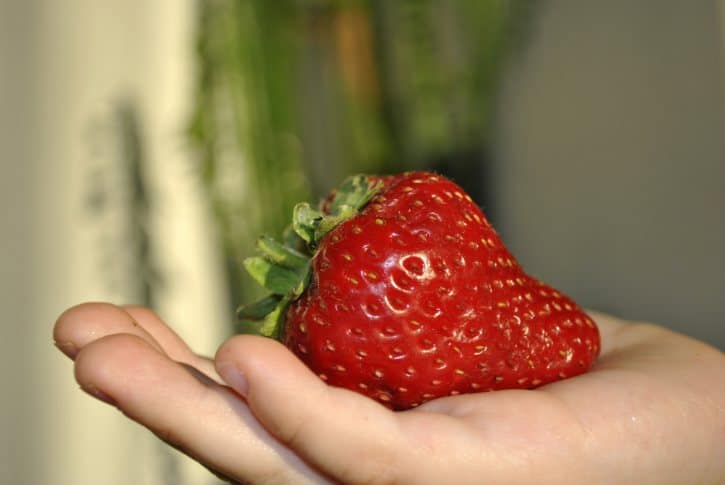
Myth 2: “Bigger strawberries taste better”
Fact: False.
Larger berries usually contain more water, which dilutes the sugars. Smaller to medium-sized berries from the same batch typically have more concentrated flavor.
Myth 3: “Shiny strawberries are the freshest”
Fact: Partially true.
Glossiness can indicate freshness. However, some varieties are bred to look exceptionally shiny regardless of their internal sweetness. Use shine as a secondary check after aroma and color evenness.
Myth 4: “Strawberries continue to ripen on the counter”
Fact: False.
Strawberries are non-climacteric. Once picked, they will soften and change color, but they will not gain any sugar. What you buy is what you get.
6. Why Supermarket Strawberries Often Taste Bland
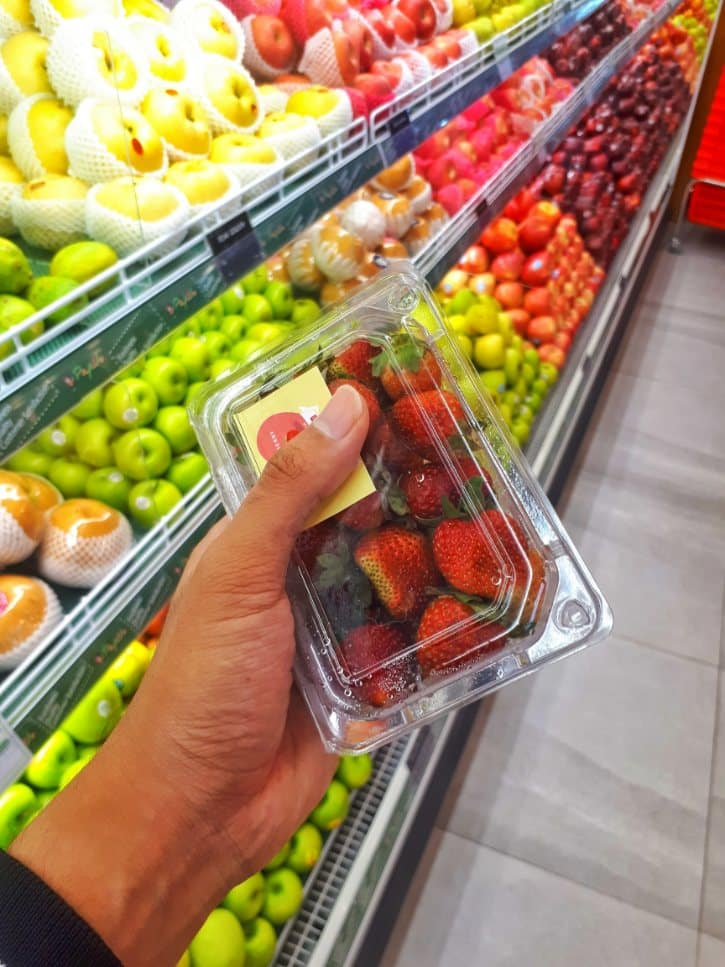
The blandness of store-bought strawberries isn’t accidental. It’s an economic trade-off.
Early Harvesting for Transport
Berries picked at the “pink stage” are firm enough to survive sorting, shipping, and handling.
If farmers waited for full ripeness, the shelf life would drop by nearly 50%. Consumers pay for this convenience with a loss of flavor.
Cold Storage Suppresses Flavor
Supermarket strawberries are stored at near-freezing temperatures to slow decay.
While necessary for safety, cold storage suppresses the aromatic compounds that make strawberries smell and taste sweet. Long refrigeration also causes moisture loss, making the fruit less juicy.
Shelf Life Over Flavor
The industry prioritizes three things: harvest timing, firmness, and cold-chain stability.
Flavor comes last.
7. Quick Checklist for Your Next Purchase
Use this simple guide at the store or market.
What to Look For
- Strong, sweet fragrance coming from the container
- Even red color all the way up to the green cap
- Fresh, bright green caps that look hydrated
- Medium-sized berries, which are less likely to be watery
- Seeds that appear slightly sunken into the flesh
What to Avoid
- No scent at all, which usually means high acid and low sugar
- White shoulders or green tips near the cap (sign of early harvest)
- Bruising or mushiness, which indicates poor handling or over-ripeness
- Dry, brown, or shriveled caps, meaning the fruit has been stored too long
- Giant berries, which often suffer from sugar dilution
The Bottom Line
Color is not your best friend when choosing strawberries. Sweetness depends on ripeness at harvest, sugar-to-acid balance, variety, and the development of aromatic compounds.
The next time you’re at the store or market, skip the “neon red” berries and let your nose lead the way.
Smell first, check the caps, and choose medium-sized berries with even color.
The sweetest strawberries aren’t always the ones that look like they belong in a magazine. They’re the ones that fill the air with their arrival.