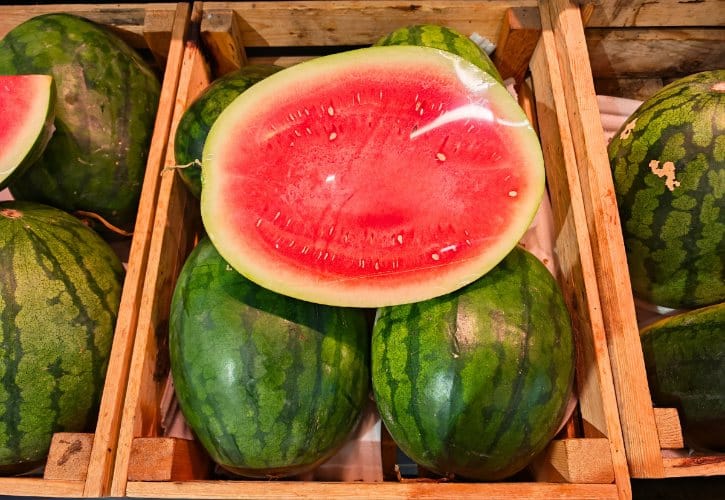
Most watermelons look almost identical sitting in the grocery bin. Yet one slice can be explosively sweet while the next tastes like watered-down nothing.
Here’s the thing: most people pick based on size or how green it looks. That’s a mistake.
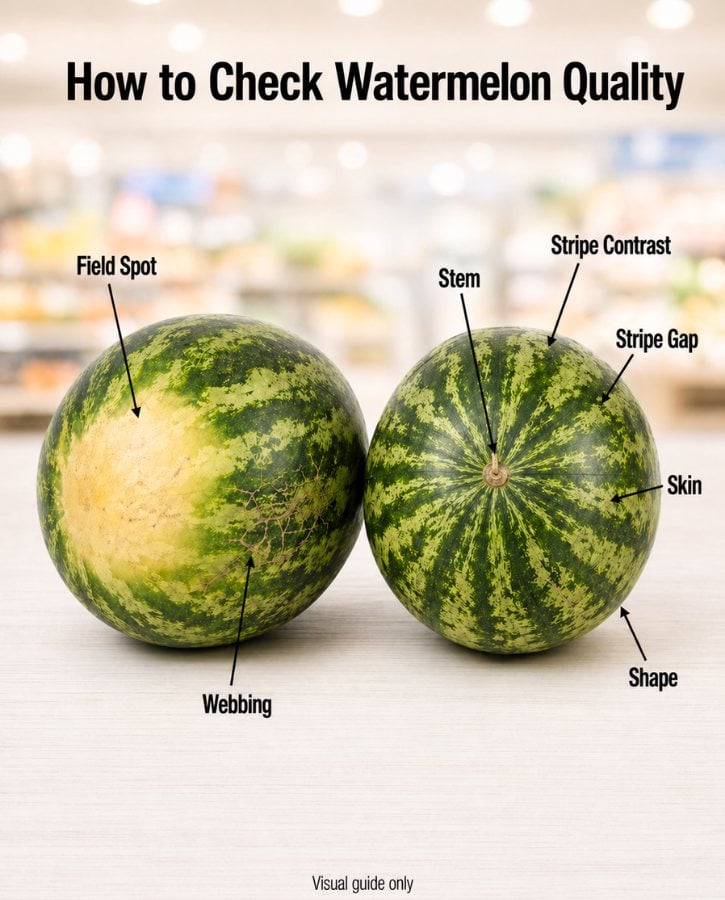
The sweetest watermelons carry specific signs that most shoppers walk right past. Once you know what to check, you’ll never gamble on a bland melon again. 😊
1. Yellow Field Spot
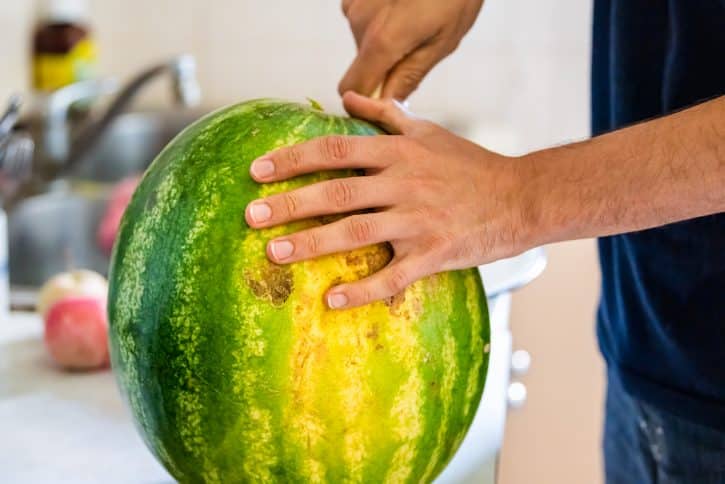
This is the single most reliable sign of a ripe watermelon. The field spot is where the melon rested on the ground while growing.
What to look for:
- A creamy yellow to deep golden patch on the bottom
- The best melons have spots that lean toward buttery gold or even orange-amber
- Ideally, the spot measures about 2 to 4 inches across
Avoid:
- White or pale green spots
- Very small spots (less than 2 inches)
Why it matters: Watermelons don’t ripen after they’re picked. A white spot means it was harvested too early, and the sugars never fully developed. That deep yellow color is proof the melon sat on the vine long enough to become sweet.
2. Button Size
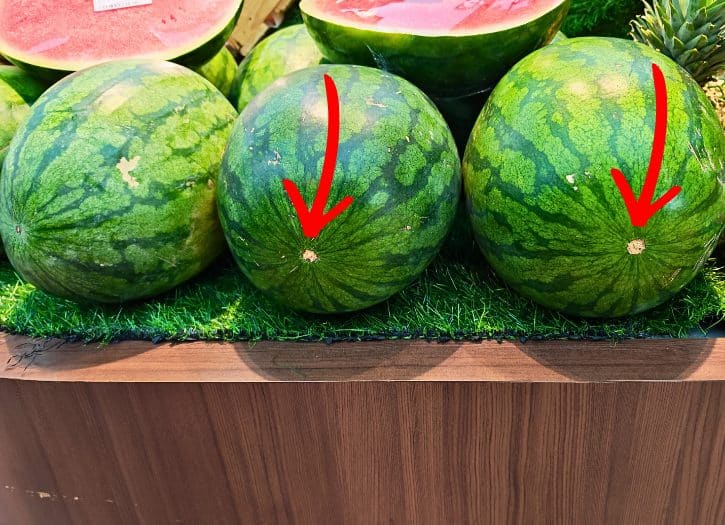
Most people overlook the bottom of the watermelon entirely. But the small scar where the flower once attached, called the “button”, tells you a lot.
What to look for:
- A small, tight, and dry button
- The scar should be flat or slightly indented, not bulging out
Avoid:
- Large, wide buttons
- Buttons that stick out like an “outie”
- Wet or soft-looking scars
Why it matters: A tight button signals that the melon developed its sugars evenly throughout. A large or protruding button often means inconsistent growth, which can lead to bland spots inside.
3. Webbing (Brown Rough Patches)
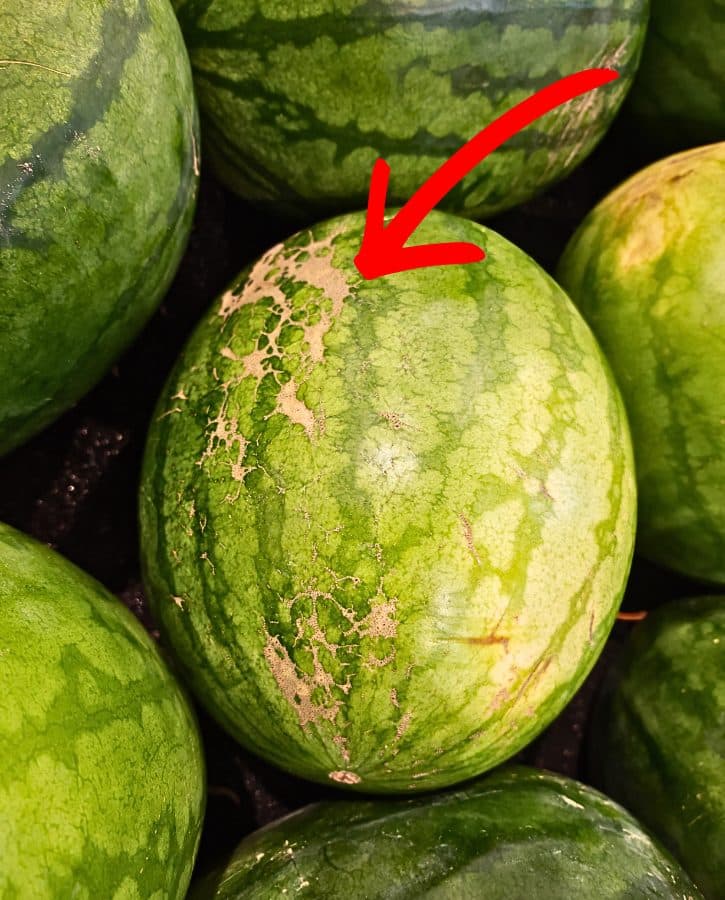
Here’s a trick most people get backwards. Those brown, rough, web-like marks on the rind? They’re actually a good sign.
What to look for:
- Extensive brown webbing across the surface
- Dark, rough patches that feel slightly raised
- The more webbing, the better
Avoid:
- Perfectly smooth, unblemished rinds
Why it matters: These marks form when sugar seeps through tiny cracks during growth. More webbing typically means the melon had excellent pollination and developed higher sugar levels. Smooth melons often taste bland by comparison.
4. Stripe Contrast
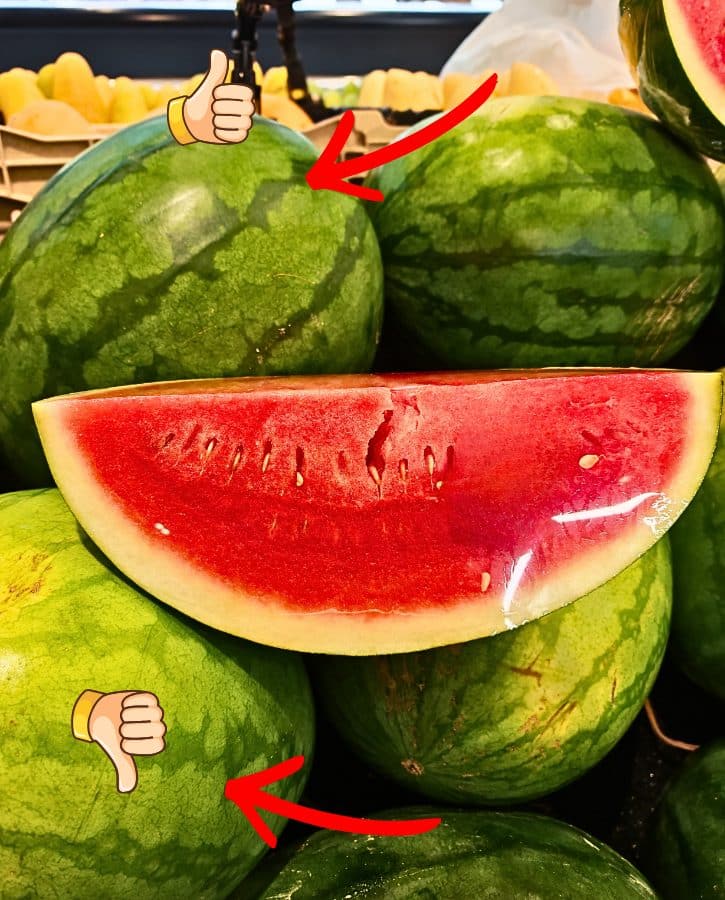
For striped varieties like Crimson Sweet or Jubilee, the pattern itself holds clues.
What to look for:
- High contrast between the dark and light stripes
- Dark stripes should look deep green and saturated
- Lighter stripes should appear muted, creamy, or slightly yellowish-green
Avoid:
- Stripes that blur together
- Low contrast where all the greens look similar
- Very bright, vivid light stripes
Why it matters: As watermelons ripen, the lighter stripes fade while the dark stripes stay bold. This high contrast shows the melon reached full maturity before harvest. Blurry, low-contrast stripes usually mean it was picked too soon.
5. Stripe Distance
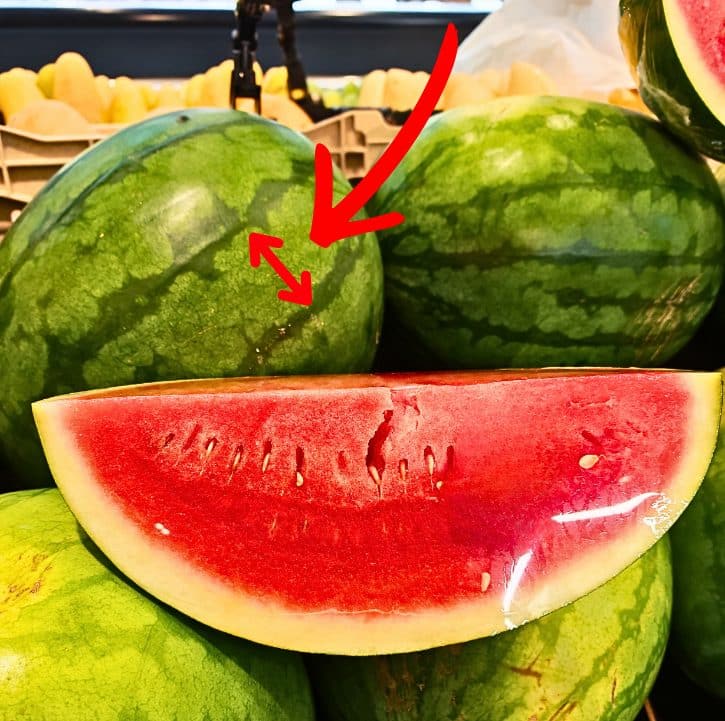
Here’s a simple visual trick that most people don’t notice. Check how far apart the stripes are.
What to look for:
- Wide spacing between stripes
- You should be able to fit two fingers comfortably in the light-colored gap
Avoid:
- Narrow, tightly packed stripes
- Stripes that seem cramped together
Why it matters: As the watermelon fills with juice and sugar, the internal pressure expands the fruit. This pushes the stripes farther apart. Tight stripes often mean the melon didn’t finish its final growth stage, where most of the sweetness develops.
6. Dull vs Shiny Skin
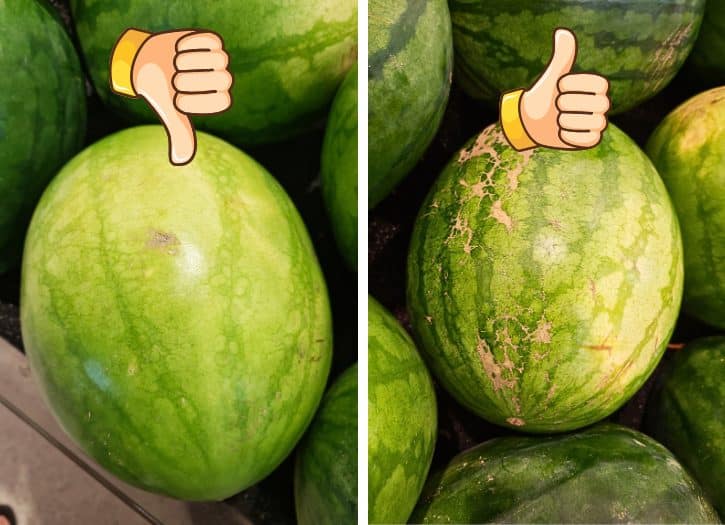
This one sounds backwards, but trust it. A dull rind beats a shiny one every time.
What to look for:
- A matte, slightly dusty appearance
- The surface should look dull, not reflective
Avoid:
- Bright, shiny, glossy rinds
- Melons that look “fresh” and vibrant green
Why it matters: Young watermelons have a waxy coating that reflects light. As they mature, this coating thickens and becomes matte. A shiny melon was almost certainly picked too early, and since watermelons don’t ripen off the vine, it will stay bland.
7. Weight Trick
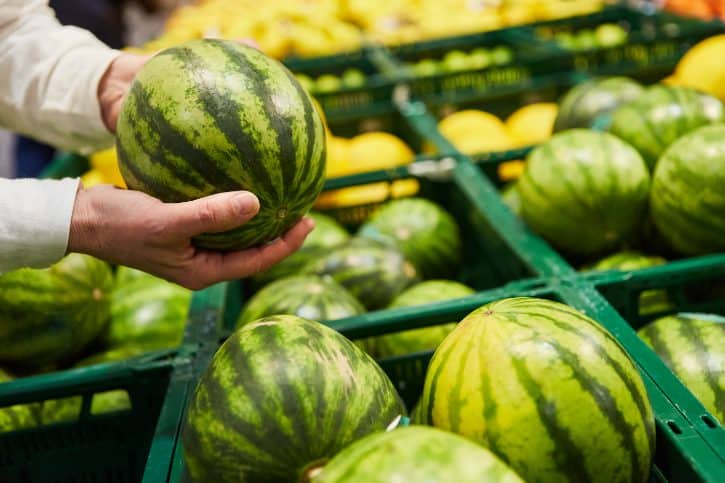
This one takes a bit of effort, but it’s worth it.
What to look for:
- A melon that feels heavy for its size
- Compare two melons of similar size and choose the heavier one
Avoid:
- Light, hollow-feeling melons
- Melons that feel “airy” when you lift them
Why it matters: Watermelons are about 92% water. A heavier melon means denser flesh packed with juice and sugar. Light melons are often dry, pithy, or have hollow spaces inside where the flesh pulled away from the center.
8. Hollow Sound Test
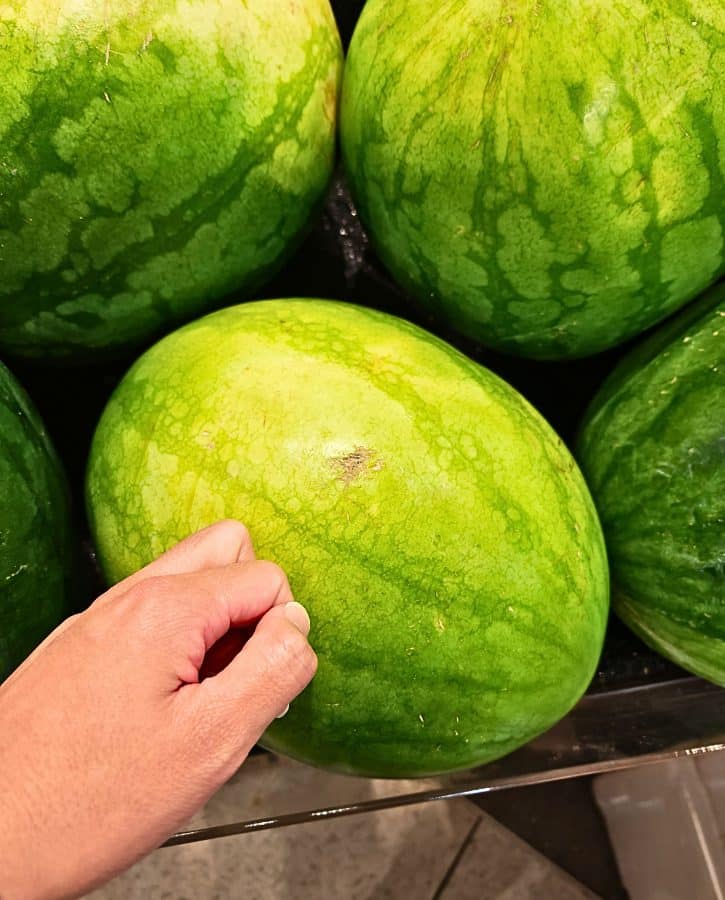
The classic thump test actually works, but only if you know what to listen for.
What to look for:
- A deep, hollow “thump” that resonates like a drum
- The sound should have a slight echo quality
Avoid:
- A high-pitched “ping” or metallic sound (underripe)
- A flat, dull “thud” with no resonance (overripe)
Why it matters: As watermelons ripen, the internal structure softens and produces a lower-pitched sound when tapped. A firm, unripe melon sounds tight and high. An overripe melon sounds dead and flat because the flesh has started breaking down.
9. Stem Check
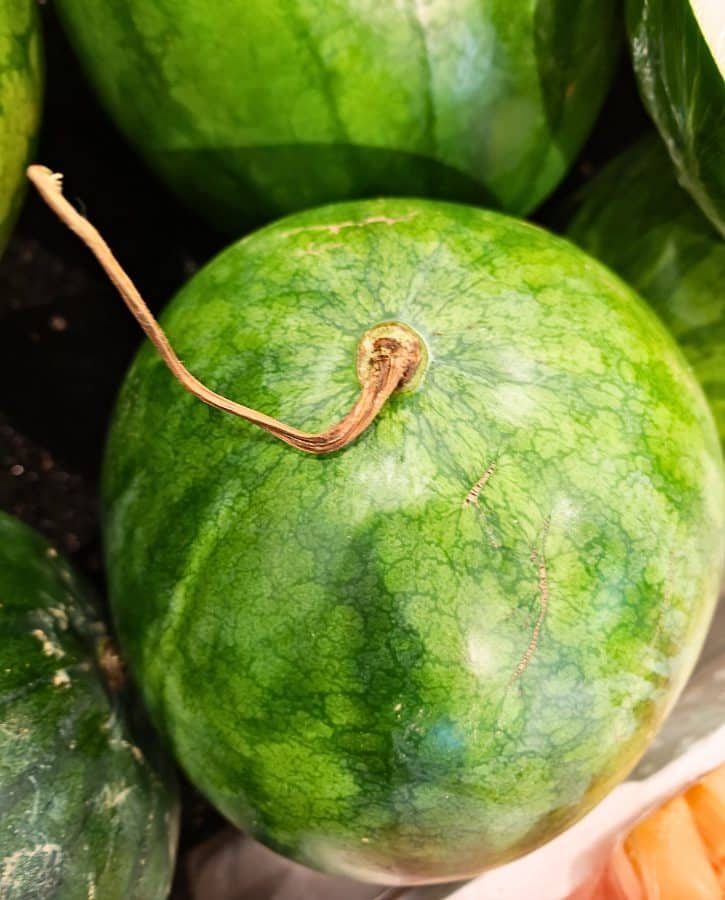
If the stem is still attached, it gives you a direct clue about harvest timing.
What to look for:
- A dry, brown, or shriveled stem
- Even better: a small indented crater where the stem naturally detached
Avoid:
- Green, fresh-looking stems
- Clean, flat cuts that look freshly sliced
Why it matters: When a watermelon fully matures, the vine naturally releases it. A green stem means it was cut early before the sugars peaked. A dried, brown stem shows the melon was ready to come off the vine on its own.
10. Uniform Shape
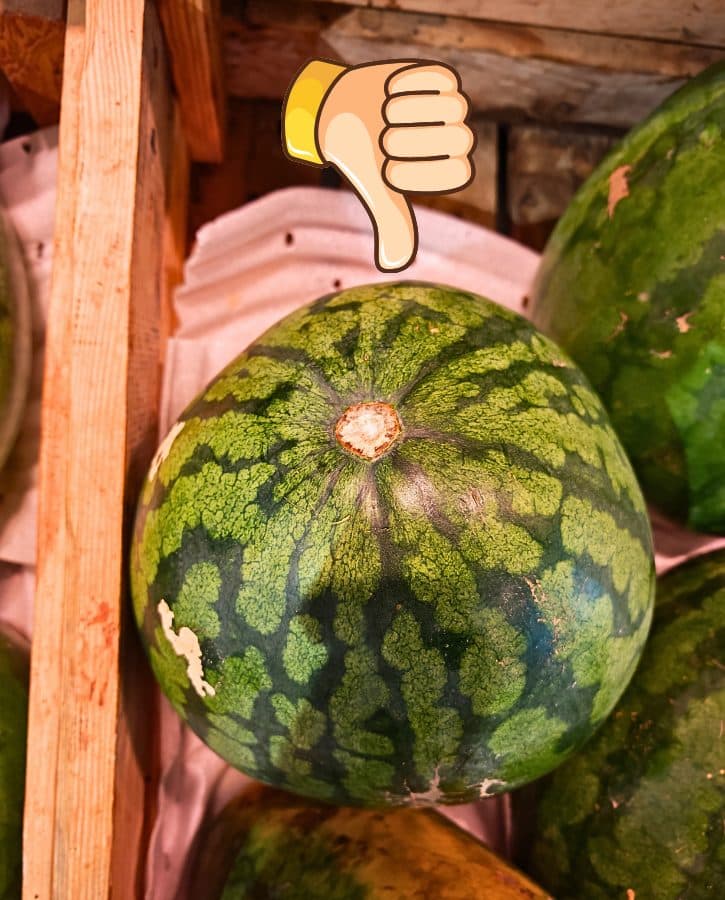
Finally, step back and look at the overall shape.
What to look for:
- A symmetrical shape, whether round or oval
- Consistent curves with no irregular bumps
Avoid:
- Pointy ends or “bottleneck” shapes
- Flat sides or uneven lumps
- One end noticeably narrower than the other
Why it matters: A symmetrical watermelon received even pollination and consistent watering. Irregular shapes often mean the sugar distribution is uneven, leaving you with sweet spots and bland spots in the same melon.
Read More: Round vs Long Watermelon – One Is Always Sweeter