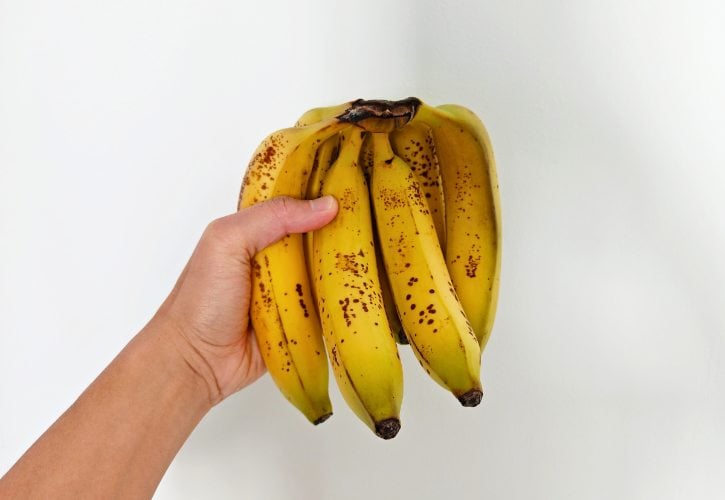
You grab a bunch of bananas and stop for a second. The skin is mostly yellow with brown spots all over, but the tips are still a little green. So is this banana sweet and ready, underripe, or going bad?
Most people judge too quickly by looking at just one sign. They see brown spots and think it is old. Or they notice green tips and assume it needs more time.
This article will show you how to read green tips, brown spots, texture, smell, stem, peel, and timing together so you always know what you are working with. 😊
1. What Green-Tipped, Brown-Spotted Bananas Usually Show at First Glance
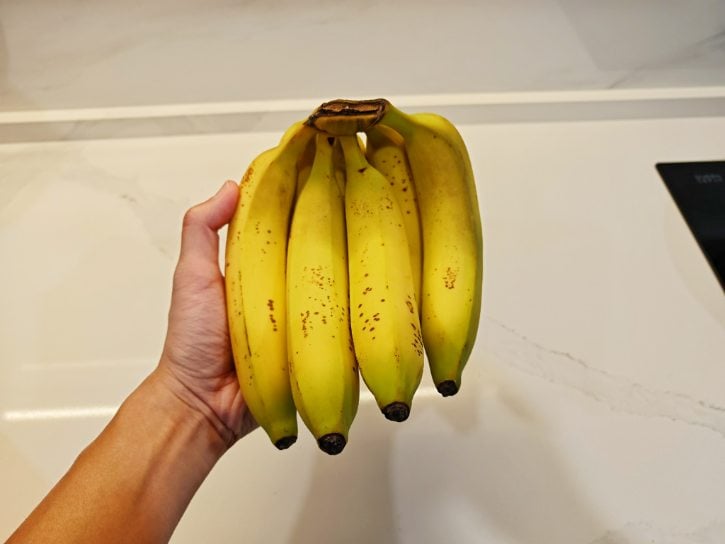
At this stage, the banana looks like it is caught between two worlds. Here is what you will usually see:
- The main body of the banana is a medium yellow.
- Small brown spots, sometimes called “sugar spots”, are scattered across the peel.
- The tips and lower ends still have a slight greenish tint.
- The stem or crown area may look dark brown or nearly black and dried out.
- The banana still holds its shape and does not feel like it is falling apart.
This is not automatically a bad banana. It is a banana at a mixed ripeness stage, where different parts are developing at slightly different speeds.
2. Why Bananas Can Have Brown Spots Before the Tips Fully Turn Yellow
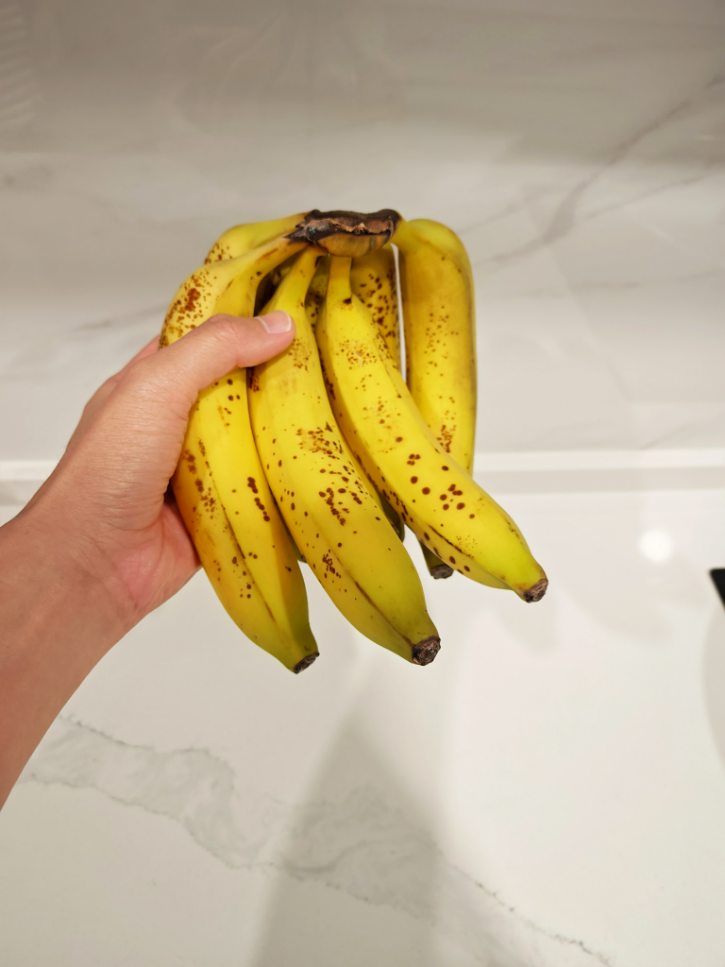
Here is where most of the confusion starts. Bananas do not ripen perfectly evenly from top to bottom.
The middle section of the banana, which has the most fruit inside, tends to ripen faster. It turns yellow and develops brown spots before the ends do. The tips can stay green even while the center is already well into the ripening process.
This is especially common when bananas ripen as a bunch. Parts of the fruit that get more warmth, pressure, or ethylene gas (the natural ripening gas bananas release) will change faster. The tips, which are more exposed to open air, often lag behind.
Sometimes, warmer temperatures speed up the sugar development inside, but the peel’s green color fades more slowly. So you can end up with a banana that looks partly green on the outside but is actually soft and sweet on the inside.
In simple terms:
- The brown spots mean the peel is ripening and the banana is getting sweeter.
- The green tips mean some parts, especially the ends, have not caught up yet.
3. What Brown Spots on These Bananas Likely Mean
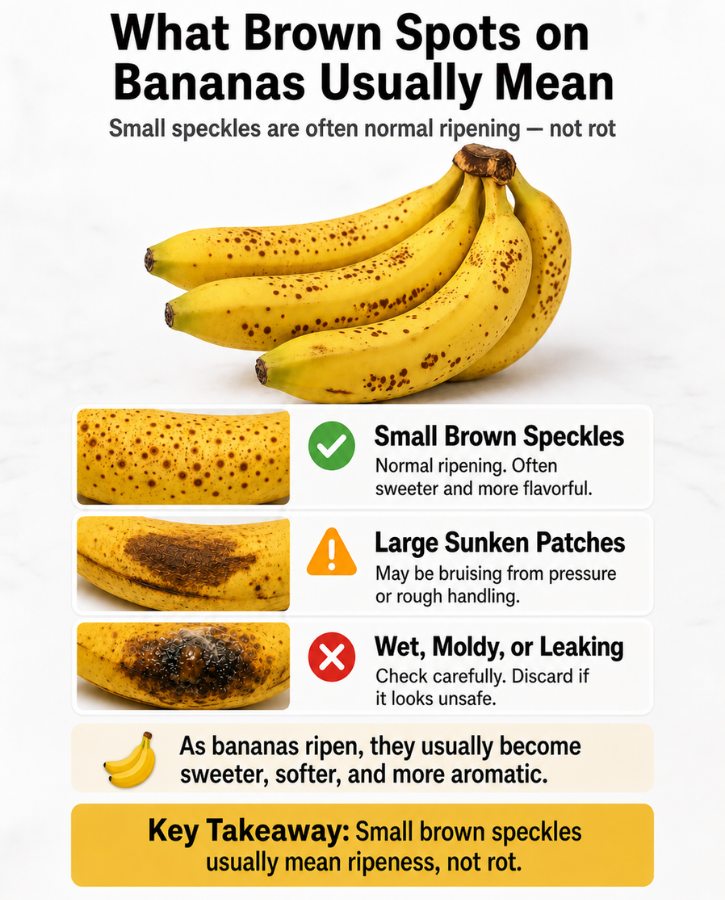
Those small brown speckles you see across the peel are a normal part of ripening. They show up as the banana shifts from starchy to sweet, and they are not a sign of rot.
Here is what to keep in mind:
- Small brown speckles = Normal ripening. This often means the banana has reached its sweetest stage.
- Large, sunken brown patches = These are usually from rough handling or being dropped. The inside may be bruised.
- Wet, moldy, or leaking areas = Warning signs. These bananas should be checked carefully or discarded.
As brown spots appear, the banana usually becomes sweeter, more aromatic, and softer in texture. More spots generally mean a stronger banana flavor.
Most people don’t realize this, but a banana with brown spots is often at its peak for eating fresh. It is not “going bad”. It is becoming its most flavorful.
4. What the Green Tips Likely Mean
The green tips do not mean the whole banana is unripe. They simply mean the ends are still a step behind the middle.
Here is what to expect:
- The center of the banana may already be sweet, creamy, and ready to enjoy.
- The ends may be slightly firmer, a little less sweet, or faintly starchy.
- This is why some people bite into this kind of banana and feel confused. Part of it tastes perfectly ripe while the other end tastes a bit bland.
The key point: Green tips are a clue about uneven ripening. They are not a reason to toss the banana.
5. What the Inside Is Probably Like
Before you peel, here is what you can expect from a green-tipped, brown-spotted banana:
- The middle section is probably soft, creamy, and pale cream in color.
- The ends may feel firmer and look a bit more opaque.
- The banana may not be perfectly uniform from end to end, but that is normal at this stage.
Here’s a simple trick: Use your senses before peeling.
- If the banana smells sweet, the sugars inside are well developed.
- If the peel comes off easily, the fruit has softened enough.
- If it feels very hard all over, it may still need time.
- If it feels mushy or smells sour, it has gone past its best point.
This kind of banana usually falls in the “ready to eat soon” category rather than the “too unripe” category. But the final answer always depends on how it feels and smells.
6. The Most Important Test: Don’t Judge by Color Alone
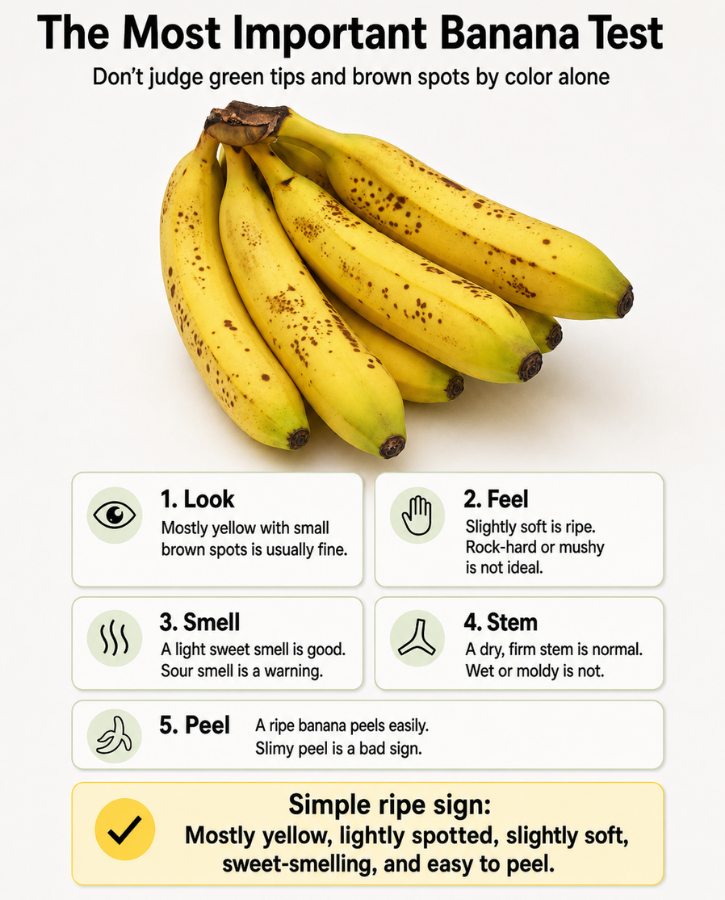
Color is only part of the story. To know whether a green-tipped, brown-spotted banana is actually ripe, use these five checks together.
a. Look
- A ripe banana is mostly yellow.
- Small brown spots usually mean it is getting sweeter.
- Slight green at the tips can still be fine if the rest of the banana is yellow.
- Avoid bananas with mold, wet cracks, or large sunken black patches.
b. Feel
- A ripe banana should feel slightly soft when you gently press it.
- It should not feel rock-hard.
- It should not collapse, leak, or feel extremely mushy.
- If the middle feels soft but the ends are firmer, it is likely ripe in the center but still catching up near the tips.
c. Smell
- A ripe banana has a light, sweet banana smell.
- If there is no smell at all, it may need more time.
- If it smells sour, fermented, or unpleasant, skip it.
d. Stem
- A ripe banana often has a dry, firm stem.
- A slightly green stem can mean it is still finishing the ripening process.
- A very dark, wet, moldy, or leaking stem is a warning sign.
- Do not judge the stem alone. The stem can darken before the inside goes bad.
e. Peel
- A ripe banana should peel easily.
- If the peel is tight and hard to remove, it may still be underripe.
- If the peel is wet, sticky, or slimy, check carefully or avoid it.
Simple ripe sign: A green-tipped, brown-spotted banana is usually ripe when it is mostly yellow, lightly spotted, slightly soft, mildly sweet-smelling, and easy to peel.
7. Is This Banana Ready to Eat Today?
In most cases, yes. A banana at this stage is likely ready to eat if:
- It feels slightly soft when gently pressed.
- It smells mildly sweet.
- The peel comes off easily.
- The inside is pale cream, not brown and mushy.
- The spots on the peel are dry, not wet or moldy.
With this level of spotting, many bananas are already sweet enough to enjoy fresh, even if the tips still look a bit green. The middle will usually be the sweetest part.
Remember: The final answer always comes down to feel, smell, peel, and inside texture, not color alone.
8. When You Should Wait Another Day
Sometimes the green tips are a sign that the banana needs a bit more time. Wait another day if:
- The banana still feels hard when you press it.
- The green at the tips is a dark, vibrant green, not a fading light green.
- It has little or no banana smell.
- It tastes chalky or bland when eaten.
- The peel feels tight and difficult to remove.
Practical advice:
- Leave it at room temperature.
- Keep it out of direct sunlight.
- Do not refrigerate it while the ends are still very green. Cold temperatures can stop the ripening process and leave the banana permanently bland.
- Check again the next day.
9. When This Banana Is Better for Smoothies, Pancakes, or Banana Bread
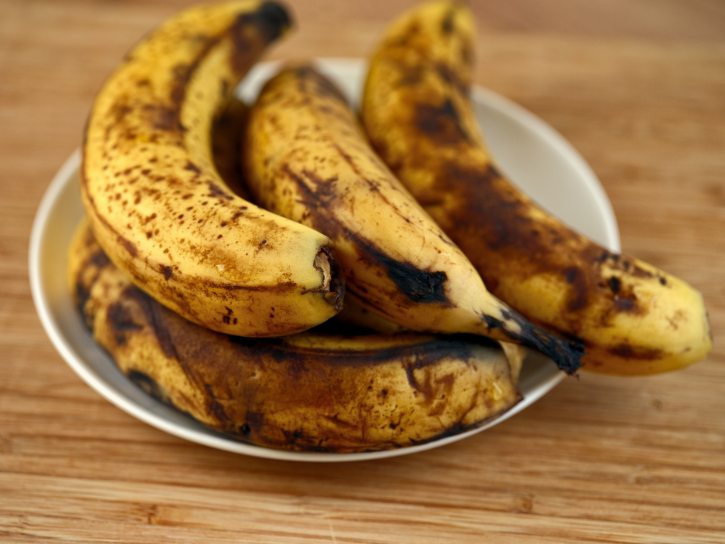
As the spots get heavier and the banana gets even softer, it moves into the best stage for cooking and blending.
A very soft banana might not be your favorite to eat fresh, but it is perfect for recipes.
Use for smoothies or baking if:
- The spots have become heavier and started merging together.
- The banana feels soft all over.
- The aroma is intensely sweet, almost honey-like.
- The flesh mashes easily with a fork.
- You do not enjoy very soft bananas eaten fresh.
Best uses at this stage:
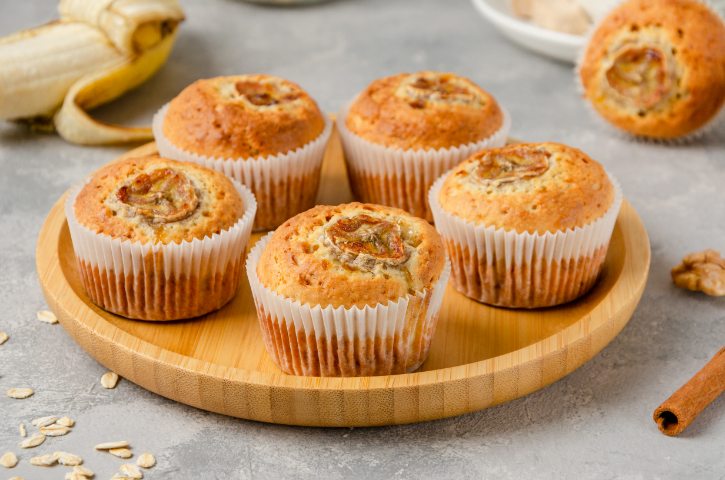
- Muffins
- Banana bread
- Pancakes
- Smoothies
- Oatmeal
- Freezing for later use
A spotted banana brings more natural sweetness and stronger banana flavor to recipes. It also blends more smoothly without leaving lumps. If you cannot finish your bananas in time, peel and freeze them at this stage to preserve the sweetness.
10. Why This Happens More Often at Home
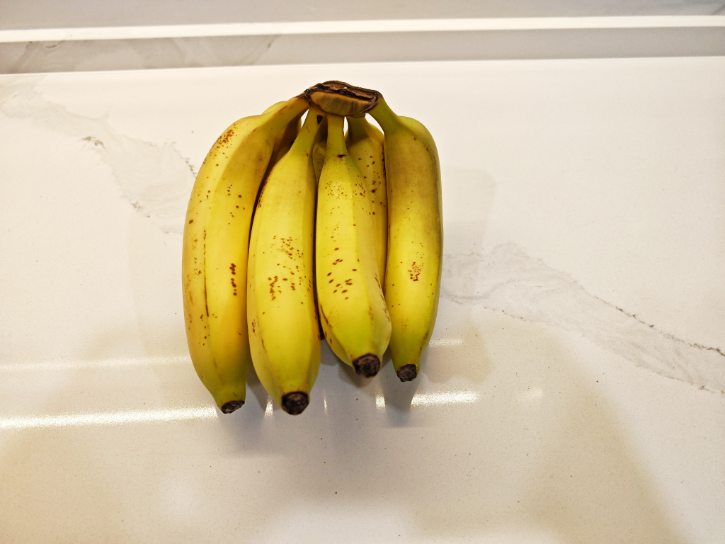
If you have noticed this kind of uneven ripening at home, you are not doing anything wrong. It is a normal part of how bananas behave outside of commercial ripening facilities.
Here is why it happens:
- Bananas keep ripening after you bring them home.
- Warm rooms speed up spotting on the peel.
- Poor airflow around the bunch can make some parts ripen faster.
- Bananas stored in a tight bunch ripen unevenly because the parts pressed together trap more ethylene gas.
- The tips, which get more airflow, may stay green while the middle yellows and spots.
This can happen even when you store your bananas properly. It is just how bananas work at home.
11. How to Store This Kind of Banana Now
Once your bananas reach this green-tipped, spotted stage, here is what to do.
If you want to eat them fresh:
- Eat the softest and most spotted ones first.
- Leave the firmer, green-tipped ones for later.
- Keep them at room temperature if they still need to ripen.
- Separate the bananas from the bunch to slow down ripening slightly.
If they are already ripe enough:
- Put ripe bananas in the fridge to slow further ripening. The peel may darken in the cold, but the inside will stay firm and sweet for a few more days.
- Peel and freeze ripe bananas if you cannot eat them soon. Frozen bananas are great for smoothies, banana bread, and homemade banana ice cream.