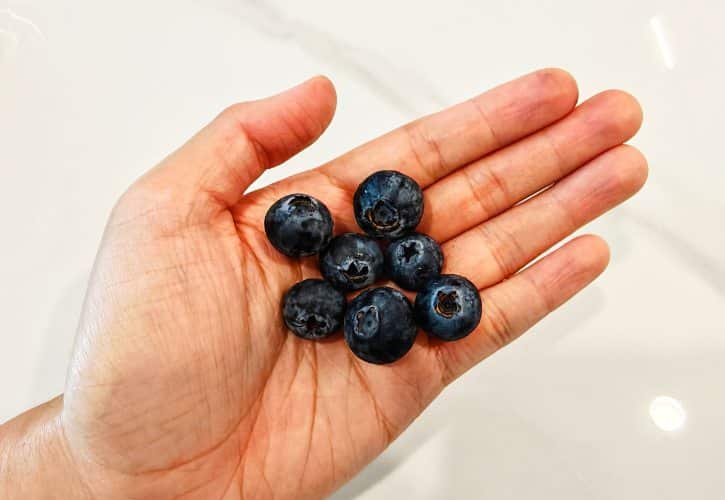
Most people grab a handful of blueberries, run them under the tap for a few seconds, and call it done. It feels like enough, but it often isn’t.
Blueberries are small and delicate. By the time they reach your kitchen, they can carry dust, tiny debris, handling residue, and surface particles from harvesting, packing, transport, and store shelves.
A quick rinse removes some of that, but not all of it. There’s a simple kitchen method that gives your berries a much more thorough clean, and it only takes a few extra minutes.
Below, you’ll find the full step-by-step process, the right ratio to use, and the common mistakes that can actually make things worse.
1. Why Running Water Alone May Not Be the Best Method
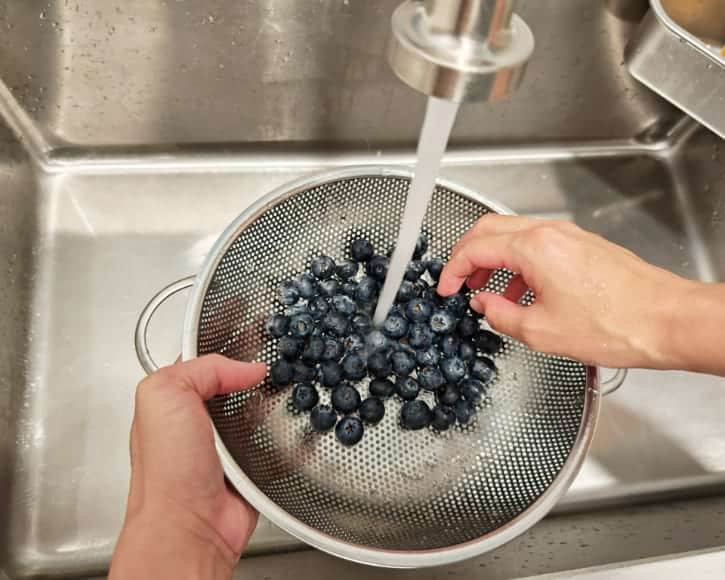
Running water is better than not washing at all, but if you want a deeper clean, blueberries need more than a quick splash under the tap.
Here’s why a fast rinse has limits:
- A quick rinse often washes only the top layer of berries well
- Blueberries roll around in a colander, so some may barely touch the water
- Surface residue can cling more strongly than loose dust
- People often rinse too quickly because blueberries look clean
- Strong water pressure can damage soft berries
- If berries are crowded in a colander, water may not reach them evenly
- Running water doesn’t give the same soaking contact as a short baking soda wash
This doesn’t mean running water is useless. It’s the basic method, but not always the most thorough one.
2. Why Baking Soda Can Help Clean Blueberries More Thoroughly
Baking soda is a mild, common kitchen ingredient that can help loosen some surface dirt and residue when mixed properly with water. Here’s why it’s worth the extra step.
a. What Makes Baking Soda Useful
- It gives the blueberries more contact time than a quick rinse
- It can help loosen surface particles before the final rinse
- It’s inexpensive and easy to find
- It’s gentle when diluted correctly
- It’s especially helpful when blueberries look dusty or when you want extra peace of mind before eating them raw
Baking soda should always be mixed with water first and always rinsed off afterward.
b. What Baking Soda Cannot Do
Baking soda is a cleaning helper, not a magic solution. It’s important to be realistic about what it can and cannot do.
Baking soda cannot:
- Remove every pesticide residue
- Kill all germs
- Fix spoiled berries
- Make moldy berries safe
- Replace proper rinsing and drying
- Make old, mushy blueberries fresh again
It helps make the washing process more thorough, but the berries still need to be rinsed and dried properly after soaking.
3. What You Need Before Washing Blueberries with Baking Soda
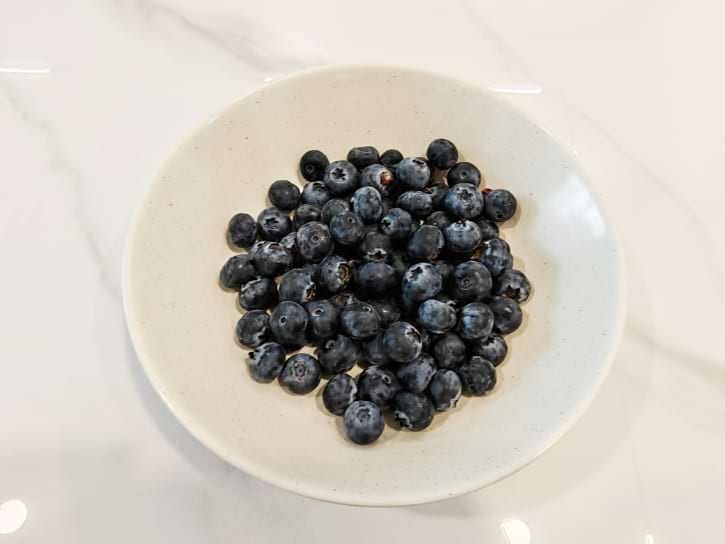
Before you start, make sure everything is ready. The method is simple, but having the right setup makes it easier and more effective.
a. Tools and Ingredients
- Fresh blueberries
- A clean bowl
- Water
- Baking soda
- A clean colander or fine-mesh strainer
- Clean paper towels or a clean kitchen towel
- A clean plate or tray for sorting
b. The Right Baking Soda Ratio
Getting the ratio right matters. Too little won’t do much. Too much can leave a taste and become harder to rinse away.
- 1 teaspoon baking soda + 2 cups water
For larger amounts:
- 2 teaspoons baking soda + 4 cups water
- 3 teaspoons (1 tablespoon) baking soda + 6 cups water
A mild solution is all you need for delicate blueberries.
c. Important Things to Avoid
- Do not use hot water. It can damage the texture of the berries.
- Do not overcrowd the bowl. Use enough water so the berries can move gently.
- Do not wash berries in a dirty sink. Always use a clean bowl.
- Do not mix baking soda with vinegar in the same wash.
4. The Correct Baking Soda Method for Washing Blueberries
This is the full step-by-step process. Follow it from start to finish for the best results.
Step 1: Sort the Blueberries First
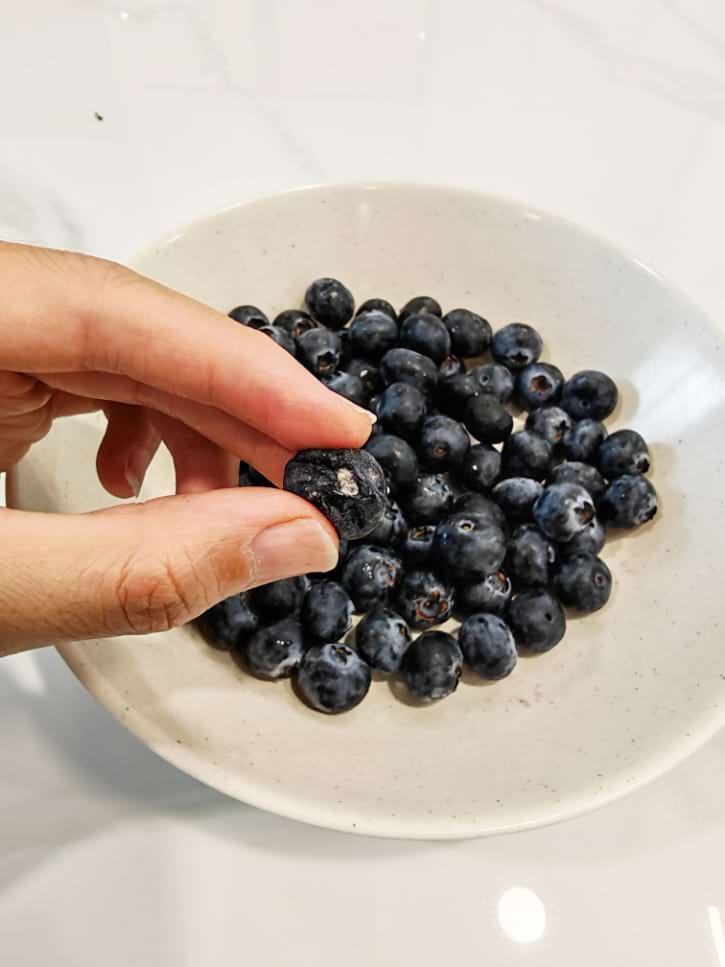
This is the step many people skip, but proper cleaning starts before the soak.
Pour the berries onto a clean plate, tray, or into a clean bowl. Check them carefully and remove:
- Moldy blueberries (any white, gray, or green fuzz)
- Mushy or shriveled berries
- Leaking or broken berries
- Stems, leaves, and any visible debris
Here’s a simple trick: always check the bottom of the container. Damaged berries often hide there, crushed under the weight of the others.
If you spot one moldy berry, check the berries around it carefully. Mold can spread quickly.
Do not wash moldy berries and eat them. Bad berries can break apart during soaking, making the water dirtier and spreading contamination to the good berries.
Baking soda can help clean good berries, but it cannot rescue berries that are already spoiled.
Step 2: Make the Baking Soda Wash
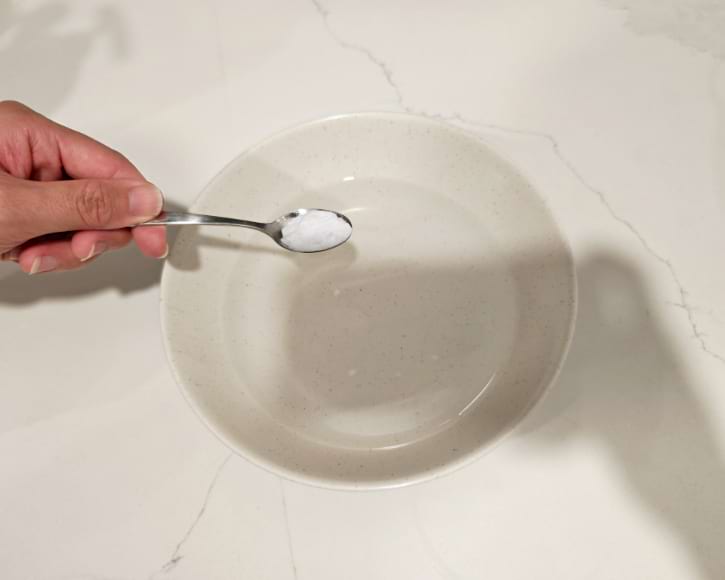
In a clean bowl, mix:
- 2 cups water + 1 teaspoon baking soda
Stir until the baking soda mostly dissolves. Make sure the baking soda is mixed into the water before adding the berries. This prevents concentrated powder from sitting directly on the delicate berry skins.
For a bigger batch:
- 4 cups water + 2 teaspoons baking soda
- 6 cups water + 3 teaspoons baking soda
A few reminders:
- Use water to protect the texture of the berries
- Use enough solution to cover the blueberries
- Do not make the mixture too strong. More baking soda does not mean cleaner berries.
- Do not use hot water
- Do not add vinegar to the baking soda solution
A mild solution is better for delicate blueberries.
Step 3: Soak the Blueberries Briefly
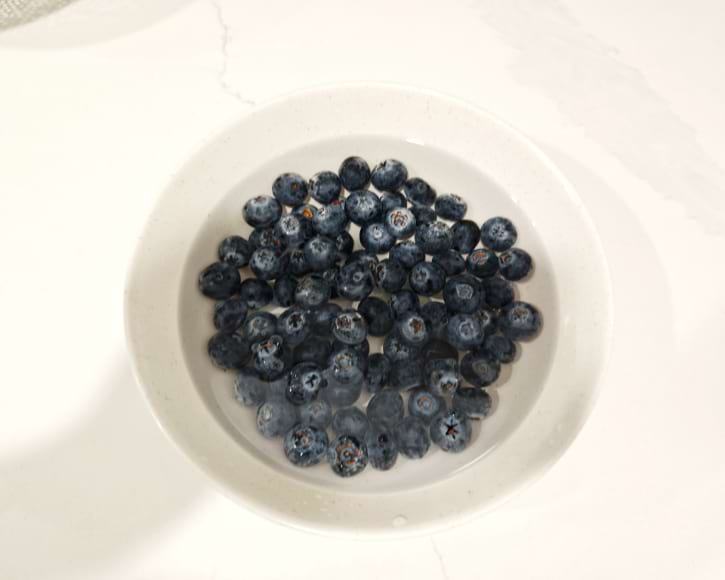
Add the sorted blueberries into the baking soda water.
Recommended soaking time:
- 5 minutes for a standard wash
- Up to 10 minutes for very dusty berries
- Do not soak longer than 15 minutes. Blueberries are porous and can start absorbing water, which makes them taste watery and feel mushy.
During the soak:
- Gently swirl the berries once or twice with a clean hand
- Let the berries float and move naturally in the water
- Do not squeeze, scrub, or press them down
- Do not use a spoon roughly
- Do not leave them sitting in water longer than needed
You’re not trying to scrub the blueberries clean. You’re giving the baking soda water enough time to loosen what a fast rinse may miss.
Step 4: Rinse Thoroughly Under Running Water
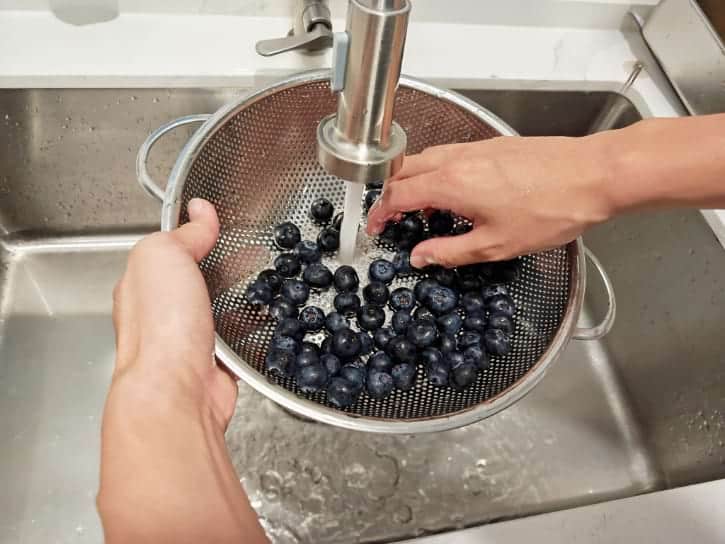
Most people don’t realize this, but the baking soda soak is not the final step. The final clean water rinse is what removes everything loosened during soaking.
After soaking, pour the blueberries into a clean colander or fine-mesh strainer.
Then rinse under running water:
- Use gentle water pressure
- Move the berries lightly with clean fingers
- Make sure all berries are rinsed, not just the top layer
- Rinse until there is no slippery or powdery feeling
- Do not use hot water
- Do not blast them with strong water pressure
- Do not skip this step
The final rinse removes loosened dirt, surface residue, and leftover baking soda. A properly rinsed blueberry should feel firm and clean, with no film on the surface.
Step 5: Dry the Blueberries Very Well
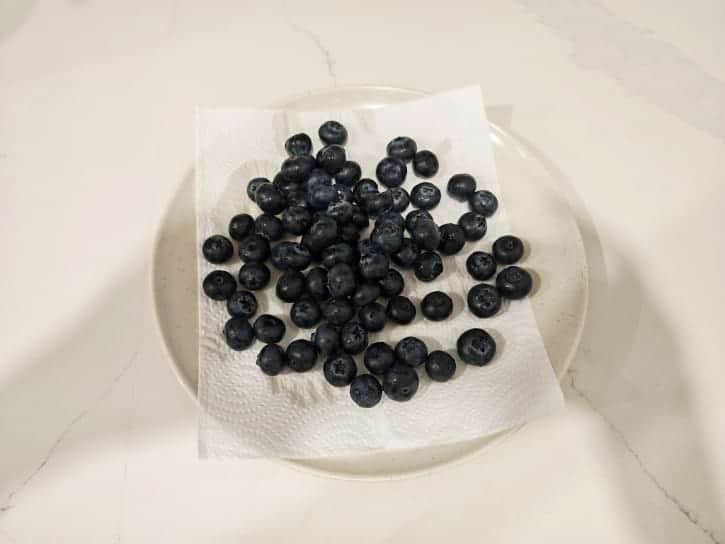
This is the step that makes the biggest difference, and it’s the one most people skip entirely.
After rinsing, let the berries drain in the colander for a minute. Then dry them carefully.
Best drying method:
- Spread the blueberries in a single layer on a clean towel or paper towel
- Gently pat them dry
- Roll them very lightly if needed
- Let them air-dry for a few minutes before eating or storing
What to avoid:
- Do not crush or rub them roughly
- Do not leave them sitting wet in a bowl
- Do not put wet blueberries back into the original container
- Do not store them while water is still clinging to the skin
Why drying matters:
- Wet blueberries spoil faster
- Moisture encourages mold growth
- Wet berries can taste watery
- Wet berries can make yogurt, cereal, pancakes, and muffins soggy
- Dry berries freeze better and clump less
- Drying helps protect texture after washing
Drying is not optional if you want the blueberries to stay fresh and taste their best.
Step 6: Eat Right Away or Store Carefully
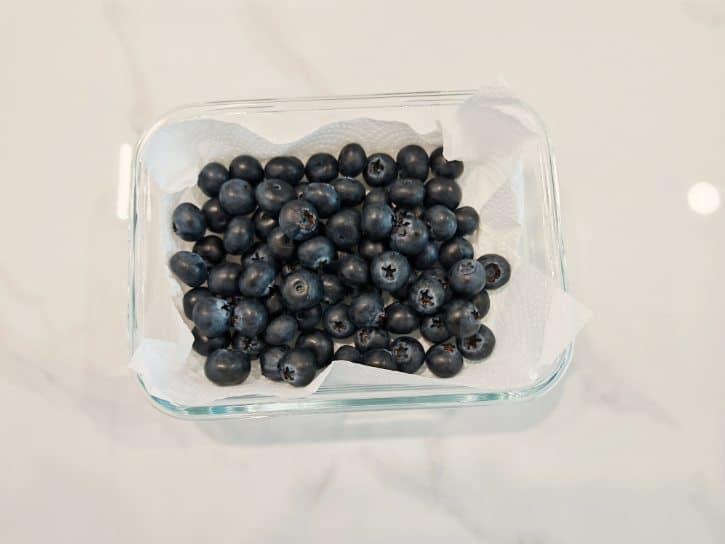
The best option is to eat your blueberries soon after washing.
If eating right away:
- Serve after rinsing and drying
- Add to yogurt, cereal, fruit salad, smoothies, pancakes, or lunchboxes
- Avoid leaving washed berries at room temperature for too long
If storing after washing:
- Make sure the berries are completely dry
- Place them in a clean container
- Line the container with a paper towel to absorb any extra moisture
- Keep the lid slightly loose if possible to allow airflow
- Store in the refrigerator
- Eat them sooner than you would unwashed berries
- Check daily and remove any soft or moldy berries
Washed blueberries usually don’t keep as long as unwashed blueberries unless they are dried very carefully.
If you wash blueberries ahead of time, drying becomes the most important step. Moisture left behind can make them spoil faster.
5. Baking Soda vs. Vinegar: Which Is Better for Blueberries?
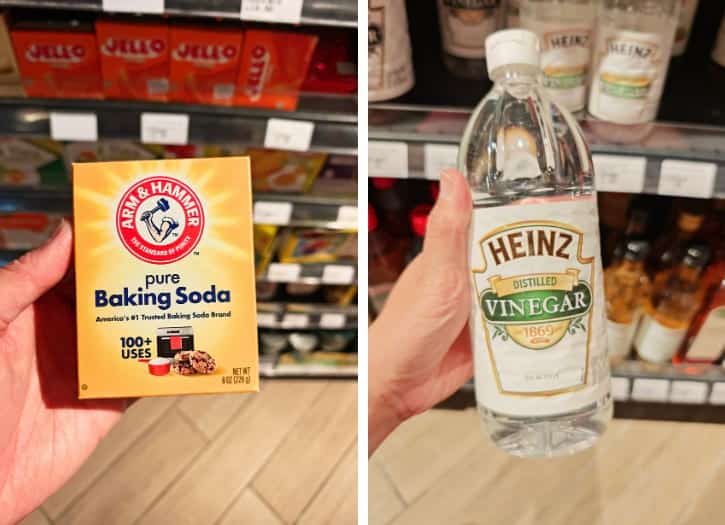
Both baking soda and vinegar are common produce-washing methods, but they work differently. Here’s how they compare.
a. Baking Soda
Best for:
- A deeper surface clean before eating
- Loosening some dirt and residue
- Giving berries more contact time than a quick rinse
- A simple cleaning method for raw blueberries
Important notes:
- It should be diluted properly
- It should not be used too strongly
- It must be rinsed off well
b. Vinegar
Best for:
- People who want to reduce mold risk during storage
- Washing berries ahead of time
- Helping manage freshness when used properly
Important notes:
- It can leave a smell or taste if not rinsed well
- It also needs a final rinse
- It also requires thorough drying
- It is not necessary for every wash
- It should not be mixed with baking soda in the same bowl
For this method, baking soda is used for a deeper clean before eating. Vinegar is more often used when people are trying to help berries last longer in storage.
6. Why You Should Not Mix Baking Soda with Vinegar to Wash Blueberries
Some people think combining baking soda and vinegar in one bowl will create a stronger cleaning solution because the mixture bubbles and fizzes. It looks powerful, but it’s actually not helpful.
a. Why the Fizzing Doesn’t Mean Cleaner Berries
- Baking soda is alkaline
- Vinegar is acidic
- When mixed together, they react with each other
- The fizzing is mostly carbon dioxide gas being released
- After the reaction settles, the mixture becomes much less useful as a cleaning solution
The bubbles may look impressive, but they don’t mean the blueberries are getting cleaner. The baking soda and vinegar are mostly canceling each other out instead of making a stronger wash.
b. What to Do Instead
- Use baking soda water if your goal is a deeper surface clean
- Use vinegar water if your goal is freshness or mold control
- Do not combine both in one bowl
- Always rinse well with running water afterward
- Always dry blueberries thoroughly
c. A Safety Reminder
Never mix vinegar with soap, detergent, or household cleaners for washing food.
Baking soda and vinegar are both popular produce-washing methods, but they work best when used separately. For a better blueberry wash, use a diluted baking soda soak, rinse well, and dry completely.