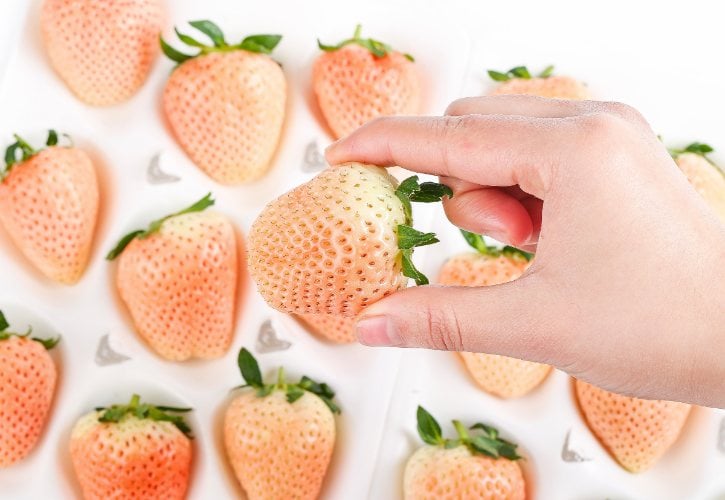
White strawberries are no longer a mystery. You have probably seen them at the grocery store, spotted them online, or heard someone mention them.
But knowing they exist and knowing how to pick, check, and eat them are two different things.
White strawberries play by different rules than the red ones you are used to.
Their color does not tell you the same story. Their taste is not what you might expect. And their ripeness, price, and shelf life all work a little differently.
Before you eat one, it helps to understand what makes them unique and what to look for so you get the best experience.
1. What White Strawberries Actually Are
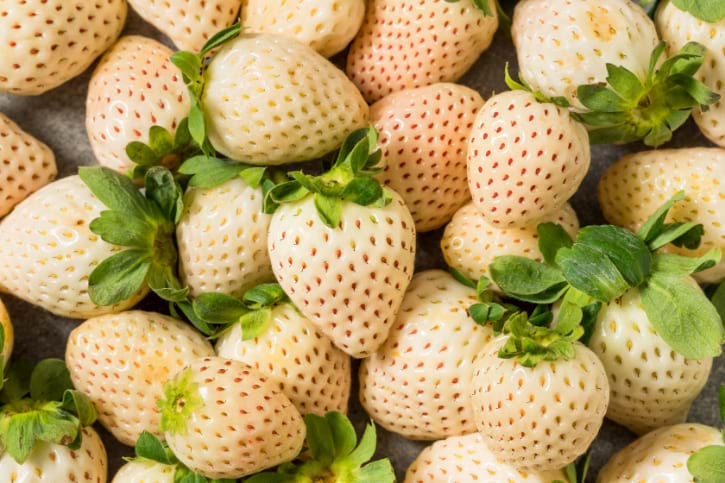
White strawberries are real strawberries. They are not fake, and they are not some kind of lab creation.
Most white strawberries you find in stores are often called pineberries, though not every white variety is exactly the same.
How to Recognize Them
- White to pale pink flesh that stays light even when fully ripe
- Red or pinkish seeds that stand out against the pale skin
- A green leafy top just like regular strawberries
- A smaller, more delicate shape compared to many red strawberries
Why They Look So Fragile
White strawberries were not bred for long-distance shipping the way red ones were.
Their skins tend to be thinner and more prone to bruising.
That is why you will often see them sold in single-layer containers or protective packaging.
2. Why They Stay White Instead of Turning Red
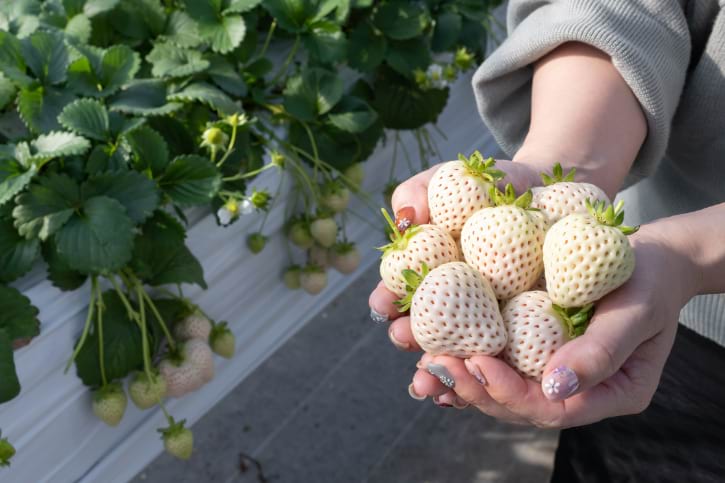
What Happens Inside Red Strawberries
Normal red strawberries get their color from natural pigments called anthocyanins. As the fruit ripens, these pigments build up and turn it from green to white to red.
What Is Different About White Strawberries
White strawberries are missing a specific protein that helps produce those red pigments. Without enough of it, the fruit cannot complete the final step of turning red.
So it stays white or pale, even though everything else inside, like sugars, acids, and aroma, keeps developing normally.
- The white color is not a sign of sickness or poor nutrition
- It is simply how these varieties are wired
- White strawberries rely on aroma and seed color to signal ripeness instead of skin color
3. The Biggest Misconception: White Does Not Always Mean Unripe
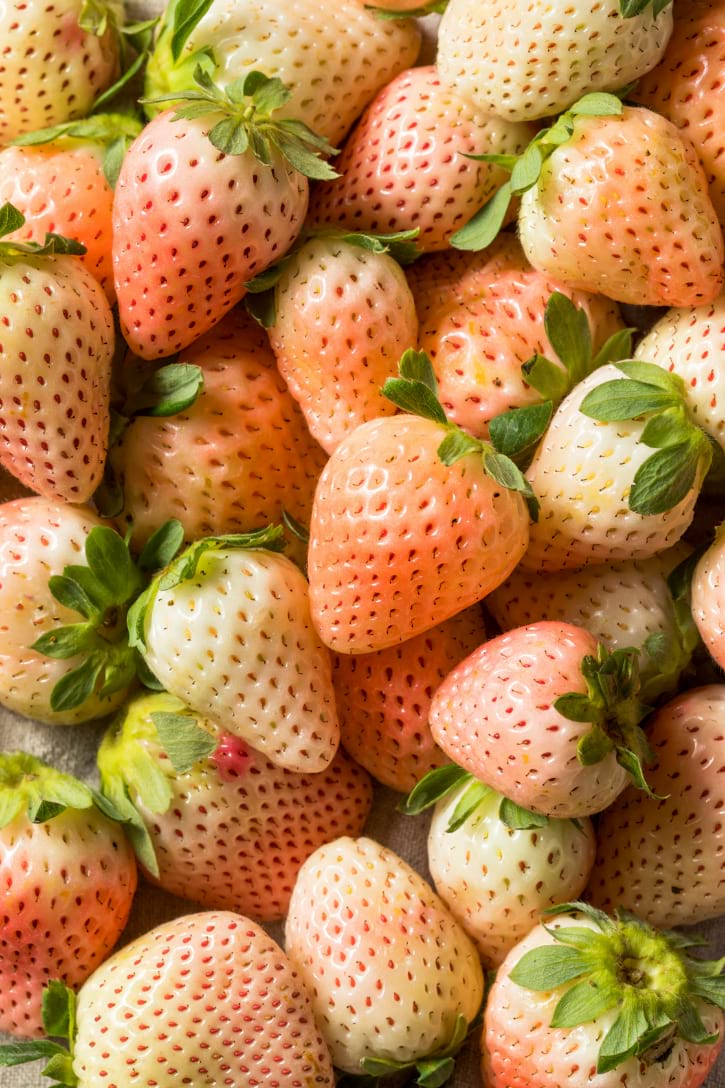
Why the “Red Equals Ripe” Rule Fails Here
For years, you have probably used redness as the main way to judge a strawberry. More red means more ripe. That rule works for red strawberries, but it completely falls apart with white ones.
- A white strawberry that looks “unfinished” might actually be at its peak of sweetness
- Waiting for it to turn red will not work. It will never turn deep red. It will just spoil.
The Pink Blush Myth
A pink tint on a white strawberry does not always mean it is more ripe. In many varieties, the pink color comes from sunlight exposure, not from higher sugar content.
- A berry grown in shade might stay ivory while tasting just as sweet
- A berry in direct sun might turn pink without any extra flavor
The key takeaway: do not judge white strawberries using the same color rules you use for red ones. Check the seeds, the aroma, the firmness, and the overall condition instead.
4. How to Tell If a White Strawberry Is Ripe
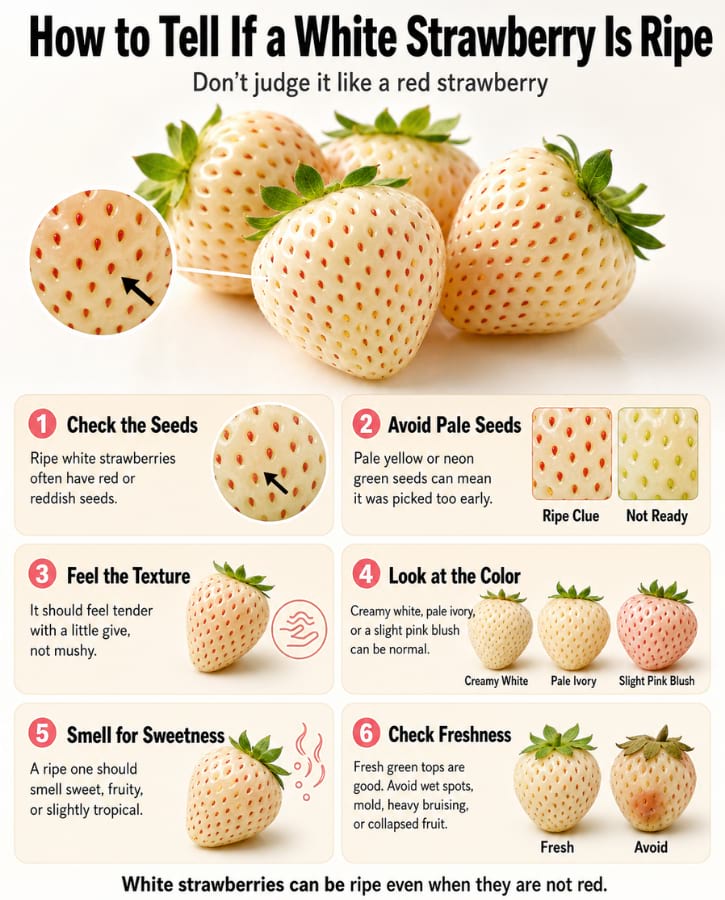
Since you cannot rely on color, you need different clues.
Visual and Touch Clues
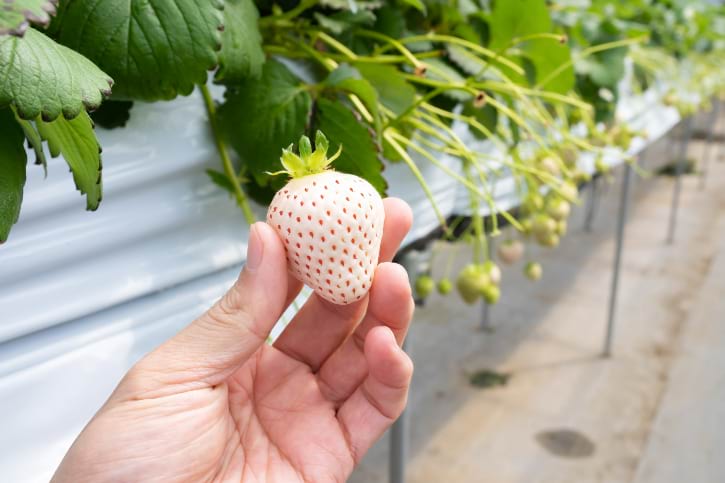
- Seed color: Your best clue. Seeds turn red when ripe. Pale yellow or neon green seeds mean the berry is not ready.
- Texture: It should feel tender but not mushy. A little give is normal, but collapsed or watery fruit has gone too far.
- Overall appearance: Creamy white, pale ivory, or a slight pink blush can all be normal.
Smell and Freshness Clues
- Aroma: A ripe white strawberry should smell sweet, fruity, or slightly tropical. No scent usually means it was picked too early.
- Stem and leaves: Fresh green tops are a good sign. Dry, brown, or slimy tops mean the berry has been off the plant too long.
- Surface condition: Avoid berries with wet spots, collapsed areas, mold, or heavy bruising.
5. What White Strawberries Taste Like
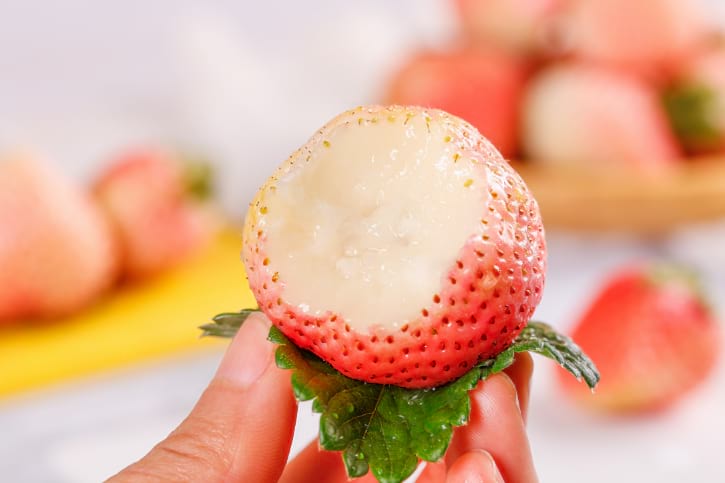
If you are expecting the bold, sweet-tart punch of a classic red strawberry, white strawberries might surprise you. They taste different. Not better or worse, just different.
Most white strawberries are described as:
- Sweet and mild
- Less tart than red strawberries
- Floral or lightly perfumed
- Tropical, sometimes with a pineapple-like note
- Smooth and delicate, without the sharp bite some red varieties have
The overall experience is lighter and more subtle. Think of it as the difference between a regular peach and a white peach.
One important thing to keep in mind: not every white strawberry will taste amazing. Just like red ones, the flavor depends on variety, ripeness, growing conditions, and storage.
6. Why Some People Say They Taste Like Pineapple
Where the Name “Pineberry” Comes From
The name is not random. White strawberries and pineapples actually share some of the same aromatic compounds, which is why the flavors overlap.
But a pineberry does not taste exactly like pineapple. It is more like a mild strawberry with a tropical hint in the background.
- Some people pick up on that note right away
- Others barely notice it and just taste a soft, sweet berry
How to Taste the Tropical Note
Here is a simple trick. Let the berries sit at room temperature for a few minutes before eating. Cold suppresses the aromatic compounds, so straight-from-the-fridge berries may not show their full flavor.
That tropical quality is also delicate. Strong flavors can easily overpower it, which is why many people prefer eating them on their own or with something mild like cream.
7. Are White Strawberries Safe to Eat?
Yes. White strawberries are safe to eat when they are fresh, properly handled, and free of spoilage. The white color is a natural trait, not a sign of contamination.
The safety checks are the same as any strawberry:
- No mold on the surface or around the leafy top
- No slimy patches
- No sour or fermented smell
- No leaking or collapsed fruit
- Wash before eating
- Keep refrigerated
- Eat soon after buying
Because their skin is pale, mold and decay are actually easier to spot on white strawberries than on dark red ones.
A practical warning: white strawberries bruise or spoil faster due to thinner skin. Bruises often show up as translucent, watery, or tan patches instead of dark spots.
8. What You Should Check Before Eating Them
White strawberries show damage differently than red ones, so a quick check before eating goes a long way.
The Smell and Touch Test
- Smell: They should smell fresh, fruity, or lightly sweet. A sour, musty, or alcohol-like odor means the fruit has started to ferment. Trust your nose, even if they look fine.
- Texture: A little softness is normal. Slimy, wet, or collapsed is not.
The Visual Inspection
- Mold: Check under the berries and around the leafy top, where moisture collects
- Bruising: Small marks are usually fine. Avoid berries with large, soft, or water-soaked patches.
- Color pattern: White, ivory, or pale pink is normal. Gray, brown, or translucent wet patches are not.
- Container condition: Standing liquid or heavy condensation inside the packaging means faster spoilage
Storage at Home
Keep them in the refrigerator, unwashed, in a breathable container until you are ready to eat. Washing too early adds moisture and speeds up spoilage.
9. Why They Are Often More Expensive Than Red Strawberries
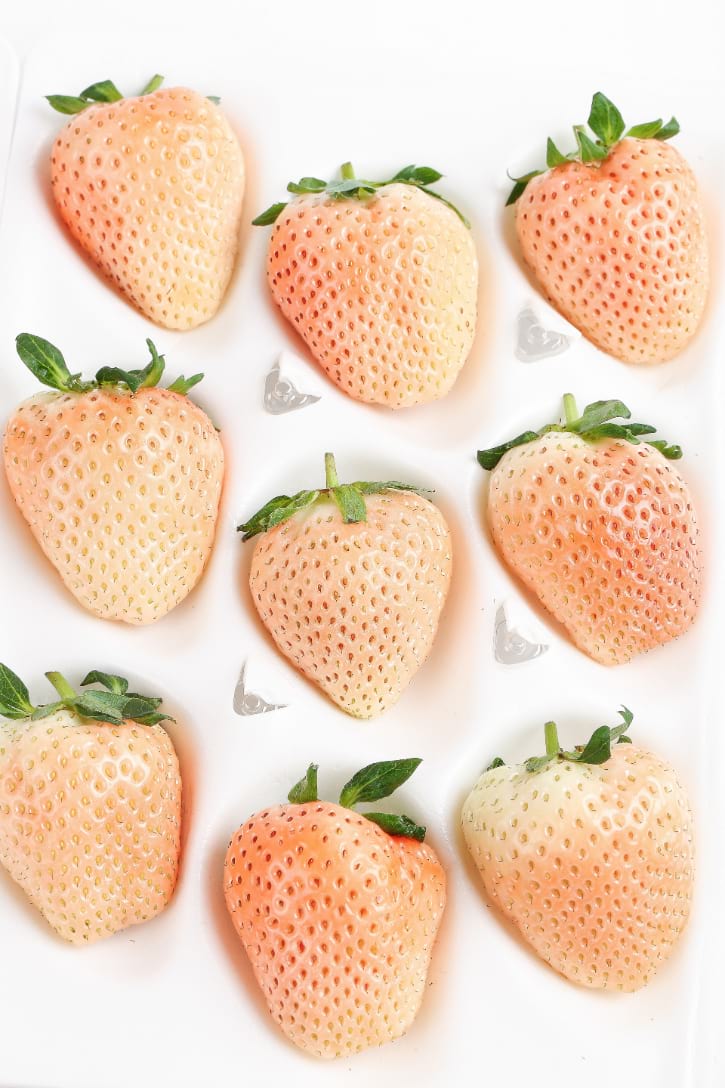
You might notice white strawberries cost double or even triple the price of red ones. This is not just about novelty.
The Real Reasons Behind the Price
- Lower yields: White strawberry plants produce fewer, smaller berries per plant
- More labor: Thin skin shows every mark, so they are almost always hand-picked with extra care and packed in single layers
- Higher waste: More berries get damaged during shipping and never reach the shelf
- Limited supply: They are still a specialty crop with fewer growers
- Shorter shelf life: They do not last as long as tougher red varieties
Are They All Luxury Items?
Not necessarily. Some Japanese varieties are positioned as luxury gifts and can cost a surprising amount per berry. But the pineberries in many grocery stores are becoming more accessible over time.
The bottom line: you are paying for extra care in growing, gentler handling, and a unique flavor experience.