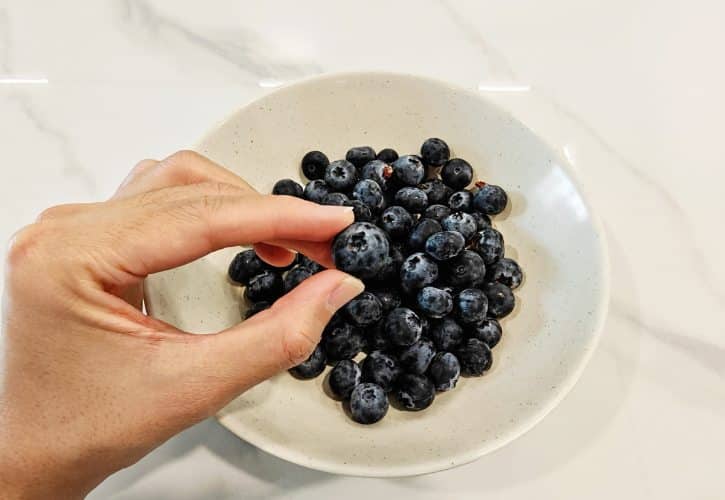
You pick up a container of blueberries, and the first thing you notice is a cloudy, powdery, white-gray coating covering the fruit. Is it dirt? Pesticide residue? Mold? Something unsafe?
Most people instinctively want shiny, clean-looking fruit. But with blueberries, the dusty-looking ones may actually be telling you something important.
That white coating is not just a random surface detail. It can reveal useful clues about freshness, handling, natural protection, and how long the berries may last after you bring them home. 😊
1. What the White Coating Actually Is
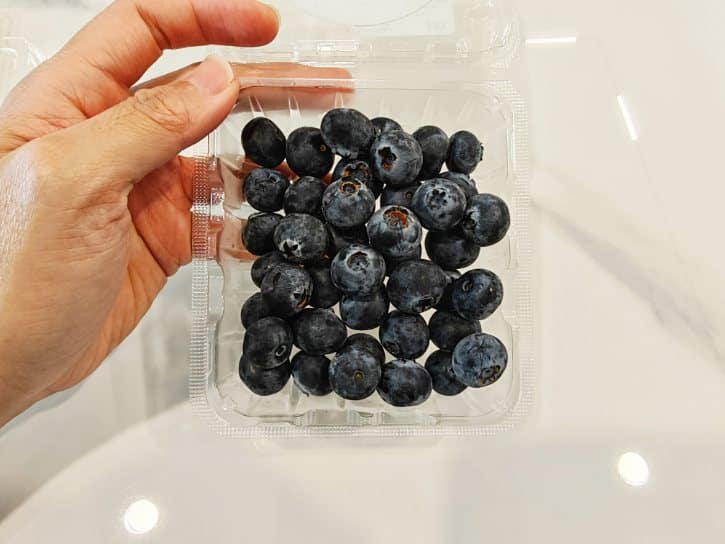
The white coating on blueberries is commonly called bloom.
It is a natural waxy layer that forms on the outside of blueberries while they grow on the bush.
It often looks dusty, cloudy, pale white, silvery, powdery, or slightly frosted, giving the fruit a soft, matte finish.
Here’s what it is not. It is not added by the supermarket. It is not a chemical spray. And it is not usually a sign that the berries are dirty.
Blueberries naturally produce this coating as a protective layer during growth. Think of it as part of the berry’s own design, not something that was put on afterward.
2. Why Blueberries Have This Natural Coating
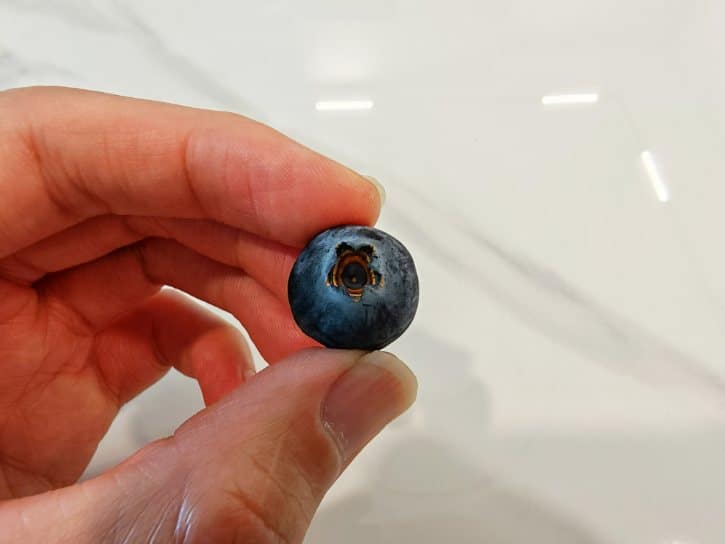
The bloom exists for a reason. It helps protect the blueberry’s delicate skin in several ways. Think of it like the blueberry’s natural protective jacket.
a. It Helps Keep Moisture In
Blueberries are mostly water, and without protection, they can shrivel or soften quickly.
- The waxy bloom acts as a barrier that helps seal moisture inside the fruit
- This keeps the berries plump and firm for longer
- Without this layer, blueberries would dry out and lose their texture much faster
b. It Helps Repel Water on the Outside
Standing water on fruit skin can encourage the growth of bacteria and mold. The bloom helps prevent that.
- It causes water droplets to bead up and roll off the surface
- This keeps the berry’s skin drier and less exposed to harmful moisture
- It works like a simple but effective natural shield
c. It Has Limits
That said, the bloom is not a perfect seal.
- It helps slow down quality loss, but it does not prevent all spoilage
- If the fruit has been handled roughly or stored in poor conditions, the bloom alone cannot keep the berries fresh
- It is one layer of protection, not a guarantee
3. Why the White Coating Can Be a Freshness Clue
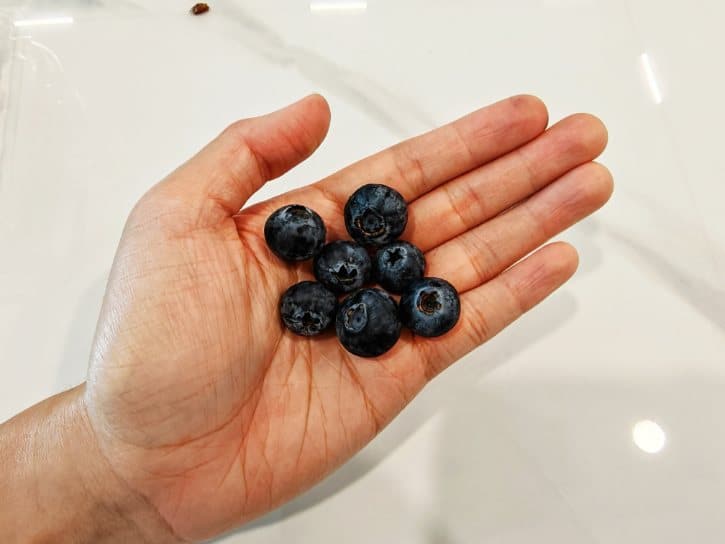
Here’s a practical detail most people don’t notice.
a. Less Handling Means More Bloom
A strong, even bloom often suggests the blueberries have been handled less roughly.
- When berries are freshly picked and not overly touched, rubbed, washed, or damaged, the bloom tends to stay more visible
- In the produce industry, a strong bloom is often used as a sign of careful handling and shorter time from farm to shelf
- Blueberries with natural bloom may look less shiny, but they can still be very fresh
b. Why “Dull” Can Actually Be a Good Thing
Many people think shiny berries look cleaner and better. But with blueberries, the opposite can be true.
- Visible bloom can actually be a positive sign of quality
- The “dull”, frosted appearance often means the berry’s natural protection is still intact
- A dusty-looking berry is still wearing its protective jacket
c. Keep It in Perspective
Bloom alone does not guarantee sweetness, perfect freshness, or safety.
- It is one helpful clue, not the only clue
- You should still check other signs like firmness, color, and overall condition
- Use bloom as a starting point, then combine it with the other checks covered later in this article
4. What It Means When Blueberries Look Too Shiny
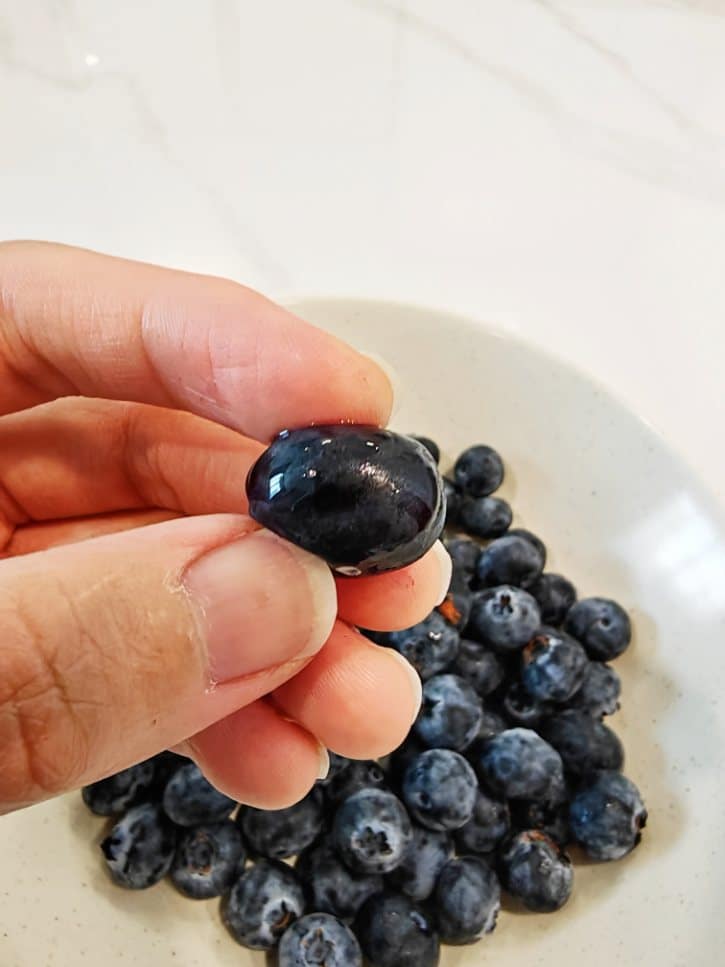
If blueberries look very shiny or wet, it may mean the bloom has been rubbed off, washed away, or affected by moisture.
Shiny berries are not automatically bad. But they do need closer checking.
Here are some possible reasons blueberries lose their bloom and look shiny:
- They were handled a lot during harvesting or packing
- They were rubbed against each other during transport
- They were washed or exposed to moisture before reaching the shelf
- They are beginning to soften with age
- Condensation formed inside the container from temperature changes
Why does this matter? Once the protective bloom is reduced and moisture is present, blueberries may spoil faster. The fruit becomes more vulnerable to shriveling and decay.
This is not a reason to panic. Just a reason to inspect shiny berries a little more carefully before buying.
5. How to Tell Bloom Apart from Mold
This is one of the most important things to know, because many people confuse the two and throw away perfectly good blueberries.
a. Natural bloom usually looks:
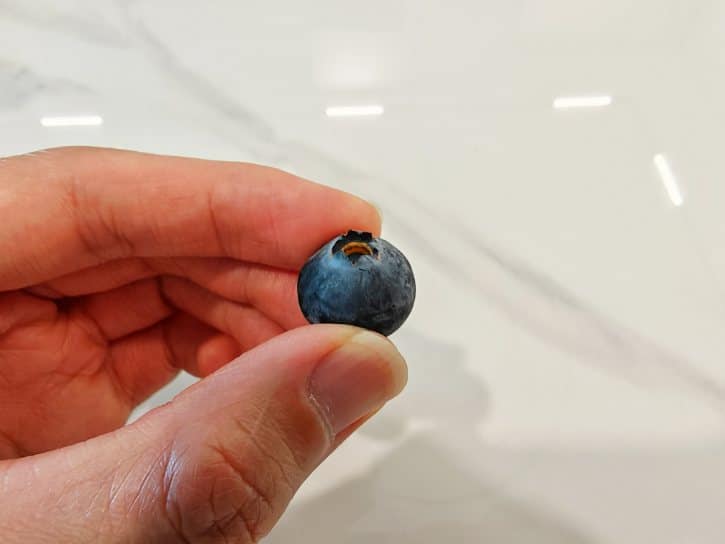
- Thin and smooth
- Even and consistent across the berry
- Powdery, like a fine frost or light dust
- Pale white or grayish
- Like part of the berry’s surface, not sitting on top of it
- Spread across many berries in the container
b. Mold usually looks:
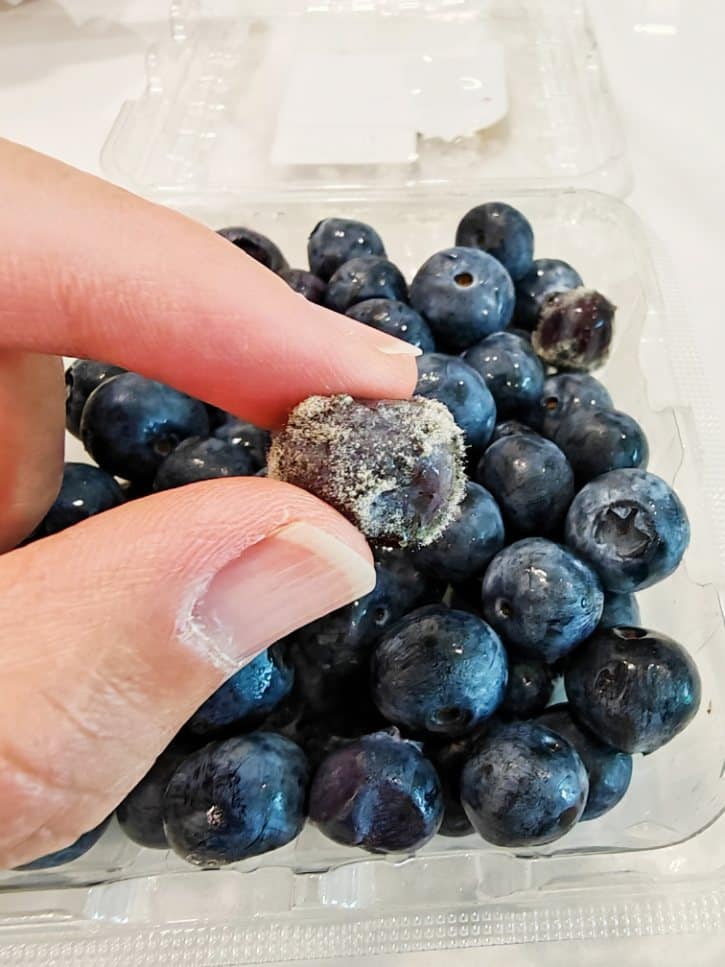
- Fuzzy, hairy, or “cotton-like”
- Patchy and uneven
- Raised and clumpy, sitting on top of the berry
- Found in spots, often near damaged areas or the stem scar
- Sometimes white, green, gray, or bluish
- Usually starting on one or two berries and spreading
c. Practical advice:
- If you see fuzzy patches, leaking juice, soft collapsed berries, or a sour smell, avoid eating those berries.
- If one berry is moldy, remove it right away and check the rest carefully. The nearby berries may still be fine if they look firm and have a healthy bloom.
- If mold has spread through a large portion of the container (more than a quarter), it is safer to discard the affected berries or the whole container depending on how widespread it is.
Here’s a simple test: if you gently rub a berry and the white color disappears to reveal smooth, dark skin underneath, that is bloom. If the white substance is fuzzy and the berry feels soft or mushy, that is mold.
Don’t worry too much. Once you know what to look for, telling them apart becomes easy.
6. What the Bloom Tells You About Handling and Storage
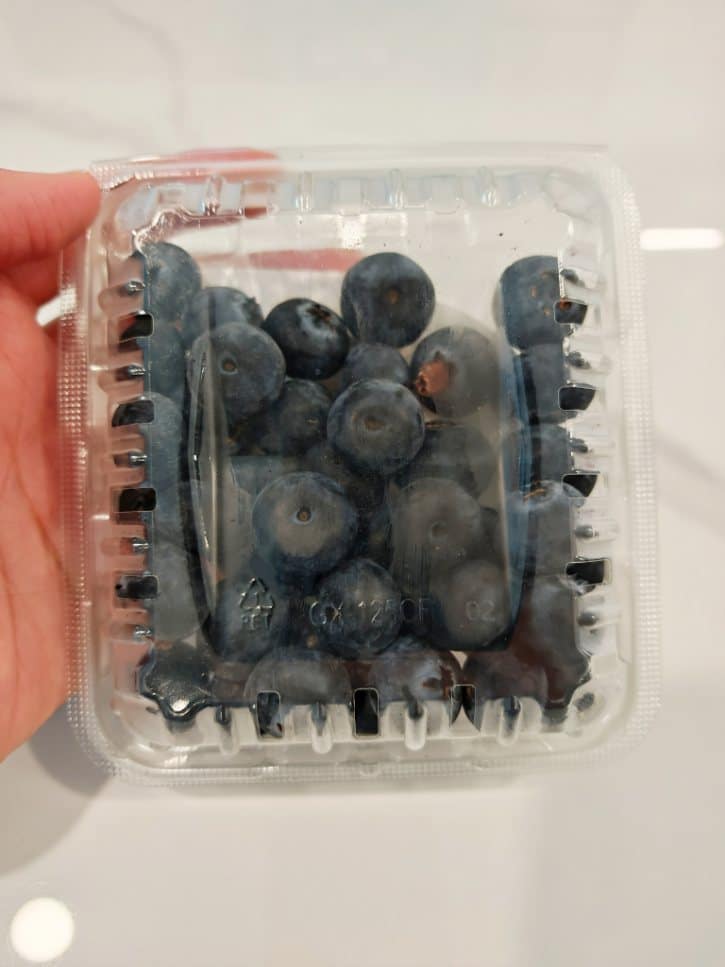
The condition of the bloom is like a report card for how the blueberries were treated on their way to the store.
Blueberries are easily damaged by pressure, friction, and moisture. Every time a berry is touched, moved, or bumped around, a small amount of that protective waxy coating is lost.
If many berries have lost their bloom and look wet, sticky, or crushed, it may suggest rough handling or poor storage conditions.
Sticky berries are a major warning sign. They can mean some fruit has already burst or leaked juice, creating the perfect environment for mold to grow.
When shopping, look for berries that are:
- Dry, with no visible moisture or fog inside the container
- Plump and firm-looking
- Evenly colored
- Mostly covered with natural bloom
- Not sitting in juice at the bottom
- Not stuck together from moisture
- Not crushed at the bottom of the container
A quick tip: gently shake the container. Fresh, well-handled berries should move freely, almost like small marbles. If they stick together or clump, that is worth noting.
7. Does More White Coating Mean the Blueberries Are Sweeter?
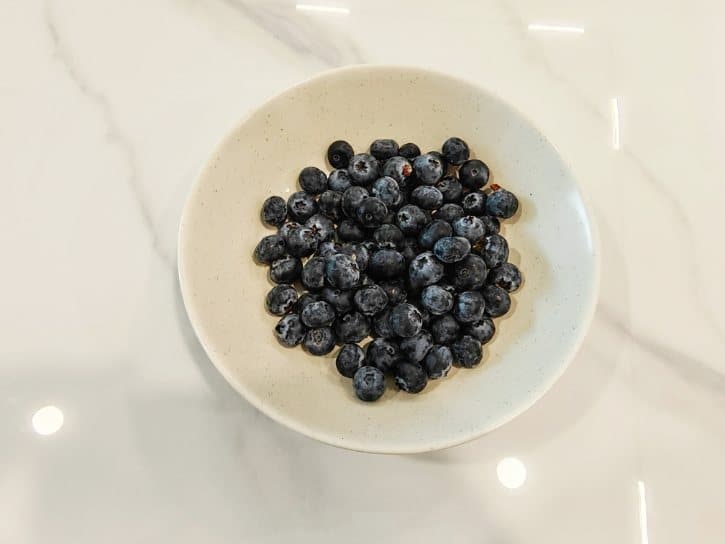
This is a common belief, but it is not quite accurate.
Bloom is mainly a freshness, handling, and protection clue. It is not a direct sweetness meter.
A blueberry can have a beautiful, strong bloom but still taste tart if it was picked before full sweetness developed. And a berry that has lost some of its bloom can still be quite sweet.
Sweetness depends more on:
- Variety: some types of blueberries are naturally sweeter than others
- Ripeness at harvest: blueberries do not get sweeter after they are picked
- Growing conditions: warm days and cool nights tend to boost sugar levels
- Maturity: how long the berry was allowed to ripen on the bush
- Storage time: longer storage can affect flavor
The practical point: bloom helps you judge condition and handling, but for sweetness, you should also look at color, plumpness, and overall ripeness. A deep purple-blue or blue-black color, without red or green near the stem, is the best visual indicator that the berry reached its full sweetness before being picked.
8. How to Pick Better Blueberries at the Store
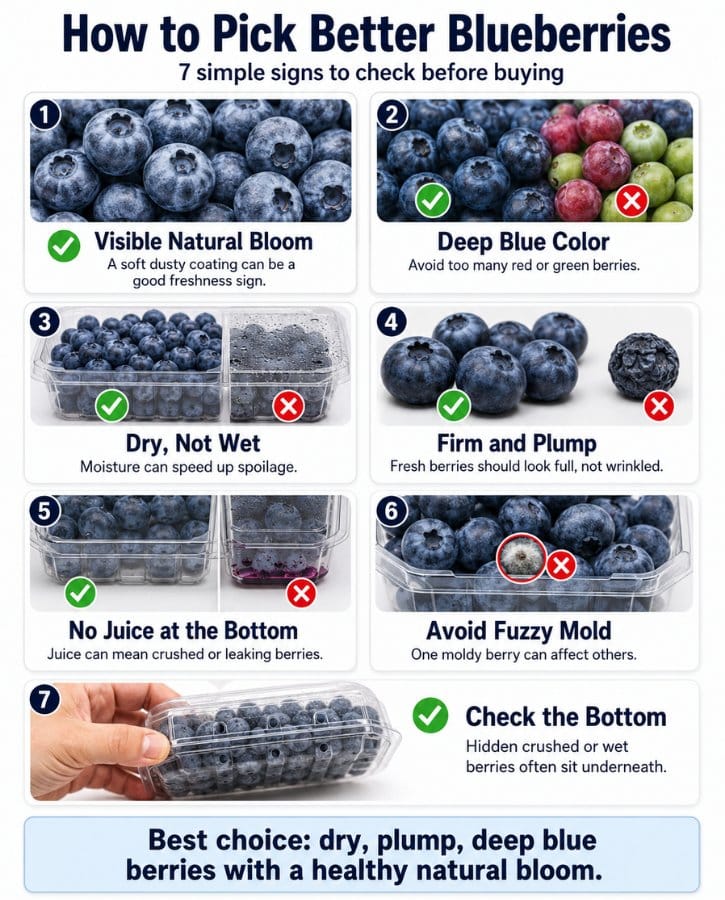
This is your simple checklist for choosing the best blueberries.
a. Look for visible natural bloom
A soft, dusty-looking coating is usually a good sign. It suggests the berries are fresh and have been handled carefully.
b. Look for deep blue to purple-blue color
Avoid containers with too many red or green berries. Those colors usually suggest the fruit was picked too early and may taste sour.
c. Choose dry berries
Moisture inside the container can speed up spoilage. The berries should look dry and move freely, not wet or foggy.
d. Look for firm, plump berries
Shriveled or wrinkled berries may be older or dehydrated. Fresh berries should look full and taut.
e. Check for no juice at the bottom
Juice at the bottom of the container can mean crushed or leaking berries. This also creates conditions for mold to spread.
f. Avoid fuzzy mold
Even one moldy berry can affect nearby berries quickly through direct contact.
g. Check the bottom of the container
Most people only look at the top layer. But the bottom often reveals crushed, wet, or moldy berries that are hidden from view. Flip the container over and check before buying.
In short: the best blueberries are dry, plump, deep blue, firm-looking, and covered in a healthy bloom. If you find a container that meets all of these, you are likely getting fruit that will stay fresh for several days in the fridge.
9. Should You Wash Off the White Coating?
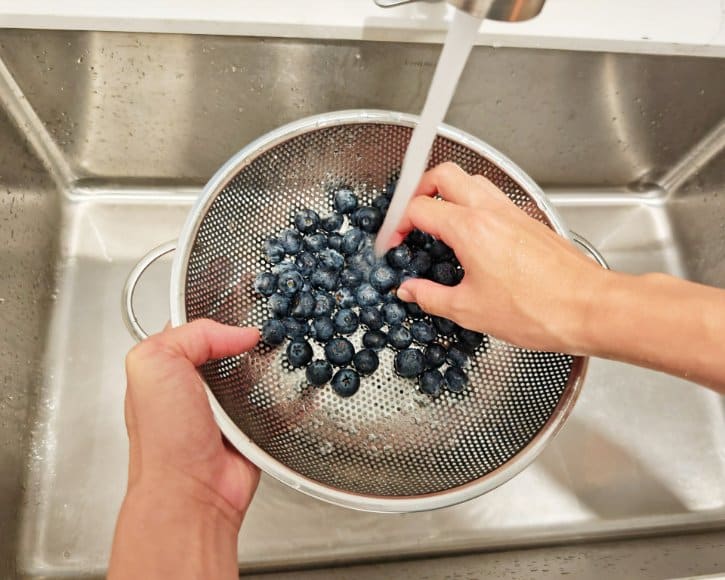
Yes, blueberries should be washed before eating. But timing matters.
a. Why You Should Not Wash Too Early
Do not wash them if you are not eating them right away. Here’s why.
- Washing removes some bloom, which weakens the berry’s natural protection
- It adds moisture to the surface, and extra moisture can make blueberries spoil faster in the fridge
- There is a small area near the stem where water can get trapped, creating a perfect environment for mold growth
b. The Best Time to Wash
The simple rule is: store them dry, rinse them only when you’re ready to eat.
- Wash only the amount you plan to eat right away
- Leave the rest unwashed and dry in the fridge
- This helps the bloom keep doing its job for as long as possible
c. How to Wash Them Properly
When you are ready to eat, keep it simple.
- Place the berries in a colander and rinse under cool, running water
- Gently move them around so all sides get rinsed
- Do not use soap, detergent, or commercial produce washes, as blueberries can absorb those chemicals
- Pat them dry or let them air dry briefly before eating
10. The Best Way to Store Blueberries So They Last Longer
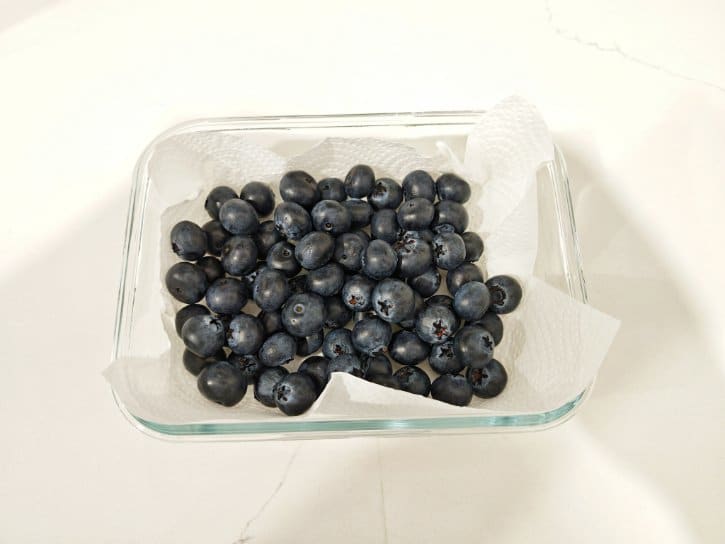
Proper storage makes a big difference. With the right approach, fresh blueberries can last well over a week in the fridge.
The goal is simple: cool, dry, and breathable.
a. Refrigerate Promptly
- Store blueberries in the fridge as soon as you can
- The coldest part of the fridge works best
- Avoid the crisper drawer, which tends to have higher humidity and less airflow
b. Keep Them Dry
- Moisture is the biggest enemy of fresh berries
- If you notice any dampness in the container, add a dry paper towel to absorb excess moisture
- Place the paper towel at the top or bottom of the container
c. Allow Airflow
- Do not seal them in an airtight plastic bag or container
- Keep them in the original vented clamshell or a shallow bowl that allows some air circulation
- Berries need to breathe to stay fresh
d. Remove Bad Berries First
- Before storing, quickly sort through and remove any berries that are already soft, leaking, or moldy
- One bad berry can affect the rest quickly through direct contact
- This simple step can add days to the life of the remaining berries
e. Avoid Temperature Swings
- Do not leave blueberries sitting at room temperature for long periods
- Temperature changes can cause condensation to form, leading to premature softening
- Take out only what you plan to eat, and return the rest to the fridge quickly
f. Bonus: Freezing for Later
If you have more blueberries than you can eat within a week, they freeze very well.
- Place them unwashed on a tray in a single layer until frozen
- Transfer the frozen berries to a freezer bag
- Rinse them when you are ready to use them in a smoothie or recipe